
Be the first to know.
Get our airplanes  weekly email digest.

Tagged with

airplanes

ORGANIZATIONS.

SHAPING THE INDUSTRY.

Addcomposites

Automation Machinery Manufacturing

Addcomposites is the provider of the Automated Fiber Placement (AFP) ecosys...

5 Posts

Embry-Riddle Aeronautical University

Higher Education

At Embry-Riddle Aeronautical University, what we do -- and do best -- is te...

University of Washington

Higher Education

Founded in 1861, the University of Washington is one of the oldest state-su...

Latest Posts

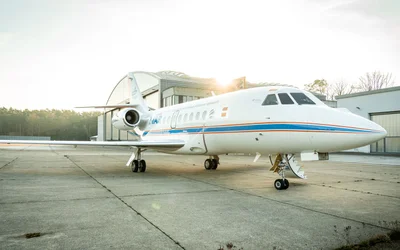
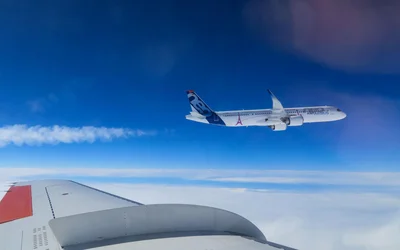
Sustainable aviation fuels (SAFs) significantly reduce the climate impact of aviation in terms of both its carbon footprint and other climate impact not related to carbon dioxide. In the future, the targeted use of SAFs in contrail regions can help to rapidly reduce the climate impact of air transport. Flight tests using aircraft powered by 100 percent SAF are to take place again in order to prepare for this transition.

Emissions and contrail study with 100 percent sustainable aviation fuel

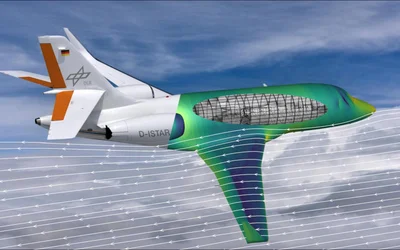
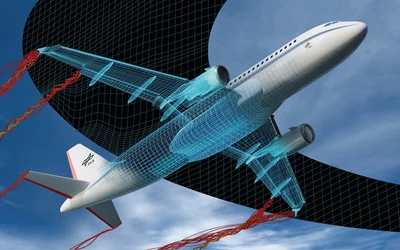
Decarbonisation of aviation relies on a combination of many incremental steps and outright technological breakthroughs. To succeed, both approaches need to exist inside a collaborative ecosystem. In this spirit, Airbus and two leading European research institutions, DLR and ONERA, are exploring how high-performance computing can improve our understanding of the relationship between aerodynamics and aircraft efficiency.

Aerodynamics and the art of aircraft design

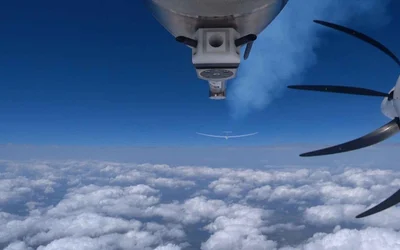
DLR supports new test flight programme by Airbus and its subsidiary Airbus UpNext for CO2-emission-free flight. The 'Blue Condor' project investigates the effects of contrails from hydrogen engines.

Analysing the contrails of the future

The initial project for the digitalised development of control surfaces for future aircraft wings has now been successfully completed at the German Aerospace Center (Deutsches Zentrum für Luft- und Raumfahrt; DLR) Virtual Product House (VPH).

Developing new aircraft faster with digitalisation