Featured
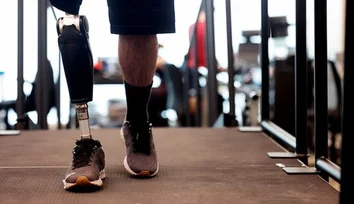
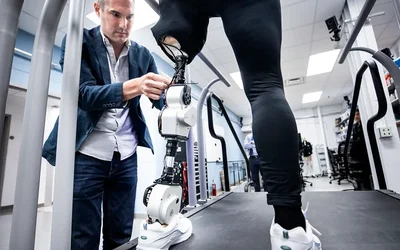
A dive into how AI is helping overcome limitations with current prosthetics by offering improved signal decoding, functionality and more intuitive control.
A dive into how AI is helping overcome limitations with current prosthetics by offering improved signal decoding, functionality and more intuitive control.
A dive into how AI is helping overcome limitations with current prosthetics by offering improved signal decoding, functionality and more intuitive control.
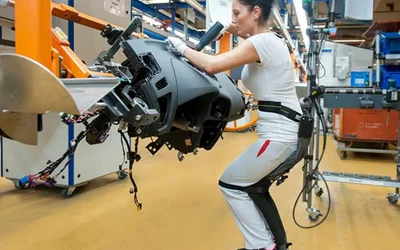
Exoskeletons made with carbon fiber composites using cutting-edge manufacturing techniques can assist workers in performing repetitive tasks.
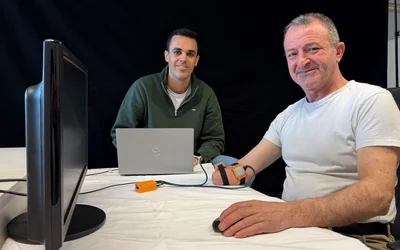
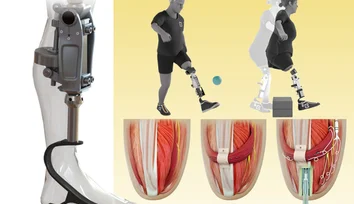
Using a new technology, researchers hope to create better control systems for prosthetic limbs.
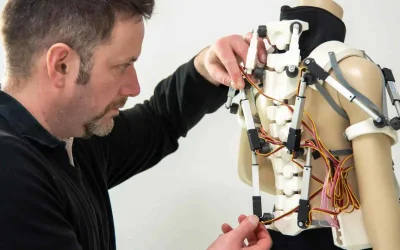
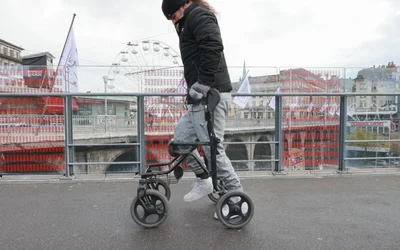
From a mechanical guide dog to a self-learning exoskeleton and magnetically controlled bacteria, researchers at ETH Zurich are busy devising robots for medical applications.
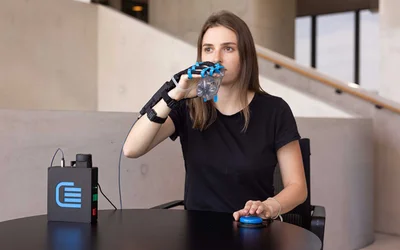
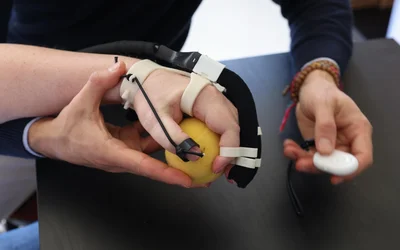
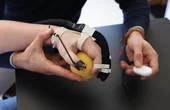
Researchers at ETH Zurich have developed an innovative hand exoskeleton that helps persons after stroke re-learn how to grasp. Its accordion-like structure makes it light, robust and easy to integrate into everyday life.
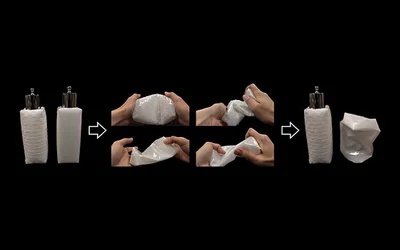
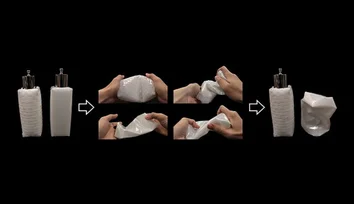
Able to undergo repeated compressions without losing their shape, woven materials could form robots, exoskeletons, car parts, architectural components and more.
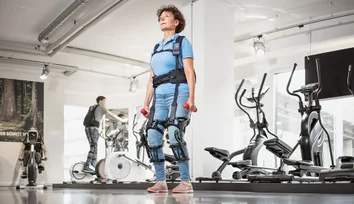
When we're healthy, activities like walking, sitting down, speaking and remembering things can be done with ease. But if an accident or illness impairs our physical or cognitive capabilities, such everyday tasks can become difficult or even impossible.
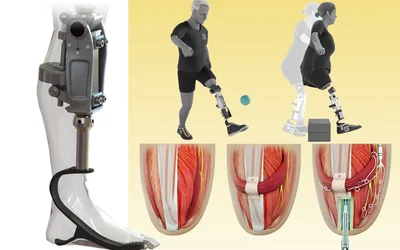
Paired with custom control software, Össur's powered knee prosthesis helped study participants sit, stand and walk more easily.
The human determinants of research are key for making progress, as championed by amputee Massimo Munzi who is helping improve prosthetics, as well as EPFL's neuroprosthetic researcher Jonathan Muheim.
In a small clinical study, users of this prosthesis navigated more easily and said the limb felt more like part of their body.
In a new study, Texas A&M researchers have used a skin-like material as a platform for investigating infections from intravenous catheters.
A dive into how AI is helping overcome limitations with current prosthetics by offering improved signal decoding, functionality and more intuitive control.
Exoskeletons made with carbon fiber composites using cutting-edge manufacturing techniques can assist workers in performing repetitive tasks.
Using a new technology, researchers hope to create better control systems for prosthetic limbs.
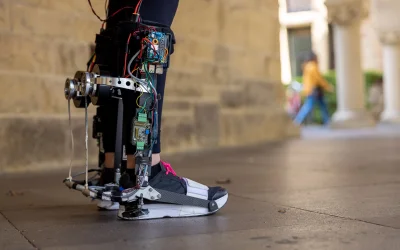
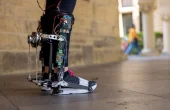
After years of careful development, engineers have created a boot-like exoskeleton that increases walking speed and reduces effort outside of the lab.

4 minutes read
Matthew partnered with a local student to undertake research using the Ultimaker S5 that went on to be recognized at the UN COP26 conference.

4 minutes read
Director of Installation and Maintenance for VodafoneZiggo, Nicole Hoebink lives “happily” in Den Bosch with her husband and her 14-year-old son. Walking their dogs is one of her favorite activities to relax and clear up her mind. Nicole has a background in economics.

5 minutes read
Working closely with users and therapists, EPFL spin-off Emovo Care has developed a light and easy-to-attach hand exoskeleton for people unable to grasp objects following a stroke or accident. The device has been successfully tested in several hospitals and rehabilitation centers.

4 minutes read
In this episode, we talk about how exoskeleton technology is being leveraged to treat parkinsons and how a new approach for more efficient, personalized exoskeletons could be the catalyst for wide scale adaptation.

A system developed by Grégoire Courtine and Jocelyne Bloch now enables patients with a complete spinal cord injury to stand, walk and even perform recreational activities like swimming, cycling and canoeing.
4 minutes read
In this episode, we reflect on some of our favorite topics from 2021 and discuss the goals for the podcast in 2022.
In this episode, we talk about a system developed by MIT researchers to optimize new material development and LifeNabled - a non-profit organization - that leverages 3D printing technology and generative design to develop cost-effective, bespoke prosthetics.
LifeNabled volunteers and designers created a fully digital workflow to produce custom 3D printed prosthetic sockets with flexible inner liners. Now, 35 patients in the jungle of Guatemala are walking on the most advanced prosthetic and orthotic devices in the world.

6 minutes read
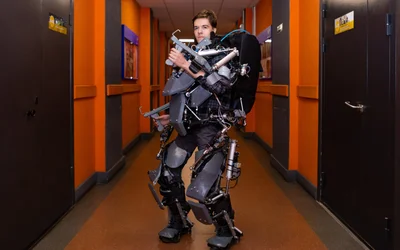
Alexey Ledyukov, a student at ITMO’s Faculty of Control Systems and Robotics, has designed an exoskeleton that will be able to help lift up to 80 kilograms easily. At the same time, the suit itself doesn’t weigh much: you can move and even run in it freely.

5 minutes read
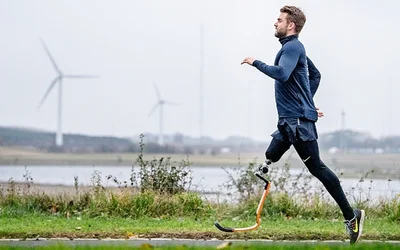
In this episode, we talk about a new machine learning model developed by NIST to predict flashover in burning buildings and protect firefighters, NASA’s new ultrasonic additive manufacturing approach, and an affordable, high performance athletic prosthetic.
By combining cost-effective 3D printing with affordable electronics and wireless technology, new accessibility solutions empower children with limb differences.

3 minutes read