Featured
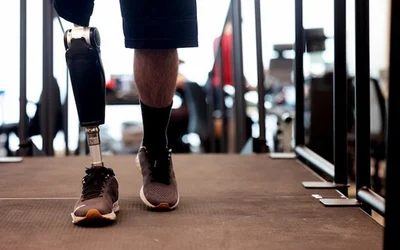
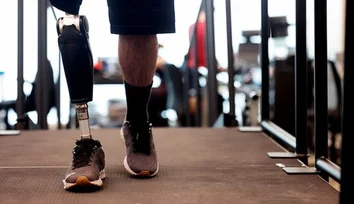
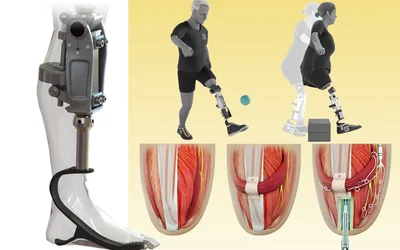
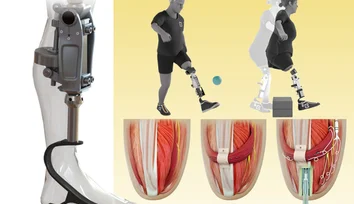
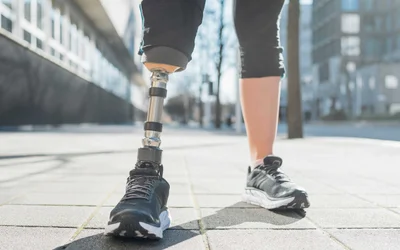
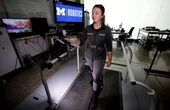
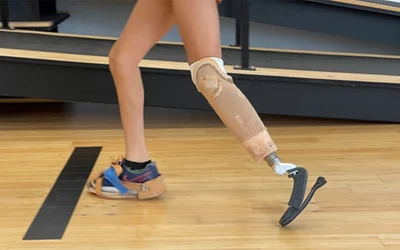
A new surgical procedure gives people more neural feedback from their residual limb. With it, seven patients walked more naturally and navigated obstacles.
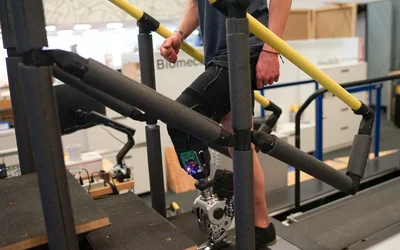
A new surgical procedure gives people more neural feedback from their residual limb. With it, seven patients walked more naturally and navigated obstacles.
A new surgical procedure gives people more neural feedback from their residual limb. With it, seven patients walked more naturally and navigated obstacles.
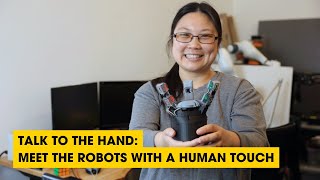
In this episode, we discuss how MIT researchers are making great strides in developing better robotic hands by focusing on an often overlooked component: the palm.
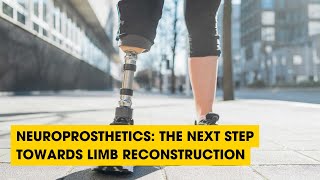
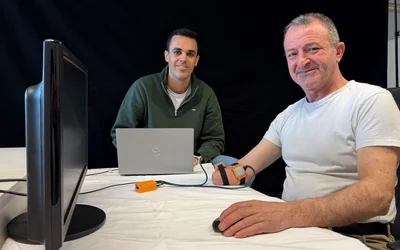
In this episode, we discuss a breakthrough from ETH Zurich to mimic natural foot signals to the brain using state of the art neuroprosthetics.
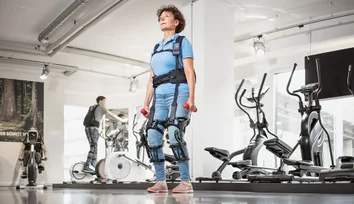
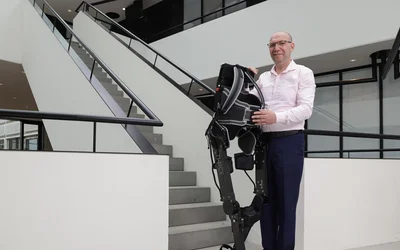
From a mechanical guide dog to a self-learning exoskeleton and magnetically controlled bacteria, researchers at ETH Zurich are busy devising robots for medical applications.
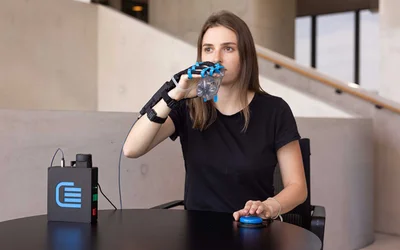
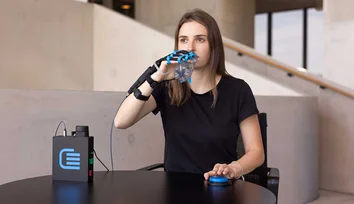
Researchers at ETH Zurich have developed an innovative hand exoskeleton that helps persons after stroke re-learn how to grasp. Its accordion-like structure makes it light, robust and easy to integrate into everyday life.
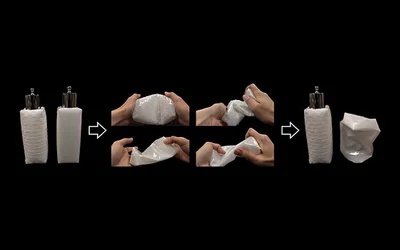
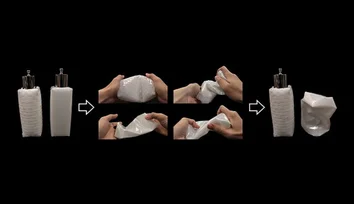
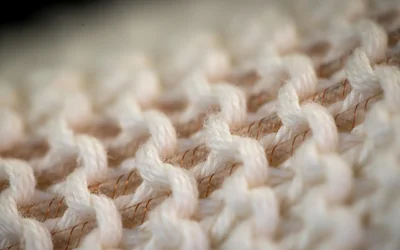
Able to undergo repeated compressions without losing their shape, woven materials could form robots, exoskeletons, car parts, architectural components and more.
When we're healthy, activities like walking, sitting down, speaking and remembering things can be done with ease. But if an accident or illness impairs our physical or cognitive capabilities, such everyday tasks can become difficult or even impossible.
Paired with custom control software, Össur's powered knee prosthesis helped study participants sit, stand and walk more easily.
The human determinants of research are key for making progress, as championed by amputee Massimo Munzi who is helping improve prosthetics, as well as EPFL's neuroprosthetic researcher Jonathan Muheim.
In a small clinical study, users of this prosthesis navigated more easily and said the limb felt more like part of their body.
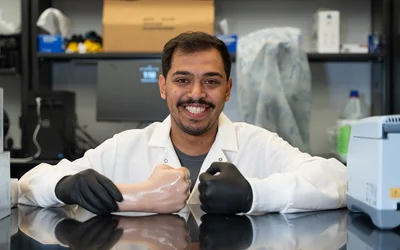
In a new study, Texas A&M researchers have used a skin-like material as a platform for investigating infections from intravenous catheters.
A new surgical procedure gives people more neural feedback from their residual limb. With it, seven patients walked more naturally and navigated obstacles.
In this episode, we discuss how MIT researchers are making great strides in developing better robotic hands by focusing on an often overlooked component: the palm.

14 minutes read
In this episode, we discuss a breakthrough from ETH Zurich to mimic natural foot signals to the brain using state of the art neuroprosthetics.
14 minutes read
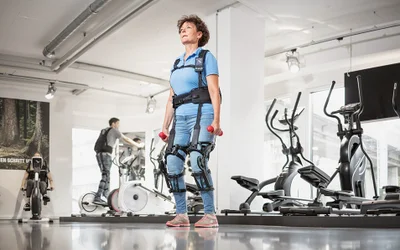
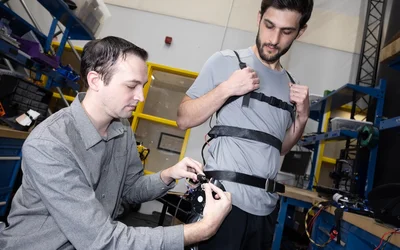
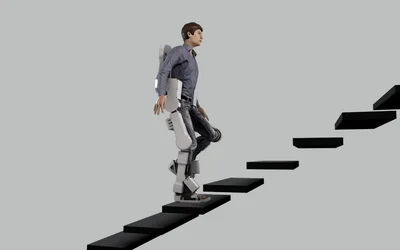
Aaron Young’s team has developed a wear-and-go approach that requires no calibration or training.

6 minutes read
Somanity aims to revolutionize mobility for individuals with motor disabilities by developing an affordable 3D-printed exoskeleton.
Prostheses that connect to the nervous system have been available for several years. Now, researchers at ETH Zurich have found evidence that neuroprosthetics work better when they use signals that are inspired by nature.

6 minutes read
A robot mimics the folded look of rose petals to grasp complex shapes more easily than a traditional hand. A pneumatic clamp makes it easier for people with motor disabilities to safely wield kitchen knives. Prostheses utilize shape memory polymers to better replicate the range of motion of a limb.

3 minutes read
In this episode, we talk about how a soft robotic exoskeleton from Harvard and Boston University is allowing patients suffering from Parkinson’s Disease to get their independence back by being able to walk safely without extra assistance.
16 minutes read
Robotic exosuit eliminated gait freezing, a common and highly debilitating symptom
4 minutes read
Using a simple and convenient touchscreen interface, the algorithm learns the assistance preferences of the wearer.
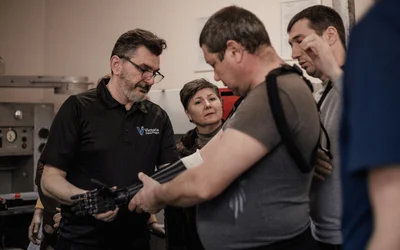
In a world often defined by disparities in healthcare access, Victoria Hand Project, a Canadian charity, is a beacon of hope. Founded in 2015 with the mission to provide accessible 3D-printed prosthetic care to under-resourced communities around the world, Victoria Hand Project has transformed lives by combining cutting-edge technology with compassionate outreach.

5 minutes read
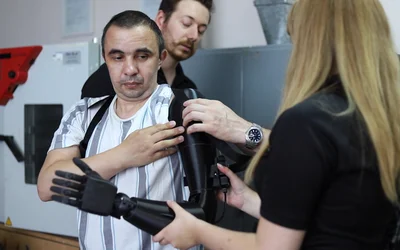
With amputees in war-torn Ukraine nearing half million, the Canadian non-profit organization Victoria Hand Project (VHP) is combining innovative materials from BASF Forward AM with UltiMaker 3D Printers’ robust construction to provide high-performance prosthetics to those in urgent need.

4 minutes read
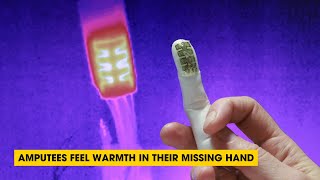
In this episode, we discuss the accidental discovery of how amputees can sense temperature in their phantom limbs and how EPFL researchers have exploited this to develop the first generation of prosthetics that can feel.
13 minutes read
Research from elite athletes informs the design of these robust and adaptable prosthetics. We interview researcher Tijmen Seignette, about his ambitions to change how we approach prosthetic design.
EPFL researchers have developed fiber-like pumps that allow high-pressure fluidic circuits to be woven into textiles without an external pump. Soft supportive exoskeletons, thermoregulatory clothing, and immersive haptics can therefore be powered from pumps sewn into the fabric of the devices themselves.

3 minutes read