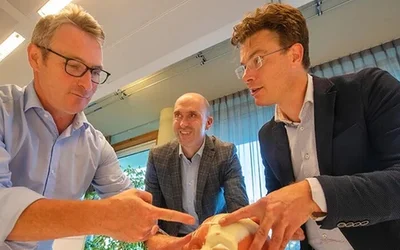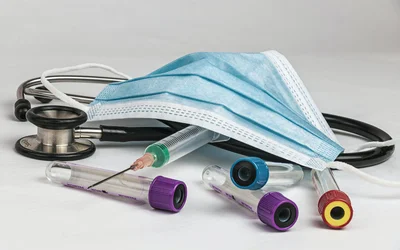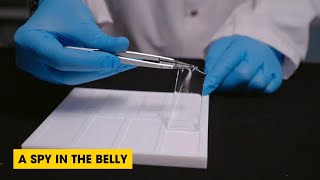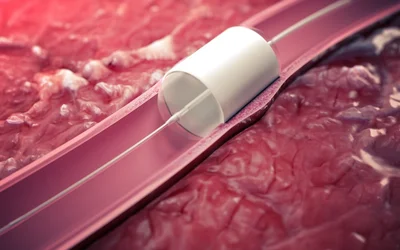



In this episode, we talk about a combined effort between ETH Zurich & the Swiss Federal Lab for Material Science (EMPA) to create “smart” internal bandages for safely patching patients post stomach/intestinal surgery while providing insight to the medical staff about the status of the patch to prevent leakages which can be fatal.
Tagged with
healthcare
ORGANIZATIONS. SHAPING THE INDUSTRY.
The Next Byte
Entertainment
The Next Byte Podcast is hosted by two young engineers - Daniel and Farbod - who select the most interesting tech/engineering cont...
165 Posts
High Tech Campus Eindhoven
High Tech
High Tech Campus Eindhoven is Europe's smartest square km and has the ultim...
49 Posts
ETH Zurich
University for science and technology
Freedom and individual responsibility, entrepreneurial spirit and open-min...
43 Posts
Harvard University
University
At the Harvard John A. Paulson School of Engineering and Applied Sciences (...
42 Posts
Latest Posts
Relatively new to High Tech Campus, STENTiT is a medtech startup aiming to revolutionize artery intervention. Born out of technology from Eindhoven University of Technology (TU/e) , the company found a natural home at High Tech Campus Eindhoven to grow its business and benefit from the Brainport community.
Healthcare is undergoing a transformative shift with the rise of stick-to-skin wearable monitoring devices. These data-collecting marvels, such as continuous glucose or cardiac monitoring devices, offer convenience & real-time insights.This article explores capabilities, applications & market trends
Players may not be aware of the severity of head impacts suffered during a game. Bearmind, an EPFL spin-off, has developed smart helmets that provide a series of metrics enabling coaches to monitor the neurological effects of head impacts suffered by their players. The firm hopes to quickly conquer the US market.
Researchers have developed a 3D bioprinter for cancer research that can be folded into a carry-on pack, transported, and easily reassembled for printing inside a biosafety cabinet. The technology can perform rapid and reproducible manufacture of complex tumouroids – 3D cell cultures which resemble tumour tissues – to test potential immunotherapy treatments.
In this episode we talk about how researchers at EPFL have developed a new method of 3D printing bone-like composites using bacteria-infused ink. The process involves the use of hydrogel as a printing medium that provides a scaffold for bacterial growth, which produces calcium carbonate crystals that mimic the properties of bone.