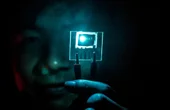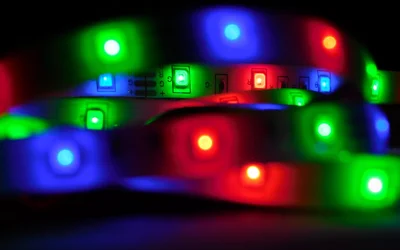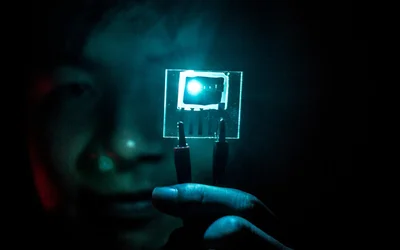
Lights could soon use the full color suite of perfectly efficient organic light-emitting diodes, or OLEDs, that last tens of thousands of hours, thanks to an innovation from physicists and engineers at the University of Michigan.

3 minutes read
Tagged with
Lights could soon use the full color suite of perfectly efficient organic light-emitting diodes, or OLEDs, that last tens of thousands of hours, thanks to an innovation from physicists and engineers at the University of Michigan.
3 minutes read
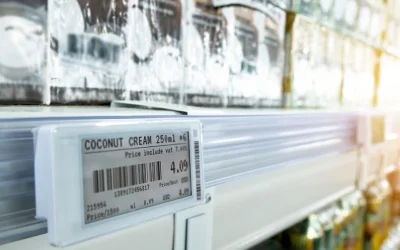
Electronic shelf labels (ESL) are connected, low-power ‘e-paper’ display devices that can replace traditional paper labels and can display text, numbers, icons, lines, barcodes and pictures. They enable retailers to automatically update individual shelf price labels from a central point across multiple stores and branches—or in certain geographic locations—at the touch of a button.

4 minutes read
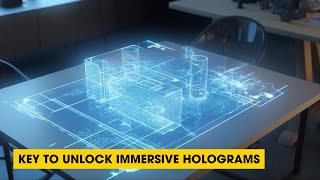
In this episode, we discuss research from Harvard that tackles the blurriness and lack of disruption recovery with most holograms which prevents users from having an immersive experience.

15 minutes read
Build your digital signage solution to manage advertising displays with single-board computers.
Researchers have developed new technology that could usher in the "next-generation" of thinner, higher-resolution and more energy efficient screens and electronic devices.
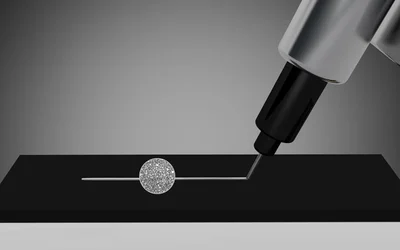
A unique new approach of printing functional materials with unparallel precision and repeatability. Technology called Ultra-Precise Deposition (UPD) is a nanodispensing method capable to print high density and high viscous materials with the resolution down to 1 µm in feature size and with high ratio of width to height after single pass. For this method material extrusion is controlled by a pressure, which means it is not supported with high electric field. Thanks to this there are no limitation if the substrate is conductive or dielectric.

2 minutes read
Prof. Zetian Mi’s team are the first to achieve high-performance, highly stable green micro-LEDs with dimensions less than 1 micrometer on silicon, which can support ultrahigh-resolution full-color displays and other applications.
3 minutes read
The three themes are closely linked since QDs can be digitally printed as color conversation materials atop blue microLEDs to enable wide color gamut RGB uLED displays without requiring a separate transfer step for each color.. This is an important technology as it simplifies the manufacturing step for microLED and thus removing a major hinderence.
As microLEDs inevitably shrink in size, the micro-bumping requirements for the microLED dies becomes more challenging. Direct wafer-based printing based on gravure offset techniques offers a promising solution in this regard. Indeed, this is another field where printed electronics can play a role.
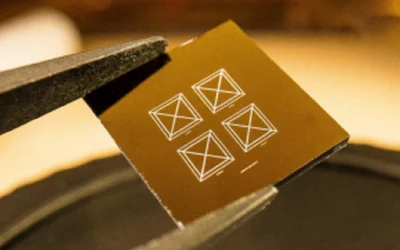
Columbia engineers invent a flat lens that exclusively focuses light of a selected color—it appears entirely transparent until they shine a beam of light with the correct wavelength onto it, when the glass turns into a lens.
Researchers have designed smart, colour-controllable white light devices from quantum dots, tiny semiconductors just a few billionths of a metre in size, which are more efficient and have better colour saturation than standard LEDs, and can dynamically reproduce daylight conditions in a single light
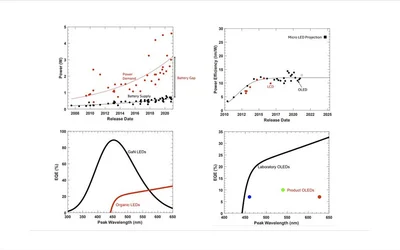
Why can microLED technology can help narrow the energy gap in electronic devices? The first slide shows the battery gap- Ahmed (Intel) has collected data by year showing that power demand of phones far exceeds the power supply level of batteries, creating a "battery gap" which ...
Phosphors or QDs for color conversion in LCD and microLED ? Which will win? This is an evolving technology space to watch. Here, it is shown that phosphor technology is evolving, enabling not just red but also green narrowband color conversation with small particle sizes compatible with microLEDs
2 minutes read
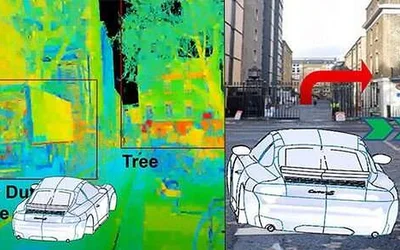
Augmented reality (AR) head-up displays (HUDs) are widely considered to be the future of connected vehicles, but more human-centred studies are needed to assess the impact of AR on the driver while operating a vehicle on public roads, say Cambridge researchers.
In this episode, we talk about how performance limitations of current microchips are being addressed by utilizing novel materials like graphene and bioinspired designs to address the needs of next generation computing and electronics.