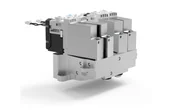
STMicroelectronics X-STM32MP-IGTW1 Expansion Board
Industrial Protocol Interface Board for STM32MP Systems
General
| Product Type | Expansion Board |
| Applications | Industrial Automation, IoT & Smart Systems, Prototyping & Development |
| Key Features | Industrial IoT Gateway Expansion Board, 40-pin GPIO Connector , 12V to 24V |
Technical Specifications
| Board Type | Industrial IoT Gateway Expansion Board |
| Host Interface | 40-pin GPIO Connector (I2C, UART, FDCAN, GPIO) |
| Compatible Platform | STM32MP257F-DK Connector Layout |
| Input Supply Voltage | 12V to 24V |
| RS-485 Transceiver | ST4E1240, up to 20Mbps Data Rate, 3V–5.5V Supply |
| RS-232 Transceiver | Two Configurable Control Outputs |
| Real-Time Clock | M41T83 with Battery Backup |
| Applications | Remote Monitoring and Control, Industrial Gateways, Factory Automation |
Overview
The STMicroelectronics X-STM32MP-IGTW1 Expansion Board is designed to support industrial IoT gateway development and factory automation communication systems. The board interfaces with STM32MP microprocessors through a 40-pin GPIO connector, enabling connectivity using I2C, UART, FDCAN, and GPIO signals. It supports key industrial serial communication protocols such as CAN bus and ModBus RTU, allowing integration with automation networks and remote monitoring systems.
The board includes the ST4E1240 RS-485 transceiver, which supports data rates up to 20Mbps and operates from 3V to 5.5V, as well as the ST3232C dual RS-232 transceiver supporting data rates up to 400kbps. Timekeeping functions are handled by the M41T83 real-time clock (RTC) with battery backup. A STSAFE-A110 secure element provides hardware-based authentication and cryptographic protection. Additional components include M24C32-R EEPROM for GPIO configuration, L6983 DC-DC converters for voltage regulation, and signal LEDs and switches for user interaction.
Features of X-STM32MP-IGTW1 Expansion Board
The X-STM32MP-IGTW1 Expansion Board supports industrial IoT gateway development with multiple communication interfaces. Let’s go through its features in detail:
Industrial Communication Interfaces
The X-STM32MP-IGTW1 Expansion Board supports several industrial communication interfaces used in factory automation and industrial IoT gateway applications. It enables connectivity through protocols such as CAN bus and ModBus RTU, allowing integration with industrial control systems and monitoring equipment. The board connects to the STM32MP microprocessor using a 40-pin GPIO connector that provides access to I2C, UART, FDCAN, and GPIO interfaces. Compatibility with the STM32MP257F-DK connector layout allows the board to be integrated into development environments based on STM32MP microprocessors for industrial gateway implementation.
Serial Communication Transceivers
The board includes multiple serial communication transceivers to support industrial networking requirements. The ST4E1240 RS-485 transceiver enables high-speed communication with data rates up to 20Mbps and operates within a 3V to 5.5V supply voltage range. For legacy or equipment-level connectivity, the ST3232C dual RS-232 transceiver provides serial communication with data rates up to 400kbps while operating within the same voltage range. A high-speed CAN transceiver is also included to enable reliable communication across industrial CAN networks commonly used in automation and control systems.
Security and Timekeeping Components
Hardware-based authentication and data protection are provided by the STSAFE-A110 secure element, which supports cryptographic services for device authentication and secure data exchange. The board also integrates the M41T83 real-time clock (RTC) with a built-in battery backup, enabling accurate timekeeping for embedded systems even during power interruptions. For configuration storage, the M24C32-R EEPROM allows automatic GPIO and driver setup, enabling the system to store configuration parameters used during device initialization and operation.
Power Management and User Interface
Power regulation on the board is handled by L6983 DC-DC converters, which step down the 12V to 24V input supply to intermediate voltage levels and further regulate the output from 5V to 3.3V for system operation. The expansion board also includes signalizing LEDs and switches that provide a basic user interface for system monitoring and manual control during development or debugging. These elements support system diagnostics and status indication in embedded industrial gateway designs used for remote monitoring and factory automation applications.
Applications
The STMicroelectronics X-STM32MP-IGTW1 Expansion Board is used in embedded systems that require industrial communication and control capabilities. In remote monitoring and control, the board enables data exchange between sensors, controllers, and supervisory systems through protocols such as CAN bus and ModBus RTU. For industrial gateways, it facilitates communication between field devices and higher-level computing platforms by supporting multiple serial interfaces and secure authentication mechanisms. In factory automation, the board can be integrated with controllers and monitoring equipment to manage industrial processes, equipment status reporting, and machine communication within automated production environments. These capabilities support reliable connectivity in distributed industrial control systems.
Where to find it

Mouser Electronics
Mouser Electronics is a worldwide leading authorized distributor of semiconductors and electronic components.
References
Recommended Specs


Continue Reading
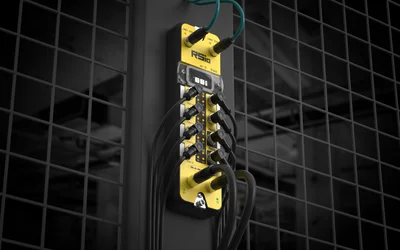
Industrial facilities are in constant need of upgrades, with machines regularly added, removed, or replaced. With the Banner RSio, safety systems engineers can transition to a more optimized distributed safety architecture, making upgrades and maintenance easier.
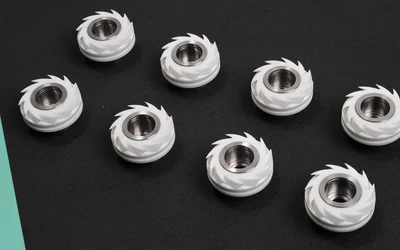
The client, one of the world's leading manufacturer of automation machines, found RPWORLD to provide qualified prototypes and low volume solutions for monthly order of 40 units. They had a new tooling machine under R&D stage, a key component, the impeller assembly failed, which caused delay of the whole product development process.So the client contacted RPWORLD to address the delay problem.

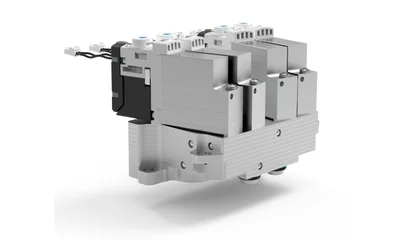
Festo relies on parts from Online Manufacturer FACTUREE to develop functional prototypes

2 minutes read