STMicroelectronics Ultra-Low-Power SPI Page EEPROM Solutions
SPI-based EEPROM Solution for Embedded Memory Applications
General
| Product Type | EEPROM |
| Applications | Prototyping & Development, Embedded Systems, Power Management |
| Key Features | SPI (Single, Dual, Quad Output) Interface, 1.6V to 3.6V, 500k Cycles, ~0.6 µA |
Technical Specifications
| Memory Density | 8 Mbit, 16 Mbit, 32 Mbit |
| Page Size | 512 bytes |
| Interface | SPI (Single, Dual, Quad Output) |
| Supply Voltage | 1.6V to 3.6V |
| Write Endurance | 500k Cycles |
| Data Retention | Up to 100 Years |
| Read Speed | Up to 50 MHz (Single), 80 MHz (Dual/Quad) |
| Power Consumption | ~0.6 µA (Deep Power-Down Typical) |
| Applications | Asset Tracking, IIoT Modules, Smart Meters, 5G Optical-Fiber Modules, Data Logging |
Overview
The STMicroelectronics Ultra-Low-Power SPI Page EEPROM Solutions include the M95P08, M95P16, and M95P32 devices, designed for non-volatile data storage in low-power embedded systems. These EEPROMs are organized into 512-byte programmable pages and support SPI communication with single, dual, and quad-output options, enabling high-speed data access. They operate within a 1.6V to 3.6V supply range and across industrial and extended temperature conditions.
The devices incorporate error correction code (ECC) for data reliability, along with Schmitt trigger inputs for noise filtering and configurable output buffer strength. Write protection mechanisms and electronic identification features support secure data storage. The memory architecture includes sector, block, and chip erase capabilities with self-timed operations. With 500k write endurance cycles and long data retention, the devices support continuous data logging and firmware storage. Ultra-low power modes, including deep power-down, reduce energy consumption in battery-powered applications.
Features of Ultra-Low-Power SPI Page EEPROM Solutions
The SPI Page EEPROM solutions provide non-volatile memory with low power consumption and flexible data access. They integrate reliability features, high-speed interfaces, and configurable memory structures for embedded applications. Let’s go through its features in detail:
Memory Architecture and Organization
The EEPROM devices are organized into 512-byte programmable pages, supporting flexible memory management. They include sector, block, and chip-erase functions, enabling selective data updates. Memory densities range from 8 Mbit to 32 Mbit, supporting high-density storage requirements.
High-Speed SPI and Data Access
The devices support SPI communication with single-, dual-, and quad-output options, enabling read speeds up to 80 MHz. This allows efficient firmware upload/download and rapid data retrieval. Support for SFDP mode and JEDEC identification simplifies integration into embedded systems.
Power Efficiency and Operating Conditions
The EEPROMs operate from 1.6V to 3.6V and support industrial and extended temperature ranges up to +105°C. Ultra-low power consumption is achieved through standby and deep power-down modes (~0.6 µA), making them suitable for battery-powered applications.
Data Integrity and Protection
Integrated ECC (DEC, TED) ensures reliable memory operation, while Schmitt trigger inputs improve noise immunity. Write protection features allow block-level locking, and electronic identification provides secure parameter storage. These mechanisms support robust operation in harsh environments.
Endurance and Reliability Features
The devices provide 500k write endurance cycles and long data retention periods. Self-timed write-and-erase operations improve reliability, while enhanced ESD protection and multiple package options support deployment across industrial, wearable, and IIoT systems.
Applications
The SPI Page EEPROM solutions are used in mobile and wearable devices for storing configuration data and logs while maintaining low power consumption. In asset-tracking and IIoT modules, they support data logging and parameter storage in distributed systems. For implantable medical devices and healthcare applications, they provide reliable non-volatile storage with extended data retention. The devices are also used in electronic shelf-edge labeling and smart meters for storing operational data and firmware. In 5G optical-fiber modules, they enable high-speed firmware storage and updates. These EEPROMs support efficient data logging and high-density memory requirements across embedded applications.
References
Recommended Specs


Continue Reading
By harnessing the power and efficiency of Nordic's nRF54L15 SoC, Minew has unlocked the full potential of its MBM04 location relay beacon.

3 minutes read

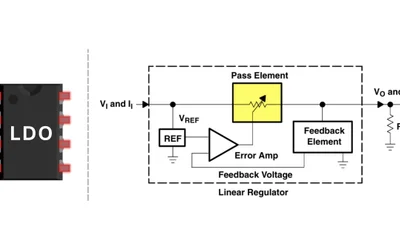
This article explains what is LDO, how the LDO regulator works, discusses key specifications such as dropout voltage, line/load regulation, noise, and PSRR, and shows how to select and design with LDOs to meet demanding engineering requirements.
This article presents a detailed technical exploration of SiC MOSFET devices, covering material physics, device structure, switching behavior, and practical design considerations for high-efficiency power electronics systems.