STMicroelectronics STM32WBA6 Wireless Microcontrollers
Wireless Microcontroller Platform based on Arm Cortex M33 with Multi Protocol Radio
General
| Product Type | Wireless Microcontrollers |
| Applications | Wireless Connectivity |
| Key Features | Arm Cortex-M33 32-bit RISC core, Up to 100MHz, Bluetooth LE, IEEE 802.15.4, ECC |
Technical Specifications
| Core | Arm Cortex-M33 32-bit RISC core |
| Maximum Frequency | Up to 100MHz |
| Radio Protocol Support | Bluetooth® Low Energy 6.0, IEEE 802.15.4 (Thread, Matter, Zigbee) |
| Radio Frequency | 2.4 GHz with programmable output power up to +10 dBm |
| Memory | Up to 2 MB Flash with ECC, up to 512 KB SRAM |
| Operating Voltage | 1.71 V to 3.6 V |
| Temperature Range | –40 °C to 85 °C (105 °C junction) or –40 °C to 105 °C (125 °C junction) |
| Applications | Navigation, Stabilization, and Instrumentation, Autonomous Vehicles, Smart Agriculture |
Overview
The STM32WBA6 Wireless Microcontrollers integrate an Arm Cortex-M33, 32-bit RISC core operating up to 100 MHz with advanced wireless connectivity. A 2.4 GHz radio supports Bluetooth® Low Energy 6.0, Bluetooth LE audio with Auracast™, IEEE 802.15.4, Thread, Matter, and Zigbee, enabling multi-protocol and concurrent operation modes. Programmable output power up to +10 dBm, support for external power amplifiers, and packet traffic arbitration (PTA) provide flexibility for a variety of designs.
The devices operate from 1.71 V to 3.6 V and across a wide temperature range, with multiple low-power modes for energy-sensitive applications. Package options range from 48 to 121 pins with 86 GPIOs, with or without SMPS. Integrated peripherals include up to 2 MB of flash with ECC, 512 KB of SRAM, multiple ADCs, timers, and USB OTG. Security features include Arm TrustZone, AES coprocessors with DPA resistance, secure firmware installation, and a hardware-unique key. These capabilities make the MCU suitable for wireless designs in automotive, industrial, healthcare, and home automation systems. In addition to the world-class features, STMicroelectronics offers a 10-year rolling production commitment on the STM32 series of devices.
STM32WBA6 Wireless Microcontrollers Features
STM32WBA6 wireless microcontrollers offer multi-protocol flexibility, supporting Bluetooth Low Energy and IEEE 802.15.4 protocols. They integrate an Arm® Cortex®-M33 core, reaching 100MHz, and feature extensive power-saving modes. Let’s go through its details and features:
Wireless and Multi‑Protocol Capabilities
The STM32WBA6 integrates a 2.4 GHz radio that supports Bluetooth Low Energy 6.0, Bluetooth LE Audio with Auracast, IEEE 802.15.4, Matter, Thread, and Zigbee. It allows concurrent operation modes and supports proprietary protocols. The STM32WBA6 Cube package includes Bluetooth LE Audio examples as well as a discovery kit for fast prototyping. The device features an integrated balun, reducing the need for external components and supporting external power amplifiers. Programmable output power up to +10 dBm and RX sensitivity of –96 dBm (Bluetooth Low Energy at 1 Mbps) or –100 dBm (IEEE 802.15.4 at 250 kbps) enable extended communication ranges.
Processing and Memory Resources
The high-performance Arm Cortex‑M33 core operates at up to 100 MHz, delivering up to 150 DMIPS with TrustZone, DSP, and FPU support. The architecture includes an ART accelerator with an 8 KB instruction cache for zero‑wait‑state execution from flash. Memory options include up to 2 MB dual‑bank flash with ECC, 512 KB SRAM with parity check, and a 512‑byte OTP for secure data.
Power Management and Operating Range
These microcontrollers operate from a 1.71 V to 3.6 V supply and support voltage scaling with embedded LDO and SMPS regulators. Multiple low‑power modes are provided, such as 120 nA standby with 16 wakeup pins, 1.33 µA standby with RTC, and 29 µA/MHz run mode. The devices are rated for temperatures ranging from –40 °C to 85 °C (105 °C junction) and from –40 °C to 105 °C (125 °C junction).
Security for IoT
The industry-leading security features inside the STM32WBA6 comply with industry security standards. SESIP Level 3: compliance with the US Cyber Trust Mark and EU Radio Equipment Directive (RED) regulations, which are mandatory as of 1 August 2025 for new IoT devices in Europe. PSA Certified Level 3, which brings the highest level of robust functionality to IoT devices. The STM32 Cortex M33 TrustZone differs by offering full configuration of peripherals, memory, and flash areas, which is not the same for all Cortex M33 devices. With an advanced readout protection (RDP) mechanism, developers can select the level of protection that best suits their application. Additional security peripherals include AES coprocessors with DPA resistance, a public key accelerator, secure firmware installation, and STMicroelectronics hardware unique key, which can be leveraged to overcome device cloning.
Integrated Peripherals and Interfaces
The devices include a comprehensive set of peripherals, including USB OTG high-speed, SAI, multiple UART, SPI, and I²C interfaces. The analog resources include a 12‑bit ADC at 2.5 Msps with oversampling and two low‑power comparators. System peripherals include timers, an RTC with calibration, watchdogs, and an 8-channel DMA controller.
Applications
The STM32WBA6 wireless microcontrollers are designed for a wide range of connected and low‑power systems. In automotive applications, they support wireless sensing, control modules, and diagnostic units that require functional safety and multi‑protocol communication. Within the sport and fitness device market, the integration of Bluetooth Low Energy and low-power modes enables wearables and tracking systems to achieve extended battery life. In healthcare, these MCUs provide secure wireless links for monitoring equipment and portable medical tools. The entertainment systems benefit from high-speed data transfer as well as Bluetooth LE audio for audio, Auracast or interactive peripherals.
Where to find it

Mouser Electronics
Mouser Electronics is a worldwide leading authorized distributor of semiconductors and electronic components.
References
Recommended Specs

Continue Reading
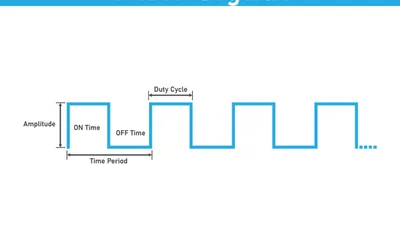
A detailed exploration of PWM theory and practice: from duty cycle and frequency to motor control, LED dimming, and emerging market trends.
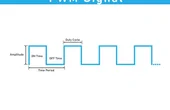

Discover how CoolSET™ PWM Gen5 Pro controllers enhance auxiliary power supply performance with faster startup, flexible gate drive, robust protection, and high efficiency in high-voltage systems.

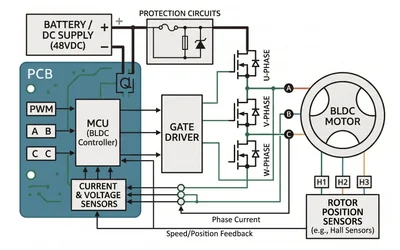
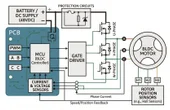
This article details BLDC motor controllers, covering system roles, architectures, commutation methods, sensing techniques, power stages, protection, IC selection, application requirements and safety standards.