Microchip Technology AVR32SD32 Curiosity Nano Evaluation Kit
Development Platform for AVR32SD32 Microcontroller with Integrated Functional Safety
General
| Product Type | Evaluation Kit |
| Applications | Prototyping & Development |
| Key Features | Dual-Core Lockstep CPU, On Flash, SRAM/EEPROM, USB Powered, 2.7V to 5.1V |
Technical Specifications
| Microcontroller | AVR32SD32 |
| CPU Architecture | Dual-Core Lockstep CPU |
| Memory | ECC on Flash, SRAM/EEPROM |
| Power Source | USB Powered |
| Adjustable Target Voltage | 2.7V to 5.1V (500mA Max) |
| Debugging Support | MPLAB X IDE, Onboard debugger, Two debug GPIOs |
| Crystals Included | One 32.768kHz, One 20MHz |
| Applications | Automotive Systems, Industrial Automation, Consumer Electronics, Security Systems |
Overview
The Microchip Technology AVR32SD32 Curiosity Nano Evaluation Kit is a compact development platform for rapid prototyping with the Microchip AVR32SD32 microcontroller. It integrates functional safety features, including a dual‑core lockstep CPU, ECC on Flash, SRAM, and EEPROM, as well as autonomous fault detection with an error controller. These safety mechanisms support compliance with ISO 26262 (ASIL C) and IEC 61508 (SIL 2) standards.
The board is powered via a USB Type-C connector and offers an adjustable target voltage from 2.7 V to 5.1 V through an onboard MIC5353 LDO regulator, delivering up to 500 mA. Hardware resources include a yellow user LED, a green power/status LED, a diffused dual‑color heartbeat LED, a mechanical user switch, and 32.768 kHz and 20 MHz crystals for timing. Two debug GPIO channels and a virtual serial port are available. Full programming and debugging are supported through the onboard debugger and MPLAB X IDE, enabling streamlined evaluation and integration.
AVR32SD32 Curiosity Nano Evaluation Kit Features
The AVR32SD32 Curiosity Nano Evaluation Kit is a compact development platform designed to facilitate rapid prototyping with the AVR32SD32 microcontroller. This section details the features and integrated functionalities of the kit:
Core Microcontroller and Safety Features
The kit is centred around the AVR32SD32 microcontroller, designed for applications requiring functional safety. It integrates hardware safety mechanisms, including a dual-core lockstep CPU, which operates two identical CPU cores in parallel to detect discrepancies. Error Correction Code (ECC) is implemented on Flash memory, SRAM, and EEPROM to mitigate data corruption. Autonomous fault detection is facilitated by an error controller, contributing to the kit's compliance with ISO 26262 (ASIL C) and IEC 61508 (SIL 2) safety standards.
Power and Connectivity
The evaluation kit uses a USB Type-C connector for both power and data transfer. It incorporates an adjustable target voltage feature, controlled by an onboard debugger that manages a MIC5353 LDO regulator. This allows for an output voltage range of 2.7V to 5.1V, limited by the USB input voltage, with a maximum output current of 500mA, constrained by ambient temperature and output voltage.
Debugging and Development Support
Full programming and debugging capabilities are provided through the Microchip MPLAB X Integrated Development Environment (IDE). The onboard debugger supports board identification, enabling the IDE to recognize the specific kit. A virtual serial port (CDC) is available for serial communication with the target microcontroller. Additionally, the kit offers two debug GPIO channels (DGI GPIO) for enhanced debugging and monitoring during application development.
Onboard Peripherals and Timing
The kit includes various onboard input and output peripherals. These consist of a mechanical user switch for user interaction and a yellow user LED for general indication. A green power/status LED indicates the kit's operational state, while a diffused dual-color LED provides heartbeat status, differentiating between pin high, pin low, and active heartbeat signals. For precise timing requirements, the kit is equipped with both a 32.768 kHz crystal and a 20 MHz crystal.
Applications
The AVR32SD32 Curiosity Nano Evaluation Kit is suited for evaluating and developing embedded designs across multiple domains. In automotive systems, it supports safety‑critical controllers and sensor interfaces by leveraging its dual‑core lockstep CPU and ECC‑protected memory. For industrial automation, the kit enables the development of reliable motor controllers and monitoring units requiring precise timing and low‑power operation. Within consumer electronics, it aids in rapid prototyping of user‑interface devices with integrated LEDs and GPIOs. In medical devices, its compliance with functional safety standards supports regulated designs. It is also applied in security systems, enabling secure control and data‑handling solutions.
Where to find it

Mouser Electronics
Mouser Electronics is a worldwide leading authorized distributor of semiconductors and electronic components.
References
Recommended Specs



Continue Reading
This article explains the ESP32 pinout, including GPIO, ADC, DAC, PWM, UART, SPI, and I2C pins; safe and reserved GPIOs; strapping pins; board differences; power limits; and practical design considerations.
This article explains the ESP8266 pinout, covering GPIO mapping, boot-strapping pins, safe-to-use pins, flash connections, ADC limits, deep-sleep functions, and NodeMCU and D1 mini pin labels.
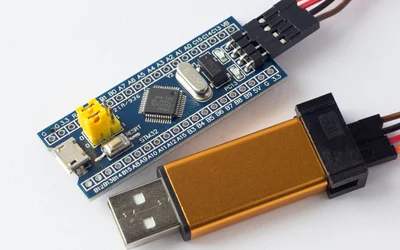
An explainer of how the STM32 Microcontroller family is organized, what the underlying Arm Cortex-M cores actually give you, and how the development ecosystem works.