Featured
Article #2 of the "Why Edge?" Series. Edge AI increases battery life, reduces latency, and in many cases, eliminates the need for cloud communication, making wearable devices more user-friendly and secure.
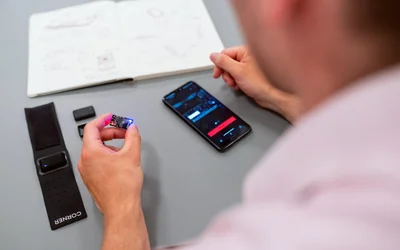
Article #2 of the "Why Edge?" Series. Edge AI increases battery life, reduces latency, and in many cases, eliminates the need for cloud communication, making wearable devices more user-friendly and secure.
Article #2 of the "Why Edge?" Series. Edge AI increases battery life, reduces latency, and in many cases, eliminates the need for cloud communication, making wearable devices more user-friendly and secure.
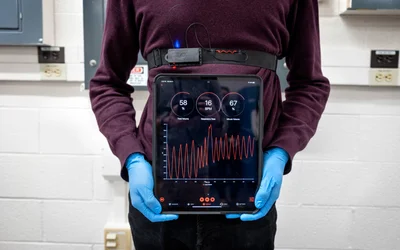
In this episode, we talk about how consumer grade wearable technology could be used to diagnose sleep disorders impacting ~1 billion people.
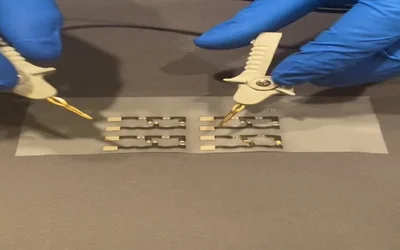
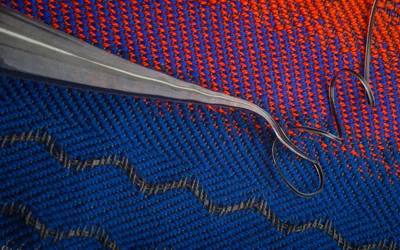
Sometimes manufacturers would like to install heating in objects that are difficult to heat. The armrest of your car. Your sporty winter coat. Bags for food delivery. Sleeping bags. etc This has been difficult to achieve until now. Read more about printed heater technology
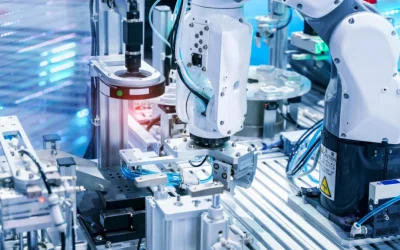
Learn how edge AI in wireless vibration sensors improves machine health monitoring, extends battery life, and enables smarter predictive maintenance in factories.
Article #2 of the "Why Edge?" Series. Edge AI increases battery life, reduces latency, and in many cases, eliminates the need for cloud communication, making wearable devices more user-friendly and secure.
In this episode, we talk about how consumer grade wearable technology could be used to diagnose sleep disorders impacting ~1 billion people.

Sometimes manufacturers would like to install heating in objects that are difficult to heat. The armrest of your car. Your sporty winter coat. Bags for food delivery. Sleeping bags. etc This has been difficult to achieve until now. Read more about printed heater technology

2 minutes read
Wearable electronic textiles are a demanding environment for reliable interconnects – the ability to function with movement and survive multiple cleanings and reuse. Good adhesion is particularly challenging in these wearable and conformable electronics applications. While solders provide the most conductive electrical connection, they are rigid and require not only the addition of an underfill adhesive but usually a post bond encapsulation. This Anisotropic Conductive Epoxy, provides reliable interconnections between electronic components and circuitry on textiles with excellent structural bonding, without encapsulation, even under repeated stretching and washings. This technology has been shown as a scalable assembly process for e-Textile manufacturing in an SMT line.
5 minutes read
Interdisciplinary team builds multi-task machine learning model for randomized controlled trial
Technology for creating 3D force and proximity sensors based on silicone, offering also the ability to customize shape and characteristcs. Key application is in collaborative robots
Gallium-Indium-Tin is an interesting material for stretchable electronics. It can be formed into a non-toxic RoHS-compliant gel and applied to almost any substrate to form stretchable conductive metallizations and circuits.
Article #8 of Improving Lives with Digital Healthcare Series: Advancements in electronics have transformed the healthcare sector. The focus is on improving the experiences of users by utilizing cutting-edge technologies like advanced drug delivery systems, wearables, surgical robots, and more.
Article #7 of Improving Lives with Digital Healthcare Series: Real-time monitoring of multiple physiological health parameters can be an effective way of preventing and early diagnosis of several diseases.
Article #1 of Improving Lives with Digital Healthcare Series: Developing wearable devices for consumer and medical applications can come with different sets of challenges.
According to research from analyst GWI, while consumers still consider fitness tracking the leading reason for owning a wearable, nearly half of all owners also expect their wearable to monitor their health.

3 minutes read
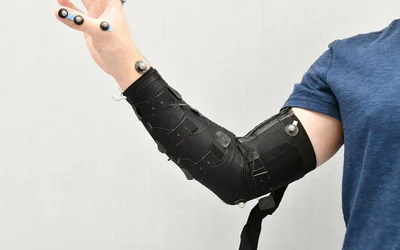
In this episode, we talk about how exoskeleton technology is being leveraged to treat parkinsons and how a new approach for more efficient, personalized exoskeletons could be the catalyst for wide scale adaptation.
Inspired by the human ear, a new acoustic fabric converts audible sounds into electrical signals.
The Cornell startup specializes in creating soft, stretchable fiber-optic sensors that can be woven into clothing to recognize different types of touch.

6 minutes read
With Inertial Sensor Modules

3 minutes read