micro robots
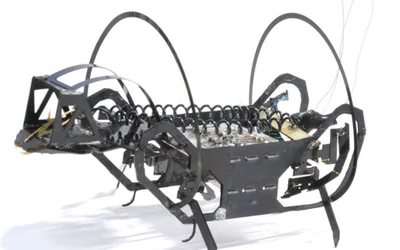
Diminutive device can leap 23 times its body length

A mechanical engineer discusses her recent advances in robotic surgery, including millimeter-scale robots that travel through the bloodstream to deliver treatment.


With a new design, the bug-sized bot was able to fly 100 times longer than prior versions.

TAGGED WITH microrobots
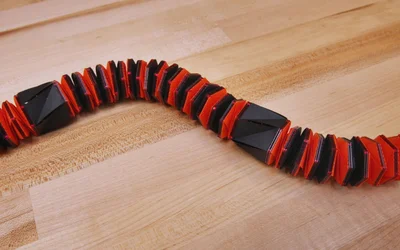
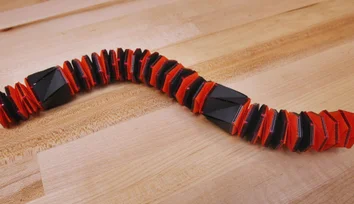
Engineers at Princeton and North Carolina State University have combined ancient paper folding and modern materials science to create a soft robot that bends and twists through mazes with ease.

A research team from ETH Zurich and the University of Zurich (UZH) has developed a novel approach to treating spinal cord injuries: controllable microrobots deliver stem cells directly to the site of an injury, where they promote nerve cell regeneration.

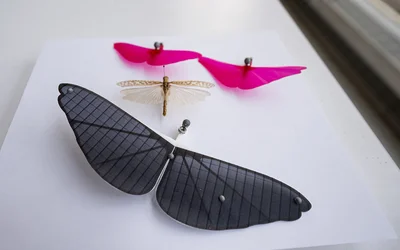
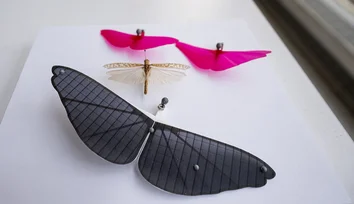
A collaboration between Princeton University engineers and entomologists at the University of Illinois Urbana-Champaign began with the researchers chasing grasshoppers in a hot parking lot.
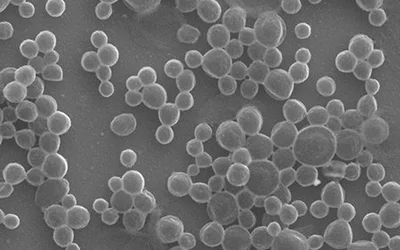
A Caltech-led team has taken a huge step toward making the next generation of microrobots for drug delivery. They have simplified both the structure of the microrobots and their production method, while making the bots highly effective and "smart" enough to direct themselves to a tumor.
TAGGED WITH micro air vehicles (mavs)
Learn why growing hardware teams slow down as they scale, and how aligned workflows, parallel collaboration, and real-time design visibility restore speed and momentum.
How standardized electronic identification will enable high-volume, complex drone operations.
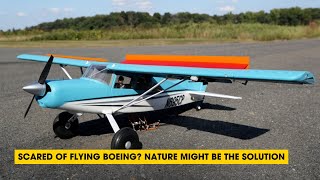
In this episode, we explore how the mechanics of bird wings are inspiring new approaches to prevent airplanes from stalling and learn how bio-mimetic designs from nature are paving the way for innovations in aviation, enhancing stability and safety for future flights.
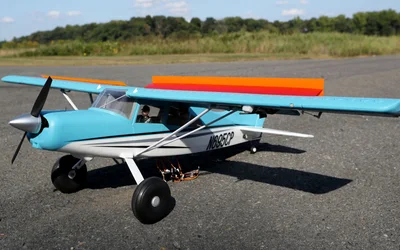
Taking inspiration from bird feathers, Princeton engineers have found that adding rows of flaps to a remote-controlled aircraft’s wings improves flight performance and helps prevent stalling, a condition that can jeopardize a plane’s ability to stay aloft.
Latest Posts
Diminutive device can leap 23 times its body length

3 minutes read
A mechanical engineer discusses her recent advances in robotic surgery, including millimeter-scale robots that travel through the bloodstream to deliver treatment.

22 minutes read
With a new design, the bug-sized bot was able to fly 100 times longer than prior versions.

A tiny, four-fingered “hand” folded from a single piece of DNA can pick up the virus that causes COVID-19 for highly sensitive rapid detection and can even block viral particles from entering cells to infect them, University of Illinois Urbana-Champaign researchers report.

4 minutes read

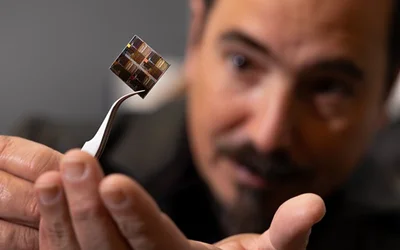
Cornell researchers in physics and engineering have created the smallest walking robot yet.

4 minutes read

In this episode, we explore how the mechanics of bird wings are inspiring new approaches to prevent airplanes from stalling and learn how bio-mimetic designs from nature are paving the way for innovations in aviation, enhancing stability and safety for future flights.

16 minutes read
Taking inspiration from bird feathers, Princeton engineers have found that adding rows of flaps to a remote-controlled aircraft’s wings improves flight performance and helps prevent stalling, a condition that can jeopardize a plane’s ability to stay aloft.

4 minutes read

The legacy of microscale robotics at Cornell continues to unfold – and refold and unfold itself again. The latest addition is a robot less than 1 millimeter in size that is printed as a 2D hexagonal “metasheet” but, with a jolt of electricity, morphs into preprogrammed 3D shapes and crawls.
4 minutes read

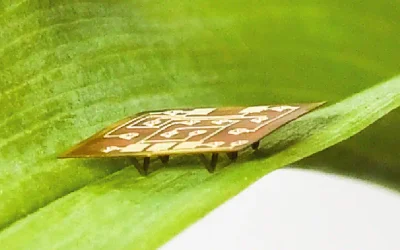
Researchers in the Department of Mechanical Engineering at Carnegie Mellon University have created the first legged robot of its size to run, turn, push loads and climb miniature stairs.

2 minutes read

These zinc-air batteries, smaller than a grain of sand, could help miniscule robots sense and respond to their environment.


In today’s world, continuous connectivity sounds like an everyday given. But delivering it is far from simple.

2 minutes read


Imagine a robot small enough to fit on a U.S. penny. Or even small enough to rest on Lincoln’s chest. It sounds preposterous enough. Now, imagine a robot small enough to rest on the chest of Lincoln – not the Lincoln whose head decorates the front side of the penny, but the even tinier version of him on the back.


Imagine a world with precision medicine, where a swarm of microrobots delivers a payload of medicine directly to ailing cells. Or one where aerial or marine drones can collectively survey an area while exchanging minimal information about their location.
3 minutes read

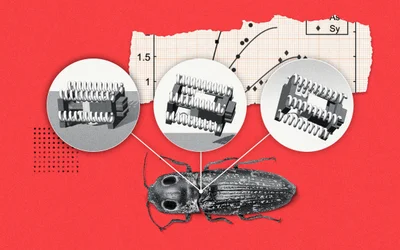
Researchers have made a significant leap forward in developing insect-sized jumping robots capable of performing tasks in the small spaces often found in mechanical, agricultural and search-and-rescue settings.

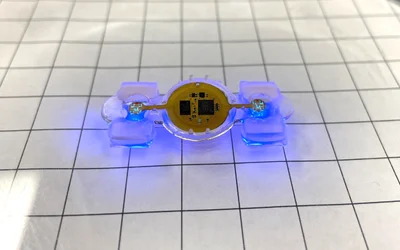
The hybrid “eBiobots” are the first to combine soft materials, living muscle and microelectronics, said researchers at the University of Illinois Urbana-Champaign, Northwestern University and collaborating institutions. They described their centimeter-scale biological machines in the journal Science Robotics.