Featured
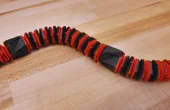
Engineers at Princeton and North Carolina State University have combined ancient paper folding and modern materials science to create a soft robot that bends and twists through mazes with ease.
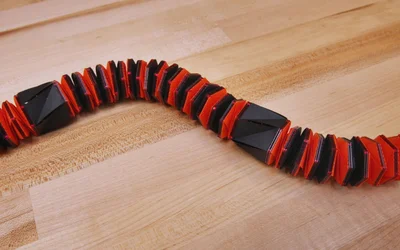
Engineers at Princeton and North Carolina State University have combined ancient paper folding and modern materials science to create a soft robot that bends and twists through mazes with ease.
Engineers at Princeton and North Carolina State University have combined ancient paper folding and modern materials science to create a soft robot that bends and twists through mazes with ease.
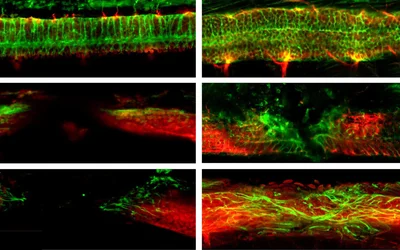
A research team from ETH Zurich and the University of Zurich (UZH) has developed a novel approach to treating spinal cord injuries: controllable microrobots deliver stem cells directly to the site of an injury, where they promote nerve cell regeneration.
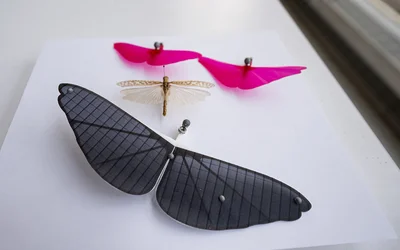
A collaboration between Princeton University engineers and entomologists at the University of Illinois Urbana-Champaign began with the researchers chasing grasshoppers in a hot parking lot.
Engineers at Princeton and North Carolina State University have combined ancient paper folding and modern materials science to create a soft robot that bends and twists through mazes with ease.
A research team from ETH Zurich and the University of Zurich (UZH) has developed a novel approach to treating spinal cord injuries: controllable microrobots deliver stem cells directly to the site of an injury, where they promote nerve cell regeneration.
A collaboration between Princeton University engineers and entomologists at the University of Illinois Urbana-Champaign began with the researchers chasing grasshoppers in a hot parking lot.
A Caltech-led team has taken a huge step toward making the next generation of microrobots for drug delivery. They have simplified both the structure of the microrobots and their production method, while making the bots highly effective and "smart" enough to direct themselves to a tumor.
Learn why growing hardware teams slow down as they scale, and how aligned workflows, parallel collaboration, and real-time design visibility restore speed and momentum.
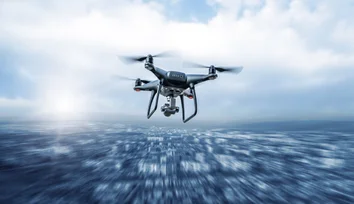
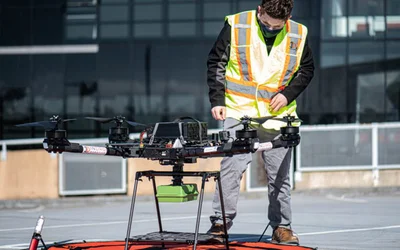
How standardized electronic identification will enable high-volume, complex drone operations.
In this episode, we explore how the mechanics of bird wings are inspiring new approaches to prevent airplanes from stalling and learn how bio-mimetic designs from nature are paving the way for innovations in aviation, enhancing stability and safety for future flights.
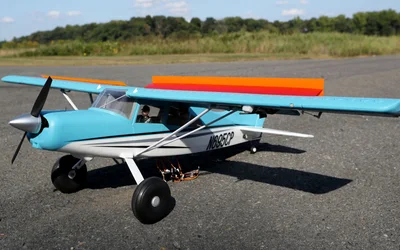
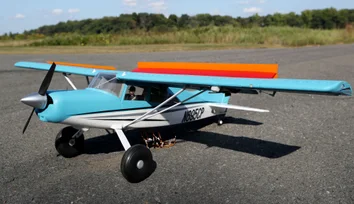
Taking inspiration from bird feathers, Princeton engineers have found that adding rows of flaps to a remote-controlled aircraft’s wings improves flight performance and helps prevent stalling, a condition that can jeopardize a plane’s ability to stay aloft.
Engineers at Princeton and North Carolina State University have combined ancient paper folding and modern materials science to create a soft robot that bends and twists through mazes with ease.
A research team from ETH Zurich and the University of Zurich (UZH) has developed a novel approach to treating spinal cord injuries: controllable microrobots deliver stem cells directly to the site of an injury, where they promote nerve cell regeneration.
A collaboration between Princeton University engineers and entomologists at the University of Illinois Urbana-Champaign began with the researchers chasing grasshoppers in a hot parking lot.

3 minutes read
A Caltech-led team has taken a huge step toward making the next generation of microrobots for drug delivery. They have simplified both the structure of the microrobots and their production method, while making the bots highly effective and "smart" enough to direct themselves to a tumor.

4 minutes read
Learn why growing hardware teams slow down as they scale, and how aligned workflows, parallel collaboration, and real-time design visibility restore speed and momentum.
Microscale swimming bots developed by U-M and Penn take in sensory information, process it and carry out tasks, opening new possibilities in manufacturing and medicine.

4 minutes read
Researchers at ETH Zurich have developed a microrobot capable of transporting drugs to specific locations within the body, with the potential for use in hospitals in the near future.

5 minutes read
Researchers at ETH Zurich have developed artificial muscles that contain microbubbles and can be controlled with ultrasound. In the future, these muscles could be deployed in technical and medical settings as gripper arms, tissue patches, targeted drug delivery, or robots.
4 minutes read
How standardized electronic identification will enable high-volume, complex drone operations.

4 minutes read
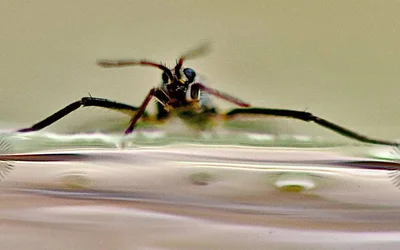
Researchers built an insect-sized robot that uses surface water and collapsable propellers as an idea to improve fast-moving machines that can operate in rivers or flooded areas.

3 minutes read
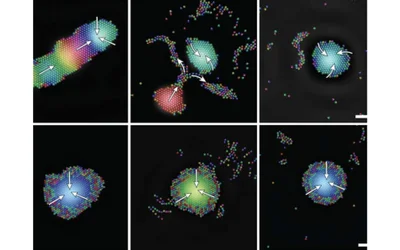
Microrobots modeled in simulations communicate via sound to form 'acoustic swarms' and move collectively

3 minutes read
Fabricated with a gel side for carrying drugs and a magnetic side for steering, these microrobots can navigate complex biological environments like intestines.
3 minutes read
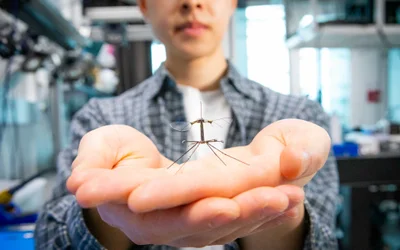
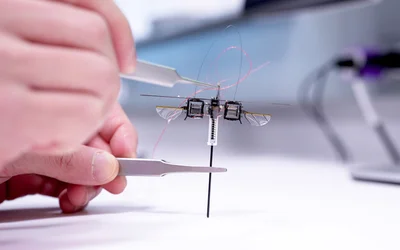
Microrobot gets crane fly-inspired legs for soft touchdowns

4 minutes read
MIT engineers developed an insect-sized jumping robot that can traverse challenging terrains and carry heavy payloads.
In this episode, we dive into Cornell University's groundbreaking development of the world's smallest walking robots, measuring between 2 to 5 microns.

11 minutes read