Featured
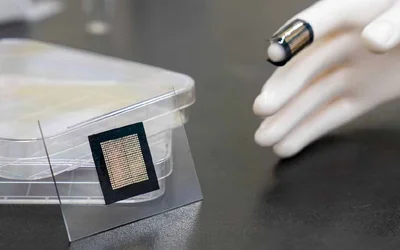
Penn State-led researchers develop first artificial skin to maintain cognitive characteristics when deformed.

Penn State-led researchers develop first artificial skin to maintain cognitive characteristics when deformed.
Penn State-led researchers develop first artificial skin to maintain cognitive characteristics when deformed.
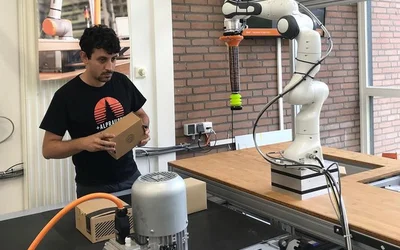
Robot arms could become safer in industrial settings by applying an artificial skin containing proximity heat sensors to detect humans in all directions.
In this episode, we talk about how ostriches are inspiring a new generation of bipedal robots and the innovation enabling remote endovascular surgery.


Additive Manufacturing/ Material Synthesis/
Akira Science provide you as a researcher with pliable 3D-printed scaffolds...
1 Post

Machinery Manufacturing
We Are Giving Human Materials the Superpowers of Nature Using Lasers
1 Post

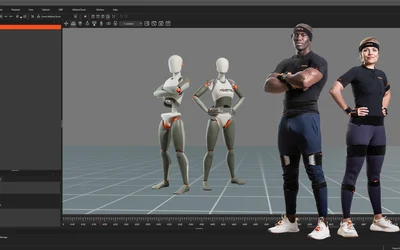
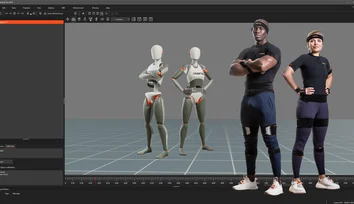
With MVN Analyze
Engineers create biomaterial that behaves like animal muscle fibers
The sophisticated artificial skin sweats where and how much the researchers want it to. This was reported in an Angewandte Chemie article by Danqing Liu and first author Yuanyuan Zhan.
Penn State-led researchers develop first artificial skin to maintain cognitive characteristics when deformed.

2 minutes read
Robot arms could become safer in industrial settings by applying an artificial skin containing proximity heat sensors to detect humans in all directions.
In this episode, we talk about how ostriches are inspiring a new generation of bipedal robots and the innovation enabling remote endovascular surgery.

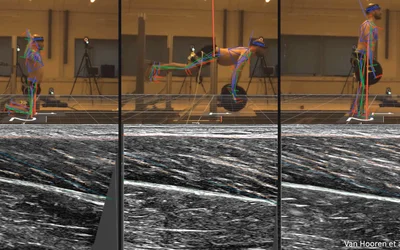
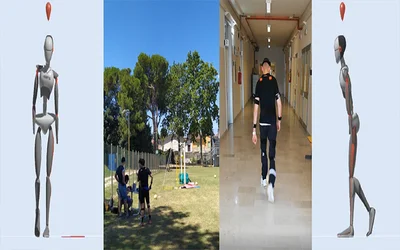
Researchers in Maastricht and Leuven used ProbeFix Dynamic for a pioneering study using dynamic ultrasound imaging and 3D motion tracking in Nordic hamstring curl, single-leg Roman chair, and single-leg deadlift.

3 minutes read
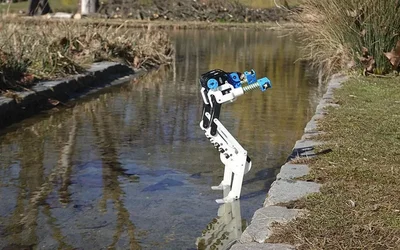
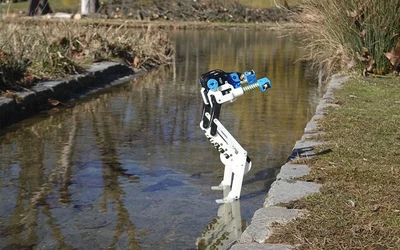
Created by the Dynamic Locomotion Group at the Max Planck Institute for Intelligent Systems (MPI-IS), BirdBot serves two purposes: Demonstrating a more efficient bipedal robot design, and furthering our understanding of how birds' legs work.
In this episode, we talk about how a group of researchers were inspired by the adaptive immune system found in humans to fortify vulnerable neural networks and a joint effort between universities to create electric skin with unmatched performance.
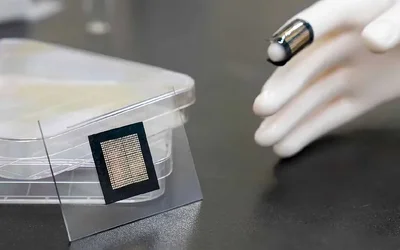
Using a highly-scalable approach to creating dense sensor networks, yet requiring only a pair of address lines, these researchers have taken inspiration from the human somatosensory system for a rapid-response sensitive sense of electronic touch.
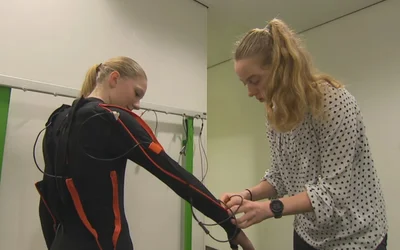
With Motion Capture for Analysis

4 minutes read
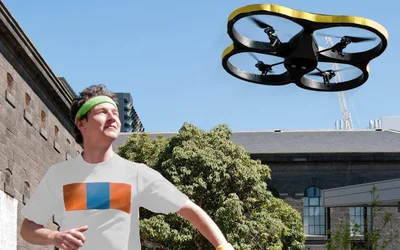
In this episode, we talk about Charm Industrial’s novel approach for carbon offsetting, a concept fitness drone from Hongik University that could be the first to commercialize, and a joint effort between MIT and US Navy to understand how sound waves are altered by water conditions in the North Pole.
Charm's unique approach for reducing atmospheric carbon has already proven to be fruitful by delivering 416 tons of carbon offsetting to Stripe one month ahead of schedule
with ORYX Go
5 minutes read
The next step in machine learning, how 3D printing will change the airline industry, and why flies hold the secret to robotic flight.
With Xsens
5 minutes read
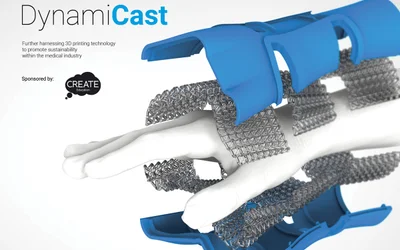
As technology has become more accessible, 3D Printed casts have grown in popularity, owing to several benefits. However, all casts share a fundamental flaw - they are single-use products

3 minutes read
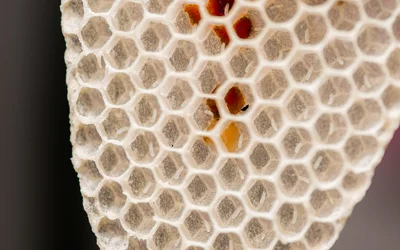
Can cellular materials serve as a design solution for achieving lightweighting of engineering structures? Let’s listen to what nature has to say.

4 minutes read