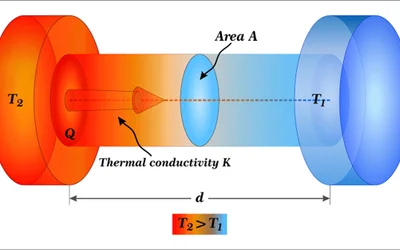
Thermal conductivity is a fundamental concept in heat transfer and is crucial in multiple industries and scientific disciplines. It refers to the ability of a material to conduct heat or the rate at which heat transfers through a substance.
Be the first to know.
Get our thermal imaging weekly email digest.
Tagged with
thermal imaging
ORGANIZATIONS. SHAPING THE INDUSTRY.

Latest Posts

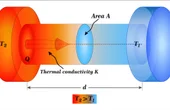
CMOS and CCD sensors both convert light into electronic signals, with CMOS using pixel-level transistors for faster, energy-efficient processing, while CCD transfers charge across the chip for superior image quality but with slower speed and higher power consumption.
Researchers fabricate the world’s smallest QR code that, invisible to the naked eye, encrypts information to only be visible by an infrared camera lens.

2 minutes read
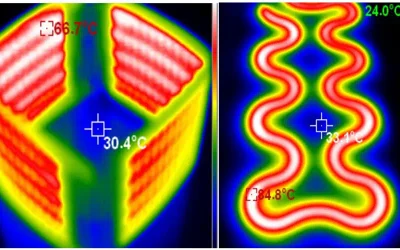
E2IP Technologies manufactures Flexible Heaters using Screen Printing Technology. This is one of the most important segments of printed and additive electronics with applications in cars, homes, and industrial settings.

3 minutes read

Caracol has introduced thermal monitoring and Infrared (IR) cameras on our #LFAM technology, to deliver zero-defect production and the best properties on final printed parts.

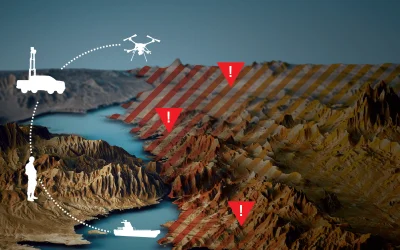
Vision is the cornerstone of every border surveillance platform. Pushing the boundaries of what we can see—from high ground and binoculars to electro-optics and infrared sensors—is the determining factor of a system’s efficacy.

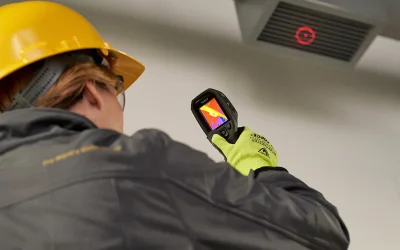
Thermal imaging cameras and non-contact infrared (IR) thermometers are both used for non-contact temperature measurements in a wide variety of applications. Both tools work according to the same principle: they detect infrared radiation and translate it into a temperature reading.

Let's take the well-known sea-rescuer, the dolphin, for example. Dolphin’s sensorium is more intended for the search of biological objects under water by use echolocation. At the same time, the military prefer to use dolphins to find metal objects (mines) rather than search & rescue drowning people

Called the QuadSight® Multi-Spectral Vision Solution, This System Improves Obstacle Detection in Harsh Weather and Lighting Conditions and Scenarios

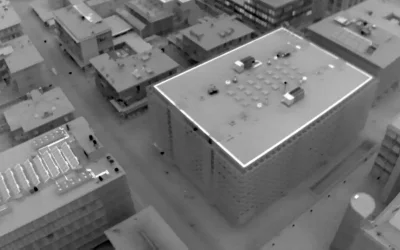
Popular media has been responsible for a wealth of misinformation throughout the years about thermal—or infrared—imaging.

1