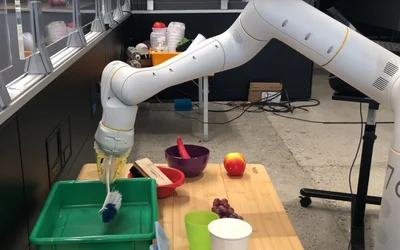
Using a now public-access dataset, a research team has created a robotics control system which can generalize to unseen related tasks — allowing robots to interpret natural-language commands and video demonstrations.
Be the first to know.
Get our machine learning weekly email digest.
Tagged with
machine learning
ORGANIZATIONS. SHAPING THE INDUSTRY.



High Tech Campus Eindhoven
High Tech
High Tech Campus Eindhoven is Europe's smartest square km and has the ultim...
49 Posts

ETH Zurich
University for science and technology
Freedom and individual responsibility, entrepreneurial spirit and open-min...
43 Posts

University of Michigan
Higher Education
Work together. Create smart machines. Serve society. University of Michiga...
40 Posts

Carnegie Mellon University
University
A private, global research university, Carnegie Mellon stands among the wor...
25 Posts
Latest Posts
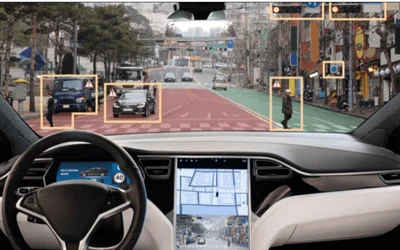
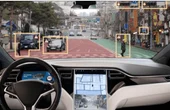
Attention: Don’t presume human or model-generated labels to be the growth truth for machine learning deployment in autonomous vehicular systems.
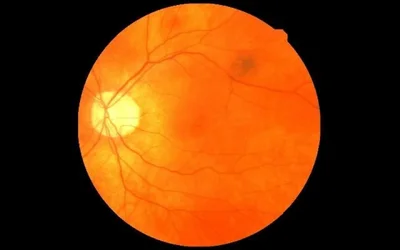
The proposed AI system has an accuracy between 70% and 80% that can be employed as a second referral mechanism for cardiovascular examination.

With research suggesting feral pigeons do as much as $1.1 billion in damage in the US alone, a project which pairs a commercial drone with machine learning to scare them away — without injury — could prove key to their control.

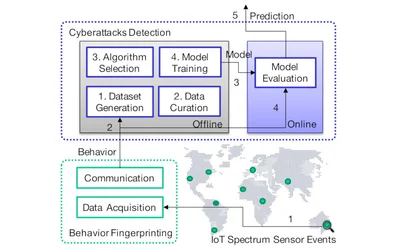
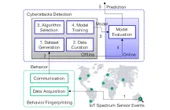
The CyberSpec framework is designed to detect anomalous behavior linked to cyber-attacks against crowd-sensing spectrum sensors, even when said sensors are running on lightweight resource-constrained hardware like a Raspberry Pi.

By reconfiguring neural networks in artificial intelligence (AI) devices, a multi-institute team that included Penn State researchers facilitated AI systems to continually learn and adapt new data and tasks in ways that were not possible or practical before.

4 minutes read

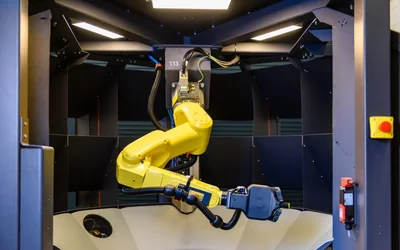
ML can be deployed on Embedded Sensors to unleash the full power of Industry 4.0.
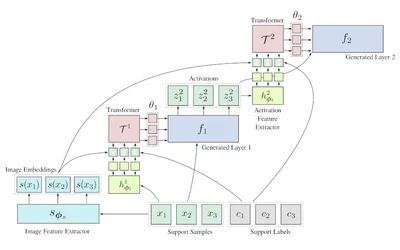
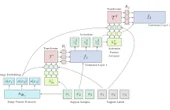
Developed at Google Research, HyperTransformer decouples the task space and individual task complexity to generate all model weights in just one pass — while also offering support for unlabeled sample ingestion.

In this article, we take a look at two tinyML projects related to healthcare. The first project helps gather Mean Radiant Temperature data outdoors to protect people from extreme heat, and the other one is a solution for affordable, accurate, & rapid detection of pneumonia.


In this article, we look at two tinyML projects for education. We show how Backyard Brains uses low-cost experiment kits to make neuroscience education more accessible. We also introduce our readers to a specialisation offered by Harvard & Google to help students learn tinyML like never before.


Designed to dramatically reduce the amount of training data needed for an image recognition system, this one-shot approach "inspired by nativism" takes a leaf from humans' ability to intuit and abstract.

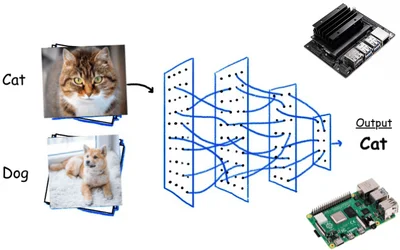
BottleFit framework applied DNN models in image classification achieves 77.1% data compression with up to 0.6% accuracy loss on the ImageNet dataset.
Considered obsolete since the introduction of vision transformers, ConvNeXt proves there's life in convolution yet — outperforming its rivals by adopting some of their own tricks.
A holistic open-source framework to improve the performance of multiple modalities and outperform the existing single-modality algorithms.
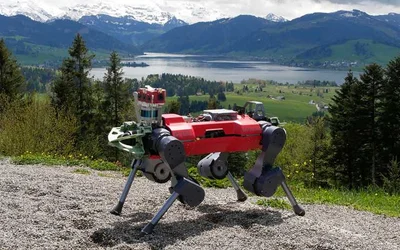
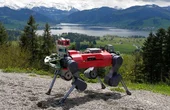
ETH researchers led by Marco Hutter developed a new control approach that enables a legged robot, called ANYmal, to move quickly and robustly over difficult terrain. Thanks to machine learning, the robot can combine its visual perception of the environment with its sense of touch for the first time.

3 minutes read