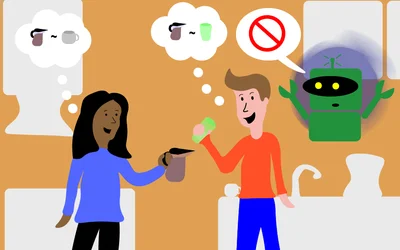
An AI team coordinator aligns agents’ beliefs about how to achieve a task, intervening when necessary to potentially help with tasks in search and rescue, hospitals, and video games.
Be the first to know.
Get our human computer interaction weekly email digest.
Tagged with
Human-Computer Interaction
Latest Posts

IT Researchers Further Develop Intelligent Speech Recognition and Translation System: Automatic Text Segmentation, Summarization, and Intelligent Query Possible

2 minutes read


McKelvey’s Chien-Ju Ho working with Art & Sciences’ Wouter Kool, DCDS PhD student Lauren Treiman to understand how human behavior changes in training AI

3 minutes read


Researchers have developed a platform for the interactive evaluation of AI-powered chatbots such as ChatGPT.

4 minutes read


In this episode, we discuss how 2 Carnegie Mellon University graduate students developed an AI system capable of giving you feedback on your interview performance in real time!

14 minutes read
Silicon Valley students use AI to help job seekers improve performance and build confidence.

3 minutes read
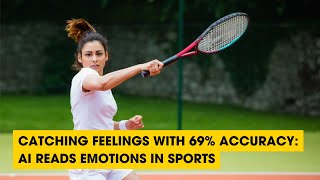
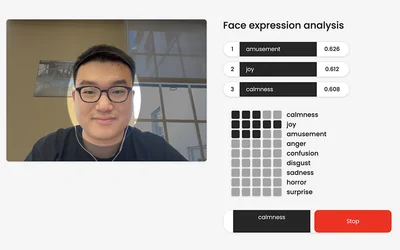
In this episode, we discuss research coming out of the Karlsruhe Institute of Technology to detect the emotions of tennis players better than humans can!
13 minutes read

Structured text is a standardized method of organizing and presenting information in a hierarchical format, ensuring precision and consistency in engineering and programming environments.

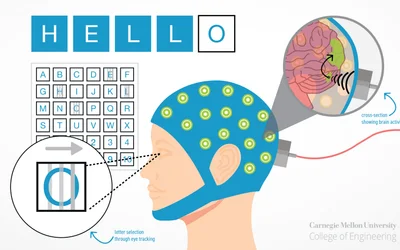
To strengthen the case for noninvasive BCIs, Carnegie Mellon researchers have demonstrated that through precision neuromodulation using focused ultrasound, the performance of a BCI could be improved for communication.
3 minutes read
Georgia Tech researchers found that chatbots are less accurate in Spanish, Chinese, and Hindi compared to English when asked health-related questions.

3 minutes read


In this episode, we discuss how a team from Carnegie Mellon University spearheading non-invasive brain computer interface solutions has had a significant breakthrough in improving their accuracy.
19 minutes read

Researchers at KIT have developed a model for emotion analysis that can determine affective states with similar accuracy to a human
3 minutes read


A new technique can be used to predict the actions of human or AI agents who behave suboptimally while working toward unknown goals.


Researchers have developed a new training tool to help artificial intelligence (AI) programs better account for the fact that humans don’t always tell the truth when providing personal information.

2 minutes read

New research from Carnegie Mellon University’s Department of Mechanical Engineering and the Human+AI Design Initiative underlines the adage “teamwork makes the dream work,” especially when it comes to human-AI collaboration.