Featured
This fresh, newly captured video from Unitree's testing grounds showcases the breakneck speed of humanoid intelligence advancement. Every day brings something thrilling!

This fresh, newly captured video from Unitree's testing grounds showcases the breakneck speed of humanoid intelligence advancement. Every day brings something thrilling!
This fresh, newly captured video from Unitree's testing grounds showcases the breakneck speed of humanoid intelligence advancement. Every day brings something thrilling!
One year after Unitree H1 (1.8m) pioneered the first standing backflip by an electric humanoid robot (March 2024). Meet the Unitree G1 – now flawlessly conquering an even more challenging standing side flip. (Zero malfunctions/damage occurred during programming and filming.)
ETH researchers have developed a new gene switch that can be activated using a commercially available nitroglycerine patch applied to the skin. One day, researchers want to use switches of this kind to trigger cell therapies for various metabolic diseases.


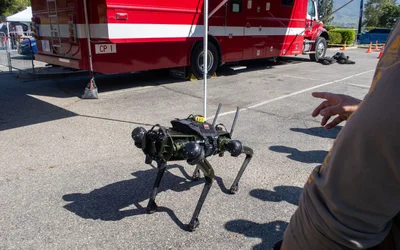
Quadruped Robot
Unitree is a world-renowned robotics company focusing on the independent de...
3 Posts

Additive Manufacturing/ Material Synthesis/
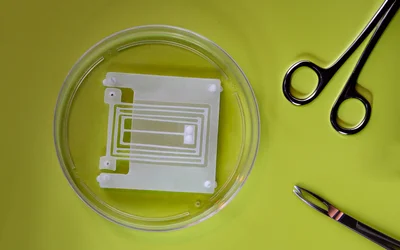
Akira Science provide you as a researcher with pliable 3D-printed scaffolds...
1 Post

Machinery Manufacturing
We Are Giving Human Materials the Superpowers of Nature Using Lasers
1 Post
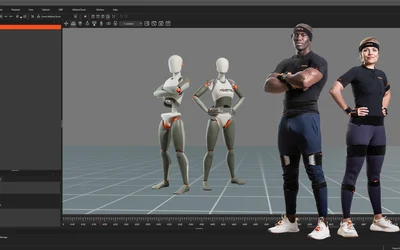
With MVN Analyze
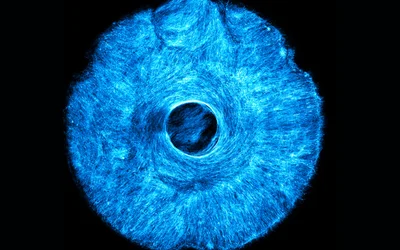
Engineers create biomaterial that behaves like animal muscle fibers
Diffusion-MPC helps robot plan tasks
The new design from MIT engineers could pump up many biohybrid builds.
MIT engineers developed a way to grow artificial tissues that look and act like their natural counterparts.
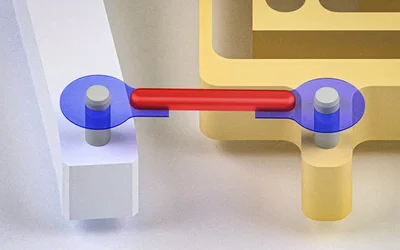
New modular, spring-like devices maximize the work of live muscle fibers so they can be harnessed to power biohybrid bots.
This fresh, newly captured video from Unitree's testing grounds showcases the breakneck speed of humanoid intelligence advancement. Every day brings something thrilling!

One year after Unitree H1 (1.8m) pioneered the first standing backflip by an electric humanoid robot (March 2024). Meet the Unitree G1 – now flawlessly conquering an even more challenging standing side flip. (Zero malfunctions/damage occurred during programming and filming.)
ETH researchers have developed a new gene switch that can be activated using a commercially available nitroglycerine patch applied to the skin. One day, researchers want to use switches of this kind to trigger cell therapies for various metabolic diseases.

3 minutes read
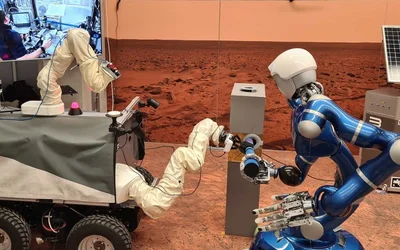
DLR's concept allows collaborative robots to yield without being forced back to their original position like a mechanical spring.

3 minutes read
MIT engineers developed a way to grow artificial tissues that look and act like their natural counterparts.
AI Avatar Price from $16K
720° Spin Kick - Hear the Impact! Kung Fu BOT Gameplay RAW. (No Speed-Up) (Do not imitate, please keep a safe distance from the machine)
We have continued to upgrade the Unitree G1's algorithm, enabling it to learn and perform virtually any movement.What other moves would you like to see. Do share with us in the comments. (Please keep a safe distance from the robot.)
Feature was just developed in the past few days and hasn't been rolled out to customers yet.
With the upgraded algorithm, G1 can learn any dance. Leave a comment to tell us what dance you'd like to see!
Debut at the Spring Festival Gala
Unitree G1 Bionic: Agile Upgrade
In this episode, we explore how traditional Chinese medicine has inspired the development of innovative pulse sensor technology and discover how ancient wisdom and modern tech are coming together to revolutionize health monitoring and diagnostics.

12 minutes read
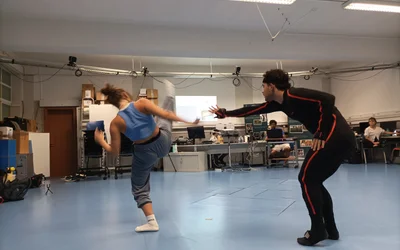
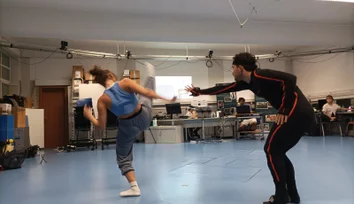
We’ve adapted motion capture data for Unitree H1, H1-2, and G1 humanoid robots, using numerical optimization methods to make their movement trajectories more natural.