Featured
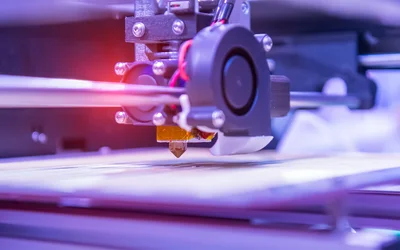
3D printing has made huge advances in the last 40 years. Officially known as additive manufacturing (AM), this technology starts out with a digital 3D model – hence its more common name.
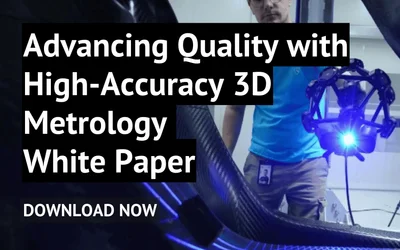
This white paper explores the increasing need for high-precision metrology in highly regulated industries such as automotive and civil aviation.
3D printing has made huge advances in the last 40 years. Officially known as additive manufacturing (AM), this technology starts out with a digital 3D model – hence its more common name.
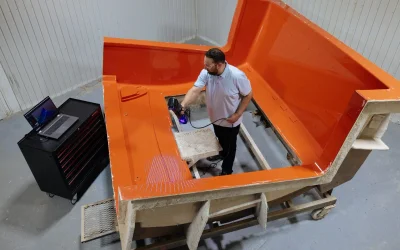
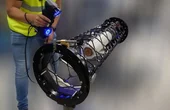
You work in aerospace, transportation, energy, mining, or heavy industries. You manufacture large parts and assemblies, some with black or shiny surfaces. You want to measure these large parts with high accuracy and fine detail without having to move them from their production environment.
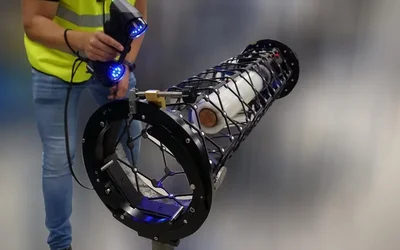
Laser scanning was found to provide an excellent middle-ground between technologies, all while being very easy to work with. The Creaform family of products has been clearly identified as being at the forefront of this technology.
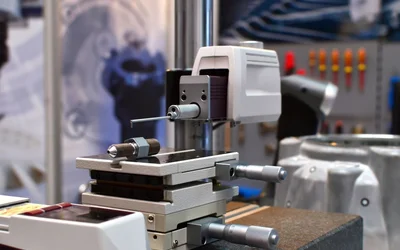
Measuring surface roughness allows metrologists to establish the roughness of a surface for quality control or other purposes. But how exactly is it done?
7 minutes read.


3D Scanning & 3D Inspection
SHINING 3D is the global 3d digitiziting technology solution provider, empo...
10 Posts

3D Measurement & Digitization
An industrial metrology brand focused on high-precision 3D measurement solu...

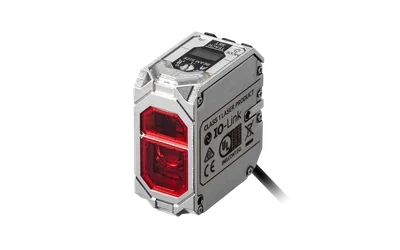
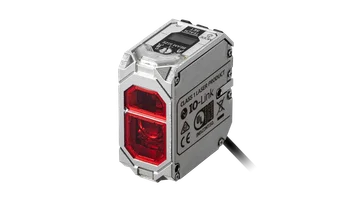
Conventional photoelectric sensors used for object detection and distance measurement can struggle with dark, glossy, or irregular targets because they rely on light intensity. Time-of-flight laser sensors overcome these challenges by using distance-based sensing instead.
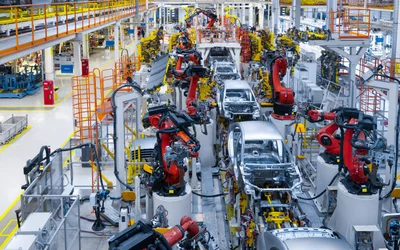
Why traditional inspection can no longer keep pace with modern automotive production, and what to do about it
Physics Behind the Blue Laser Advantage
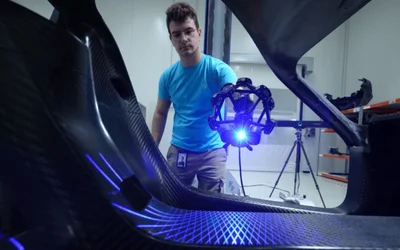
Learn how Shining3D is driving precision in automotive and civil aviation.
3D printing has made huge advances in the last 40 years. Officially known as additive manufacturing (AM), this technology starts out with a digital 3D model – hence its more common name.
You work in aerospace, transportation, energy, mining, or heavy industries. You manufacture large parts and assemblies, some with black or shiny surfaces. You want to measure these large parts with high accuracy and fine detail without having to move them from their production environment.

5 minutes read
Laser scanning was found to provide an excellent middle-ground between technologies, all while being very easy to work with. The Creaform family of products has been clearly identified as being at the forefront of this technology.
3 minutes read
End-to-end manufacturers are companies that lead products through the entire manufacturing process, from design to customer delivery.
6 minutes read
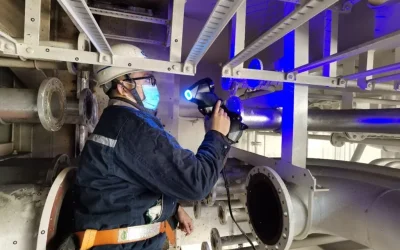
The shipbuilding industry is a critical component of any country’s infrastructure and economy. However, the process of ship construction, particularly the installation of pipes throughout the hull, is challenging and cumbersome. This is due to the segmented construction method adopted in shipbuilding, which often leads to deviations in the hull production process, making it difficult to accurately arrange and install pipes.
2 minutes read
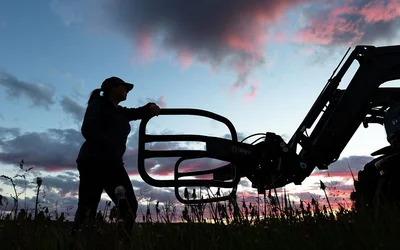
Ålö Agricultural Machinery (Ningbo) Co., Ltd, a wholly owned subsidiary of Ålö, is a leading manufacturer of loaders and implements for agricultural tractors. With production facilities in four countries and customers in over 50, Ålö holds approximately 30% of the world market for tractor loaders exceeding 50 hp. Since 2020, the company has been part of the JOST Group, a renowned manufacturer of safety-critical systems for commercial vehicles.
2 minutes read
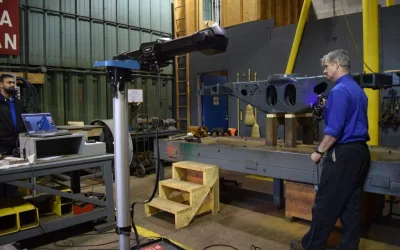
National Steel Car is a leading railroad freight and tank car manufacturer. Based in Hamilton, Ontario, Canada, and founded in 1912, the company develops and produces over 76 model variations of freight and tank cars for railroad, agriculture, chemical, construction, metal, energy, and financial/leasing companies in Canada and the United States.
2 minutes read
The New York City Yacht Club’s American Magic team once again chooses Creaform’s 3D measurement technologies to gear up for the next America’s Cup. Learn more.
2 minutes read
Developing a new type of train that could transport luxury tourists from Tokyo to mountain resorts, such as Hakone and Mount Fuji, and beaches, such as Odawara and Enoshima, in less time. That was the Odakyu Electric Railway’s mission when the company undertook the design of the Romance Car in 1957.
3 minutes read
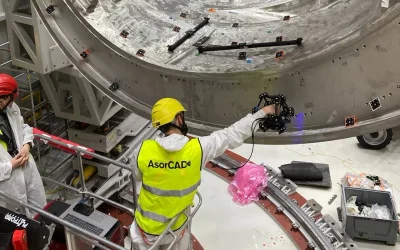
Recreating the fusion reaction occurring in the Sun’s core here on Earth; this is the mission that scientists and engineers have taken up with ITER, one of human history’s most ambitious engineering projects.
3 minutes read
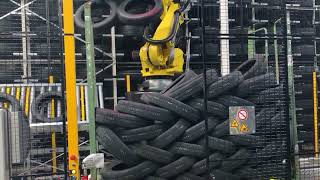
TireDepal by AROTEC allows robots to fully automatically depalletize all common tire carriers with unprecedented performance and flexibility. The solution harnesses the power of Photoneo 3D vision, which can cover a large scanning area and provide high-quality 3D data even for challenging materials such as black tires.

3 minutes read
More time—this is a luxury that many people wish they could afford. What about engineers who work long hours to design and manufacture molds to produce automotive performance parts, such as engine devices, transmissions, and electronic controls? What would they do if they could save 85% of the time required for mold inspections?
6 minutes read
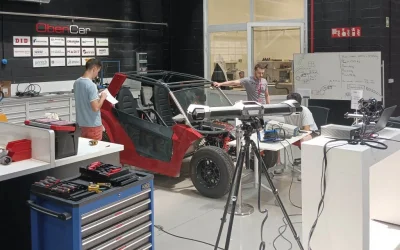
AIC-Automotive Intelligence Center, based in Amorebieta-Etxano, Bizkaia, is a European center for the generation of value for the automotive industry based on a concept of open innovation where companies improve their positioning through cooperation.
3 minutes read
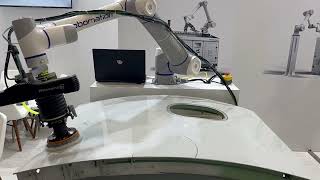
Robomation Robot Technologies Inc. developed a solution for automated polishing / sandblasting of objects, using Photoneo 3D camera MotionCam-3D attached to the robotic arm. MotionCam-3D has been chosen for this application because it provides a number of unique benefits, including the ability to scan the object's surface in motion with utmost precision and efficiency.
Based in California but servicing the entire United States, APEX Race Parts brings the latest wheel and tire technology to the automotive racing industry. The business employs dozens of car racing experts that are driven by the need for speed and performance.
3 minutes read