Engineering for Transient Resilience
NEC 2023 and the Modern Surge Protection Imperative

07 May, 2026. 5 minutes read
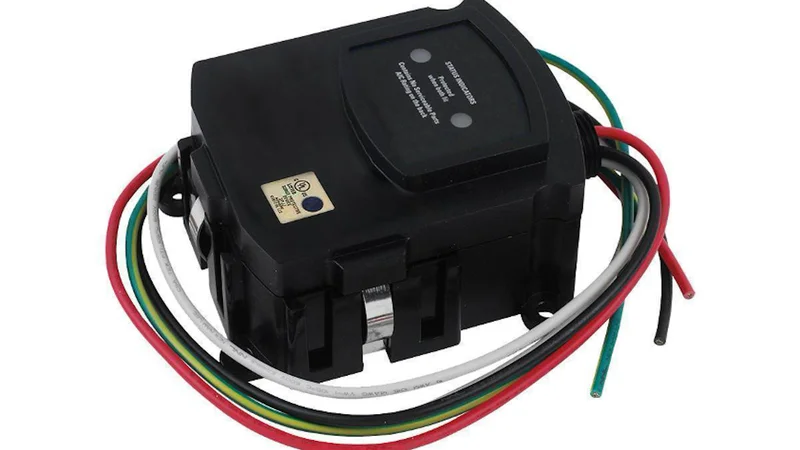
The 2023 revision of the National Electrical Code (NEC) represents a deliberate response to the rapid transformation of electrical infrastructure. Issued by the National Fire Protection Association (NFPA), the NEC functions as the primary benchmark for safe electrical installation once adopted by state or local authorities [1].
Although the NEC is updated every 3 years, the 2023 edition is particularly significant. Electrical systems today are no longer dominated by passive loads such as heaters and induction motors. Instead, installations increasingly rely on inverter-driven equipment, digitally controlled appliances, LED drivers, communication modules, and embedded processors. These technologies improve efficiency and enable automation, yet they operate within tighter electrical tolerances. As a result, transient overvoltage events pose a greater risk than in legacy systems.
In this context, surge protection moves from being a recommended enhancement to a structural requirement in modern design.
Recognition of 10-Ampere Branch Circuits
One of the understated but meaningful updates in NEC 2023 is the formal recognition of 10-ampere branch circuits under Section 210.23. Historically, 15-ampere circuits were the minimum standard for lighting and general-purpose loads. The change reflects advances in LED lighting efficiency and reduced steady-state consumption.
However, while current demand decreases, system sensitivity increases. Modern loads rely on switch-mode power supplies, MOSFET-based converters, microcontrollers, and gate-driver circuits. These semiconductor components are highly susceptible to overvoltage stress. Even short-duration spikes can degrade oxide layers, alter threshold voltages, or damage control circuitry.
The implication is clear: lower current ratings do not reduce the need for surge protection. On the contrary, the proliferation of sensitive electronics heightens the necessity for coordinated transient mitigation.
Understanding Transient Overvoltage
Transient overvoltage originates from lightning strikes, grid switching operations, capacitor bank transitions, transformer energization, and interruption of inductive loads. IEEE standards—particularly the C62 series—define surge environments and testing waveforms [2].
The commonly referenced 8/20 µs waveform describes a surge current that rises to its peak in 8 microseconds and decays to half its value in 20 microseconds. The steep rise time results in large current slew rates (di/dt). The induced voltage across a conductor during such an event follows:

Even modest conductor inductance can therefore generate significant voltage if the current changes rapidly. This principle explains NEC 2023’s emphasis on minimizing conductor length between surge protective devices (SPDs) and the equipment they protect. Longer leads increase inductive impedance, elevating the residual voltage that reaches downstream electronics.
The installation guidance in NEC 2023 reflects fundamental electromagnetic behavior rather than procedural conservatism.
Expanded Service-Level Surge Protection
Section 230.67 mandates the installation of a Type 1 or Type 2 SPD for services supplying dwelling units. The 2023 revision clarifies that this requirement extends beyond traditional single-family residences to include dormitories, hotel guest rooms, and certain healthcare sleeping facilities.
This clarification recognizes the concentration of sensitive electronic equipment in residential-type environments. HVAC systems incorporate control boards, appliances contain embedded processors, lighting systems use electronic drivers, and communication infrastructure integrates network interfaces. Each introduces additional semiconductors that are vulnerable to voltage transients.
By requiring service-level surge protection, NEC 2023 reduces cumulative stress across these distributed electronic nodes [1].
Protection Within Control Panels
NEC 2023 also introduces Section 409.70, which requires SPDs to be installed within or immediately adjacent to industrial control panels that support personnel protection systems. This provision strengthens surge mitigation in environments where operational reliability and safety are tightly linked [3].
Placing SPDs close to control panels reduces inductive path length and enhances clamping performance during high-energy events. The code, therefore, encourages distributed protection rather than reliance on a single upstream device.
Classification Under UL 1449
SPDs are classified according to UL 1449 (4th Edition), the governing safety standard for surge protective devices.
Type 1 SPDs are suitable for installation on either the line side or load side of the service disconnect and are typically used at service entrances. Type 2 SPDs are installed downstream of the service disconnect and require upstream overcurrent protection.
Effective device selection requires evaluation of:
Maximum continuous operating voltage (MCOV)
Voltage protection rating (VPR)
Nominal discharge current (In)
Short-circuit current rating (SCCR)
Compliance with NEC requirements must therefore be aligned with UL listing classifications and system-level coordination [4].
Varistor-Based Surge Suppression and Thermal Management
Most SPDs rely on metal oxide varistors (MOVs), nonlinear variable resistors that transition from a high-impedance state to a conductive state when the voltage exceeds a defined threshold. MOVs effectively divert surge current but experience incremental degradation with repeated exposure.
If subjected to sustained abnormal overvoltage, an MOV can overheat. Without proper thermal management, this condition may lead to thermal runaway. Modern surge protection designs increasingly incorporate integrated thermal disconnection mechanisms to address this risk.
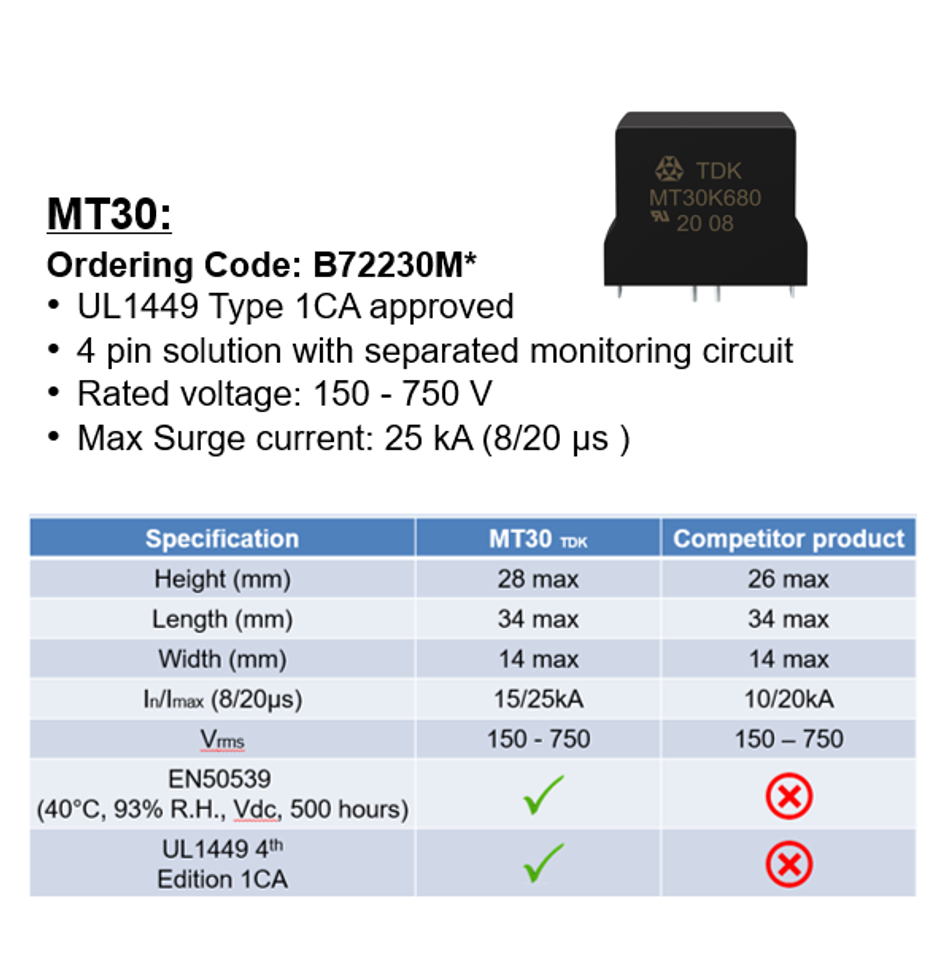
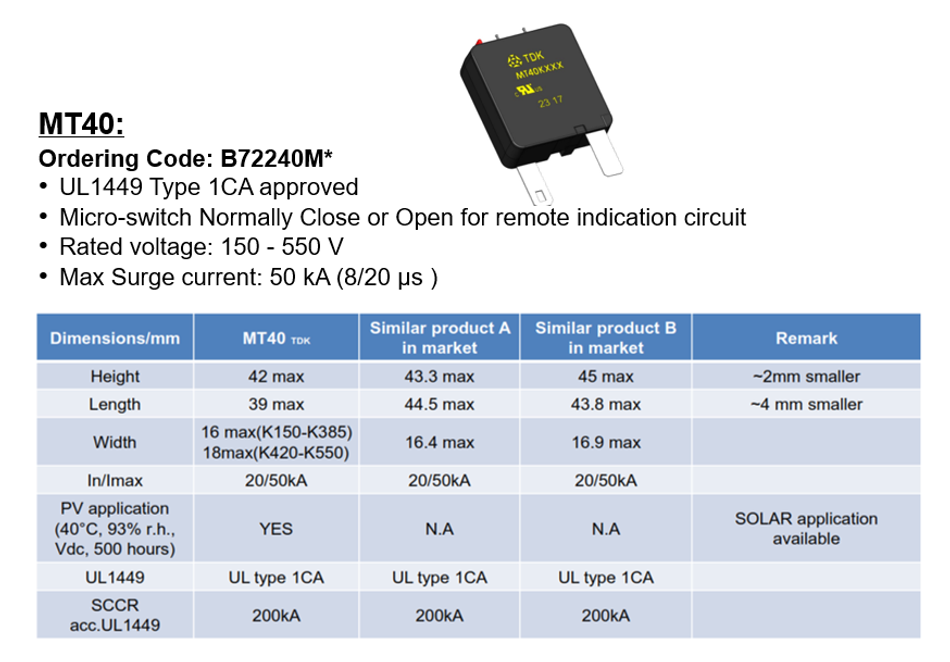
TDK has advanced this approach through its ThermoFuse varistor architecture [5]. The design integrates a modified varistor disk in series with a thermal protection element. Under abnormal thermal stress, the device disconnects safely from the circuit, reducing fire risk and supporting compliance with UL 1449 abnormal overvoltage testing requirements.
This integration of surge suppression and thermal isolation enhances reliability in applications such as photovoltaic inverters, industrial power supplies, outdoor lighting systems, and telecommunications infrastructure. By embedding protection within the component, engineers can achieve a compact design while maintaining compliance with NEC 2023 expectations.
Surge Current Ratings and System Context
The 25 kA and 50 kA (8/20 µs) surge ratings correspond to standardized impulse withstand tests defined by IEEE and UL. Higher ratings are particularly relevant at service entrances and distributed energy installations where exposure levels are elevated.
However, surge performance depends on more than peak current rating. Grounding quality, conductor routing, bonding integrity, and layered coordination between protection stages significantly influence real-world behavior. Surge mitigation must therefore be treated as a system-level engineering decision [6].
Electrification and Layered Protection
NEC 2023 also incorporates updates related to photovoltaic systems, electric vehicle charging infrastructure, and revised definitions in Article 100. These changes reflect the ongoing electrification of buildings and the growing prevalence of inverter-based architectures.
Inverter-driven systems introduce frequent switching events and bidirectional power flow, altering transient propagation pathways. As distributed generation expands, surge protection must be implemented in layers—service entrance, distribution panel, control panel, and equipment level.
The NEC’s expanded surge protection language formalizes this layered approach and acknowledges the complexity of modern power distribution.
Conclusion
The NEC 2023 revision responds directly to the increasing sensitivity of contemporary and future electrical systems. As semiconductor-based devices dominate residential, commercial, and industrial environments, transient overvoltage events pose a greater threat than in previous decades.
By expanding service-level SPD requirements, reinforcing control panel protection, and aligning installation practices with electromagnetic principles, NEC 2023 positions surge protection as a foundational design element.
Within this regulatory framework, integrated component technologies—such as thermally protected varistors—support compliance while enhancing long-term reliability. The code defines the safety threshold; robust surge protection solutions ensure that threshold is met in practice.
With ThermoFuse varistors, TDK provides component-level surge protection that combines transient overvoltage suppression with integrated thermal disconnection. This helps engineers address NEC 2023 surge protection expectations, support UL 1449 abnormal overvoltage safety requirements, protect downstream electronics, and reduce fire risk in compact SPD designs.
References:
National Fire Protection Association (NFPA). National Electrical Code (NEC), NFPA 70, 2023 Edition. https://www.nfpa.org/nec
IEEE Standards Association. IEEE C62 Series – Surge Environment and Testing Standards. https://standards.ieee.org
Brie Shouppe, “Understanding the 2023 NEC Rules for Surge Protection,” DITEK Surge Protection, Nov. 8, 2023. https://www.diteksurgeprotection.com/understanding-the-2023-nec-rules-for-surge-protection
Mersen, “Location, Type and Designations – UL 1449 4th Edition,” Technical Bulletin TT-SPN6, Mersen, https://www.mersen.com/sites/default/files/files_imported_ep/TT-SPN6-UL1449-4th-Edition-Location-Type-Designations.pdf
TDK Electronics. Varistors and Surge Protection Technical Information.
https://product.tdk.comIEEE Power & Energy Society. Power Quality Resources.
https://site.ieee.org/pes-power-quality/