Multi Jet Fusion (MJF) 3D Printing: A Comprehensive Guide for Engineers
Here we explore how Multi Jet Fusion (MJF) 3D printing combines powder bed fusion and ink jetting to produce strong, isotropic parts with exceptional efficiency.

31 Oct, 2025. 11 minutes read
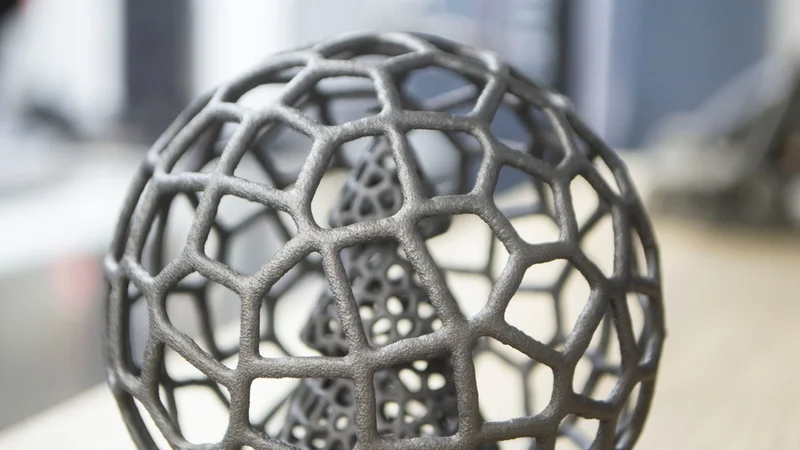
Multi Jet Fusion (MJF), the polymer 3D printing technology commercialised by printing giant HP in 2016, enables engineers to produce functional end-use parts. Belonging to the powder bed fusion (PBF) family of 3D printing technologies, MJF 3D printing uses inkjet print heads to deposit chemical agents that determine where powder fuses and where it remains loose.[1] This approach processes entire layers at once, delivering isotropic mechanical properties, fine detail resolution, and high dimensional accuracy.
Industrial demand for MJF 3D printing is high, with industry experts often ranking HP—the sole provider of MJF hardware—as one of the top companies for polymer printing.[2] Key industries include automotive, aerospace, medical, and consumer electronics, and HP continues to expand its materials portfolio, with recent additions including a halogen-free flame-retardant PA 12. For engineers in digital design, hardware development, or electronics packaging, understanding MJF’s capabilities can be a massive advantage.
This article explores MJF 3D printing from first principles to practical use. It explains the physics of the fusion process, compares MJF with competing technologies such as SLS and FDM, reviews available materials and properties, and outlines design guidelines for manufacturable parts.
How MJF Works: Theory of the Multi‑Agent Process
Powder Bed Fusion Meets Ink Jetting
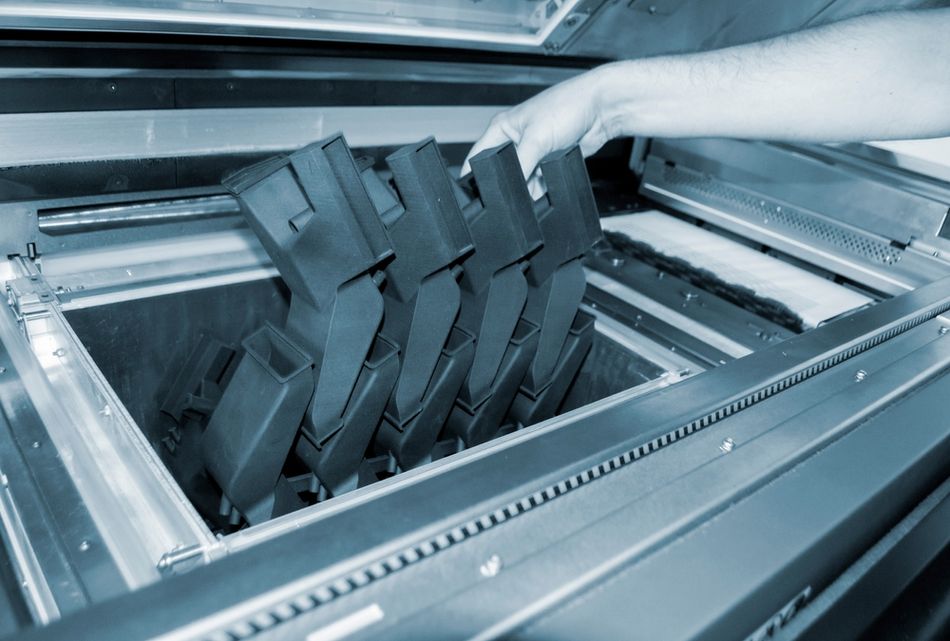
MJF belongs to the powder bed fusion class of additive manufacturing techniques. Like SLS, it uses a thin layer of polymer powder spread across a build platform. However, MJF replaces the laser of SLS with a print head that deposits two types of liquid agents:
Fusing agent: an infrared-absorbing ink jetted onto areas where the powder should fuse.
Detailing agent: a contrasting fluid deposited around part edges to stop fusing and sharpen features.
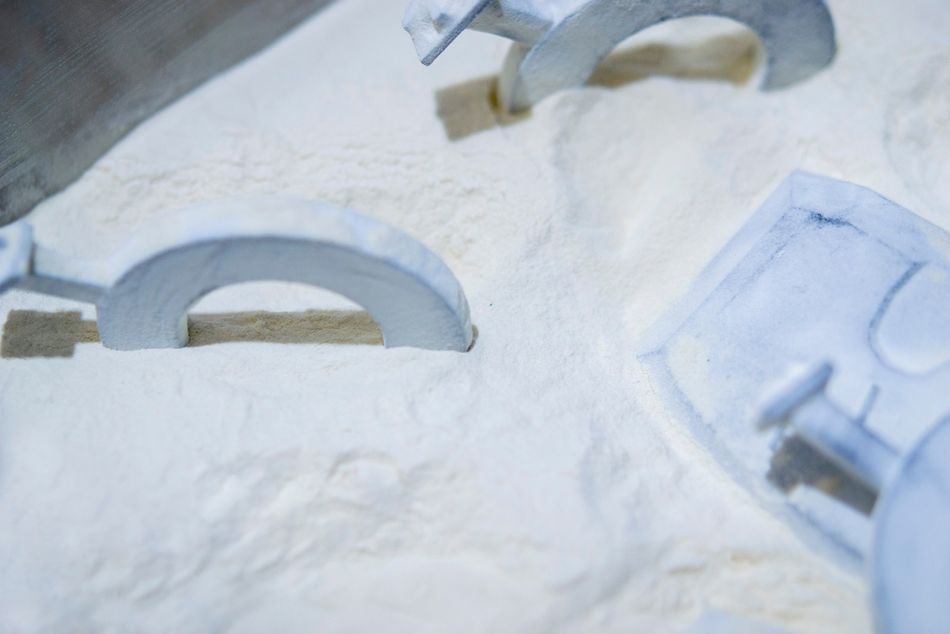
After a layer of powder is laid, the print head scans across the bed and selectively deposits these agents according to the slice geometry. Infrared heating lamps then expose the entire layer. Where the fusing agent was applied, powder absorbs heat and reaches melting temperature; polymer chains entangle across particles, forming a solid layer. Powder with only detailing agent or no agent remains loose, acting as a natural support for overhangs. The build platform lowers by one layer thickness (typically 80 µm), fresh powder is recoated, and the process repeats until the part is complete.[3]
Because each layer is processed at once, MJF achieves high throughput. HP’s PageWide print-bar architecture—an existing piece of technology from its 2D printing department—deploys thousands of nozzles to jet agents simultaneously.[4] This voxel-level control lets engineers fine-tune mechanical properties and surface finish by varying deposition at each voxel. HP used to offer a full-color MJF printer (the Jet Fusion 580), adding another level of control, but the company discontinued this model.
Comparison with SLS and FDM
Energy source: MJF and SLS both fuse powder but differ in energy delivery. SLS scans point-by-point with a laser, while MJF uses inkjet deposition and infrared lamps to process entire regions simultaneously. FDM extrudes molten polymer through a nozzle, depositing material line by line.
Speed and throughput: MJF processes an entire layer in one pass, making it up to ten times faster than SLS or FDM for certain geometries. Its high packing density further boosts productivity.
Supports: FDM typically requires removable supports for overhangs. MJF and SLS rely on surrounding powder as a natural support, eliminating the need for separate structures.
Feature resolution: MJF achieves details of 0.2–0.5 mm with layer thicknesses around 0.08 mm, yielding smooth surfaces and sharp edges. FDM features are generally above 0.4 mm, while SLS resolution is comparable but surfaces are rougher.
Isotropy: MJF parts show isotropic properties since melted polymer flows across layers. SLS parts often lose strength in the Z-direction due to incomplete fusion, and FDM parts are anisotropic because of filament deposition.
Material reuse: MJF recycles up to 80% of unused powder, with some newer materials offering around 60% reusability. SLS typically reuses about 50%, while FDM consumes filament with no powder reuse.
Recommended reading: SLA vs SLS: Choosing the Right Laser 3D Printing Technology
Materials for MJF
Standard Nylon Grades
MJF’s strength lies in engineering thermoplastics, particularly nylon (polyamide). The most common grades offered directly from HP include:
Material | Description | Typical Applications | Powder Reusability |
HP 3D HR PA 12 | General-purpose nylon with strength, stability, and fine detail | Functional prototypes, end-use parts, housings, enclosures | Up to ~80% |
HP 3D HR PA 11 | Ductile, impact-resistant, bio-based nylon derived from castor oil | Flexible parts, wearables, orthotics, lattice structures | Up to ~80% |
HP 3D HR PA 12 GB | Glass-bead-filled nylon with higher stiffness and dimensional stability | Tooling, fixtures, rigid components | Up to ~70% |
HP 3D HR PA 12 S | Nylon optimized for balance of properties and surface aesthetics | Aesthetic parts, mid-strength applications | Up to ~75% |
HP 3D HR PA 12 W | White nylon for uniform white-colored parts | Consumer goods, parts requiring consistent appearance | ~60% |
HP 3D HR PP (Polypropylene) | Lightweight, tough, chemically resistant thermoplastic | Chemical-resistant parts, snap-fits, fluid systems | Up to ~75% |
HP 3D HR TPU 01 / ESTANE® TPU M88A/M95A | Flexible elastomers with durability, rebound, and elongation | Seals, gaskets, damping parts, flexible connectors | Up to ~70% |
Flame‑Retardant and Speciality Materials
Growing demand in automotive, consumer electronics, and electrical applications has accelerated the development of flame-retardant and specialty polymers for MJF. One of the most notable is HP 3D HR PA 12 FR, developed with Evonik. This halogen-free flame-retardant nylon is UL94 V0-certified at 2.5 mm thickness, offers smooth surface finishes, and maintains a 60% powder reusability ratio. It is well suited for producing housings, cable guides, battery enclosures, and appliance components where flame retardancy and durability are important.
Other advanced options include electrostatic dissipative (ESD) PA 12 for electronics protection, polypropylene (PP) for lightweight, chemically resistant parts, and additional elastomeric grades such as TPA for flexible components. HP’s open materials platform has also encouraged the development of specialty materials by third-party suppliers. For example, BASF Ultrasint® TPU 01 provides high elasticity and abrasion resistance, making it ideal for seals, gaskets, protective gear, and cushioning components.
Recommended reading: Strongest 3D Printer Filament: Choosing Between PC, Nylon, TPU, and Others
Design Guidelines for MJF
MJF eliminates the need for support structures, but designing for powder bed fusion still requires careful planning. Following established guidelines improves part quality, minimizes warping, and reduces post-processing.
Wall Thickness and Feature Size
Minimum wall thickness: For functional parts, use 1.5 mm or above. Walls as thin as 0.5 mm are possible for non-functional features but may warp or break.
Cantilevers and thin ribs: Keep the length-to-thickness ratio below 1 (e.g., a 1 mm thick cantilever should not exceed 1 mm long). Add fillets or ribs to improve stiffness.
Embossed/engraved text: Embossed text should have line thickness of at least 0.5 mm; engraved features should be at least 0.5 mm deep and 2.5 mm high for legibility.
Small holes and pins: Holes can be printed down to 0.5 mm, but blind holes should be avoided unless provided with escape channels for unfused powder.
Tolerances and Clearances
General tolerances: MJF typically achieves ±0.3 mm or ±0.3% of feature size in the XY plane, and ±0.4 mm in Z.
Assembly clearance: For separately printed parts, use at least 0.5 mm clearance between mating faces. For moving assemblies printed in a single build, maintain at least 0.7 mm clearance.
Warping and Large Flat Surfaces
Aspect ratios: Avoid ratios greater than 10:1 for long features. Break up large components or add ribs to reduce distortion.
Hollow and lattice structures: Hollow thick sections to ~2 mm walls and include drain holes to allow unused powder to exit. Use lattice infill to reduce mass and thermal stress.
Cutouts and ribs: Replace wide flat areas with cutouts or lattices. Keep sheet thickness above 0.3 mm to prevent collapse.
Snap-Fits and Flexible Features
Design basics: Use a base thickness ≥1 mm and overhang depth ≥1 mm. Add fillets or radii at cantilever bases to reduce stress.
Material choice: PA 11 or TPU are preferred for flexible clips due to higher elongation. PA 12 GB is brittle and not suitable for flexing parts.
Post-Processing Considerations
Surface finish: As-printed parts have a grainy grey surface with Ra ~125–250 µin. Sandblasting removes loose powder; tumbling or chemical smoothing reduces roughness but removes ~0.1 mm of material and rounds sharp edges.
Aesthetic finishing: Dyeing, painting, or vapor smoothing can improve appearance. When designing mating features or critical dimensions, account for potential material removal during finishing. Service providers may offer these options, while companies like DyeMansion specialize in coloring MJF parts.
Ordering MJF Parts vs. Buying a Printer
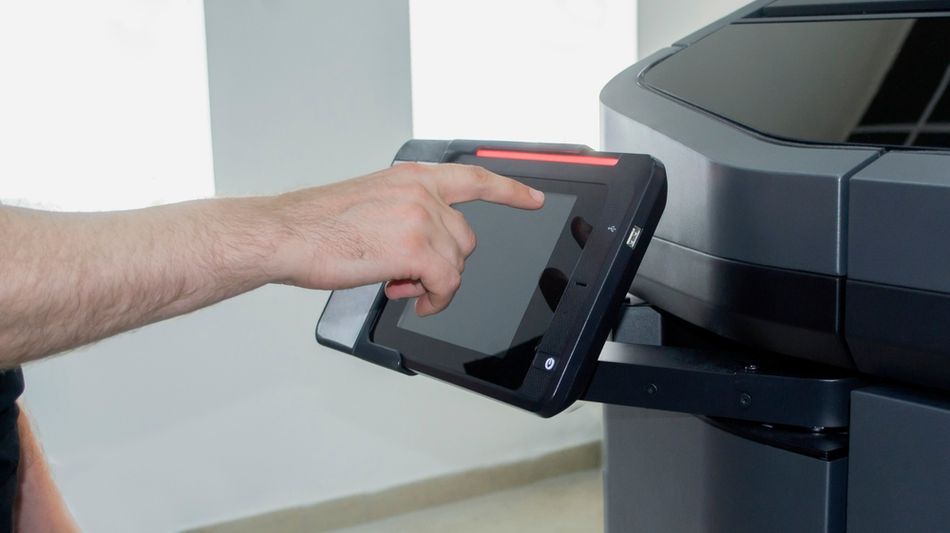
When deciding whether to order MJF parts through a service bureau or buy an MJF printer in-house, the trade-offs come down to scale, cost, and operational complexity. For individuals and most businesses, ordering parts through a service provider is the better option due to the high cost of machinery.
Ordering MJF Parts (Outsourcing)
Fast setup and minimal upfront investment—simply upload your CAD files and receive finished parts in days.
You benefit from the service provider’s process expertise, material options, and quality control without needing in-house skill or infrastructure.
For low to medium volumes, outsourcing often offers better cost-per-part than owning, especially when machine idle time, maintenance, and powder inventory are considered.
Some well-known MJF service providers include Protolabs, Fathom, Stratasys Direct, and Materialise.
Buying an MJF Printer (In-House)
Requires substantial capital investment, facility support (ventilation, powder handling, safety), and technical expertise.
Offers full control over scheduling, confidentiality, and process tuning.
Economical when part volumes are high enough to amortize the machine cost and ongoing consumables.
For reference, more affordable MJF systems like the HP Jet Fusion 5000 cost around USD 350,000. Top-of-the-line models cost even more.
Practical Implementation: From CAD to Finished Part
The process for making MJF parts does not differ greatly from other polymer 3D printing processes. However, unlike FDM, most engineers and businesses will not operate the MJF printer themselves, leaving this part of the process to professional service providers.
Prepare the CAD model: Apply the design guidelines above. Combine multiple parts into a single build when feasible to maximise packing density. Avoid unnecessary supports.
Orient for optimal strength and packing: Orientation influences dimensional accuracy and surface finish. Place surfaces requiring smooth finish on the XY plane; orient load‑bearing features to align with the XY plane for maximum strength. Use nested arrangements to improve packing density and reduce per‑part cost.
Configure or specify machine settings: MJF printers allow selection of material (PA 12, PA 11, PA 12 FR etc.), layer thickness (usually 80 µm) and print modes (fast build or quality).
Post‑processing: After printing, the build unit cools for several hours to prevent warping. Parts are then depowdered using bead blasting or ultrasonic cleaning. Further finishing (tumbling, dyeing, machining) may be applied.
Advantages and Limitations of MJF
Advantages
High Productivity: MJF processes entire layers at once, enabling much faster build speeds than FDM or SLA.
Low Per-Part Cost: Dense packing of parts in the build volume and high powder reuse minimize waste and reduce cost compared with other powder-based methods.
Isotropic Mechanical Properties: Polymer fusion across layers delivers consistent strength in all directions, making parts suitable for demanding end-use applications.
Design Freedom: The absence of support structures allows complex geometries, such as internal channels, lattice infill, and moving assemblies. Multiple components can be consolidated into single printed parts, cutting assembly time and improving reliability.
Sustainability: High levels of powder reuse and the availability of halogen-free materials reduce material waste and environmental impact.
Material Versatility: A growing portfolio includes PA 12, PA 11, flame-retardant grades, glass-bead composites, TPU, and ESD materials, covering a wide range of functional requirements.
Limitations
Surface Finish: As-printed parts are grainy and grey, requiring finishing processes for cosmetic use. Full-color printing is limited to certain models.
Material Portfolio: While expanding, options remain focused on thermoplastics. High-temperature polymers and metals are not yet available.
Printer Cost and Size: MJF systems are capital-intensive and require dedicated post-processing equipment. Build volumes may also constrain very large parts.
Powder Handling: Effective reuse demands careful mixing of fresh and recycled powder under controlled conditions. Nylon powder is combustible, requiring appropriate safety protocols.
MJF in Industry: Current Adoption and Future Trends
Automotive and Transportation
The automotive sector is one of the leading adopters of MJF, driven by the need for lightweight, customized parts and rapid development cycles. Automakers use the technology for functional components such as ducts, housings, and interior parts, while custom builders have demonstrated vehicles with dozens of MJF-printed components. Beyond prototyping, the technology supports on-demand production of replacement parts, reducing both inventory and tooling costs. New flame-retardant grades like PA 12 FR are enabling safe, cost-effective battery housings and cable guides that comply with industry standards.
Example: Custom car shop Blazin Rods used MJF to build a vehicle containing more than 75 3D printed components using flame-retardant HP 3D HR PA 12 FR powder.[5]
Medical Devices and Orthotics
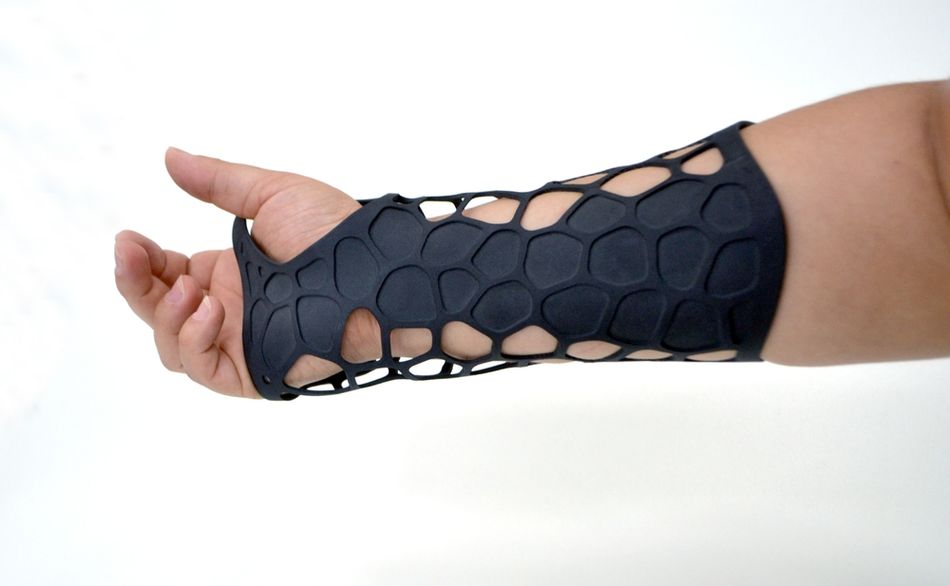
MJF’s compatibility with biocompatible polymers such as PA 11 and PA 12 makes it well suited for healthcare. Applications include prosthetic sockets, orthotic devices, and dental aligner molds. Complex lattice structures can be integrated to deliver lightweight yet supportive components, while post-processing methods such as dyeing and vapor smoothing improve comfort and aesthetics for patients. Collaborations between healthcare providers, start-ups, and manufacturing services continue to expand the role of MJF in personalized medical solutions.
Example: Naked Prosthetics has used HP 3D HR PA 12 enabled by Evonik to make custom finger prostheses for individuals with partial-hand amputation.[6]
Robotics, Drones, and Consumer Electronics
In robotics and drones, MJF produces lightweight but strong brackets, housings, and end-of-arm tooling with integrated cable routing. Electronics manufacturers benefit from materials with ESD-safe and flame-retardant properties, simplifying compliance in packaging and enclosures. Demonstrations have highlighted how MJF enables aerodynamic drone components and customized housings for electronics. In consumer markets, wearables, eyewear, and smart-home devices leverage the technology for personalized design, rapid iteration, and faster time to market.
Example: NECO has used a number of HP materials to produce lightweight drone components with complex internal structures for optimized heat dissipation.[7]
Market outlook
Forecasts show robust growth for MJF, driven by expanded material compatibility, improvements in resolution and speed, and adoption in the aerospace sector. Sustainability initiatives and demand for customised, on‑demand manufacturing fuel further growth.[8] HP itself continues to innovate by releasing AI‑driven tools—such as an AI Text‑to‑3D solution that converts textual prompts into printable models, launched at Rapid + TCT 2025—and expanding its materials portfolio.
Conclusion
Multi Jet Fusion has established itself as a production-ready additive manufacturing technology, bridging the gap between prototyping and industrial-scale output. By merging powder bed fusion with inkjet expertise, it delivers parts that combine isotropic strength, fine detail, and efficient throughput. The technology’s reliance on natural powder support reduces the need for secondary structures, opening the door to complex designs and part consolidation that streamline manufacturing.
For engineers, success with MJF lies in applying sound design practices, selecting suitable materials, and accounting for post-processing requirements. With growing access to flame-retardant, recyclable, and specialty polymers, the platform is increasingly relevant in industries ranging from automotive to electronics and healthcare. Just as importantly, MJF reflects HP’s evolution from decades of paper printing into a new era of digital manufacturing, repurposing its inkjet heritage into a scalable 3D production system.
Frequently Asked Questions (FAQ)
How does MJF differ from other powder bed technologies?
MJF jets two agents—fusing and detailing—onto a powder bed, then uses infrared lamps to melt entire layers at once. This delivers higher throughput and isotropic parts compared with SLS, which sinters powder point by point. Binder jetting, by contrast, glues powder with a binder and typically requires sintering afterward.
What materials can be printed with MJF?
Available 3D printing materials include PA 12, PA 11, PP, TPU, and others. Specialty grades such as electrostatic-dissipative nylon expand the portfolio for electronics and industrial uses.
How sustainable is MJF compared with other 3D printing methods?
HP MJF reuses most of its powder, significantly reducing waste and cost. The lack of support structures for 3D printed parts means less excess material than FDM or SLA, and bio-based or halogen-free grades further improve sustainability.
Is MJF suitable for production or only prototyping?
MJF is widely used for production-grade final parts. Automotive, medical, and robotics companies employ it for functional components, and its throughput and consistency make it competitive with injection molding for medium volumes.
What are the limitations of MJF regarding part size and cost?
Build volumes are limited to medium-sized parts, so larger designs must be split and joined. Printers are expensive, but outsourcing is common, and per-part costs are competitive for short runs.
References
[1] Khorasani M, MacDonald E, Downing D, Ghasemi A, Leary M, Dash J, Sharabian E, Almalki A, Brandt M, Bateman S. Multi Jet Fusion (MJF) of polymeric components: A review of process, properties and opportunities. Additive Manufacturing. 2024 Jul 5;91:104331. Available from: https://doi.org/10.1016/j.addma.2024.104331
[2] Sher D. The top 10 companies in the polymer AM market [Internet]. VoxelMatters. 2024 Feb 27 [cited 2025 Oct 15]. Available from: https://www.voxelmatters.com/the-top-10-companies-in-the-polymer-am-market/
[3] Adach M, Sokołowski P, Piwowarczyk T, Nowak K. Study on geometry, dimensional accuracy and structure of parts produced by multi jet fusion. Materials. 2021 Aug 11;14(16):4510. Available from: https://doi.org/10.3390/ma14164510
[4] HP. MJF vs SLS – What Is the Difference? [Internet]. Palo Alto (CA): HP; [cited 2025 Oct 15]. Available from: https://www.hp.com/us-en/printers/3d-printers/learning-center/mjf-vs-sls.html
[5] HP Inc. HP Continues to Advance Additive Manufacturing with New Innovations and Collaborations at RAPID + TCT 2025 [Internet]. April 8, 2025. Available from: https://www.hp.com/us-en/newsroom/press-releases/2025/hp-advances-additive-manufacturing.html
[6] HP Inc. Body-powered finger prostheses by Naked Prosthetics [Internet]. Palo Alto (CA): HP Inc.; [cited 2025 Oct 15]. Available from: https://reinvent.hp.com/us-en-3dprint-body-powered-finger-prostheses
[7] HP Inc. NECO’s Manufacturing Transformation with HP Multi Jet Fusion 3D Printing and Autodesk Fusion [Internet]. Palo Alto (CA): HP; [cited 2025 Oct 15]. Available from: https://reinvent.hp.com/us-en-3dprint-drones
[8] Knowledge Sourcing. Multi-Jet Fusion 3D Printing Technology Market Report [Internet]. [place unknown]: Knowledge Sourcing; [cited 2025 Oct 15]. Available from: https://www.knowledge-sourcing.com/report/multi-jet-fusion-3d-printing-technology-market
in this article
1. How MJF Works: Theory of the Multi‑Agent Process2. Materials for MJF3. Design Guidelines for MJFOrdering MJF Parts vs. Buying a Printer5. Practical Implementation: From CAD to Finished Part6. Advantages and Limitations of MJF7. MJF in Industry: Current Adoption and Future Trends8. Conclusion9. Frequently Asked Questions (FAQ)10. References