SLA vs SLS: Choosing the Right Laser 3D Printing Technology
3D printer novices might assume that SLA and SLS are closely related, but the technologies are used for quite different purposes.

12 Aug, 2025. 8 minutes read
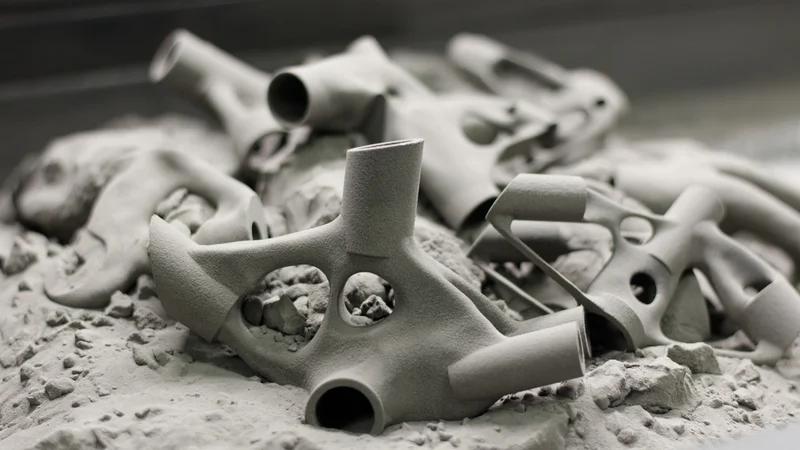
Stereolithography (SLA) and Selective Laser Sintering (SLS) are two of the most recognized 3D printing technologies, yet they work in fundamentally different ways. Despite this, confusion is common—both are professional-grade processes, involve lasers, and are often compared against more familiar FDM printing. (Not to mention both start with “SL.”) Still, SLA vs SLS comparisons quickly reveal distinct differences in materials, part characteristics, and ideal applications.
SLA is part of the vat photopolymerization family, alongside Digital Light Processing (DLP) and masked stereolithography (mSLA). All use a light source to solidify photosensitive resin in a vat, producing parts with fine detail and smooth surfaces. SLA is valued for accuracy and surface quality, making it well-suited for models, patterns, and small functional components where precision matters.
SLS, on the other hand, is a powder bed fusion technology that fuses layers of thermoplastic powder using a laser. It is more closely related to processes like HP’s Multi Jet Fusion (MJF) and even metal systems such as Direct Metal Laser Sintering (DMLS). By building parts in a self-supporting powder bed, SLS enables complex geometries without support structures, offering design freedom that SLA cannot match. This article will explore SLA vs SLS in more detail, including materials, costs, and performance.
Fundamentals of SLA and SLS
Stereolithography (SLA)
Principle of Operation
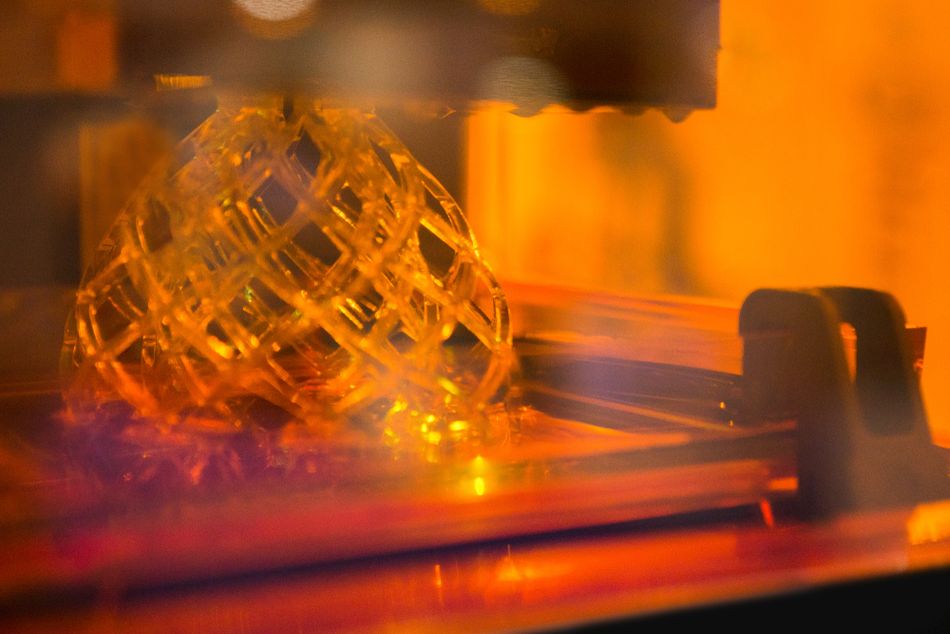
SLA is the oldest 3D printing technique, introduced by Chuck Hull in 1986. It belongs to the vat photopolymerization family. A build platform descends into a vat of liquid photopolymer resin. An ultraviolet (UV) laser, steered by galvo mirrors, selectively cures the resin to form the cross‑section of each layer.[1] The platform then lifts to allow fresh resin to flow beneath, and the process repeats. Multiple support structures are printed first, followed by the actual geometry. After printing, parts must be cleaned and cured further under UV light to achieve full strength.
Materials
SLA uses photopolymer resins. Standard resins produce smooth, detailed prototypes; engineering resins offer improved mechanical properties; flexible resins mimic elastomers; and biocompatible resins support medical applications. These materials are thermosetting; once cured, they cannot be remelted or reshaped.
Post-Processing
After printing, parts are removed from the build platform, rinsed in an isopropyl alcohol bath to remove uncured resin, and post‑cured under UV light. Support structures are snipped off and surfaces may be sanded or coated for aesthetics. Some resins require additional baking or chemical bath to improve mechanical properties.
Advantages
High resolution and surface finish: The laser can cure extremely fine features, enabling layer thicknesses around 50 µm. Parts often require little sanding or polishing, making SLA ideal for small electronic housings, connector prototypes and cosmetic models.
Dimensional accuracy: Tight tolerances are achievable because the laser precisely traces each layer.
Wide range of resins: Photopolymers can be tailored for properties like temperature resistance or elasticity.
Limitations
Brittle parts: Cured resins do not achieve full densification and may contain voids; they often lack high impact or fatigue resistance. Resin parts can deform under sustained load.
Support structures and post‑processing: SLA requires supports for overhangs; removing supports and washing parts adds labor and time. Final curing is necessary to reach full stiffness.
Limited build volume: Many desktop SLA machines are compact, restricting part size.
Recommended reading: How do Resin Printers Work: SLA, DLP & More
Selective Laser Sintering (SLS)
Principle of Operation
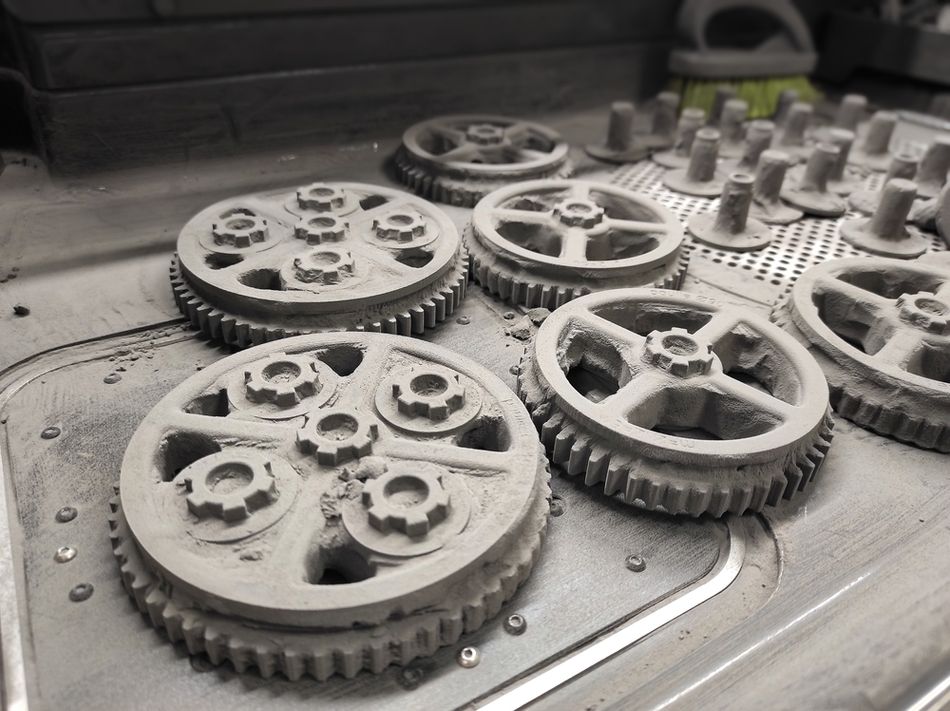
SLS is a powder bed fusion process. A recoater spreads a thin layer of thermoplastic powder (nylon, PA 11 or PA 12) across a build chamber. A high‑power laser scans the layer, locally sintering—fusing but not fully melting—the powder to form the part’s cross‑section. Unsintered powder supports overhangs and complex shapes, eliminating the need for support structures. After each layer, the chamber lowers, fresh powder is applied, and the laser continues. Once printing finishes, parts are removed from the powder bed and often bead‑blasted to remove residual powder.
Materials
SLS works primarily with thermoplastic powders. Common choices include general‑purpose nylons (PA 11 or PA 12), mineral‑ or glass‑filled variants, TPU elastomers and polypropylene. These powders deliver strong, durable parts and can withstand elevated temperatures. Material cost is higher than resin, but the resulting parts behave more like injection‑molded thermoplastics.
Post-Processing
The build chamber cools before parts are excavated from the powder bed. Loose powder is brushed or vacuumed away and can be recycled.[2] Bead blasting or tumbling smooths the surface. For applications requiring sealed or smooth surfaces, vapor smoothing or infiltrating with epoxy can improve finish. Dyeing can add color without altering part dimensions.
Advantages
Mechanical strength: SLS parts have better durability and heat resistance than SLA parts because they use engineering‑grade thermoplastics. They can handle functional loads and repeated use.
No support structures: The surrounding unsintered powder naturally supports overhangs, allowing freeform geometry, internal channels and nested parts.
Efficient batch printing: Multiple components can be nested in a single build volume, improving throughput and reducing cost per part. Powder can also be reused partially after sieving.
Limitations
Rough surface finish: SLS parts typically have grainy surfaces due to powder particles, requiring sanding or post‑processing for smoothness.
Lower resolution: Layer thickness is generally 100–300 µm, limiting fine details compared to SLA.
Expensive equipment and materials: Industrial SLS printers cost significantly more than desktop SLA machines. Material handling requires sealed chambers and safety precautions (powder is combustible).
Comparing Printing Parameters
SLA (Stereolithography) | SLS (Selective Laser Sintering) | |
Laser type | UV laser cures liquid resin | Infrared or CO₂ laser sinters thermoplastic powder |
Material form | Photopolymer resin (thermosetting) | Thermoplastic powders (nylon, TPU, PP) |
Layer thickness | 50 µm or less (high resolution) | 100–300 µm (lower precision) |
Support structures | Required; removed after printing | Not required; powder supports geometry |
Surface finish | Smooth to near‑polished; minimal post‑processing | Grainy texture; requires sanding or smoothing |
Mechanical strength | Lower strength, brittle resins | High durability and heat resistance |
Equipment cost | ~$5k for desktop printers | $20k–$650k for industrial machines |
Post‑processing effort | Wash, remove supports, UV cure | Bead blast, depowder parts |
Ideal applications | Detailed prototypes, casings, fluidic channels | Functional parts, clips, jigs, enclosures |
Materials Comparison
Photopolymer Resins for SLA
Photopolymer resins vary widely in composition. Standard resins (often acrylic‑based) provide moderate strength and high detail, perfect for visual prototypes. Engineering resins contain fillers or modified backbones to enhance stiffness, heat resistance or impact strength; they are useful for functional prototypes and jigs. Flexible resins incorporate elastomeric segments for applications like seals or gaskets. Biocompatible resins meet ISO 10993 standards and are used for dental guides or hearing aid shells.
Resins generally degrade under UV light and may absorb moisture over time. Cured parts can crack when exposed to solvents or mechanical stress. Engineering teams should consider the service environment; SLA parts may be unsuitable for high‑temperature or chemically aggressive settings.
Thermoplastic Powders for SLS
The PA 12 family dominates SLS due to its balanced mechanical properties and processability. PA 12 powder offers high sphericity and flowability, promoting uniform layer deposition. Its relatively low melting point (~175 °C) reduces energy consumption. PA 12 exhibits excellent impact strength, tensile strength and bending strength, making it suitable for functional prototypes and small‑batch production. Glass‑filled or mineral‑filled variants increase stiffness but may cause faster wear on machine components.
PA 11 powders, derived from renewable castor oil, provide improved toughness and environmental resistance. TPU powders yield elastomeric parts for seals and flexible hinges. Polypropylene (PP) powders offer chemical resistance and low density. SLS powders can be partially recycled; however, each reuse cycle reduces mechanical properties, so a mix of virgin and recycled powder is typically used.
Recommended reading: FDM vs SLA: Comparing Extrusion and Photopolymerization 3D Printers
Cost and Scalability
Printer and Material Costs
Cost remains a key differentiator when selecting a 3D printing technology. Desktop SLA printers suitable for labs or design studios typically cost around $5,000, more than less precise vat photopolymerization technologies like mSLA (where some machines are available for well under $1,000). For many years, Formlabs has offered the best value desktop SLA machines, though its new Form 4 model actually uses a form of mSLA instead of traditional, laser-based SLA.[3] Consumable resin prices range from $50 to $200 per liter, and many resins have limited shelf life.
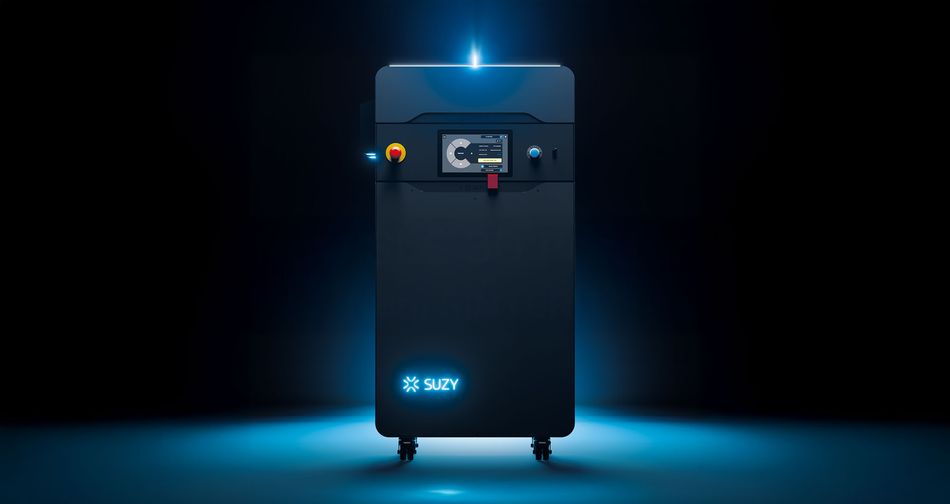
SLS systems, on the other hand, range from $20,000 for entry‑level professional units to $650,000 or more for industrial machines. In 2025, the most budget-friendly machine is probably the Sinterit Suzy, priced around the $20,000 mark. The higher cost of SLS arises from high‑powered lasers, powder handling systems and inert gas chambers. Thermoplastic powders cost $60–$150 per kilogram, but some portion can be recycled. Post‑processing equipment like bead blasters or powder sieves adds to the investment.
Labor and Post‑Processing Costs
While SLA requires washing and curing, SLS demands depowdering and bead blasting. Labor costs vary depending on part complexity and quantity. SLS may be more efficient for batch production because multiple parts can be printed simultaneously. SLA offers fast setup and quick turnaround for single prototypes but may become slower when printing many parts due to support removal.
Lead Times and Throughput
For prototypes requiring fine detail, SLA can deliver parts in as little as 2–3 days because no tool fabrication is needed. SLS lead times are comparable, typically 3–4 days for polymer parts. However, SLS’s ability to nest multiple parts in a single build gives it an advantage for small‑batch production.[4] Engineers should also consider machine uptime; SLS cycles are longer due to powder heating and cooling.
Practical Implementation Guidance
Selecting the Right Technology for Specific Applications
Common SLA applications: Dental models, jewelry casting patterns, prototypes with fine detail, custom molds, small-scale functional parts
Common SLS applications: Functional end-use parts, tooling and jigs, snap-fit components, housings and enclosures, short-run manufacturing
Optimizing Designs for SLA
Orient parts to minimize supports: Angle parts so that large flat surfaces are slightly tilted, reducing suction and peel forces. Use sacrificial structures like tree supports to minimize scars.
Consider resin shrinkage: Account for ~1–2 % dimensional shrinkage; test a sample and adjust CAD models accordingly.
Design robust features: Avoid extremely thin walls (<0.4 mm) that may warp or break during support removal. Add fillets to edges to distribute stress.
Optimizing Designs for SLS
Powder removal access: Include holes or channels to remove unsintered powder from cavities. Avoid closed internal volumes.
Uniform wall thickness: Maintain consistent wall thickness to minimize warping; avoid large solid volumes that cool unevenly.
Part packing: Arrange multiple parts in the build chamber to maximize space utilization. Use software to nest parts with appropriate clearance.
Orientation for strength: Align critical features along the XY plane to take advantage of better in‑plane strength. Minimize vertical overhangs to reduce stair-stepping.
Conclusion
Comparing SLA vs SLS reveals that these laser-based 3D printing methods excel at different tasks. SLA 3D printing is the go-to printing process for high-resolution, aesthetically refined prototypes. It produces a smooth surface finish and intricate features from a wide array of photopolymer resins, making it invaluable for electronics enclosures, sensor housings, fluidic devices, and medical models. However, SLA parts are generally less robust and require careful post-processing.
SLS 3D printing, sometimes referred to as SLS printing, is the workhorse for functional prototypes and small-scale production. Using thermoplastic powders such as PA 12 or ABS, and a high-powered laser, it generates durable parts with good thermal and chemical resistance. The absence of support structures enables complex geometries and efficient batch production but yields rougher surfaces and requires a higher initial investment.
When choosing between SLA and SLS, engineers should weigh factors such as resolution, mechanical strength, material compatibility, cost, and production volume. There is no universal winner—only the best fit for a specific design and business context. By understanding the underlying physics and practical trade-offs, hardware designers and engineers can harness the power of additive manufacturing to accelerate innovation.
Frequently Asked Questions (FAQ)
What is the core difference between SLA and SLS in terms of process?
SLA uses a UV laser to cure liquid photopolymer resin, building parts layer by layer and requiring support structures. SLS employs a high‑power laser to sinter thermoplastic powder, with unsintered powder acting as support, enabling more complex geometries.
Which technology provides better surface finish and detail?
SLA typically offers superior surface finish and fine detail thanks to thin layer thicknesses (~50 µm). SLS parts have a grainy texture due to powder particles and may require sanding or vapor smoothing.
Are SLS parts stronger than SLA parts?
Yes. SLS parts made from nylon or PA 12 powders exhibit higher mechanical strength and heat resistance than SLA resin parts. SLA resins are prone to brittleness and should not be used for high‑load applications.
How do equipment costs compare between SLA and SLS printers?
Desktop SLA printers cost roughly $3,750–$5,000, making them accessible to labs and small businesses. Industrial SLS machines range from $20,000 to $650,000 due to their more complex laser systems and powder handling.
Can both SLA and SLS be used for medical or bio‑compatible applications?
Yes, but material choice matters. SLA offers biocompatible resins suitable for dental guides and hearing aids. SLS can produce sterilizable parts from medical‑grade nylon powders. Always verify regulatory compliance for the intended application.
What about SLM?
Selective Laser Melting (SLM) is a name trademarked by Nikon SLM Solutions for a metal powder bed fusion process otherwise known as Direct Metal Laser Sintering (DMLS).
References
[1] Çerlek Ö, KESERCİOĞLU MA, Han K. Stereolithography (SLA): An Innovative Additive Manufacturing Process. New trends and frontiers in engineering. 2024:399-412.
[2] Uddin M, Williams D, Blencowe A. Recycling of selective laser sintering waste nylon powders into fused filament fabrication parts reinforced with Mg particles. Polymers. 2021 Jun 22;13(13):2046.
[3] Formlabs. Form 4 [Internet]. Formlabs; 2025 [cited 2025 Aug 11]. Available from: https://formlabs.com/3d-printers/form-4
[4] Butler J. Using selective laser sintering for manufacturing. Assembly Automation. 2011 Aug 2;31(3):212-9.