DFMA: Design for Manufacturing and Assembly Explained
Design for manufacturing and assembly (DFMA) reduces product cost where it is actually decided: on the drawing board.

11 Aug, 2026. 11 minutes read

DFMA helps to simplify designs and improve production efficiency
Key Takeaways
DFMA (design for manufacturing and assembly) combines DFM and DFA into one method for reducing production costs and time-to-market during early product development, before tooling and suppliers lock those costs in.
The economics are front-loaded: about 80% of manufacturing cost is fixed by design decisions.
Published DFMA results report 20 to 50% part count reductions, 10 to 30% shorter assembly time, and 15 to 40% lower total product cost.[1]
The core of the DFA method is the minimum-part-count criteria: any part that does not move relative to its neighbors, does not need a different material, and is not required for assembly access is a candidate for elimination. Fasteners fail these tests by definition.
The DFA index scores assembly efficiency from 0 to 100 by comparing the theoretical minimum assembly time (2.93 seconds per theoretically necessary part) against the estimated actual assembly time.[2]
Introduction
Every product you ship carries costs that were committed months or years earlier, when the mechanical design was still a sketch. DFMA, short for design for manufacturing and assembly, is the engineering methodology for finding and removing those costs while they are still cheap to remove.
DFMA was developed by Geoffrey Boothroyd and Peter Dewhurst at the University of Rhode Island, who founded Boothroyd Dewhurst, Inc. in 1983 to commercialize it; the pair received the U.S. National Medal of Technology and Innovation in 1991 for the concept, development, and commercialization of DFMA.[1] DFMA is a registered trademark of Boothroyd Dewhurst, Inc.,[3] but the methodology itself is taught, published, and applied worldwide.
This article covers the combined DFMA methodology: what it is, why it works, how the DFA analysis and DFA index work step by step, and what results engineering teams publish. Wevolver has a separate in-depth guide to design for manufacturing (DFM) that covers per-process design rules for machining, molding, and sheet metal; this article focuses on the method that joins DFM and DFA together.
Recommended reading: Design for Manufacturing (DFM): The Engineer's Complete Guide
What Is DFMA?
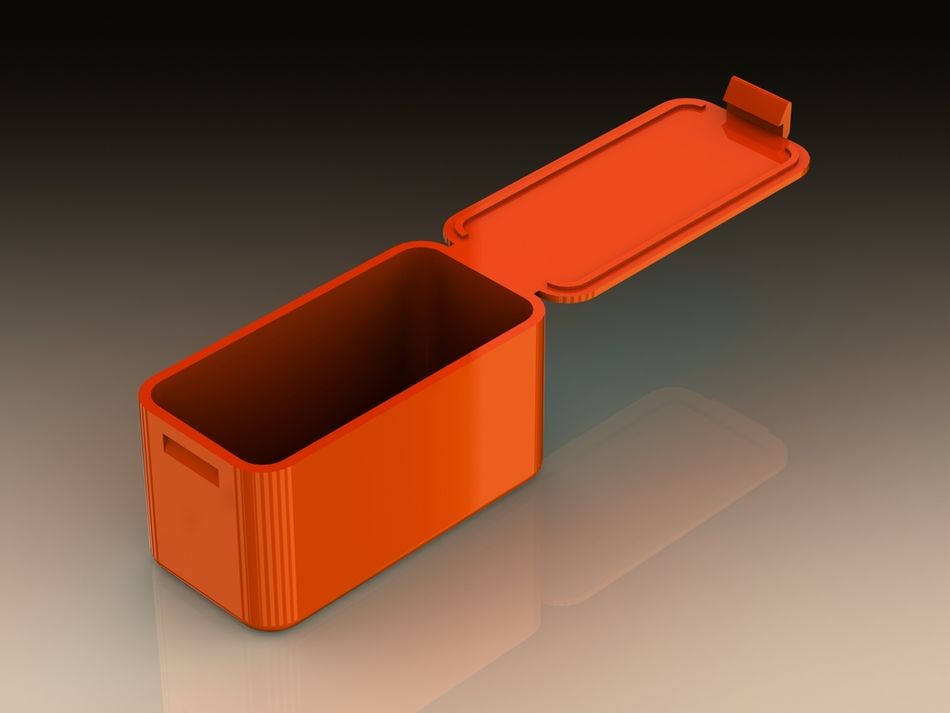
DFMA is a product development method that cuts total cost and time-to-market by simplifying parts and processes.[1] It merges two complementary disciplines:
Design for assembly (DFA) simplifies the product structure: fewer parts, fewer fasteners, fewer assembly steps, and parts that are easy to grasp, orient, and insert.
Design for manufacturing (DFM) optimizes the individual parts that remain, so each one can be made easily and consistently at the target production volume.[1]
In the Boothroyd Dewhurst workflow, you run DFA first to consolidate parts and eliminate unnecessary complexity, then use DFM to check what the redesigned parts cost to make and select cost-effective shape-forming processes.[3]
Boothroyd’s 1987 research explains that applying design for assembly delivers major reductions in total product cost even when assembly cost itself is a small share of the whole, because part consolidation removes material, tooling, and overhead cost along with assembly time.[4]
DFM vs DFA vs DFMA
Method | Optimizes | Typical questions |
DFM (design for manufacturing) | Individual parts and their processes | Can this part be molded, machined, or formed efficiently? What do tolerances and materials cost? |
DFA (design for assembly) | Product structure and assembly operations | How many parts? How many fasteners and assembly steps? How long does assembly take? |
DFMA (design for manufacturing and assembly) | Both, applied as one method | What is the theoretical minimum part count, and what does each remaining part truly cost? |
If you need the per-process DFM design rules (wall thickness, draft angles, machining radii, tolerances versus cost), see Wevolver’s dedicated design for manufacturing guide; the rest of this article stays on the combined method.
Why DFMA Matters
Cost is locked in early. About 80% of manufacturing cost is determined during design, before a supplier ever sees a drawing, and a change that costs nearly nothing at concept stage can cost 10 to 100 times more after tooling exists.[1] DFMA begins during the phase of the product lifecycle where changing geometry is free.
Fewer parts compound savings. Every part you eliminate removes its piece price, its share of assembly cost, a line on the bill of materials, a purchasing transaction, inventory, inspection, and a possible failure mode. That is why DFMA typically leads to 20 to 50% part-count reductions and 15 to 40% total cost reductions,[1] numbers no single manufacturing process improvement can match.
Time-to-market shrinks. Simpler products have fewer drawings to release, fewer suppliers to qualify, less prototyping to iterate, and fewer assembly operations to debug during ramp-up. Boothroyd Dewhurst reports faster development time and fewer suppliers as standard side effects of DFA redesigns.[3]
Quality improves. Every insertion is a defect opportunity, so reducing assembly steps directly reduces the quality control burden and field failures. Products that are easy to assemble tend to cost less and get built right more consistently.[3]
The DFA Method: Part-Count Reduction

DFA runs on a simple categorization technique. Working through the product structure in assembly order, you classify every part according to the minimum-part-count criteria.[2]
Base part: The one part everything else attaches to. An assembly has exactly one.
Movement: The part must move relative to parts already assembled during operation, like a wheel on an axle. Motion that a living hinge or integral spring could provide does not count.
Material: The part must be a different material for a fundamental reason such as electrical insulation, sealing, or light transmission. A window or an O-ring qualifies.
Assembly: The part must be separate or previous parts could not be assembled. A cover typically qualifies.
A part that meets none of these criteria has no theoretical reason to exist: it is a candidate for elimination or combination. Fasteners (screws, bolts, nuts, washers, rivets, clips) and connectors (wires, cables, hoses) are automatic candidates by definition, because fastening is not a function the product needs, only a function the current design needs.[2]
The essential remaining parts are then optimized for assembly. Each part is rated for how it is grasped, oriented, and inserted by looking at characteristics such as symmetry (a part that can be inserted in more orientations is handled faster), handling difficulties (parts that nest, tangle, stick together, or slip from fingers), and insertion difficulties (not self-locating, obstructed access, restricted sight lines).[3] Each difficulty adds a time penalty from time standards established by Boothroyd Dewhurst.[2]
Threaded fastening is one of the most expensive securing processes; snap-fits are among the cheapest, which is why so many DFA redesigns replace screws with molded snap features.
The DFA Index
The DFA index turns all of this into a single assembly efficiency score:
DFA index = (Nmin × ta ÷ tma) × 100
where Nmin is the theoretical minimum number of parts, ta is the ideal assembly time per part (2.93 seconds, from Boothroyd Dewhurst time studies), and tma is the estimated total assembly time including all penalties.[2] The scale runs 0 to 100; higher is better, and the score is independent of product size or complexity, so you can use it for benchmarking design alternatives or competitors’ products against your own.[3]
There is no universal passing grade. The value of the DFA index is in comparison; in the worked example below it rises from 11.8 to 34.7. Tracking the index across design reviews turns product simplification into a measurable engineering target instead of an opinion.
Worked Example: An Electronics Enclosure
A DFMA Forum paper by L3Harris producibility engineer Bill Devenish describes a full DFA analysis of an electronics enclosure: a housing, a circuit card assembly (CCA), a cover, and eight screws, for 11 total parts plus a serial-marking operation.[2] The study assumed a life volume of 100,000 units, a fully burdened labor rate of $100 per hour, and 85% plant efficiency.
Applying the minimum-part-count criteria, only three parts are theoretically necessary: the housing (base part), the CCA (different material), and the cover (needed for assembly access). The eight screws are fasteners, so all are elimination candidates. Two redesigns follow from that finding:
Design | Entries (parts + operations) | Assembly time | Assembly labor cost per unit | DFA index |
Baseline (8 screws) | 12 | 87.6 s | $2.86 | 11.8 |
Redesign 1: snap-fit cover | 8 | 58.5 s | $1.91 | 17.6 |
Redesign 2: snap-fit cover and snap-in CCA | 4 | 29.7 s | $0.97 | 34.7 |
Redesign 2 cuts assembly time by 66% and almost triples assembly efficiency, with the same three functional parts doing all the work. The remaining engineering question is a DFM one: will the cover with integrated snap features (which needs undercuts in the mold) cost more than the flat cover it replaces? DFM Concurrent Costing analysis answers that question with estimates before any tooling is cut.[2]
The DFM Side of DFMA
Once DFA has consolidated the product structure, DFM analysis makes sure every surviving part is producible at cost. In the combined method this means three things:
Process and material selection: Match each part to a manufacturing process (injection molding, machining, sheet metal, casting, 3D printing) appropriate to its geometry, material, and production volume, and prefer materials that process easily.
Geometry that suits the process: Consolidated multifunctional parts are often more complex than the parts they replace, so check moldability (uniform walls, draft, undercuts only where justified), machinability (tool access, standard radii), and formability early with your manufacturing engineers or contract manufacturer.
Tolerances no tighter than function requires: Tight tolerances drive slower manufacturing operations, extra machining passes, and higher inspection cost, so tolerance from the stack-up rather than habit.
Standardizing components, fastener sizes, and stock materials across the product line reduces procurement complexity and supports lean manufacturing goals in production. Standard parts also de-risk supply compared to custom components.
How to Run a DFMA Study
DFMA is a structured team exercise. The Devenish paper offers a general step-by-step sequence that can be followed.[2]
Build the product structure: Enter the parts list (effectively the bill of materials plus assembly operations) in assembly order.
Determine costs: Life volume, labor rate, plant efficiency, and any dedicated fixture costs, so cost estimates and results can be compared.
Answer the questions for every part: Function, minimum-part-count criteria, symmetry, handling, securing process, insertion difficulties. Do this as a cross-functional team: design engineering, manufacturing, quality, and often procurement or your contract manufacturer, because they know the capabilities of the factory floor.
Review the baseline: Part count, theoretical minimum parts, assembly time, and DFA index.
Brainstorm redesigns: Every part flagged by the criteria is a prompt: combine it, mold it in, replace fasteners with snap-fits. This is where the method leads to design innovation.
Model the redesigns and compare: Keep the theoretical minimum part count identical across alternatives so the DFA index remains a valid comparison, then verify the best option with DFM should-cost analysis before committing to tooling.
Iterate through development: Rerun the analysis at each design review to verify the score is improving, and document every assumption as you go.
Run the first study at concept stage if you can. This is concurrent engineering in practice: design and manufacturing decisions made together before prototyping. Modern CAD and PLM environments like Siemens Teamcenter increasingly embed DFMA thinking directly in the workflow,[5] while the Boothroyd Dewhurst software accepts standard CAD formats.[3]
Recommended reading: Understanding CAD File Types: A Comprehensive Guide for Digital Design and Hardware Engineers
Published DFMA Results

Several published studies demonstrate the success of the DFMA methodology.
An early application of the procedure by machinery multinational Ingersoll-Rand led to an improved radiator and oil cooler design concept in which part count was reduced from 80 to 29 and assembly time reduced from 18.5 minutes to 6.5 minutes.[6]
In 2008, Bell Helicopter carried out a DFMA case study on a sheet metal electrical box for its 429 helicopter. The number of detail parts was reduced from 4 to 1 and the number of fasteners from 40 to 8, resulting in an assembly time reduction from 51 minutes to just 6 minutes.[7]
For small electromechanical assemblies such as motor drives, Boothroyd Dewhurst reports typical DFMA outcomes of 25 to 35 parts reduced to 8 to 12, assembly time cut from 180 to 240 seconds down to 60 to 90 seconds, and separate fasteners cut from 10 to 15 down to 2 to 4.[1]
Specific case studies from Boothroyd Dewhurst, noted in the table below, show typical part-count reductions of 30 to 60%.[8]
Case | Reported results |
IDEXX Catalyst Dx analyzer | 183 parts to 31 (83% fewer), 63 fasteners to 0, assembly time 45 min to 11 min, assembly cost $622 to $384, DFA index 3.8 to 35.8 |
ITT Aerospace ball valve | 55% part reduction, 58% assembly labor reduction |
Hypertherm CNC metal cutter | 27% part reduction while adding product features, 50% shorter build and test time |
DFMA in Construction: Prefabrication and Modular Building
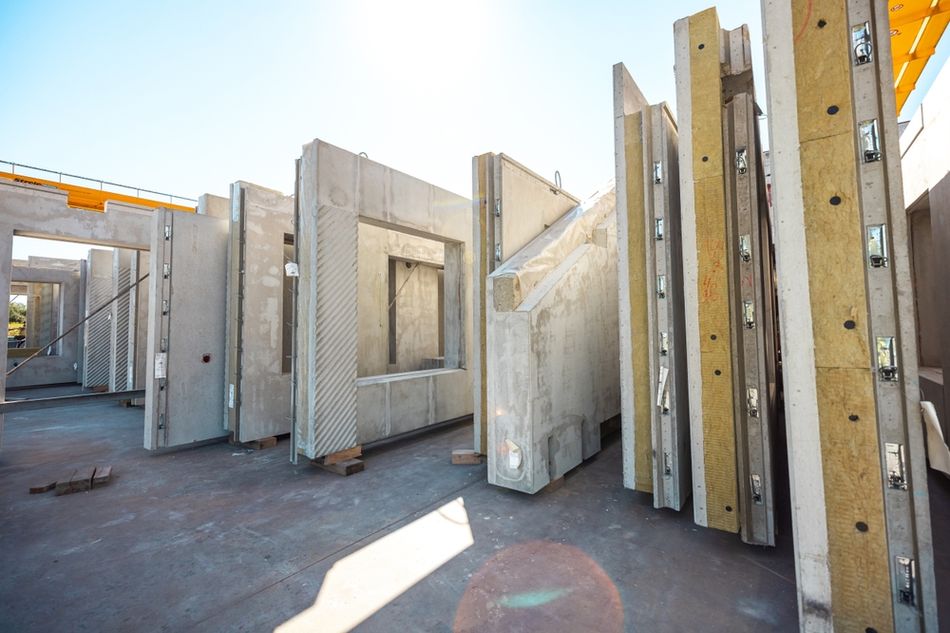
DFMA has a slightly different meaning in construction, usually written DfMA. In this field, it means designing buildings so that components can be manufactured offsite through prefabrication and assembled quickly onsite, treating a building more like a product.
The Royal Institute of British Architects (RIBA) first published its DfMA Overlay to the RIBA Plan of Work in 2016, and the current edition aligns DfMA tasks with all seven categories of Modern Methods of Construction across every project stage.[9] RIBA frames DfMA as an evolution of ordinary design practice and pushes the industry toward assembly rather than construction, with modular design and platform approaches reused across projects.[9]
DFMA, Sustainability, and Lifecycle Cost
Part-count reduction is also a material-efficiency strategy, which links DFMA to sustainability goals: fewer parts mean less raw material, less scrap across manufacturing operations, lighter products, and simpler logistics. Fewer fasteners and simpler product structures can also ease disassembly for repair and recycling at end of life.
However, a 2022 systematic review of DFMA methods in mechanical product development found that integration of environmental objectives into DFMA remains underdeveloped, with only recent studies attempting multi-objective analysis that combines material, manufacturing, and assembly costs with environmental factors.[10]
Limitations and Common Mistakes
Applying DFMA too late: After tooling release, design changes become 10 to 100x more costly.[1]
Not applying principles to complex parts: The 2022 review found most published DFMA methods target relatively simple products of few components.[10] Complex systems need the method tailored.
Over-consolidating: A single multifunctional part can concentrate tooling risk, complicate repairs, or force exotic processes. The minimum-part-count criteria identify candidates for elimination, not obligations; serviceability and mold complexity (undercuts, side actions) are legitimate reasons to keep a part separate. Document the justification either way.
Treating automation as the goal: Boothroyd noted in 1987 that as DFA improves a design, assembly automation gets harder to justify: with few, easy-to-handle parts, manual assembly is often cheapest.[4] Simplify first and automate only what remains.
Not involving the team: A cross-functional team with mechanical design, quality, and manufacturing expertise produces better redesign ideas than an individual engineer.
Conclusion
DFMA has a long track record of reducing part counts, assembly time, and cost. The basic method is straightforward: assess each part against the minimum-part-count criteria, look closely at handling and insertion costs, and use the DFA index to identify opportunities for simplification. Case studies, from small enclosures to complex analyzers, show that eliminating a part can often save more than making it cheaper. Applying DFMA early in product development, with the design and manufacturing teams working together, can make these savings easier to achieve.
Frequently Asked Questions
What does DFMA stand for?
DFMA stands for design for manufacturing and assembly (also written design for manufacture and assembly). It combines design for manufacturing (DFM) and design for assembly (DFA) into a single methodology. DFMA is a registered trademark of Boothroyd Dewhurst, Inc. for its software and method.[3]
What is the difference between DFM, DFA, and DFMA?
DFA reduces part count and assembly time by simplifying the product structure. DFM makes each remaining part easier and cheaper to produce with its manufacturing process. DFMA applies both together, typically DFA first for product simplification, then DFM costing on the surviving parts.[3]
Who invented DFMA?
Geoffrey Boothroyd and Peter Dewhurst developed the methods at the University of Rhode Island and founded Boothroyd Dewhurst, Inc. in 1983; they received the U.S. National Medal of Technology and Innovation in 1991 for DFMA.[1]
What is a good DFA index?
There is no universal threshold; the DFA index (0 to 100) is a comparison tool. Published redesigns show jumps such as 3.8 to 35.8 and 11.8 to 34.7.[8][2] What matters is the improvement between your baseline and your redesign, measured with a consistent theoretical minimum part count.
When should you apply DFMA?
At concept stage, before tooling and supplier commitments, because design changes get 10 to 100 times more expensive after tooling exists.[1] Rerun the analysis at each design review as the product develops.
Is DFMA only for high-volume products?
No. Life volume changes the economics (tooling amortization favors volume), but part-count reduction cuts assembly cost, bill of materials complexity, and quality risk at any volume. Low-volume, high-mix builders often benefit most from fewer assembly steps and standard parts.
Does DFMA apply to construction?
Yes, as DfMA: designing buildings for offsite manufacture and rapid onsite assembly using prefabrication and modular construction. RIBA’s DfMA Overlay to the Plan of Work, first published in 2016, is the reference framework.[9]
References
[1] Boothroyd Dewhurst Inc. DFMA explained: design for manufacture and assembly [Internet]. [cited 2026 Aug 11]. Available from: https://www.dfma.com/resources/what-is-dfma.asp
[2] Devenish B. Conducting a step-by-step DFA analysis. DFMA Forum. L3Harris Technologies; 2019. Available from: https://www.dfma.com/forum/2019pdf/devenish.pdf
[3] Boothroyd Dewhurst Inc. DFMA software: DFA product simplification [Internet]. [cited 2026 Aug 11]. Available from: https://www.dfma.com/pdf/dfadescription.pdf
[4] Boothroyd G. Design for assembly: the key to design for manufacture. Int J Adv Manuf Technol. 1987;2:3-11. Available from: https://link.springer.com/article/10.1007/BF02601481
[5] Siemens. Design for manufacture and assembly (DFMA) [Internet]. [cited 2026 Aug 11]. Available from: https://www.siemens.com/en-us/technology/design-for-manufacturing-assembly-dfma/
[6] Gerhardt DJ, Hutchinson WR, Mistry DK. Design for manufacture and assembly: Case studies in its implementation. The International Journal of Advanced Manufacturing Technology. 1991 May;6(2):131-40. https://doi.org/10.1007/BF02601436
[7] Bergerson A. DFMA challenges and success at Bell Helicopter. Fort Worth (TX): Bell Helicopter Textron Inc.; 2010. Available from: https://www.dfma.com/pdf/getstarted/2010B.pdf
[8] Boothroyd Dewhurst Inc. What is design for assembly (DFA)? Principles, examples and checklist [Internet]. [cited 2026 Aug 11]. Available from: https://www.dfma.com/design-for-assembly.asp
[9] Royal Institute of British Architects. DfMA overlay to the plan of work [Internet]. [cited 2026 Aug 11]. Available from: https://www.riba.org/work/insights-and-resources/professional-features/plan-of-work-professional-features/dfma-overlay-to-the-plan-of-work/
[10] Formentini G, Boix Rodríguez N, Favi C. Design for manufacturing and assembly methods in the product development process of mechanical products: a systematic literature review. Int J Adv Manuf Technol. 2022. Available from: https://link.springer.com/article/10.1007/s00170-022-08837-6
in this article
1. Introduction2. What Is DFMA?3. Why DFMA Matters4. The DFA Method: Part-Count Reduction5. The DFM Side of DFMA6. How to Run a DFMA Study7. Published DFMA Results8. DFMA in Construction: Prefabrication and Modular Building9. DFMA, Sustainability, and Lifecycle Cost10. Limitations and Common Mistakes11. Conclusion12. Frequently Asked Questions13. References