



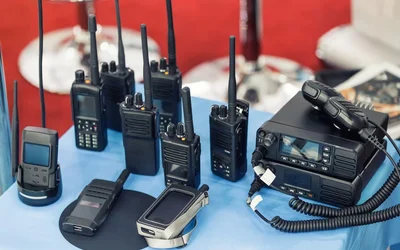
Half Duplex vs Full Duplex: Understand how these protocols affect data transmission, learn their advantages and limitations, and discover how they are utilized in various networking technologies.
Be the first to know.
Get our iot weekly email digest.
Tagged with
IoT
ORGANIZATIONS. SHAPING THE INDUSTRY.


Latest Posts


Get to know the differences between memory options and the trade-offs you need to make when working with Bluetooth Low Energy development projects.

3 minutes read


Article #1 of our Circuit Protection Series: Wired IoT has a range of communication standards that require specific protective solutions.


The collaboration between Nordic Semiconductor and Edge Impulse provides resource-optimized IoT devices with more accessible machine learning at the edge.
3 minutes read


Wireless sensor technology, supported by cellular IoT connectivity, offers light at the end of the pipeline for the oil and gas processing industry and refineries.
3 minutes read

The data link layer in the OSI model is responsible for seamless video calls and swift file transfers. This article will dive deep into its mechanisms and operations appreciating how the layer silently powers our interconnected world.


As utilities and consumers switch to green energy sources, the IoT is used to analyze usage patterns and predict faults to make electricity grids more intelligent and reliable.
3 minutes read


How Network Attached Storage and Storage Area Network centralize and simplify Storage Management.


LoRa gateways serve as communication devices within a LoRa network between end-devices and the LoRaWAN network server (LNS). In this article, we give you a general introduction to LoRa gateway.

7 minutes read

In the world of computer networks, various topologies exist to enable devices to communicate with each other effectively. One such topology is the star topology, which is widely used due to its reliability and simplicity.

A Comprehensive Guide to Understanding Factors, Challenges, Limitations, and Real-World Applications for Optimized Communication Speed and Reliability


While most consumers have long since stopped using these older networks, the companies relying on legacy M2M wireless connectivity should consider cellular IoT solutions.
3 minutes read


The fact that nowadays three-quarters of IoT projects fail, is especially surprising considering that the Internet of Things is estimated to become a market valued at $ 11.1 trillion by 2025. Read about the main challenges faced by businesses implementing IoT-Solutions.
5 minutes read

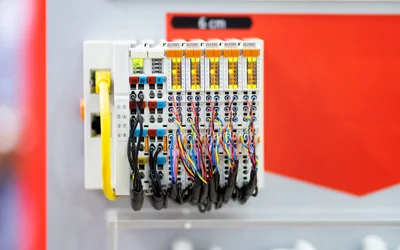
How PLC controls production systems and processes in harsh industrial environments


To address the existing barriers to IoT growth and adoption and breathe new life into the smart home market, members of the Connectivity Standards Alliance (formerly Zigbee Alliance) have launched 'Matter' (formerly Project Connected Home Over IP or Project CHIP).
4 minutes read