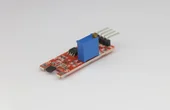
Digi Connect® Sensor XRT-M
Cellular IoT Gateway for Remote Industrial Monitoring
General
| Product Type | Sensors |
| Applications | Prototyping & Development, Data Logging & Monitoring, Sustainability & Green Tech |
| Key Features | LTE-M / NB-IoT, 9VDC to 30VDC, Dual 12Ah Batteries, 200 mA Maximum Output |
Technical Specifications
| Connectivity | LTE-M / NB-IoT (Dual-Mode Cellular) |
| Power Input | 9VDC to 30VDC |
| Battery | Dual 12Ah Batteries |
| Output Current | 200 mA Maximum |
| Operating Temperature | -35°C to 70°C |
| Max Input Voltage | 30 VDC |
| Communication Protocols | MQTT, Modbus |
| Applications | Water and Wastewater Management, Oil and Gas Operations, Industrial Automation, Environmental Monitoring |
Overview
The Digi Connect® Sensor XRT-M is a battery-powered cellular gateway designed for remote telemetry and monitoring in industrial environments. It supports dual-mode LTE-M and NB-IoT connectivity, enabling long-range, low-power communication for distributed sensor networks. The device integrates MQTT and Modbus protocols, allowing direct data transmission from field sensors to cloud platforms such as Digi Axess for storage and analysis.
The system supports configurable read and reporting intervals, enabling flexible data acquisition based on application requirements. It can connect to and power multiple industry-standard sensors, supporting deployment in diverse monitoring scenarios. Device health and sensor data are managed through a web-based interface and mobile application, enabling remote configuration and diagnostics. The gateway operates within a wide temperature range and is designed for industrial environments, supporting telemetry applications that require reliable communication, extended battery operation, and scalable sensor integration.
Features of Digi Connect® Sensor XRT-M
The Digi Connect® Sensor XRT-M enables remote telemetry with cellular connectivity and integrated protocols. It supports sensor interfacing, cloud data transmission, and configurable operation for industrial monitoring applications. Let’s go through its features in detail:
Cellular Connectivity and Communication Protocols
The device supports dual-mode LTE-M and NB-IoT connectivity for low-power wide-area communication. It integrates MQTT for lightweight data transmission and Modbus for compatibility with industrial sensors, enabling direct communication with cloud platforms.
Sensor Integration and Data Acquisition
The gateway can connect to and supply power to multiple industry-standard sensors. Configurable read and reporting intervals allow control over data acquisition frequency, supporting various telemetry requirements. This enables efficient monitoring of remote assets with minimal manual intervention.
Cloud Integration and Remote Management
Sensor data and device health information are transmitted to Digi Axess, where they are stored and processed. The platform provides tools for configuration, analytics, and alert generation. Mobile management through iOS and Android applications supports remote monitoring and system control.
Power System and Operational Efficiency
The system uses dual 12Ah batteries to support extended operation in remote deployments. Low-power cellular communication and configurable reporting intervals contribute to efficient energy usage, enabling long-term field operation without frequent maintenance.
Industrial Design and Environmental Operation
The device operates within a temperature range of -35°C to 70°C and is housed in a NEMA enclosure with C1D2 certification. This supports deployment in industrial environments, including hazardous locations, where exposure to harsh conditions is expected.
Applications
The Digi Connect Sensor XRT-M is used in water and wastewater management for monitoring flow levels, pressure, and system performance across distributed infrastructure. In oil and gas operations, it supports remote monitoring of pipelines, tanks, and gas distribution systems. Within industrial automation, the gateway enables data collection from field sensors for process monitoring and control. It is also applied in environmental monitoring to track parameters such as air quality, water conditions, and regulatory compliance metrics. The device supports remote telemetry in locations where wired connectivity is not feasible, enabling reliable data transmission and system visibility across large or isolated sites.
Where to find it

Mouser Electronics
Mouser Electronics is a worldwide leading authorized distributor of semiconductors and electronic components.
References
Recommended Specs



Continue Reading

IoT-enabled sensor technology is set to revolutionise waste management.

From simple sensor control to connected, intelligent devices, embedded systems often outgrow a single MCU. Pairing an MCU with Linux adds power and flexibility, but also introduces communication challenges, dual development workflows, and increasing software complexity.

4 minutes read
This article presents a comprehensive engineering guide to Hall Effect Sensors, covering theoretical foundations, device structures, sensor types, specifications, applications, and practical integration strategies for modern electronic system design.