Arduino® UNO™ Q 4GB
Single-Board Computer for Edge AI Applications

General
| Product Type | Development Boards |
| Applications | Prototyping & Development, Artificial Intelligence & Machine Learning |
| Key Features | Qualcomm Dragonwing™ QRB2210, 4GB LPDDR4, 32GB eMMC, Wi-Fi 5, Bluetooth® 5.1 |
Technical Specifications
| Main Processor (MPU) | Qualcomm Dragonwing™ QRB2210 |
| CPU Architecture | Quad-core Arm Cortex-A53 @ 2.0GHz |
| Real-Time MCU | STM32U585 Cortex-M33 @ 160MHz |
| System Memory | 4GB LPDDR4 |
| Storage | 32GB eMMC |
| Wireless Connectivity | Wi-Fi 5, Bluetooth® 5.1 |
| Operating System | Debian Linux |
| Real-Time OS | Arduino® Core on Zephyr OS |
| Applications | Edge AI & Vision, Industrial IoT Gateway, and Professional Prototyping |
Overview
UNO Q 4GB is a single-board computer that combines a Linux-capable application processor with a real-time microcontroller for embedded control and edge computing applications. The platform integrates a Dragonwing QRB2210 processor featuring four Arm Cortex-A53 cores operating at up to 2.0GHz, alongside an STM32U585 Cortex-M33 microcontroller for deterministic I/O and control tasks.
The board includes 4GB LPDDR4 memory and 32GB eMMC storage, supporting Linux-based applications, containerized workloads, data logging, and AI processing. Connectivity options include Wi-Fi 5, Bluetooth 5.1, USB-C, CAN, UART, SPI, I2C/I3C, and GPIO interfaces. Multimedia capabilities are provided through integrated image signal processors, video output support, audio interfaces, and camera connectivity. The platform supports Debian Linux on the application processor and Zephyr-based Arduino Core on the microcontroller. Compatibility with Arduino® App Lab enables management of Linux applications, embedded firmware, and AI workloads from a unified development environment.
Features of UNO Q 4GB
UNO Q 4GB combines Linux-based processing and real-time control on a single board. It integrates connectivity, multimedia interfaces, storage, and embedded development capabilities. Let’s go through its features in detail:
Dual-Processor Architecture
UNO Q 4GB uses a split-processing architecture consisting of a Dragonwing QRB2210 application processor and an STM32U585 microcontroller. The Cortex-A53 processor executes Linux applications, AI workloads, and networking tasks, while the Cortex-M33 MCU manages deterministic I/O operations, sensors, and time-sensitive control functions. Communication between both processing domains is handled through an integrated software framework.
Memory, Storage, and Operating Systems
The platform integrates 4GB LPDDR4 memory and 32GB eMMC storage for operating system deployment, application execution, and data storage. Debian Linux runs on the application processor, while the STM32U585 operates with Arduino Core on Zephyr OS. Docker and Docker Compose support enable deployment of containerized applications for edge computing and embedded software development.
Connectivity and Industrial Interfaces
The wireless connectivity includes Wi-Fi 5 and Bluetooth 5.1 with onboard antennas. Peripheral interfaces include CAN, UART, SPI, I2C/I3C, PWM, GPIO, ADC, PSSI, and JTAG. The board also features a USB-C interface with host/device role switching and power management capabilities, supporting communication with external devices and development systems.
Vision, Multimedia, and Audio Support
The Dragonwing QRB2210 integrates dual image signal processors supporting camera configurations up to 25MP at 30fps. Video output is available through USB-C and MIPI DSI interfaces. Audio functionality includes microphone input, headphone output, and line-level interfaces. These resources support vision processing, video applications, multimedia systems, and human-machine interfaces.
Development Ecosystem and Expansion Features
The board integrates Arduino App Lab for managing Linux applications, Arduino sketches, and AI workloads. Hardware features include a Qwiic connector, RGB LEDs, an LED matrix, push-button interface, and debugging connections. Compatibility with Linux-based development workflows and Arduino tools supports prototyping, embedded software development, and system integration.
Applications
UNO Q 4GB is used in edge AI and computer vision applications such as object detection, facial recognition, image analysis, and autonomous navigation systems. In Industrial IoT gateway deployments, it aggregates sensor data, performs local processing, and manages communication with cloud services while supporting industrial interfaces. The platform is also suitable for professional prototyping of smart home hubs, media controllers, machine monitoring systems, and advanced user interfaces. Its combination of Linux processing, real-time control, multimedia support, and wireless connectivity enables the development of intelligent embedded systems that require both high-level computing and deterministic hardware control.
Qualcomm branded products are products of Qualcomm Technologies, Inc. and/or its subsidiaries. Arduino and UNO are trademarks or registered trademarks of Arduino S.r.l.
References
Recommended Specs

Continue Reading

Inside the hands-on EchoGlow workshop, where makers trained and deployed on-device AI on the new Arduino® UNO™ Q at Hackaday Europe, 2026

In the ever-evolving world of processor architectures, the showdown between RISC-V and ARM sparks fervent competition. With their distinct histories, these two giants are redefining computing power and igniting discussions on openness, customization, and innovation in microprocessors.
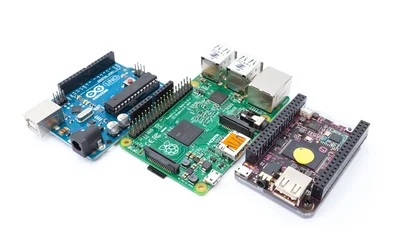
This article provides a comprehensive analysis of Arduino vs Raspberry Pi, highlighting their essentials, key features, and recent developments, helping you make an informed decision for your next project.