Solid-State Batteries vs Lithium-Ion Batteries
Understanding cell chemistry, safety, energy density, and manufacturing realism.

26 Jul, 2026. 14 minutes read
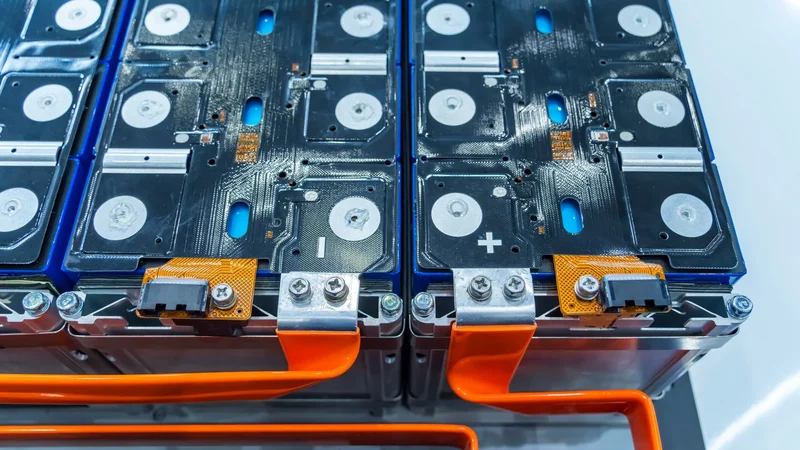
A typical cell pack of NMC batteries for an electrical vehicle
icsterisin Solid-State Batteries vs Lithium-Ion Batteries
Understanding cell chemistry, safety, energy density, and manufacturing realism.
Key Takeaways
Solid-state batteries replace the liquid electrolyte and porous separator used in conventional lithium-ion batteries with a solid electrolyte, which may be ceramic, sulfide, oxide, halide, or polymer based.
The main technical attraction for solid-state batteries vs lithium-ion batteries is higher energy density. Graphite anodes have a theoretical capacity of 372 mAh/g, while lithium metal has a theoretical capacity of 3,860 mAh/g.[1,2]
Today's lithium-ion batteries are not a weak baseline. Commercial LFP and NMC cells already achieve useful combinations of Wh/kg, Wh/L, cost, safety, manufacturability, and cycle life.
A non-flammable solid electrolyte can reduce fire risk associated with flammable liquid electrolytes and organic solvents, but solid-state batteries are not automatically immune to thermal runaway, internal short circuits, lithium dendrite growth, cathode oxygen release, or pack-level propagation hazards.[2]
Dendrite formation, interfacial resistance, cathode-electrolyte contact loss, lithium metal volume change, stack pressure, and thin-film electrolyte manufacturing are core engineering barriers.
Mass production remains the dividing line. Toyota and Idemitsu, Samsung SDI, QuantumScape, PowerCo, Stellantis, and Factorial are real programs, but conventional li-ion batteries dominate electric vehicles, consumer electronics, grid storage, and most energy storage deployments today.[4,5,6]
Introduction
Solid-State Batteries vs Lithium-Ion batteries is not just a contest between a futuristic battery and an obsolete one. Instead, it is a comparison between a mature, highly optimized rechargeable battery platform and a family of newer electrochemical architectures that may solve some of the hardest limits in today's cells while introducing new failure modes and production constraints.
A conventional lithium-ion cell uses a cathode, a graphite or graphite-silicon anode, a porous polymer separator, and a liquid electrolyte containing a lithium salt such as LiPF6 dissolved in carbonate organic solvents. During charge, lithium ions move from the cathode to the anode; during discharge, they move back through the electrolyte while electrons flow through the external circuit.
In a solid-state cell, the solid electrolyte replaces the liquid electrolyte and often the separator. The solid electrolyte may be a sulfide, oxide or ceramic, halide, or solid polymer. That change is important because it can make lithium metal practical as the negative electrode. A lithium metal anode removes much of the mass and volume penalty associated with graphite anodes, which is why many solid-state batteries target higher energy density for electric vehicles, aerospace, grid applications, and premium electronics.[1,2]
This article compares solid-state batteries vs lithium-ion batteries across the design variables that engineers actually use: architecture, materials, energy density, safety, dendrite formation, cycle life, charging speed, thermal behavior, cost, manufacturing maturity, standards, and application fit.
Cell Architecture and Materials
At the cell architecture level, the defining difference is simple: Solid-state batteries replace the liquid electrolyte and separator of lithium-ion batteries with a solid electrolyte. The downstream consequences are not simple.
In conventional lithium-ion batteries, the liquid electrolyte wets porous electrodes and fills tortuous pathways through the separator. This gives good interfacial contact over large active surface areas. The separator prevents direct electronic contact between anode and cathode while allowing lithium ions to pass.
Commercial separators are often polyethylene, polypropylene, or multilayer shutdown separators with pore sizes below 1 micrometer. The electrolyte is commonly LiPF6 in carbonate solvents such as ethylene carbonate, dimethyl carbonate, or diethyl carbonate.
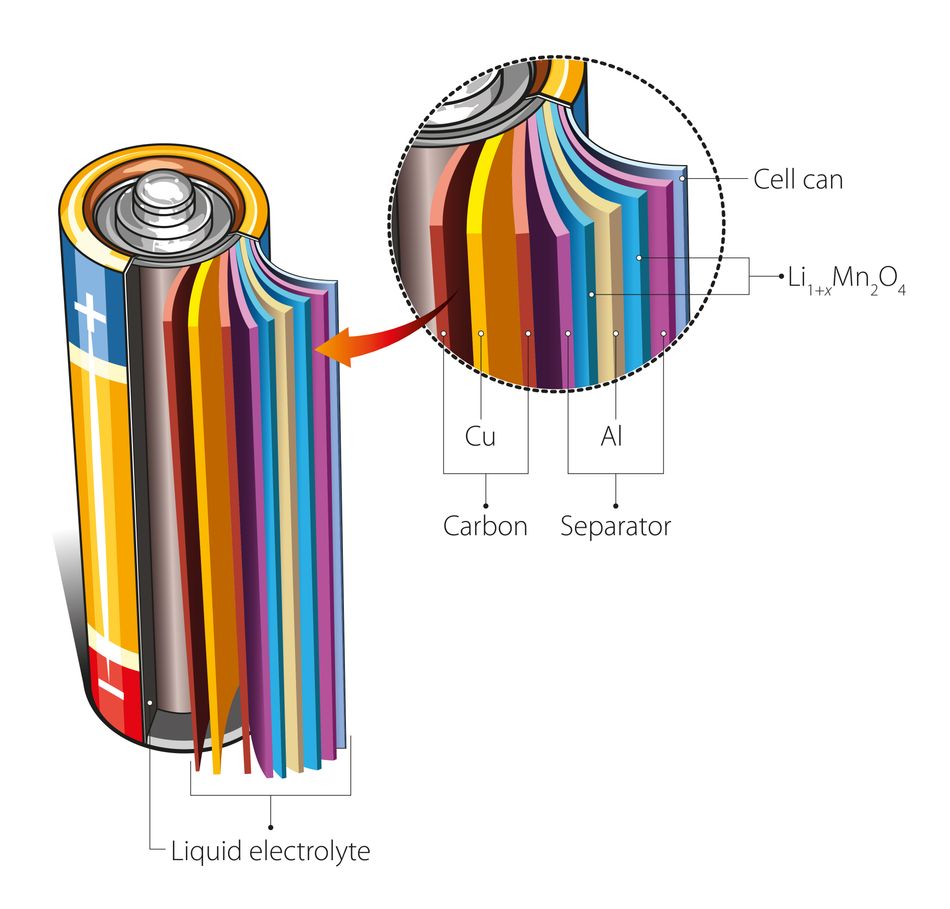
In solid-state batteries, there is no free-flowing liquid phase to wet every pore and particle surface. Ion transport depends on solid-solid contact between the cathode composite, solid electrolyte, and anode.
That is why microstructure, particle size distribution, calendering, interlayers, stack pressure, and cathode loading become first-order design variables rather than secondary optimization details.
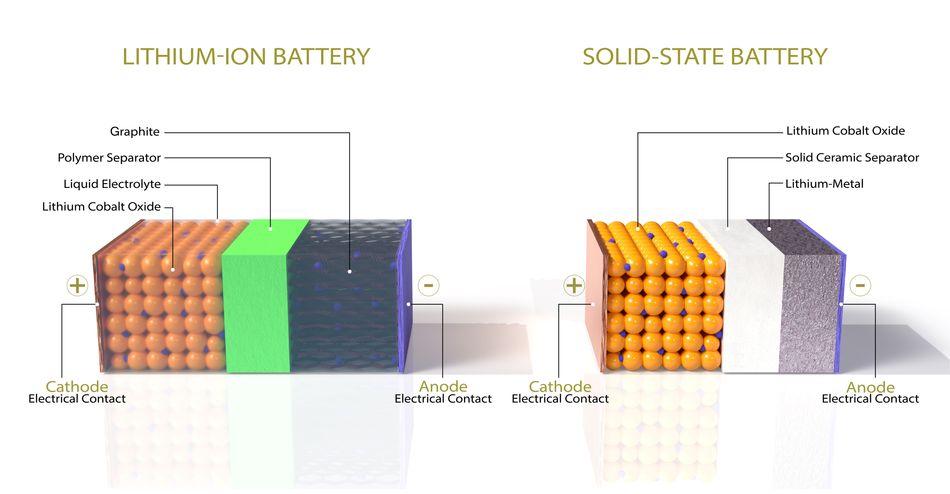
Cell element | Conventional lithium-ion batteries | Solid-state batteries | Engineering implication |
Cathode | LFP, NMC, NCA, LCO, LMO, and related metal oxides | Often high-nickel NMC, NCA, sulfur or metal oxide cathode concepts, usually blended with solid electrolyte and conductive carbon | Cathode particles may need coatings to reduce reactions with the solid electrolyte |
Anode | Graphite, graphite-silicon, hard carbon in some variants | Lithium metal anode, anode-free lithium plating designs, silicon, or composite anodes | Lithium metal improves theoretical capacity but increases sensitivity to dendrite formation, stack pressure, and interfacial degradation. |
Electrolyte | Liquid electrolyte, usually lithium salt in organic solvents | Solid electrolyte, typically sulfide, oxide, ceramic, halide, or solid polymer | Solid electrolyte can improve thermal stability but must maintain ion conduction and contact |
Separator | Porous polymer separator, sometimes ceramic coated | Often eliminated as a separate component because the solid electrolyte separates electrodes | Defects in the solid electrolyte can become direct short-circuit pathways |
Manufacturing | Slurry coating, drying, calendaring, electrolyte filling, formation, aging | Thin solid electrolyte deposition or lamination, dry/inert handling, pressure-controlled stack assembly, modified formation | Existing lithium-ion lines help, but solid-state cells require new quality-control steps |
Dominant failure modes | SEI growth, lithium plating, gas generation, separator damage, thermal runaway | Interfacial resistance growth, dendrite penetration, cracking, contact loss, lithium inventory loss | Different abuse tests and diagnostics are required |
Cathode Material Choices
The cathode remains a major driver of voltage, cost, thermal behavior, and energy density in both chemistries.
Nickel Manganese Cobalt Oxides - NMC and NCA provide higher energy density and are common in long-range electric vehicles.[1,2] High-nickel NMC variants such as NMC811 and NCA can increase energy density, but thermal stability and long-term cycling are engineering concerns, especially under abnormal conditions.
Lithium Iron Phosphate - LFP or Lithium Iron Phosphate or LiFePO4, is attractive because it avoids nickel and cobalt, has strong thermal stability, and supports long cycle life. It is widely used in stationary energy storage, grid storage, and cost-sensitive electric vehicles. A LiFePO4 battery generally sacrifices energy density relative to high-nickel NMC but can be cheaper and more durable.
Suggested Reading: What Is LiFePO4? Engineering Guide to Lithium Iron Phosphate Batteries
Solid-state batteries do not eliminate cathode constraints. They can use high-energy cathode materials, but cathode particles must be ionically connected to the solid electrolyte and electronically connected to conductive carbon.
Any reaction layer at the cathode-electrolyte interface adds impedance. Cathode volume change during cycling can break contact and shorten lifespan.
Anode Material Choices
The most important energy-density lever is the anode.
Graphite - Current lithium-ion batteries usually use graphite or graphite-silicon anodes. Graphite is stable, low cost, manufacturable, and well understood, but it stores lithium by intercalation and imposes a practical ceiling on cell-level energy density.
Lithium Metal - A lithium metal anode changes the mass balance. Lithium metal has a theoretical capacity of 3,860 mAh/g compared with 372 mAh/g for graphite.[2] In anode-free designs, lithium plates onto a current collector during the first charge, eliminating a pre-existing thick lithium foil.
Solid Electrolyte Families
The term solid electrolyte covers several material classes. They differ enough that "solid-state battery" should not be treated as one chemistry.
Solid electrolyte family | Examples | Strengths | Engineering challenges | Practical fit |
Sulfides | Argyrodites such as Li6PS5Cl, LGPS-type materials | High room-temperature ionic conductivity, relatively soft and deformable, compatible with pressing and lamination | Moisture sensitivity, H2S management, interfacial reactions, powder processing, dry-room or inert handling | Strong EV candidate if thin, stable, manufacturable films can be produced |
Oxides and ceramics | LLZO garnet, LATP, LAGP | Better air stability than sulfides, high modulus, good thermal stability, wide electrochemical windows in some systems | Brittle, high sintering temperatures, poor contact with electrodes, grain-boundary issues | Promising for high-safety and specialty cells, harder for large-area EV pouch formats |
Solid polymers | PEO with lithium salts such as LiTFSI, gel or composite polymers | Flexible, processable, lower interfacial contact stress | Low room-temperature conductivity in many systems, often needs elevated temperature, lower stiffness against dendrites | Useful in niche cells, hybrid electrolytes, and some moderate-temperature systems |
Hybrid composites | Polymer plus ceramic or sulfide filler | Processability plus improved mechanical or ionic properties | Filler dispersion, percolation, interface control, reproducibility | Likely bridge architecture for manufacturability |
Recent work on sulfide-based composite films describes why sulfides attract so much attention: sulfide solid electrolytes can have room-temperature ionic conductivity comparable to liquid electrolytes, while polymer electrolytes may be around 10^-5 S/cm at room temperature.[3]
Energy Density and Why Lithium Metal Matters
Energy density must be specified carefully. Engineers should ask whether a number is cell-level or material-level, packaged or unpackaged, measured or projected, at what discharge rate, at what temperature, at what state of charge, and under what stack pressure.
QuantumScape's QSE-5 B-sample discussion is useful because it explicitly reports a measured 21.6 Wh packaged cell at C/5 and 25 °C, with 301 Wh/kg and 844 Wh/L, explaining why test conditions are so important.[5]
For lithium-ion batteries, LFP cells are often lower in Wh/kg but attractive for cycle life and cost. High-nickel NMC cells can reach substantially higher energy density at the cost of more demanding thermal and aging management.[1,2]
Example cell or program | Type | Status | Reported or calculated energy density | Other relevant data |
EVE LF280K | LFP lithium-ion battery | Commercial cell | About 165 Wh/kg and 345 Wh/L, calculated from 3.2 V, 280 Ah, 5.42 kg, and published dimensions | 6,000 cycles at 25 °C and 0.5C/0.5C to 80% capacity under specified test conditions; charge 0 °C to 55 °C, discharge -20 °C to 55 °C |
LG INR21700 M50 | NMC811 lithium-ion cell | Commercial cylindrical cell | 267 Wh/kg and 740 Wh/L | 5 Ah, 18.2 Wh nominal energy, graphite-SiOx anode, datasheet cycle life reported as 500 cycles under full-window C/3 conditions |
QuantumScape QSE-5 B sample | Lithium-metal solid-state cell | B-sample, pre-mass-production | 301 Wh/kg and 844 Wh/L, measured at C/5 and 25 °C | Fully packaged sample; volume reported at 100% state of charge and operating pressure below 3.4 atm |
Samsung SDI ASB program | All-solid-state battery | Pilot-line samples and stated 2027 mass-production target | Company-stated 900 Wh/L | Uses proprietary solid electrolyte and anode-less technology, according to Samsung SDI |
Factorial and Stellantis FEST | Solid-state battery | Validated automotive-size cells, demonstration fleet target | 375 Wh/kg reported | 77 Ah cells, more than 600 cycles toward automotive qualification, 15% to 90% charge in 18 minutes at room temperature, -30 °C to 45 °C operation reported.[6] |
The reason solid-state batteries can outperform lithium-ion batteries is not merely that the electrolyte is solid. The energy-density improvement comes primarily from enabling lithium metal, anode-free designs, high-voltage cathodes, thinner separators or electrolytes, and tighter packaging.
If the solid electrolyte is thick, if the lithium metal excess is large, if heavy compression hardware is needed, or if protective interlayers consume too much volume, the advantage can shrink or disappear.
Safety Characteristics
Safety is one of the strongest arguments for solid-state batteries, but it needs careful wording. Conventional lithium-ion batteries use flammable liquid electrolytes based on organic solvents. If a cell is overcharged, internally shorted, crushed, heated, or manufactured with a latent defect, the liquid electrolyte, separator, anode, and cathode can participate in exothermic reactions.
Thermal Runaway
Solid-state batteries can reduce some of these risks because a non-flammable solid electrolyte can replace flammable liquid electrolytes and may also function as the separator.[2]
Moreover, research literature describes solid-state batteries as offering enhanced safety and higher energy density because of non-flammable solid electrolytes and lithium metal compatibility.[1,2]
However, "non-flammable solid electrolyte" does not mean "non-hazardous battery." A solid-state cell still contains stored electrochemical energy, reactive lithium in many designs, high-energy cathode materials, current collectors, tabs, binders, coatings, and packaging. Internal short circuits can still create localized heating.[2]
Abuse Behavior
Lithium metal can react with moisture and some electrolyte decomposition products. High-nickel cathodes and other metal oxides can release oxygen or heat under abuse. Therefore, pack-level safety must still address propagation, venting, insulation, fusing, contactors, BMS limits, thermal barriers, and mechanical protection.
Safety Standards
The relevant safety standards for solid-state cells are as follows.
UN 38.3 is widely used for transport testing of lithium and related batteries.
IEC 62660-1 covers performance and life testing for electric vehicle lithium-ion cells, including capacity, power, energy density, storage life, and cycle life.
IEC 62660-2 addresses reliability and abuse behavior.
UL 2580 covers EV battery assemblies and evaluates whether the energy storage assembly can withstand simulated abuse without exposing people to hazards.
IEC 62619 is relevant for industrial and stationary lithium battery safety.
SAE J2464 provides an abuse-test framework for EV and hybrid EV rechargeable energy storage systems.[7]
Recommended Reading: Whats The Difference Between UL And IEC Standards?
Interfacial and Mechanical Challenges
The hardest scientific challenges in solid-state batteries are often mechanical and interfacial, not just electrochemical.
In a liquid electrolyte lithium-ion cell, lithium plating on graphite can occur during fast charging, low-temperature charging, high state of charge, or cell aging. Metallic lithium deposits can become mossy or dendritic. If dendrites penetrate the separator, they can cause short circuits.
Solid-state batteries are often presented as a solution, but lithium dendrite growth is still observed in many solid electrolyte systems. Studies of lithium metal cells with ceramic solid electrolytes report that dendrites can form during charging at practical rates, penetrate the ceramic, and cause shorting and failure.
Dendrite Formation
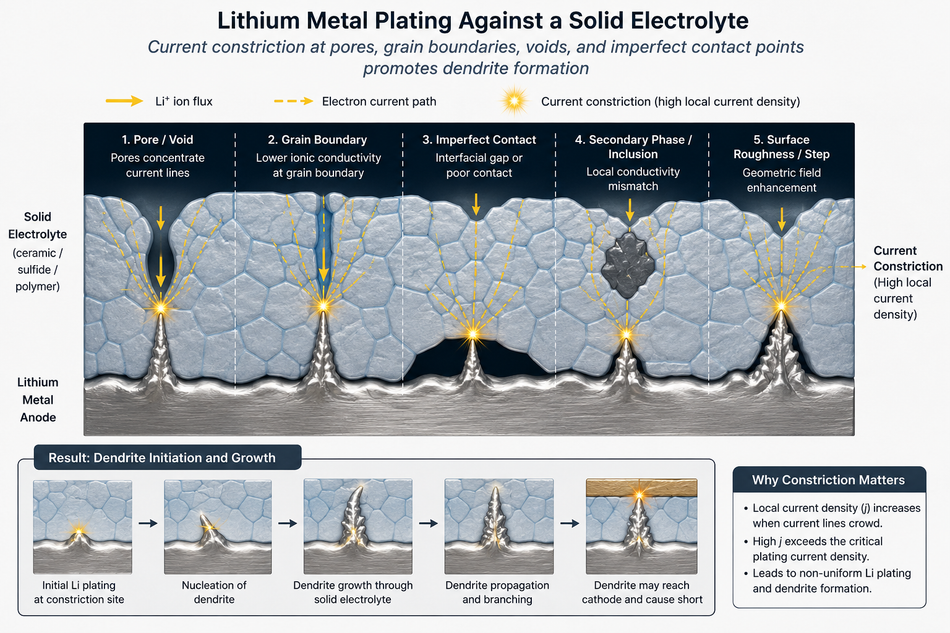
Dendrite formation in solid-state batteries is driven by local current density, defects, pores, grain boundaries, electronic leakage, pressure gradients, lithium depletion, interface reactions, and nonuniform plating.
- A stiff ceramic electrolyte can block some mechanical growth modes, but it can also fracture.
- A softer sulfide can improve contact, but may require pressure and careful chemical stabilization.
- A polymer can accommodate strain, but may not provide enough room-temperature ionic conductivity or dendrite suppression.
Interfacial Resistance
Interfacial resistance is the other major barrier. In liquid cells, the electrolyte wets the electrode surface. But, in solid-state cells, two solids must remain in intimate contact through thousands of cycles. As a result, cathode particles expand and contract, causing thickness changes in in lithium metal plates, and strips. This can lead to cracks in solid electrolytes.
Moreover, side reactions can form resistive interphases. RSC and Poor solid-solid contact, side reactions, and volume change can increase charge-transfer resistance and limit ion transport.
Stack Pressure
Stack pressure is therefore a design variable. Some solid-state cells need external pressure to maintain contact and suppress void formation at the lithium interface. That pressure system can complicate module design and reduce pack-level energy density if it requires heavy frames, springs, or compression plates.
Performance Characteristics
Cycle Life
Cycle life and lifespan are not intrinsic labels. They depend on depth of discharge, C-rate, temperature, voltage window, calendar aging, pressure, end-of-life criterion, and cell balancing strategy. A 6,000-cycle LFP result and a 600-cycle solid-state result may both be valid, but they are not comparable unless the test conditions align.
Temperature Ranges
Commercial LFP cells show why lithium-ion batteries remain so competitive. The EVE LF280K datasheet lists 6,000 cycles at 25 °C under 0.5C charge and 0.5C discharge to 80% initial capacity, and 2,500 cycles at 45 °C under specified conditions. It also lists 0 °C to 55 °C charge and -20 °C to 55 °C discharge temperature ranges. These numbers are one reason LFP and LiFePO4 battery systems are common in stationary energy storage and grid storage.
Lifespan
For solid-state batteries, long lifespan is possible in principle, but it is not guaranteed. A lithium metal anode must plate and strip uniformly over many cycles. The cathode-solid electrolyte interface must not grow impedance too quickly. Stack pressure must remain in range.
Charging Speed
Charging speed follows the same pattern. Solid-state batteries may support high charging speed because some solid electrolytes have high ionic conductivity and because lithium metal removes graphite intercalation limits.
The constraint is that ultra-fast charging increases current density, heat generation, lithium plating nonuniformity, and mechanical stress. For design engineers, it's not just about the charging time. Instead, factors like capacity retention, Coulombic efficiency, impedance, safety margin, and temperature uniformity, especially after hundreds or thousands of fast-charge cycles.
Suggested Reading: How to Charge a Lithium-Ion Battery Safely and Efficiently?
Manufacturing and Quality Control
Lithium-ion batteries have a massive manufacturing advantage. Production equipment, process windows, formation protocols, in-line inspection, electrolyte filling, dry-room controls, pack architecture, supply chains, and recycling pathways are already industrialized.
DOE notes that lithium-ion batteries moved from consumer electronics into electric vehicles and stationary energy storage, with broad deployment enabled by mass production.[3]
Solid-state batteries are still largely in pilot, sampling, and pre-mass-production phases for EV-size cells. The notable point is that the field is no longer purely academic.
Toyota and Idemitsu are developing mass production technology for sulfide solid electrolytes and have stated a BEV commercialization target in the 2027 to 2028 period followed by full-scale mass production.[4]
Idemitsu has also announced construction of a large pilot facility for solid electrolytes with several hundred tons per year of planned production capacity and construction completion targeted in 2027.[4]
Samsung SDI began work on its solid-state pilot line in Suwon in 2022, supplied samples in 2023, and is preparing for 2027 mass production. It reports a 900 Wh/L energy-density target for an all-solid-state battery using proprietary solid electrolyte material and anode-less technology.[8]
Manufacturing challenges include:
Producing thin solid electrolyte layers without pinholes, cracks, or thickness variation.
Maintaining low interfacial resistance over large electrode areas.
Handling sulfides in moisture-controlled environments.
Sintering or densifying oxide and ceramic electrolytes without damaging other layers.
Integrating high-loading cathodes with sufficient ionic and electronic percolation.
Managing stack pressure without unacceptable pack mass or volume.
Detecting latent internal defects before shipment.
Achieving lithium-ion-like yields, throughput, and cost.
Cost is not only material cost. It includes yield loss, formation time, capital equipment, dry-room or inert-room infrastructure, compression fixtures, inspection, scrap handling, recycling, and qualification time.
Application Areas
The best battery is application-specific. The following table summarizes suited applications across various battery types.
Application | Lithium-ion batteries today | Solid-state battery fit | Engineering judgment |
Long-range electric vehicles | NMC, NCA, and increasingly LFP dominate | Strong potential if high Wh/L, fast charge, safety, and cycle life are validated | Premium EVs are the most likely early target |
Cost-sensitive EVs | LFP is highly competitive | Harder unless solid-state cost falls sharply | LFP will remain difficult to displace |
Consumer electronics | Lithium-ion pouch and cylindrical cells dominate | Thin-film and small solid-state cells can help wearables, medical devices, and compact electronics | Large-format EV solid-state maturity should not be inferred from small cells |
Grid storage | LFP and LiFePO4 battery systems dominate because of cost, safety, and long cycle life | Possible if cost, lifetime, and safety exceed LFP at system level | Near-term grid storage favors LFP |
Aerospace, drones, defense | High specific energy is valuable | Strong fit if reliability and abuse behavior are proven | Cost tolerance is higher |
High-temperature or safety-critical systems | Lithium-ion requires careful protection | Ceramic or specialty solid-state systems may help | Use case depends on qualification standards and failure mode |
For electric vehicles, the value proposition is stronger. Higher Wh/L can reduce pack size or increase range. Higher Wh/kg can reduce vehicle mass. Improved abuse tolerance can simplify safety engineering, though not eliminate it.
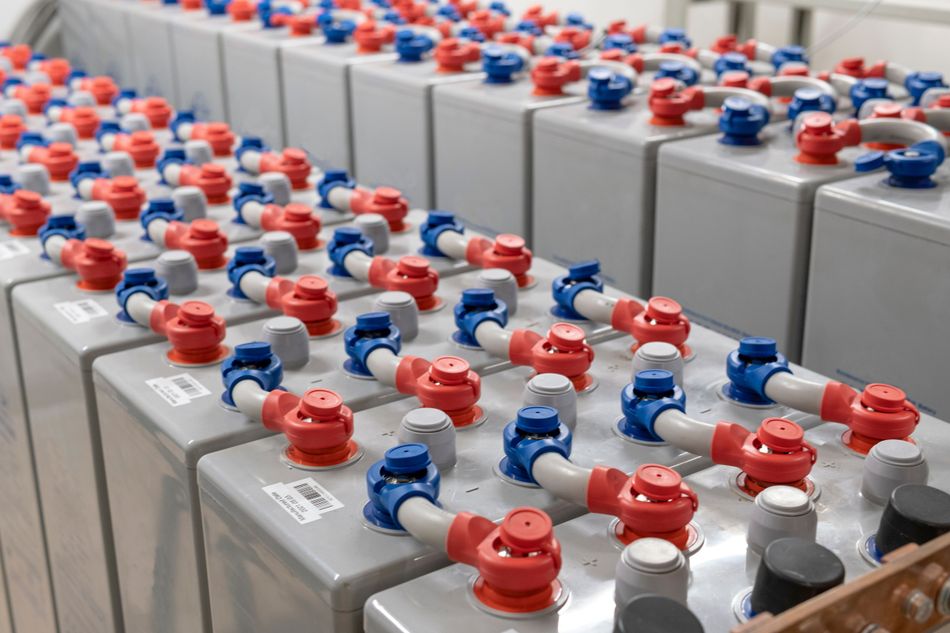
For grid storage, a solid-state cell must compete against LFP on installed cost per kWh, cycle life, calendar life, round-trip efficiency, thermal management, safety, bankability, and serviceability.
Recommended Reading: Lithium-Ion Solar Battery Selection and Integration for Engineers
Conclusion
Solid-state batteries offer higher theoretical energy density, improved safety, and better packaging potential by replacing liquid electrolytes with solid materials and enabling lithium metal anodes. However, challenges such as dendrite formation, interfacial resistance, cracking, and manufacturing complexity must be overcome before widespread adoption.
Lithium-ion batteries remain the industry standard due to their maturity, low cost, and scalable production across multiple chemistries. Rather than replacing lithium-ion, solid-state batteries are expected to first serve high-performance applications, while future success will depend on manufacturability, durability, safety, and cost at scale.
FAQ
1. Are solid-state batteries better than lithium-ion batteries?
Not universally. Solid-state batteries can offer higher energy density and improved safety potential because they use a solid electrolyte instead of a liquid electrolyte, and many designs enable a lithium metal anode. However, lithium-ion batteries are mature, lower cost, field-proven, and already strong in cycle life, manufacturability, and reliability. For electric vehicles, solid-state may become attractive first in premium, high-range platforms. For grid storage, LFP lithium-ion batteries remain difficult to beat on cost and lifespan.
2. Why does a lithium metal anode increase energy density?
A lithium metal anode stores charge much more densely than graphite. Graphite has a theoretical capacity of 372 mAh/g, while lithium metal has a theoretical capacity of 3,860 mAh/g. Removing graphite can reduce inactive mass and volume, especially in anode-free cells where lithium plates onto a current collector during charge.
3. Are solid-state batteries immune to thermal runaway?
No. A non-flammable solid electrolyte can reduce fire risk associated with flammable liquid electrolytes and organic solvents, but solid-state batteries still contain stored energy, reactive materials, cathodes, current collectors, and possible internal short-circuit paths. Lithium metal and high-energy cathode materials can still create hazardous failure modes under abuse. Solid-state cells should still be evaluated under transport, abuse, reliability, pack-safety, and application-specific standards such as UN 38.3, IEC 62660, UL 2580, IEC 62619, and SAE J2464.
4. Which solid electrolyte is most practical for electric vehicles?
Sulfides are among the most discussed EV candidates because they can provide high room-temperature ionic conductivity and are mechanically softer than many oxides, which helps interfacial contact. Toyota and Idemitsu are specifically working on sulfide solid electrolytes for all-solid-state BEV batteries. Oxide and ceramic electrolytes offer good stability advantages but are brittle and difficult to integrate over large areas. Solid polymer systems are easier to process but often have lower room-temperature conductivity.
5. How do cycle life and lifespan compare?
Current lithium-ion batteries, especially LFP, already have excellent cycle life under controlled conditions. The EVE LF280K LFP cell, for example, is rated for 6,000 cycles at 25 °C under specified 0.5C cycling to 80% capacity. Solid-state batteries may eventually provide long lifespan, but current automotive-size examples are still being validated. Factorial and Stellantis reported more than 600 cycles for 77 Ah solid-state cells toward automotive qualification [6].
6. Can solid-state batteries support ultra-fast charging?
They may, but ultra-fast charging is not automatic. Some solid electrolytes have high ionic conductivity, and lithium metal avoids graphite intercalation limits. Factorial and Stellantis reported 15% to 90% charging in 18 minutes at room temperature for 77 Ah FEST cells. The engineering risk is that higher current density can accelerate lithium dendrite growth, void formation, heating, and interfacial damage [6].
7. Why are solid-state batteries not yet in mass production for EVs?
The barriers are manufacturability and durability rather than basic electrochemistry alone. Large cells need thin, defect-free solid electrolyte layers; stable cathode and anode interfaces; controlled stack pressure; low interfacial resistance; and high yield. Sulfides need moisture control, oxides and ceramics can be brittle, and polymers may have conductivity limits. Toyota and Idemitsu identify durability, quality, cost, and raw-material supply as key challenges, while Samsung SDI and others remain in pilot or sample-stage programs.
8. Should grid storage switch from LFP to solid-state batteries?
Not in the near term for most projects. Grid storage prioritizes low cost, long calendar life, high cycle life, safety, availability, and bankability. LFP lithium-ion batteries are already strong on those metrics, and LiFePO4 battery systems have a mature supply chain. Solid-state batteries could become attractive for grid storage if they prove lower lifetime cost, very long cycle life, simpler safety management, or superior temperature tolerance. Until then, LFP remains the practical default for most stationary energy storage designs.
References
U.S. Department of Energy, Office of Electricity. (2023). Technology strategy assessment: Lithium-ion batteries. https://www.energy.gov/sites/default/files/2023-07/Technology
Sandia National Laboratories. (n.d.). DOE/EPRI electricity storage handbook, Chapter 3: Lithium-ion batteries. https://www.sandia.gov/app/uploads/sites/163/2021/09/ESHB-Ch3_Lithium-Batteries_Preger.pdf
Li, et al. (2024). Sulfide-based composite solid electrolyte films for all-solid-state batteries. Communications Materials. https://www.nature.com/articles/s43246-024-00482-8
Toyota Motor Corporation. (n.d.). Idemitsu and Toyota announce cooperation toward mass production of all-solid-state batteries for BEVs. https://global.toyota/en/newsroom/corporate/39865919.html
QuantumScape. (n.d.). A first look at the QSE-5 B sample. https://www.quantumscape.com/blog/a-first-look-at-the-qse-5-b-sample/
Stellantis. (2025). Stellantis and Factorial Energy reach key milestone in solid-state battery development. https://www.stellantis.com/en/news/press-releases/2025/april/stellantis-and-factorial-energy-reach-key-milestone-in-solid-state-battery-development
SAE International, Electric and Hybrid Electric Vehicle Rechargeable Energy Storage System (RESS) Safety and Abuse Testing, SAE Standard J2464_200911, Rev. Nov. 2009. https://webstore.ansi.org/standards/sae/sae24642009j2464.
Samsung SDI, “[SDI Focus] 900Wh/L All Solid Battery Becomes Reality,” Dec. 3, 2024. https://www.samsungsdi.com/sdi-story/sdi-focus/900wh-all-solid-battery-becomes-reality.html.
in this article
1. Key Takeaways2. Introduction3. Cell Architecture and Materials4. Solid Electrolyte Families5. Energy Density and Why Lithium Metal Matters6. Safety Characteristics7. Safety Standards 8. Interfacial and Mechanical Challenges9. Performance Characteristics 10. Manufacturing and Quality Control11. Application Areas12. Conclusion13. FAQ14. References