Flow Battery: How It Works, Types, Cost, and Lifespan
A flow battery stores energy in liquid electrolytes held in external tanks, allowing power and storage capacity to be sized independently. This article explores how it works, its vanadium, zinc-bromine, and iron chemistries, and its cost, efficiency, lifespan, and grid-scale applications.

17 Nov, 2026. 31 minutes read
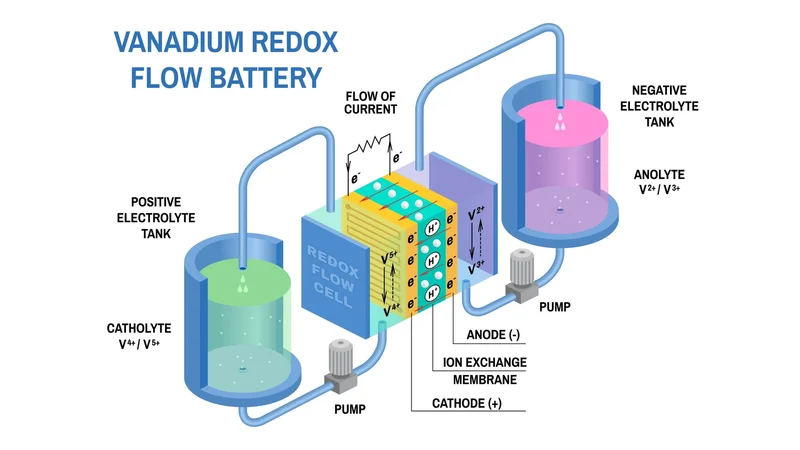
Redox flow battery system components and operation
This article was first published on
www.wevolver.comKey Takeaways
A flow battery circulates liquid electrolytes from external tanks through an electrochemical cell stack. According to a technical review of flow battery systems, the stack determines power output, while the electrolyte volume determines energy storage capacity.
The vanadium redox flow battery (VRFB) is among the most established and widely deployed flow battery technologies. A 2026 industry review reports that China connected more than 440 MW/1.74 GWh of vanadium flow battery capacity to the grid in 2024.
Vanadium electrolytes have a reported energy density of approximately 25–35 Wh/L, while lithium-ion batteries can reach 250 Wh/L or more. Vanadium flow batteries can achieve approximately 15,000–20,000 charge-discharge cycles, according to published technical research.
A national laboratory review places flow battery system-level round-trip efficiency at approximately 65–80%. Four-hour systems generally fall toward the lower end of this range.
A government energy assessment estimates an installed cost of $384.50/kWh for a 100 MW, 10-hour vanadium flow battery system. The estimated cost per kilowatt-hour decreases as storage duration increases.
Introduction
A flow battery is a rechargeable battery in which liquid electrolytes circulate through one or more electrochemical cells from external tanks. Unlike conventional batteries, where the active materials are stored within the electrodes, a flow battery stores most of its electrochemically active materials in liquid electrolytes outside the cell. These electrolytes enter the cell during operation, where electrochemical reactions convert stored chemical energy into electricity.
This design determines how flow batteries are configured. Their energy capacity can be increased by adding more electrolyte or expanding the external tanks, while power output can be increased by adding cells to the stack. This separation provides flexibility in system design. However, the relatively low energy density of some flow battery chemistries, including vanadium systems, means they require more space than lithium-ion systems with comparable storage capacity.
Flow batteries have moved beyond experimental development and are being deployed in large-scale energy storage applications. Mineral industry data published in 2025 report continued use of vanadium redox flow batteries in large-scale storage systems and growth in installations worldwide. The same data identify high capital costs and limited availability of high-purity vanadium feedstock as ongoing challenges. Recent technical reviews also identify flow batteries as a developing option for long-duration energy storage.
What Is a Flow Battery?
The terms "flow battery" and "redox flow battery" are often used interchangeably. Redox is short for reduction-oxidation, a process in which chemical species transfer electrons. In these batteries, active materials undergo reversible oxidation and reduction reactions as the system charges and discharges.
In a conventional flow battery, the electrodes, commonly made from carbon felt, provide surfaces for electrochemical reactions without being consumed as the active energy-storage materials. This differs from conventional batteries, in which electrode materials participate directly in the electrochemical reactions and undergo chemical changes during charging and discharging.
A fuel cell is a related electrochemical device because it also separates the energy-conversion component from the supply of chemical reactants. However, most fuel cells generate electricity from externally supplied reactants and cannot be efficiently reversed through electrical input. A rechargeable flow battery, by contrast, stores energy by electrically reversing its redox reactions, allowing it to charge and discharge.
How a Flow Battery Works
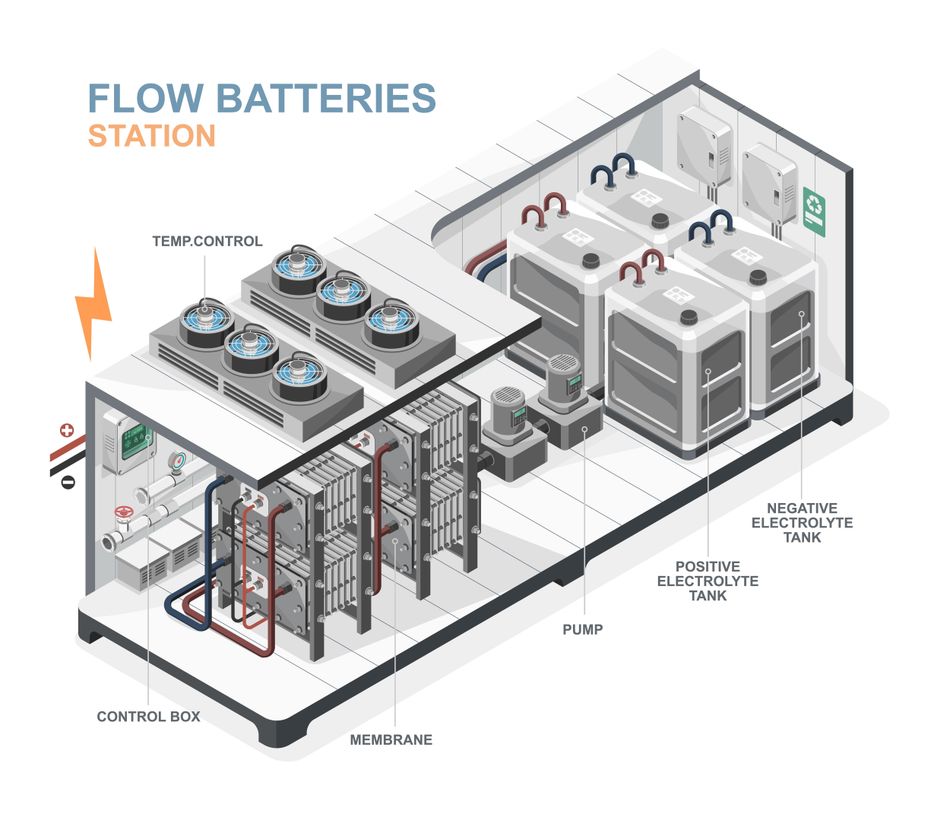
A flow battery system consists of external electrolyte tanks, an electrochemical cell stack, and a circulation system that moves the electrolytes between the tanks and the cells. It also requires power conversion and control equipment to connect the battery to an electrical load or the grid. In a vanadium system, a bidirectional inverter converts direct current (DC) from the battery into alternating current (AC) for the grid and converts AC back to DC during charging. Control equipment regulates system operation, including electrolyte circulation.
Component | What it does | What it determines or influences |
External tanks | Store the positive and negative liquid electrolytes, which contain the active materials used to store chemical energy. | Energy capacity (kWh), mainly through electrolyte volume and concentration. |
Pumps and piping | Circulate the electrolytes between the tanks and the cell stack, maintaining the flow needed for electrochemical reactions. | Circulation rate, auxiliary energy consumption, and part of the system's balance-of-plant cost. |
Cell stack | Contains multiple electrochemical cells connected in series. The cell area and number of cells influence the current and voltage the stack can deliver. | Power output (kW), determined by the stack's voltage and current. |
Separator or ion exchange membrane | Separates the positive and negative half-cells while allowing ions to pass between them. It also limits the crossover of active species. | Coulombic efficiency and the extent of electrolyte cross-contamination. |
Power conversion and control equipment | A bidirectional inverter manages DC-to-AC and AC-to-DC conversion. Supervisory control equipment regulates functions such as electrolyte flow and system operation. | Grid compatibility, power conversion, and operational control. Some systems may also require a DC-DC converter to increase the voltage. |
Recommended reading: Flow Cell Technology: A Comprehensive Guide
Charging and Discharging, Step by Step
The vanadium redox flow battery (VRFB) provides a useful example because it uses vanadium in different oxidation states on both sides of the cell.
Pumps circulate the positive and negative electrolytes from their respective tanks through the cell stack. Porous electrodes provide surfaces for the electrochemical reactions.
During charging, electrical energy drives oxidation and reduction reactions in opposite half-cells. On the negative side, vanadium ions (V³⁺) gain electrons and are reduced to V²⁺. On the positive side, vanadium in the +4 oxidation state (VO²⁺) loses electrons and is oxidized to vanadium in the +5 oxidation state (VO₂⁺).
During discharge, these reactions reverse. V²⁺ loses an electron and becomes V³⁺ at the negative electrode, while VO₂⁺ gains an electron and becomes VO²⁺ at the positive electrode. Protons move through the ion exchange membrane to maintain charge balance.
Electrons released at the negative electrode travel through an external circuit to the positive electrode. This electron flow provides electrical power to an external load or the grid.
The electrolytes return to their respective tanks, where they are stored until the next operating cycle. The battery's state of charge can be estimated by monitoring the relative concentrations of the vanadium species in the electrolytes.
The standard cell voltage of an all-vanadium system is approximately 1.26 V at 25°C and 50% state of charge. Actual operating cells can exhibit voltages around 1.4 V, depending on operating conditions and membrane-related effects. The open-circuit voltage varies with state of charge, typically ranging from approximately 1.1 to 1.6 V.
Why Power and Energy Scale Separately
In a flow battery, the cell stack determines the system's power output, while the volume and concentration of electrolyte in the tanks determine its total energy capacity. This separation allows designers to configure power and storage capacity independently. The relationship is commonly expressed as an energy-to-power (E/P) ratio, measured in hours.
This scalability has important cost and space implications. Because the electrolyte accounts for a substantial portion of the energy-storage capacity, increasing the E/P ratio can reduce the estimated cost per kilowatt-hour by spreading fixed and power-related system costs over a larger energy capacity.
However, the electrolyte tanks require considerable space. Vanadium electrolytes have a reported energy density of approximately 25–35 Wh/L. On this basis, storing 1 MWh requires roughly 29–40 m³ of electrolyte before accounting for the tanks, cell stack, and operating limits on the usable state-of-charge range.
For comparison, a published technical review reports energy density of 250 Wh/L or more for lithium-ion batteries. At that density, 1 MWh corresponds to approximately 4 m³ or less. These figures should be interpreted carefully because electrolyte-level and battery-level energy density may not represent equivalent measurement boundaries.
Volume and installation footprint are also different measures. A recent industry review reports that some vanadium flow battery installations can achieve a smaller normalized footprint than comparable lithium-ion installations through system layout and vertical stacking. This does not eliminate the need to account for tank dimensions, access, spacing, and other site requirements when comparing installations.
The independent scaling of power and energy applies primarily to conventional redox flow batteries. It does not apply in the same way to hybrid flow batteries, which use a solid electrode, typically at the anode, alongside a liquid electrolyte.
Types of Flow Batteries
Flow batteries are generally divided into two families based on where their electrochemically active materials are stored. This distinction affects how independently a system's power output and energy capacity can be scaled.
Redox flow batteries store their electrochemically active materials in liquid electrolytes. Both positive and negative active materials remain dissolved in solution and circulate through the cell during operation.
Hybrid flow batteries store at least one active component inside the cell, often as a solid metal deposited on an electrode during charging. Zinc-bromine and all-iron flow batteries are examples. Because part of their energy-storage material is held within the cell, their power and energy capacities are not as independently scalable as those of conventional redox flow batteries.
Flow batteries can also be classified as aqueous or non-aqueous, depending on the solvent used in their electrolytes. Non-aqueous systems can support higher-voltage redox couples and greater theoretical energy densities. However, membrane resistance and limited ion selectivity remain technical challenges. A 2023 government energy assessment reported that commercial flow battery systems were based primarily on aqueous chemistries.
Chemistry | Family | Negative/positive redox couples | Cell voltage | Commercial status |
All-vanadium (VRFB) | Redox | V(II)/V(III) and V(IV)/V(V) | 1.26 V standard; approximately 1.4 V in operating cells | The most established and widely deployed flow battery chemistry, with multi-gigawatt-hour installations reported worldwide |
Iron-chromium | Redox | Cr(II)/Cr(III) and Fe(II)/Fe(III) | Approximately 1.2 V | Demonstration projects have advanced toward commercial deployment, including a megawatt-scale project in China approved for commercial use in 2023 |
Bromine-polysulfide | Redox | Sulfide/polysulfide and bromide/bromine | Approximately 1.5 V | Demonstrated, but a 2020 technical assessment reported that the chemistry had not yet reached commercial maturity |
Zinc-bromine | Hybrid | Zn/Zn²⁺ and Br₂/Br⁻ | 1.85 V standard | One of the more commercially developed hybrid chemistries, although the supplier base has contracted |
All-iron | Hybrid | Fe/Fe(II) and Fe(II)/Fe(III) | 1.26 V at 50% state of charge | Commercial systems have been developed, alongside continued research into alternative iron-based electrolytes |
Aqueous organic | Redox | Organic molecules, including anthraquinone and benzoquinone derivatives | Depends on the molecule pair | Under development; degradation of active molecules remains a technical challenge |
Vanadium Redox Flow Battery (VRFB)
The vanadium redox flow battery uses vanadium in four oxidation states across its two electrolytes. The negative electrolyte contains V²⁺ and V³⁺, while the positive electrolyte contains vanadium in the +4 and +5 oxidation states. Using the same element on both sides reduces the risk of permanent capacity loss from cross-contamination. If vanadium species cross the membrane, the electrolyte balance can be disrupted and efficiency reduced, but the effects can often be corrected through rebalancing.
Some commercial systems include a connection between the electrolyte tanks that allows the liquids to be transferred when their states of charge become unbalanced. Rebalancing can also address imbalances that develop over time through processes such as water transport across the membrane. These measures help maintain capacity during extended operation, although they do not eliminate the need for maintenance or component replacement.
Vanadium electrolytes typically contain approximately 1.6–1.7 M vanadium in sulfuric acid, with a total sulfate concentration of about 5 M. One technical assessment proposed an operating temperature range of 10–40 °C for an electrolyte containing 2 M vanadium and 5 M total sulfate. Lower vanadium concentrations, generally around 1.5–1.8 M, may be used to accommodate wider temperature ranges in more demanding climates.
Research into vanadium-based flow batteries dates back several decades. Experiments conducted in 1984 demonstrated the use of vanadium redox couples in both halves of a working flow cell. An all-vanadium battery patent followed in 1986, and its expiration in 2006 helped open the technology to broader commercial development. Since then, manufacturers in several countries have developed vanadium flow battery systems.
Zinc-Bromine Flow Battery
The zinc-bromine flow battery is a widely recognized example of a hybrid flow battery. A significant portion of its stored energy is held as metallic zinc deposited on the negative electrode during charging. Consequently, its energy capacity depends partly on the amount of zinc that can be deposited within the cell, meaning power and energy cannot be scaled as independently as in a conventional redox flow battery.
Zinc bromide solution is stored in both tanks. During charging, zinc ions are reduced and deposited as solid zinc on the negative electrode, while bromide ions are oxidized to bromine at the positive electrode. During discharge, the reactions reverse: zinc dissolves back into the electrolyte as Zn²⁺, and bromine is reduced to bromide ions.
The positive half-reaction is Br₂ + 2e⁻ ⇌ 2Br⁻, with a standard potential of approximately +1.09 V versus the standard hydrogen electrode (SHE). The negative reaction involves Zn²⁺ + 2e⁻ ⇌ Zn, with a standard potential of approximately −0.76 V versus SHE. Together, these reactions produce a standard cell voltage of approximately 1.85 V and a theoretical specific energy of about 440 Wh/kg. Commercial systems achieve substantially lower values, with reported specific energies of approximately 60–85 Wh/kg.
Bromine presents a significant design challenge. It has limited solubility in water and a boiling point of approximately 58.8 °C. To manage it, manufacturers add a bromine-complexing agent, typically a quaternary amine, to capture bromine and reduce the presence of free bromine in the electrolyte. This helps limit corrosion and exposure risks. However, complexing agents add to system costs. A 2021 technical review identified these additional costs as one reason zinc-bromine systems may not offer a substantial cost advantage over vanadium systems, despite the relatively low cost of zinc and bromine as raw materials.
Zinc deposition also requires careful management. Uneven growth can produce dendrites, which may obstruct flow channels or penetrate the separator and cause internal short circuits. Some zinc-bromine designs therefore require periodic full discharge to help manage zinc deposits and reduce the risk of dendrite-related failure. Bromine crossover through the separator can also contribute to self-discharge.
Despite these challenges, zinc-bromine electrolytes are reported to have relatively low susceptibility to some forms of electrolyte aging. Commercial lifetime estimates have ranged from approximately 11 to 14 years. Pilot systems have demonstrated charge and discharge durations of up to 10 hours, current densities of up to 80 mA/cm², and energy efficiencies of around 80%.
The commercial supplier base has narrowed. One manufacturer of zinc-bromine systems entered voluntary administration in August 2024 after failing to secure the capital needed to expand production. This development illustrates the financing and manufacturing challenges facing some flow battery technologies, even when their technical performance has been demonstrated.
Iron Flow Batteries: All-Iron and Iron-Chromium
All-iron flow batteries were proposed in 1981 and use iron-based reactions in both half-cells. They are classified as hybrid systems because metallic iron is deposited and stripped from the negative electrode, while the Fe²⁺/Fe³⁺ redox couple reacts in solution at the positive carbon electrode. The cell voltage is approximately 1.26 V at 50% state of charge. The chemistry is sensitive to pH, partly because hydrogen evolution can compete with the intended electrochemical reactions.
A 2023 government energy assessment reported that a U.S. manufacturer had reached an annual production capacity of nearly 800 MWh for its all-iron flow battery by the end of 2022. A 2024 product datasheet for a containerized system specified a discharge power of 75 kW and an energy capacity ranging from at least 380 kWh to 500 kWh. Its electrolyte consists of ferrous chloride, potassium chloride and water. The datasheet also reported more than 20,000 cycles and a 25-year design life. These are manufacturer specifications rather than independently established field-life results.
In June 2026, the manufacturer announced that it would continue developing iron flow battery technology for long-duration energy storage while reallocating some capital toward sodium-ion products and streamlining its operations.
Research into alternative iron-based designs is also continuing. In 2024, a national laboratory reported a laboratory-scale iron flow battery using a neutral-pH, phosphate-based electrolyte. The system retained 98.7% of its maximum capacity over 1,000 consecutive cycles. Its initial design achieved an energy density of up to 9 Wh/L, compared with approximately 25 Wh/L reported for commercial vanadium systems. These results demonstrate research progress, but laboratory performance should not be treated as evidence of commercial readiness.
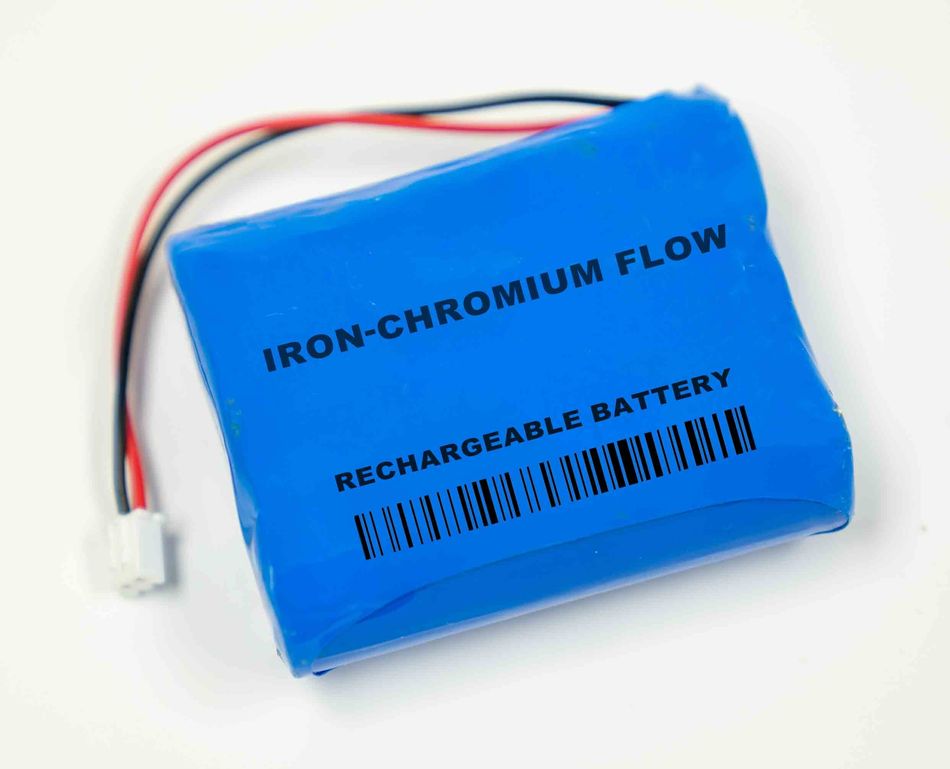
Iron-chromium flow batteries were proposed in 1974 as an alternative approach to storing energy through reversible redox reactions. Early development focused on the Fe/Cr system, with a 1 kW, 13 kWh preprototype used to evaluate its operating principles. The chemistry uses iron and chromium as the active reactants, with Fe(II)/Fe(III) and Cr(II)/Cr(III) redox couples.
Cross-contamination between the two electrolytes became a recognized technical challenge in early iron-chromium systems. This problem helped motivate research into all-vanadium designs, which use the same element in both electrolytes and are therefore less vulnerable to permanent capacity loss from crossover.
Iron-chromium technology has continued to develop, particularly in China. In February 2023, a megawatt-scale demonstration project with a storage capacity of 6,000 kWh and a six-hour discharge duration was approved for commercial use. The project represents a significant step in the development of large-scale iron-chromium storage, although approval for commercial use does not, by itself, establish long-term operating performance.
Flow Battery Performance: Efficiency, Energy Density and Lifespan
The performance figures below primarily describe vanadium flow battery systems unless otherwise specified. They should be treated as indicative ranges rather than fixed specifications because performance varies with stack design, energy-to-power (E/P) ratio, state of charge and operating conditions.
Metric | Typical figure | Context |
System round-trip efficiency (redox flow systems) | 65–80% | A national laboratory review reports this range, with four-hour systems generally closer to 65%. |
Stack round-trip efficiency | Average above 80%; some stacks reach 88% | A 2022 study cited in a subsequent technical review reported these results. |
Electrolyte energy density | 25–35 Wh/L | Reported for vanadium electrolytes. Lithium-ion battery energy density is substantially higher, with reported values of 250 Wh/L or more, although the measurement boundaries may differ. |
Cycle life | 15,000–20,000 cycles | A range reported in a 2021 technical review. Actual cycle life depends on operating conditions and maintenance. |
Calendar life (redox flow systems) | 10–20 years | Membranes and electrodes may require replacement after approximately 10 years, while pumps may last 15–20 years, according to a technical assessment. |
Response time | On the order of milliseconds | Rapid electrical response is possible when the electrodes remain filled with electrolyte and the circulation pumps are on standby. |
Why System Efficiency Trails Cell Efficiency
Small laboratory cells have demonstrated round-trip efficiencies above 85–90%. However, larger pilot systems must account for additional losses, including hydraulic resistance, pump energy consumption and shunt currents. Reported efficiencies for kilowatt-scale pilot systems have ranged from approximately 57% to 75%, depending on operating conditions and electrolyte flow optimization.
Shunt currents are another source of energy loss. They occur when electrical current follows unintended paths through the conductive electrolyte in the common manifolds connecting cells in the stack. System designers therefore need to manage manifold configurations and electrical resistance to limit these losses.
Auxiliary equipment also affects overall performance. Pumps consume electricity to circulate the electrolytes, while power conversion equipment introduces additional losses during charging and discharging. One commercial system datasheet published in 2023 reported a maximum DC round-trip efficiency of 75% and nominal auxiliary power consumption of 3.6 kW for a unit with a maximum DC power output of 78 kW.
The measurement boundary matters when comparing specifications. DC round-trip efficiency accounts for energy entering and leaving the battery on the direct-current side. It does not include inverter losses associated with converting DC to alternating current (AC) for grid use. Therefore, compare DC efficiency figures with other DC figures and AC system efficiency with equivalent AC measurements. Check whether auxiliary loads are included in either figure.
Coulombic efficiency is a separate performance measure. It compares the electrical charge recovered during discharge with the charge supplied during charging. Active-species crossover through the separator can reduce coulombic efficiency because some of the stored reactants move into the opposite electrolyte and may undergo unwanted reactions. This process is sometimes described as a chemical short circuit. Membrane selectivity helps limit crossover and maintain high coulombic efficiency, although it must be balanced against ionic conductivity and electrical resistance.
Degradation and Lifespan
Flow batteries experience degradation differently from batteries that store their active materials within solid electrodes. In many redox flow systems, the liquid electrolytes can retain their electrochemical activity over extended periods. However, other components, including membranes, electrodes, pumps and seals, experience wear and may require maintenance or replacement. A technical assessment estimates that membranes and electrodes may need replacement after approximately 10 years, while pumps may last 15–20 years.
Electrolyte crossover is another degradation mechanism. Some active species pass through the separator into the opposite electrolyte, where they can react and reduce the battery's available energy. This process can be relatively rapid compared with some other forms of degradation. Restoring performance may require electrolyte rebalancing, chemical remediation, or, in some cases, electrolyte replacement.
Vanadium systems have an advantage because both electrolytes contain the same element in different oxidation states. Crossover can disrupt the balance between the two tanks and reduce efficiency, but it does not necessarily cause permanent loss of active material. The electrolyte can often be rebalanced to restore its original operating condition.
Long-term operating evidence supports the durability potential of vanadium flow batteries. A 2026 technical review reports that a 20-year service life has been demonstrated in a flow battery installation. It also describes a commercial installation that showed negligible capacity loss after 10 years of operation. These examples provide evidence of long-term durability, although results from individual installations should not be treated as guarantees for every system.
Manufacturer specifications also report low annual capacity degradation. For example, a commercial system datasheet published in 2023 claimed annual capacity degradation below 0.5%. Such figures represent stated product performance rather than independently verified results from long-term field studies.
A government energy assessment uses more conservative assumptions in its 2030 reference case for a 100 MW, 10-hour vanadium flow battery system. It assumes a 12-year service life for the stacks and pumps, 10,000 electrolyte cycles, and a system round-trip efficiency of 65%. These assumptions illustrate the difference between modeled project economics and the longer service lives reported in some field installations.
Recommended reading: Critical Design Considerations in Estimating the State of Lithium-ion Batteries
How Much Does a Flow Battery Cost?
When comparing flow battery prices, the cost per kilowatt-hour ($/kWh) must be considered alongside the system's power rating and storage duration. A system designed to discharge for 10 hours will have a different cost per kilowatt-hour from one designed for two or four hours, even at the same power rating.
Installed cost: A 2023 government energy assessment estimates the total installed cost of a 100 MW vanadium flow battery system with 10 hours of storage at $384.50/kWh. For a 1,000 MW system with the same storage duration, the estimated cost falls to $365.20/kWh. These are modeled cost estimates rather than market prices applicable to every project.
Effect of storage duration: A 2020 national laboratory assessment shows how the estimated DC system cost per kilowatt-hour decreases as storage duration increases for a 10 MW vanadium flow battery system.
Storage duration (E/P, hours) | Total DC system cost ($/kWh) |
2 | 439 |
4 | 330 |
6 | 293 |
8 | 275 |
10 | 264 |
The same assessment estimates the power-related portion of the storage block, including the cell stack, pumps and piping, at $351.50/kW. The energy-related portion, comprising the electrolyte and tanks, is estimated at $177.70/kWh. At a fixed power rating, extending storage duration requires additional electrolyte and tank capacity. The power-related cost is therefore distributed across more kilowatt-hours, reducing the cost per unit of stored energy.
Prices in China: The first 100 MW/400 MWh phase of a large-scale vanadium flow battery demonstration project in China was reported to have cost RMB 1.9 billion. This corresponds to approximately RMB 4.75/Wh, or RMB 4,750/kWh. In 2024, the average winning bid price for four-hour vanadium flow battery systems in China fell to approximately RMB 2,000/kWh. Industry projections at the time anticipated a further reduction to around RMB 1,500/kWh over the following years. These figures reflect a specific market and period and should not be treated as universal global prices.
Vanadium supply and material costs: The vanadium electrolyte is one of the largest cost components of a vanadium flow battery and can account for more than 60% of capital expenditure. Its cost is closely linked to the price and availability of vanadium, making supply conditions an important consideration when estimating project costs.
Global mine production was estimated at 110,000 metric tons in 2025. China accounted for approximately 82,000 metric tons, while Russia produced about 21,000 metric tons. Vanadium demand is also strongly influenced by the steel industry. In the United States, metallurgical applications accounted for more than 90% of reported vanadium consumption in 2025.
This connection to steel production exposes vanadium flow battery projects to market conditions outside the energy storage sector. Price volatility can affect the initial cost of electrolyte procurement and, consequently, the capital required to develop a project. The estimated average Chinese price for vanadium pentoxide containing 98% V₂O₅ was approximately 11.07/kg(5.02/lb) in 2025, down from 11.99/kg(5.44/lb) in 2024.
Electrolyte recovery and residual value: Vanadium is not consumed during normal charge-discharge operation. Although electrolyte may require rebalancing, treatment or replacement under certain conditions, its active material can be recovered and reused. This gives vanadium electrolyte potential residual value at the end of a project's operating life and can reduce the cost of supplying electrolyte for future installations.
Some project developers have also explored electrolyte leasing arrangements. Under these models, the developer or a separate provider retains ownership of the vanadium electrolyte and may recover it when the storage system reaches the end of its deployment. Such arrangements can reduce the initial capital burden on the project owner, although their financial benefits depend on contract terms, recovery costs and the future value of vanadium.
Levelized cost of storage: A government energy assessment projects a levelized cost of storage of approximately $0.16/kWh for a 100 MW, 10-hour vanadium flow battery system in 2030. For a 1,000 MW system with the same duration, the projected figure falls to approximately $0.15/kWh.
These projections can be compared with the $0.05/kWh target established under a national long-duration energy storage initiative. The target calls for a 90% reduction in the cost of technologies capable of providing at least 10 hours of energy storage within the initiative's designated timeframe. Reaching that target would require substantial reductions in system costs and improvements in the economics of long-duration storage.
Advantages of Flow Batteries
Independent power and energy sizing. Conventional redox flow batteries allow energy capacity and power output to be configured separately. Adding electrolyte increases energy capacity, while adding cells to the stack increases power output.
Deep cycling capability. The active materials are stored in liquid electrolytes rather than being consumed as solid electrode materials. This allows many flow battery systems to undergo deep charge-discharge cycles without the same cycle-life limitations associated with some conventional battery chemistries.
Reusable electrolyte. In vanadium systems, the active material is not consumed during normal operation. The electrolyte can be maintained, rebalanced and potentially recovered for reuse, reducing the need to replace the active material over the system's lifetime.
Fast response. Vanadium flow batteries can respond on a millisecond timescale when the electrodes remain filled with electrolyte and the pumps are on standby. This makes them suitable for applications such as voltage sag compensation and frequency regulation.
Improved fire safety in aqueous systems. Separating the energy-storage electrolyte from the electrochemical reaction site offers design and operational advantages. Aqueous vanadium electrolytes are non-flammable, reducing the fire risk associated with combustible battery materials. However, other chemical and electrical hazards still require appropriate controls.
Straightforward state-of-charge monitoring. The state of charge in vanadium systems can be estimated from the relative concentrations of the active vanadium species in the electrolytes. Unlike many conventional battery systems, flow batteries do not require the same cell-to-cell balancing arrangements associated with series-connected cells.
Hybrid systems, including zinc-bromine batteries, do not offer the same degree of independent power and energy scaling because some active material is stored within the cell. However, they retain other flow battery characteristics, including liquid electrolyte circulation and the potential for long-duration operation.
Disadvantages and Limitations of Flow Batteries
Low energy and power density. Vanadium flow battery systems generally require more space than lithium-ion systems with comparable energy capacity. Their electrolyte tanks, cell stacks and supporting equipment contribute to their larger physical footprint. A 2021 technical review reported typical current densities of approximately 80–100 mA/cm² for commercial vanadium systems, with power densities approaching 100 mW/cm². More recent research has demonstrated larger stacks operating at current densities of approximately 200 mA/cm² while maintaining energy efficiency above 80%. These results indicate technical progress but should not be assumed to represent all commercial systems.
System complexity. Flow batteries require pumps, piping, sensors, control equipment and secondary containment in addition to the cell stack and electrolyte tanks. These components increase installation and maintenance requirements, making the technology more suitable for stationary storage applications where space and supporting infrastructure are available.
Moderate round-trip efficiency. Reported system-level round-trip efficiency for flow batteries generally ranges from 65% to 80%. Pumping requirements, hydraulic resistance, shunt currents and power conversion losses contribute to the difference between cell-level and complete-system performance.
Vanadium cost and supply constraints. Vanadium prices are influenced by supply conditions and demand from the steel industry. Limited availability of high-purity vanadium and price volatility can increase electrolyte procurement costs and make project economics less predictable.
Electrolyte crossover. Active species can pass through the membrane into the opposite electrolyte, disrupting the balance between the two tanks and reducing battery efficiency. Remediation may involve electrolyte rebalancing or other treatment. In vanadium systems, crossover-related capacity imbalances are generally recoverable because both electrolytes contain the same element in different oxidation states.
Chemistry-specific limitations. Zinc-bromine systems require careful management of zinc deposition to prevent dendrite formation and need bromine-complexing agents to control free bromine. All-iron systems are sensitive to pH changes, while hydrogen evolution can reduce efficiency and interfere with normal operation.
Operating temperature limits. Vanadium electrolytes have temperature-dependent stability limits. Vanadium species can precipitate at high temperatures, while low temperatures can also affect electrolyte stability and performance. A technical assessment proposed an operating range of approximately 10–40 °C for a 2 M vanadium electrolyte formulation. Actual limits depend on electrolyte concentration and composition.
Commercial and market barriers. Flow battery projects face challenges involving financing, bankability, grid interconnection delays, limited market opportunities and supply chain development. These barriers can make project deployment difficult even when the underlying technology has demonstrated technical performance. Changes in market conditions have also led some developers and manufacturers to restructure their operations or discontinue particular products.
Flow Battery vs. Lithium-Ion Batteries
Lithium-ion batteries accounted for most new stationary battery storage installations in 2019. Approximately 8.8 GWh of lithium-ion capacity was installed for stationary energy storage that year, compared with 0.25 GWh of redox flow battery capacity. These historical figures illustrate the difference in commercial adoption at the time, although they should not be interpreted as a comparison of current market shares.
The choice between a flow battery and a lithium-ion battery depends on storage duration, available space, operating requirements, safety considerations and project economics.
Attribute | Flow battery (vanadium) | Lithium-ion batteries |
Where energy is stored | In liquid electrolytes held in external tanks | In electrochemically active materials within the cells |
Power and energy scaling | Power output and energy capacity can be sized independently | Power and energy capacity generally increase together as cells are added |
Energy density | Approximately 25–35 Wh/L for the electrolyte | Approximately 250 Wh/L or more at the cell level, depending on chemistry and design |
Cycle life | Approximately 15,000–20,000 cycles, according to a 2021 technical review | Varies by chemistry, cell design, operating conditions and depth of discharge |
Fire safety | Aqueous vanadium electrolytes are non-flammable | Thermal runaway can cause fires; risk varies with chemistry, system design and safety controls |
The energy-density figures in the table refer to different measurement boundaries. The vanadium figure describes the electrolyte, while the lithium-ion figure describes the battery cell. A complete flow battery installation also requires tanks, pumps, piping and a cell stack, so its system-level energy density is lower than the electrolyte figure alone suggests.
Vanadium flow batteries are better suited to applications requiring several hours of energy storage, where their independent power and energy sizing can offer an economic advantage. A national-laboratory assessment identifies applications of eight hours or longer as a potential area of strength for flow batteries. However, the economics depend on electricity market conditions, project costs and the value assigned to longer storage durations.
At shorter durations, the costs of stacks, pumps and piping are spread over fewer kilowatt-hours of storage capacity. This can make flow batteries less competitive with lithium-ion systems, which offer higher energy density and an established manufacturing and supply chain. For longer-duration stationary applications, the ability to increase electrolyte volume without proportionally increasing stack capacity can improve the economics of a flow battery project.
Recommended reading: Solid-State Batteries vs Lithium-Ion Batteries
Are Flow Batteries in Use Today?
Yes. Vanadium flow batteries are operating in grid-connected installations across several countries. China has become a major deployment market. A 2026 market review counted 189 vanadium battery projects in the country by the end of 2024, with a combined capacity of 6,074 MW and 23,956 MWh. This total includes projects already operating as well as those under construction or in planning, so it should not be interpreted as commissioned capacity.
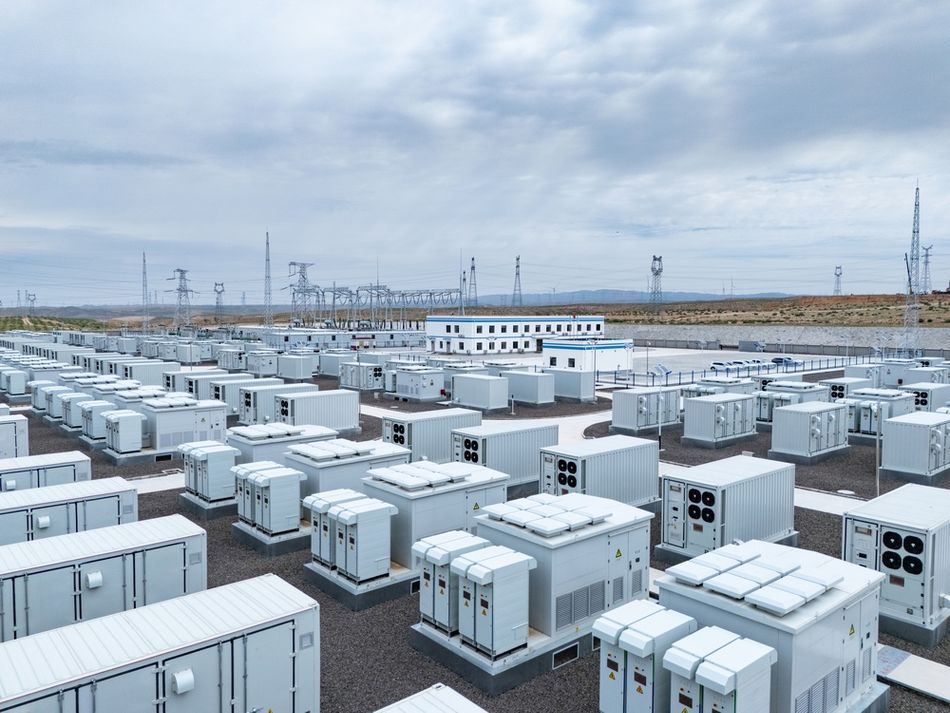
Large operating installations demonstrate the technology's growing scale. A 100 MW/400 MWh vanadium flow battery installation in Dalian, China, was connected to the grid in September 2022 and entered operation shortly afterward. Its approved development plan provides for an eventual capacity of 200 MW/800 MWh, although the first-phase capacity should not be confused with the full planned capacity.
In December 2024, a 175 MW/700 MWh vanadium flow battery project in Wushi, Xinjiang, reached construction completion. A larger 200 MW/1,000 MWh project in Jimsar, Xinjiang, entered full operation at the end of 2025. The latter is a five-hour system paired with a 1 GW solar installation.
Flow battery field applications predate these large projects. By 1997, a 200 kW/800 kWh vanadium system had been used in Japan for a load-leveling field trial. The system reportedly achieved an overall energy efficiency of 80%.
The following examples show the range of applications and project scales. Operating installations are separated from projects that have been selected, announced or remain under development.
Location or project | Chemistry | Reported capacity | Status or application |
Dalian, China | Vanadium | 100 MW/400 MWh first phase; 200 MW/800 MWh planned ultimate capacity | First phase connected to the grid in September 2022 and subsequently entered operation. The larger figure represents the planned full development |
Wushi, Xinjiang, China | Vanadium | 175 MW/700 MWh | Construction completed in 2024 |
Jimsar, Xinjiang, China | Vanadium | 200 MW/1,000 MWh | Entered full operation at the end of 2025; five-hour system paired with a 1 GW solar installation |
Laufenburg, Switzerland | Vanadium | Initial 1.5 GWh, with expansion to 2.1 GWh proposed | Engineering and construction preparation underway following an EPC agreement announced in August 2026; not yet an operating installation |
Japan, Hokkaido grid projects | Vanadium | 15 MW/60 MWh and 17 MW/51 MWh | Earlier systems entered operation in 2015 and 2022, respectively |
Minami-Hayakita, Hokkaido, Japan | Vanadium | 11 MW/33 MWh | Selected for wind-power grid integration; completion scheduled for 2029 |
Chappice Lake, Alberta, Canada | Vanadium | 2.9 MW AC/8.3 MWh | Completed and commissioned in 2023 as part of a solar-plus-storage facility |
San Diego, California, USA | Vanadium | 2 MW/8 MWh | Grid-connected demonstration installation operating since 2018; used to support grid reliability and renewable energy integration |
Yadlamalka, South Australia, Australia | Vanadium | 2 MW/8 MWh AC | Developed alongside a 6 MWp solar installation to demonstrate grid services and renewable energy integration |
Kalgoorlie, Western Australia, Australia | Vanadium | 50 MW/500 MWh | Proposed 10-hour system. The state government was evaluating proposals in 2026; commercial operation is targeted for 2029 |
These projects demonstrate the use of flow batteries for load leveling, renewable energy integration, grid reliability and long-duration storage. Their development stages matter when assessing the technology's commercial reach. Commissioned installations provide evidence of actual operation, while announced and planned projects indicate market interest but do not yet establish operating performance.
Flow Battery Applications
Flow batteries are best suited to stationary applications where storage duration, frequent cycling and flexible energy capacity matter more than compact size. Their main uses include:
Renewable energy integration and peak shaving. Grid-scale flow batteries can store surplus electricity from wind and solar installations and discharge it when generation falls or demand rises. A large installation in Dalian, China, was developed to support peak shaving, load leveling and renewable energy integration.
Grid stabilization and power quality. Flow batteries can provide frequency regulation, voltage support and other grid services. Their fast response makes them useful for managing short-term fluctuations, while their storage capacity supports longer periods of energy shifting.
Commercial, industrial and microgrid applications. Flow battery systems can support peak shifting, demand management, backup supply and ancillary services at facilities with substantial electricity requirements. They can also work alongside on-site renewable generation in microgrids.
Data center energy storage. A proposed installation in Laufenburg, Switzerland, combines a large vanadium flow battery with a data center campus. The project illustrates interest in using long-duration storage to support energy-intensive digital infrastructure.
Backup and remote power. Flow batteries can provide backup electricity and support remote or off-grid installations, including sites where access to the grid is limited or unreliable.
Two other applications are less suitable for most current flow battery designs.
Electric vehicles: Flow batteries have been investigated for vehicle applications, but their relatively low energy density and dependence on external tanks, pumps and piping make them less practical than lithium-ion batteries for most vehicles. Their advantages are more relevant to stationary installations, where space and weight are less restrictive.
Typical residential storage: Most commercially established flow battery systems are designed for commercial, industrial, and utility-scale installations. Their equipment requirements, footprint, and upfront costs can make them difficult to justify for ordinary household storage. This does not make residential use technically impossible, but it is not the technology's main commercial market.
Recommended reading: Energy Storage System (ESS) Technologies Most Suitable for Renewable Energy Usage
Flow Battery Standards and Safety
Flow battery systems must meet requirements for performance, electrical safety, chemical handling, installation, and fire protection. Several international and North American standards are relevant, but they address different parts of the system.
The IEC 62932 series specifically addresses stationary flow battery energy systems. Two important documents are:
IEC 62932-2-1:2020 specifies performance requirements and test methods for verifying the performance of flow battery systems and complete flow battery energy systems. It covers stationary installations and includes performance verification rather than electromagnetic compatibility testing.
IEC 62932-2-2:2020 specifies safety requirements and risk-reduction measures for stationary flow battery systems operating at a maximum voltage of 1,500 V DC. Its scope includes indoor and outdoor commercial and industrial installations in non-hazardous locations.
The IEC lists the performance standard with a stability date of 2028. The safety standard has a listed stability date of 2026, so its status should be checked against the IEC catalogue when specifying a system or preparing a project. A new performance-standard project was also in development in 2026.
In North America, several additional standards may apply:
UL 1973 covers battery systems used in stationary energy storage applications. Its scope includes specific requirements for flowing-electrolyte technologies.
UL 9540 addresses the safety of complete energy storage systems and equipment, including the compatibility and integration of their components.
UL 9540A provides a test method for evaluating thermal runaway and fire propagation in battery energy storage systems. It is a test method, not a general product certification.
NFPA 855 establishes installation requirements for stationary energy storage systems. Its 2026 edition includes updated provisions and guidance concerning large-scale fire testing in applicable situations.
These standards are not interchangeable. A battery-level evaluation does not establish that the complete installation meets system-level requirements, and a fire test does not by itself demonstrate compliance with every installation code. Project specifications should identify the applicable editions, required certifications and test reports, and the authority having jurisdiction should confirm local requirements.
Flow battery safety also depends on the chemistry and the design of the installation. Vanadium electrolytes are commonly acidic sulfuric acid solutions, which require controls for leaks, spills and worker exposure. Zinc-bromine systems present additional hazards because free bromine is corrosive and toxic. Piping, pumps, electrical equipment and electrolyte tanks introduce further mechanical, electrical and chemical risks.
Secondary containment is therefore an important design consideration. The system should include appropriate provisions for containing electrolyte leaks, managing spills and protecting workers and the surrounding environment. Suppliers should provide documentation covering electrolyte composition, material compatibility, containment capacity, leak detection, emergency procedures and maintenance requirements.
Recommended reading: Higher Reliability and Longer Lifetimes with Advanced Battery Management in Healthcare Energy Storage Systems
How to Decide Whether a Flow Battery Fits Your Project
Start with storage duration. Vanadium flow batteries are often considered for applications requiring eight hours or more of storage. However, technical suitability does not guarantee economic viability. Check whether your electricity market, utility contract or project revenue model compensates the system for providing longer-duration storage.
Compare cycle life with calendar life. Technical reviews report cycle-life estimates of approximately 15,000–20,000 cycles for vanadium flow batteries. At one full cycle per day, that would correspond to roughly 41–55 years of cycling. This is a mathematical comparison, not an expected service life. A national laboratory assessment estimates calendar life at approximately 10–20 years and identifies membranes and electrodes as components that may require replacement after about 10 years. Pumps may require replacement after 15–20 years. For most projects, calendar life, maintenance and component replacement are more relevant than the theoretical cycle count.
Assess the space and structural requirements. Include the electrolyte tanks, cell stacks, pumps, power conversion equipment, service clearances and secondary containment when estimating the installation footprint. Weight also matters for foundations, transport and site access. For example, one commercial iron flow battery datasheet reports a footprint of 29.7 m² and a maximum operating weight of approximately 41,000 kg. These figures are product-specific, not representative of every flow battery system.
Evaluate efficiency at the system level. Request round-trip efficiency figures that include pumps, controls and power conversion equipment. Confirm whether the supplier reports DC-to-DC or AC-to-AC efficiency, and establish the measurement boundary before comparing competing systems. Auxiliary electricity consumption can materially affect project performance.
Check the operating environment. Temperature limits vary by system design and electrolyte chemistry. Commercial datasheets reviewed for this article report ambient operating ranges of approximately −5 to 45 °C for one vanadium system and −15 to 50 °C for one iron-based system. Check whether the installation requires additional heating, cooling, ventilation or weather protection under local conditions.
Assess supplier reliability and long-term support. Review the supplier's financial position, project history, warranties, service arrangements and ability to provide replacement components over the expected system life. Ask who will maintain the pumps and stacks, how electrolyte rebalancing or recovery will be handled, and whether replacement parts will remain available. A 2023 government assessment identified financing, bankability, interconnection delays, limited market opportunities and supply-chain development as barriers to wider flow battery deployment. The voluntary administration of a flow battery manufacturer in August 2024 also illustrates why supplier continuity deserves attention.
Request independent performance and safety evidence. Ask for test reports against applicable standards, including IEC 62932-2-1 for performance verification and IEC 62932-2-2 for system safety. Confirm the editions used, the testing laboratory, the system configuration tested and whether the evidence applies to the complete installation or only individual battery components.
Recommended reading: Designing for Optimal Power Conversion Efficiency in Battery-Powered Systems
Common Mistakes
Comparing cost-per-kilowatt-hour figures for systems with different storage durations without accounting for power-related and energy-related costs.
Using cell or stack round-trip efficiency as though it represents complete-system performance.
Assuming a hybrid flow battery offers the same independent power and energy scaling as a conventional redox flow battery.
Excluding stack, pump, membrane and other component replacements from lifetime cost estimates.
Treating manufacturer cycle-life and durability claims as independently verified field performance.
Assuming that a long cycle-life rating guarantees an equally long calendar life.
Comparing DC and AC efficiency figures without checking which auxiliary loads and conversion losses are included.
Conclusion
Flow batteries exchange energy density for long cycle life, flexible capacity sizing and the potential for extended stationary operation. In conventional redox designs, additional electrolyte increases energy capacity without requiring a proportional increase in stack power. Vanadium electrolyte can remain usable over long periods with appropriate maintenance and rebalancing, although stacks, pumps and other system components may require replacement.
These characteristics make vanadium flow batteries an established option for large-scale, long-duration energy storage. Their relatively low energy density, moderate system round-trip efficiency and exposure to vanadium price fluctuations remain important limitations.
A flow battery deserves consideration when a project requires extended storage, frequent cycling and independent sizing of power and energy. The final decision should depend on the project's storage duration, site constraints, operating conditions, market revenues, lifetime costs and the supplier's ability to support the system over its service life.
Frequently Asked Questions
What is a flow battery in simple terms?
A flow battery is a rechargeable battery that stores energy in liquid electrolytes held in external tanks. Pumps circulate the electrolytes through a stack of electrochemical cells, where reversible chemical reactions generate or store electricity. In conventional redox flow batteries, the electrolyte volume determines energy capacity, while the cell stack determines power output.
How long do flow batteries last?
Redox flow battery systems typically have an estimated calendar life of 10–20 years. Individual components may need replacement sooner: membranes and electrodes may require replacement after about 10 years, while pumps may last 15–20 years. Vanadium flow batteries are also reported to achieve approximately 15,000–20,000 charge-discharge cycles, although actual service life depends on operating conditions, maintenance and component replacement.
How much does a flow battery cost?
A government energy assessment estimates an installed cost of approximately $384.50/kWh for a 100 MW, 10-hour vanadium flow battery system. In China, the average winning bid price for four-hour vanadium flow battery systems was reported at approximately RMB 2,000/kWh in 2024. These figures reflect different markets, system configurations and cost bases, so they should not be treated as directly comparable prices.
What are the disadvantages of flow batteries?
The main limitations are relatively low energy density, large space requirements, system complexity, and moderate round-trip efficiency. Pumps, piping, sensors and containment equipment add to installation and maintenance requirements. System-level round-trip efficiency is generally reported at approximately 65–80%. Vanadium systems also face exposure to vanadium price fluctuations and supply constraints.
Are flow batteries used today?
Yes. Flow batteries are deployed in grid-connected energy storage projects worldwide. China connected more than 440 MW/1.74 GWh of vanadium flow battery capacity to its grid in 2024. Other installations include utility-scale systems in the United States and Australia, as well as a 100 MW/400 MWh first phase of a large project in Dalian, China.
Are flow batteries better than lithium-ion batteries?
Neither technology is better for every application. Vanadium flow batteries offer long cycle life and independent sizing of power and energy, making them suitable for many long-duration stationary applications. Lithium-ion batteries have much higher energy density and are generally more suitable where space and weight are limited. Vanadium flow battery electrolyte has an energy density of approximately 25–35 Wh/L, compared with 250 Wh/L or more for lithium-ion batteries, although these figures may use different measurement boundaries. Flow batteries are often considered for applications requiring eight hours or more of storage.
What is a vanadium redox flow battery?
A vanadium redox flow battery (VRFB) is a rechargeable battery that uses vanadium ions in different oxidation states in its positive and negative electrolytes. During charging, one vanadium species is oxidized while the other is reduced. Discharging reverses these reactions to release electricity. Because both electrolytes use vanadium, crossover through the membrane is generally more manageable than in systems using different active elements, although it can still cause capacity imbalance and require rebalancing.
Can you use a flow battery at home or in an electric vehicle?
Flow batteries are technically capable of serving smaller applications, but most commercially established systems are designed for commercial, industrial and utility-scale installations. Their tanks, pumps, cell stacks and supporting equipment require more space than typical residential battery systems. Their relatively low energy density also makes them less suitable for electric vehicles, where weight and available space are critical. Lithium-ion batteries remain the more practical choice for most residential and vehicle applications.
What is the difference between a flow battery and a fuel cell?
Both technologies use electrochemical reactions to produce electricity, but they operate differently. A fuel cell generates electricity from externally supplied reactants, which are typically replenished rather than electrically regenerated within the device. A rechargeable flow battery stores active materials in liquid electrolytes and reverses its electrochemical reactions during charging, allowing it to store and release electrical energy repeatedly.
Are flow batteries safe?
Aqueous flow batteries, including vanadium systems, use non-flammable electrolytes, which reduces the risk of fire associated with combustible battery materials. However, the complete installation is not hazard-free. Vanadium electrolytes are typically acidic sulfuric acid solutions that require spill and exposure controls. Zinc-bromine systems also require controls for free bromine, which is corrosive and toxic. Safe operation depends on appropriate containment, leak detection, ventilation where required, electrical protection, and maintenance.
References
Sánchez-Díez, E., Ventosa, E., Guarnieri, M., et al. (2021). Redox flow batteries: Status and perspective towards sustainable stationary energy storage. Journal of Power Sources, 481, 228804. https://doi.org/10.1016/j.jpowsour.2020.228804. Open-access PDF
Skyllas-Kazacos, M., Tang, A., & Li, Y. (2026). A forty-year history of the development, commercialization, and implementation of the UNSW Vanadium Flow Battery. Journal and Proceedings of the Royal Society of New South Wales, 159(1), 4–24. https://www.royalsoc.org.au/wp-content/uploads/2026/07/159-1-02Skyllas-Kazacos_Tang_Li.pdf
U.S. Department of Energy, Office of Electricity. (2023). Technology Strategy Assessment: Flow Batteries. Findings from Storage Innovations 2030. DOE/OE-0033. U.S. Department of Energy PDF
Battery Council International Technical Committee. (2025). Common and Alternative Battery Chemistries (Version 1). Battery Council International PDF
Nguyen, T., & Savinell, R. F. (2010). Flow batteries. The Electrochemical Society Interface, Fall 2010, 54–56. Electrochemical Society PDF
Foley, E. (2024, August 23). Redflow enters voluntary administration after failing to secure funds. pv magazine. Article
Jiménez-Blasco, U., Arrebola, J. C., & Caballero, A. (2023). Recent advances in bromine complexing agents for zinc-bromine redox flow batteries. Materials, 16(23), 7482. https://doi.org/10.3390/ma16237482. Open-access article
ESS Tech, Inc. (2024). Energy Warehouse: Long-Duration Energy Storage Solution for Commercial and Industrial Applications (Datasheet Rev. 9). Product datasheet
Pacific Northwest National Laboratory. (2024, March 25). New all-liquid iron flow battery for grid energy storage. PNNL news release
Nambafu, G. S., et al. (2024). Phosphonate-based iron complex for a cost-effective and long cycling aqueous iron redox flow battery. Nature Communications, 15, Article 2566. https://doi.org/10.1038/s41467-024-45862-3. Full research article
Colthorpe, A. (2022, July 21). First phase of 800MWh world biggest flow battery commissioned in China. Energy-Storage.news. Article
Colthorpe, A. (2026, August 24). Invinity confirms EPC contract award for 2.1GWh landmark flow battery in Switzerland. Energy-Storage.news. Article
Colthorpe, A. (2026, April 28). Sumitomo Electric flow battery wins Japanese transmission operator HEPCO's renewables integration tender. Energy-Storage.news. Article
in this article
1. Key Takeaways2. Introduction3. What Is a Flow Battery?4. How a Flow Battery Works5. Types of Flow Batteries6. Flow Battery Performance: Efficiency, Energy Density and Lifespan7. How Much Does a Flow Battery Cost?8. Advantages of Flow Batteries9. Disadvantages and Limitations of Flow BatteriesFlow Battery vs. Lithium-Ion Batteries11. Are Flow Batteries in Use Today?12. Flow Battery Applications13. Flow Battery Standards and Safety14. How to Decide Whether a Flow Battery Fits Your Project15. Conclusion16. Frequently Asked Questions17. References