Metal 3D Printing: A Comprehensive Guide for Engineers and Students
Metal 3D printing is transforming manufacturing by allowing engineers to produce complex, high performance parts directly from digital designs.

21 Aug, 2025. 14 minutes read
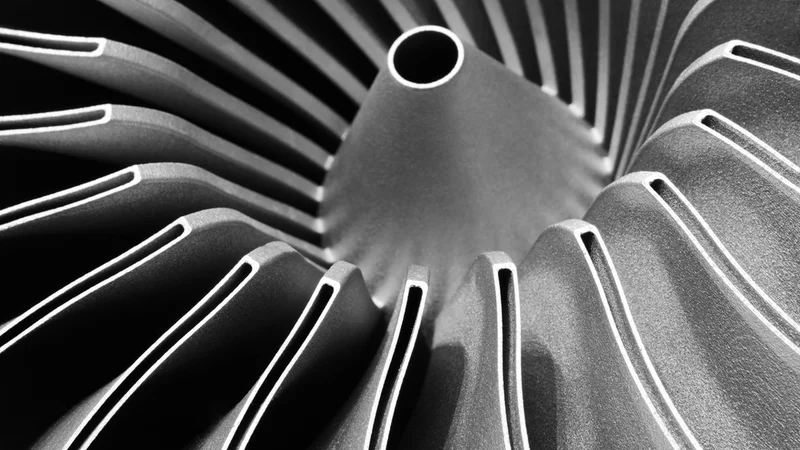
Metal 3D printing—also known as metal additive manufacturing—has progressed from a prototyping novelty to a viable method for producing high‑performance end‑use parts. By adding material layer by layer rather than removing it, metal 3D printing enables geometries that are impossible or uneconomical with conventional machining and other methods.
Several industries deploy metal 3D printing technologies to solve engineering challenges. Aerospace companies print complex fuel nozzles; medical firms produce patient‑specific implants; electronics designers fabricate intricate heat sinks and bus bars. And because of this breadth of high-value applications, additive manufacturing research expert VoxelMatters estimates that the metal 3D printing market will be worth $60 billion by 2034.[1]
This article provides engineers and engineering students with a technical understanding of metal 3D printing. It does so by examining the physics and process parameters of key technologies, exploring material choices, and looking at top industrial applications.
Recommended reading: Metal 3D Printing Technology Report
Metal 3D Printing Technologies
Powder Bed Fusion (PBF)
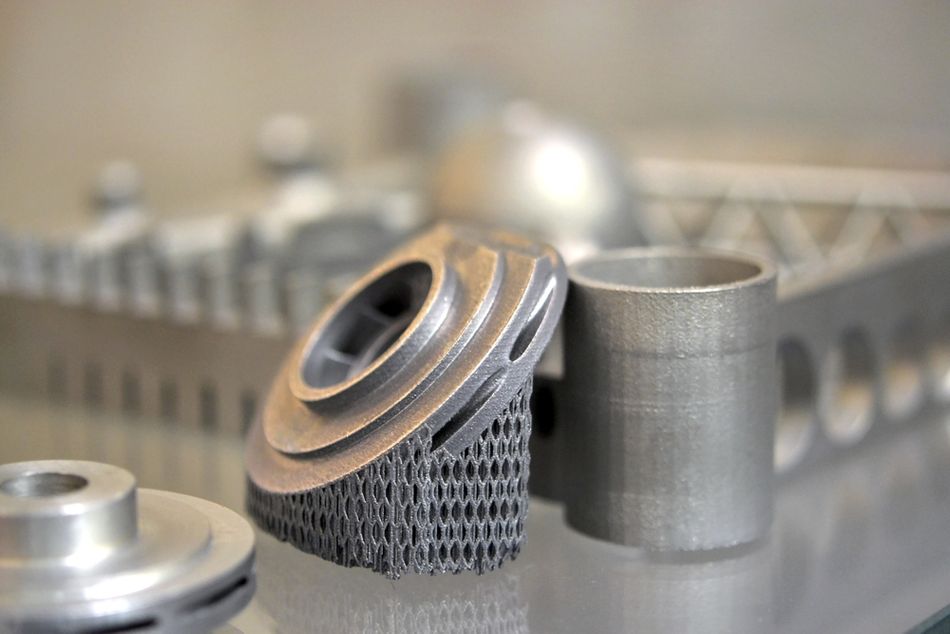
Powder Bed Fusion (PBF) is the most mature and widely adopted method for metal additive manufacturing. All PBF systems share a basic sequence:
Powder Spreading: A thin layer of metal powder (~0.1 mm) is spread across a build platform. The powder supply comes from a hopper and is distributed using a roller or blade.
Selective Fusion: A high-energy beam (laser or electron beam) selectively melts or sinters the powder cross section. The build platform then drops one layer thickness, and another layer is spread.[2]
Part Formation: The cycle repeats until the entire part is built. Unfused powder supports the part during printing, and is removed after completion.
PBF has two primary subtypes: Direct Metal Laser Sintering (DMLS), also known as Selective Laser Melting (SLM), and Electron Beam Melting (EBM).
Direct Metal Laser Sintering (DMLS)
Direct Metal Laser Sintering (DMLS)—also called Selective Laser Melting (SLM) or Laser Powder Bed Fusion (LPBF)—is the standard for high-precision metal 3D printing. It uses high-powered fiber lasers to fully melt metal powder, producing parts with high density. Key parameters include:
Laser Power (200–1000 W) and Scan Speed: Laser power determines melting energy, and scan speed influences bead width and cooling rate. Proper optimization can achieve part densities greater than 99.5%.
Layer Thickness (20–80 µm): Thinner layers yield finer resolution but increase build time; thicker layers improve throughput but may compromise surface finish.
Hatch Spacing and Scanning Strategy: Patterns such as contour offset, partition scanning, and spiral fill manage heat distribution and residual stress. Spiral scanning can reduce stress by continuously changing direction.
Build Chamber Atmosphere: An inert gas (nitrogen or argon) prevents oxidation. Typical build temperatures range from 100–200 °C to reduce thermal gradients.
Most SLM machines require trained operators and extensive safety infrastructure because the fine metal powder is hazardous. Equipment costs often exceed US$1 million, and post-processing (cutting parts from the build plate, heat treating, and machining) adds further time and expense.
Electron Beam Melting (EBM)
Electron Beam Melting uses a focused electron beam instead of a laser to melt powder. EBM machines operate in a vacuum, which results in uniform temperature distribution and high build rates. Unlike SLM, the process can maintain elevated temperatures throughout the build, which helps reduce residual stress and distortion in parts. This makes EBM especially well-suited for producing large titanium components used in aerospace and medical implants, where strength-to-weight ratio and biocompatibility are critical.
However, EBM typically produces rougher surfaces than SLM, requiring additional machining for applications that demand tight tolerances or smooth finishes. The process is also more limited in terms of material selection, with titanium alloys being the most common.[3] Equipment costs are similarly high, and like SLM, significant post-processing is often required. Despite these drawbacks, EBM remains attractive for industries prioritizing high build rates, structural integrity, and performance in demanding environments.
Binder Jetting
Binder jetting separates the printing and sintering stages. In this process, an industrial printhead selectively deposits a liquid binding agent onto a uniformly spread layer of fine metal powder. This meticulously repeats to form a three-dimensional “green” part, which possesses temporary integrity. Final metallurgical density is achieved in a subsequent high-temperature furnace sintering cycle, which thermally fuses the powder particles and burns out the binder.
Key characteristics of binder jetting include:
Production Throughput: Utilizing multiple printheads allows for the simultaneous construction of numerous parts within a single build volume. Furthermore, the sintering process is a batch operation, enabling the consolidation of many green parts into full-density metal components in a single furnace run.
Elimination of Support Structures: The unbound powder surrounding the part provides complete support for overhangs and complex geometries during the print, enabling a high level of design freedom without the need for sacrificial supports that require manual removal.
Essential Post-Processing: All parts must undergo critical post-processing steps, including a debinding stage to remove the polymer binder and a high-temperature sintering step to achieve densification. A significant and predictable amount of isotropic shrinkage occurs during sintering, which must be meticulously anticipated and compensated for during the initial design phase.
Because binder jetting utilizes polymer binders and operates without high-power energy sources during printing, it can process challenging materials like stainless steels, aluminum, and titanium more cost-effectively than many fusion-based methods. While industrial-grade machines from manufacturers like Desktop Metal and HP remain a capital-intensive investment, often exceeding US$1.5 million, the technology is a leading contender for the mass production of end-use metal parts.
Directed Energy Deposition (DED)
Directed Energy Deposition (DED) is characterized by a moving deposition head that feeds material directly into a focused heat source—typically a laser, electron beam, or plasma arc—creating a molten pool on a substrate to fuse material layer by layer. This process is highly versatile and is subdivided into two primary variants:
Powder-Based DED (Laser Material Deposition): This method blows a stream of metal powder into the melt pool. It is exceptionally well-suited for repairing high-value components, adding features to existing parts, and even "healing" damaged or worn non-printed industrial components.
Wire-Based DED (Electron Beam Additive Manufacturing): This variant uses metal wire as its feedstock, which is melted by an electron beam. This enables the construction of very large-scale structures (often exceeding 5 meters) at remarkably high deposition rates, albeit with a lower resolution and surface finish compared to powder-bed systems.
A significant advantage of DED systems is their compatibility with multi-axis CNC platforms or robotic arms, facilitating advanced hybrid manufacturing. This combines additive deposition with subtractive machining in a single setup, allowing for features to be added and then precision-machined in a single operation. These systems are ideal for applications such as repairing aerospace turbine blades or depositing wear-resistant, hard-facing layers onto industrial machinery components.
Bound Powder Extrusion (BPE)
Bound Powder Extrusion (BPE) operates on a principle similar to fused filament fabrication (FFF/FDM). The process extrudes a specialized filament consisting of metal powder uniformly bound within a polymer matrix. After the "green" part is printed, it undergoes a multi-stage post-processing sequence: a wash cycle to dissolve the primary polymer binder, followed by a thermal debinding and sintering process to achieve a solid metal part.
BPE offers several compelling advantages:
Inherently Safe Material Handling: The metal powder is safely encapsulated within the polymer filament, completely eliminating the hazards and handling complexities associated with loose, fine metal powders.
Significantly Lower Entry Cost: Commercial BPE systems, such as the Markforged Metal X, represent a far more accessible capital investment, with prices typically ranging from US$120,000 to US$200,000—a fraction of the cost of laser powder bed fusion machines.
Broad Geometric Capability: Functioning like a standard FFF printer, BPE technology can fabricate complex shapes featuring internal channels, hidden cavities, and sophisticated open-cell lattice structures that would be difficult or impossible to produce with powder-bed technologies.
As with binder jetting, designers must account for precise and uniform dimensional shrinkage that occurs during the sintering phase. For companies seeking a lower-cost entry into functional metal prototyping and production, BPE presents a highly capable and scalable solution.
Recommended reading: Types of 3D Printers: The Ultimate Guide to Additive Manufacturing Technologies
Metal 3D Printing Materials
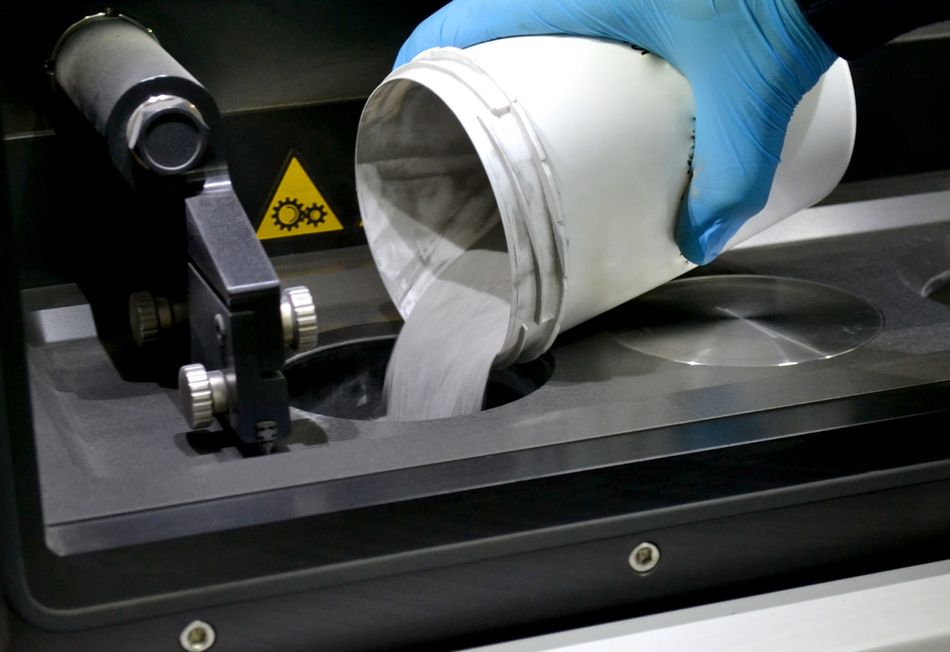
Selecting the optimal material for a metal additive manufacturing project requires consideration of mechanical properties, corrosion resistance, heat tolerance, overall cost, and, critically, printability. Five major material groups dominate the current metal AM landscape, each offering distinct advantages and applications.
Steel
Steel remains one of the most widely used metals in 3D printing, prized for its exceptional strength, durability, and versatility. It is most commonly processed in fine powder form for technologies like Binder Jetting and Powder Bed Fusion (PBF), and as a metal-infused filament for Bound Powder Extrusion (BPE) systems.
Stainless Steels: Austenitic grades like 316L offer excellent corrosion resistance, making them ideal for marine components, chemical processing equipment, and food-grade applications, but they cannot be heat treated. Martensitic precipitation-hardening grades like 17-4 PH can be heat treated to achieve higher strength, though with slightly less corrosion resistance; this makes them suitable for applications like non-corrosive turbine blades, firearm components, and structural brackets.
Tool Steels: This category includes A-series air-hardening steels (e.g., A2) for a balance of toughness and wear resistance in dies and gauges; D-series water-hardening steels (e.g., D2) that maximize hardness for cutting tools and punches; and H-series hot-work steels (e.g., H13) that retain strength at high temperatures for die-casting molds and extrusion dies.
In general, steels exhibit high stiffness and strength, are relatively affordable, and support various heat treatments. However, printed steel parts often require stress-relief annealing to mitigate internal stresses from the build process and subsequent surface finishing to achieve optimal mechanical properties and aesthetics.
Superalloys
Nickel- and cobalt-based superalloys, such as Inconel 625, Inconel 718, and Cobalt Chrome, are engineered for extreme environments, offering unparalleled temperature resistance, creep strength, and corrosion resistance. These challenging-to-machine materials are almost exclusively processed as fine powders for high-energy PBF and DED technologies.
Inconel Alloys: These nickel-based alloys are a mainstay in the aerospace and energy sectors, used to manufacture turbine blades, rocket engine components, and high-temperature engine seals that must withstand intense heat and pressure.
Cobalt Chrome: Valued for its high strength, wear resistance, and excellent biocompatibility, cobalt chrome is the material of choice for demanding medical applications, particularly in load-bearing orthopedic implants like knee and hip replacements.[4]
While superalloys are among the most expensive AM materials, they benefit significantly from additive manufacturing, which allows for the creation of complex, lightweight geometries that are often impossible to achieve through conventional machining.
Titanium
Titanium alloys are renowned for their exceptional strength-to-weight ratio, low density, and outstanding corrosion resistance. They are primarily processed as spherical powder for PBF and DED, and are also available in wire form for Wire-DED systems, which is advantageous for manufacturing large-scale aerospace structures.
Ti-6Al-4V (Grade 5): This is the most common titanium alloy in AM. It is approximately 40% lighter than stainless steel while offering similar strength, making it a fundamental material for aerospace brackets, lightweight airframe components, and high-performance biomedical implants like spinal cages and prosthetic limbs.
Commercially Pure Titanium (CP Ti): Valued for its excellent biocompatibility and formability, CP Ti is widely used for applications where maximum corrosion resistance or osseointegration is required, such as dental implants, cranial plates, and custom facial reconstructive surgery mesh.
Copper
Copper’s primary value in additive manufacturing lies in its superior electrical and thermal conductivity. The material form is dictated by the printing process: pure copper is difficult to process with lasers due to its high reflectivity, so it is often used as a bound filament in BPE systems or as pure powder in specialized Binder Jetting or electron beam PBF machines. Alloyed copper (e.g., C18150 chromium copper) can be printed on standard laser PBF equipment but sacrifices some conductivity.
The ability to 3D print complex, conformally cooled geometries makes copper ideal for next-generation heat exchangers, high-efficiency cooling channels in injection molds, and inductively wound RF components like waveguides and antennae for superior electrical performance.
Aluminum
Aluminum alloys are sought after for their low weight, good mechanical properties, and natural corrosion resistance. In AM, they are predominantly used in powder form for PBF processes. The most readily printable alloys are typically casting-grade variants, such as AlSi10Mg, which contain silicon (up to 12%) to improve flowability and reduce thermal stresses during printing.
Aluminum is extensively used to produce lightweight functional prototypes, custom heat sinks with optimized surface areas, and jigs and fixtures for aerospace and automotive assembly lines. However, for applications where absolute weight savings are the most critical factor, titanium or high-performance composite polymers can sometimes provide a better balance of properties and value.
Design Rules for Metal Additive Manufacturing
Feature | Powder Bed Fusion | Binder Jetting | Directed Energy Deposition | Bound Powder Extrusion |
Minimum Wall Thickness | ~0.3–0.5 mm | ~0.5–1.0 mm | ~1.0–2.0 mm | ~1.0–2.0 mm |
Minimum Feature Size | ~0.2–0.4 mm | ~0.5 mm | >2.0 mm | ~1.0 mm |
Support Structures | Critical. Required for overhangs < 45° and to resist warping. | Not Required. The surrounding powder supports all features. | Often Not Required. The process is typically used for large, simple geometries or repair. | Required. Needed for overhangs < 45° to prevent sagging during printing. |
Overhang Angle | 45° is standard limit without supports. | Any angle is possible due to powder support. | Varies, but can handle very shallow angles due to the nature of deposition. | 45° is standard limit without supports. |
Surface Finish | Rough, grainy (as-built). Requires post-machining for smoothness. | Gritty, sandy texture from powder. Often improved via infiltration or sintering. | Very rough, wavy. Almost always requires finish machining. | Rough, similar to FDM. Improved during sintering. |
Dimensional Accuracy | ±0.1–0.3% (high precision) | Shrinkage is significant & predictable (~20%). Must be designed for. | ±0.5–1.0 mm (low precision, near-net shape) | Shrinkage is significant & predictable (~15–20%). Must be designed for. |
Build Envelope | Small to Medium (up to ~500 mm³) | Medium to Large (up to ~800mm x 500mm x 400mm) | Very Large (can be several meters) | Medium (similar to desktop FDM printers) |
Key Design Consideration | Stress management. Parts have high residual stress requiring heat treatment. | Uniform wall thickness is critical to ensure even sintering and prevent defects. | Designed as a near-net shape. All critical features require post-process machining. | Uniform cross-sections aid in even debinding and sintering. Avoid massive solid blocks. |
Ideal For | Complex, high-value parts with intricate internal channels (e.g., conformal cooling). | High-volume production of smaller, less complex parts (e.g., gears, filters). | Large, simple parts, cladding, and repairing existing components. | Functional prototypes, jigs & fixtures, and parts with complex but self-supporting geometries. |
Simplified Workflow
Metal additive manufacturing (AM) follows a structured workflow, but the details vary depending on the specific technology used—powder bed fusion (PBF), binder jetting, directed energy deposition (DED), or bound powder extrusion (BPE).
1. Digital design and modelling
Engineers begin with a 3D CAD model, exported in formats such as STL or 3MF to represent surface geometry. Design for Additive Manufacturing (DfAM) principles are applied to consolidate assemblies, optimize topology, and incorporate lightweight lattice structures. Generative design software can automate these optimizations. In technologies like DED, designers also consider near-net-shape deposition and machining allowances.
2. Slicing and build preparation
Slicing software converts the model into thin layers and defines process parameters. For PBF, this includes layer thickness, laser power, scanning strategy, and support placement. Binder jetting requires compensation for shrinkage during sintering, while bound metal extrusion must plan for debinding. DED toolpaths differ entirely, resembling CNC machining strategies but for material addition rather than removal.
3. Material preparation
Each process demands different feedstocks. PBF and binder jetting rely on highly spherical gas-atomized powders (typically 15–60 µm) with strict moisture and oxygen control. DED can use larger powder particles or wire feedstock. Bound metal extrusion employs filament or rods containing metal powder mixed with polymer binders. Material consistency directly affects part quality and process stability.
4. Printing
During the build, operators maintain environmental control and monitor process stability. PBF systems run in inert gas or vacuum, requiring precise powder spreading and beam control. Binder jetting, in contrast, operates at room temperature but requires careful binder saturation. DED involves real-time control of melt pools and deposition tracks, often monitored with pyrometers or coaxial cameras. Bound metal extrusion resembles polymer 3D printing, but parts remain in a fragile “green” state until post-processing.
5. Post-processing
Extensive post-processing is essential:
Support removal: Mechanical or chemical depending on process and material.
Stress relief and heat treatment: Thermal cycles optimize microstructure; specific recipes vary by alloy (e.g., annealing for 316L, solution treatment for Ti-6Al-4V).
Surface finishing: Machining, abrasive blasting, chemical polishing, and emerging techniques like electropolishing or vapor smoothing reduce roughness.
Densification: Binder jetting and bound extrusion parts require sintering; hot isostatic pressing (HIP) may follow for critical PBF or DED parts.
Inspection and certification: CT scanning, metrology, and mechanical testing validate density, accuracy, and mechanical performance.
6. Integration and assembly
Final components may be used as-built, machined to tight tolerances, or integrated into hybrid manufacturing workflows that combine additive and subtractive processes in a single setup. The level of finishing required depends heavily on the AM process: PBF typically achieves higher resolution but needs polishing, while DED parts usually require more extensive machining.
Ordering Metal 3D Printed Parts Online
Ordering metal 3D printed parts online is a practical way to access advanced manufacturing without investing in costly equipment. The process usually begins by preparing a CAD model in STL or 3MF format. Many platforms run automatic design checks during upload to flag issues such as thin walls or overhangs.
After uploading, users select the material (stainless steel, titanium, aluminum, etc.), the printing technology (DMLS, binder jetting, DED), and any finishing options such as machining or polishing. Instant quotes typically reflect part size, material choice, and post-processing requirements.
Common workflow steps include:
Upload CAD file to an online portal.
Choose material and finish.
Review manufacturability checks and pricing.
Place order and await delivery.
Turnaround times can be as short as a few days, making online services a cost-effective, on-demand option for prototypes, tools, and end-use metal parts.
Recommended reading: How to 3D Print: A Quick-Start Guide for Engineers
Applications of Metal 3D Printing
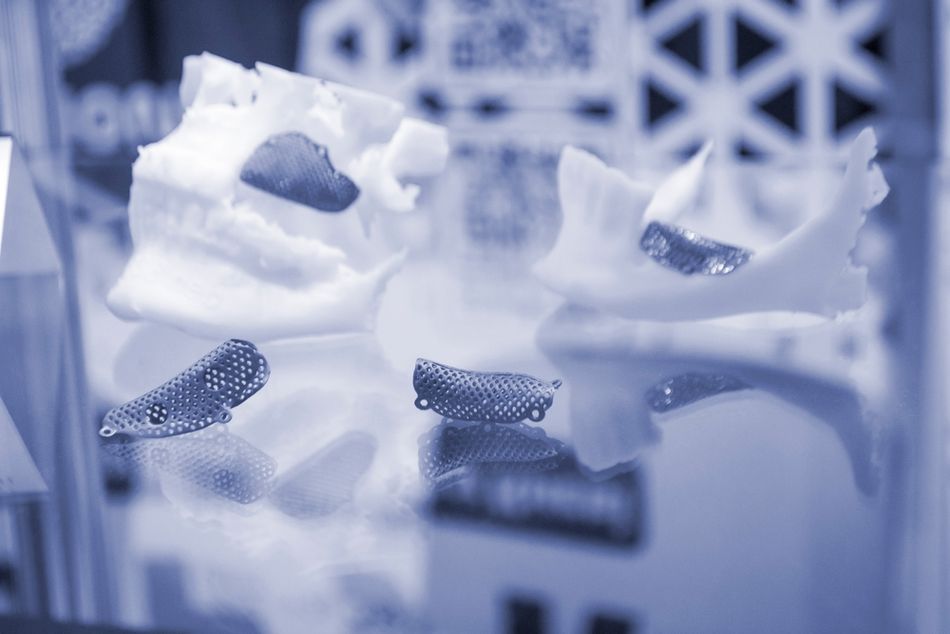
Metal additive manufacturing has moved far beyond prototyping and now delivers production-ready parts across multiple industries. Its ability to create complex geometries, reduce weight, and enable customization gives it unique advantages over traditional manufacturing methods. Applications span from highly regulated fields like aerospace and medical to fast-moving sectors such as automotive and consumer products.
Aerospace and Aviation
The aerospace industry was among the earliest adopters of metal AM. Applications include:
Lightweight structural components: Selective laser melting (SLM) produces lattice structures and complex geometries that reduce weight while maintaining strength. GE’s LEAP engine fuel nozzle is a landmark example, consolidating 20 parts into one and cutting weight by 25%.
Rapid prototyping: Engineers iterate designs quickly without expensive tooling.
Thermal management: Internal cooling channels in turbine blades improve performance and extend lifespan.
Automotive
Automakers use metal 3D printing for:
Prototyping and tooling: Rapidly producing fixtures, molds, and prototypes reduces development cycles.
High-performance parts: Customized intake manifolds, exhaust systems, and lightweight brackets boost efficiency.
Restoration and spare parts: On-demand printing of obsolete components minimizes inventory needs.
Medical and Dental
Metal AM enables patient-specific healthcare solutions:
Custom implants: Dental crowns, hip cups, and cranial plates are printed to match patient anatomy.
Surgical instruments: Complex tools like forceps benefit from high precision.
Biocompatible materials: Titanium and cobalt chrome integrate well with body tissues, reducing rejection risk.
Energy, Tooling, and Industrial Equipment
Metal AM provides robust solutions in demanding environments:
Heat exchangers and bus bars: Copper’s conductivity supports optimized cooling for power electronics.
Jigs and fixtures: Tool steels printed into custom shapes reduce lead times and support lean manufacturing.
Repair and refurbishment: DED can rebuild worn turbine blades or molds, extending service life.
Electronics
For engineers and hardware developers, metal AM enables:
Compact enclosures and chassis: Lightweight housings for electronics.
Thermal management: Complex copper heat sinks dissipate heat efficiently.
Electromagnetic shielding: Stainless steel or titanium enclosures block EMI.
Consumer Products
Large-scale metal AM is emerging in areas like architecture and design:
Architectural hardware and furniture: Customized decorative panels and structures.
Jewelry: Designers exploit AM to create intricate, one-off pieces difficult to achieve with casting.
Sports equipment: Custom sporting products like golf clubs can be fabricated using metal 3D printing.
Advantages and Limitations
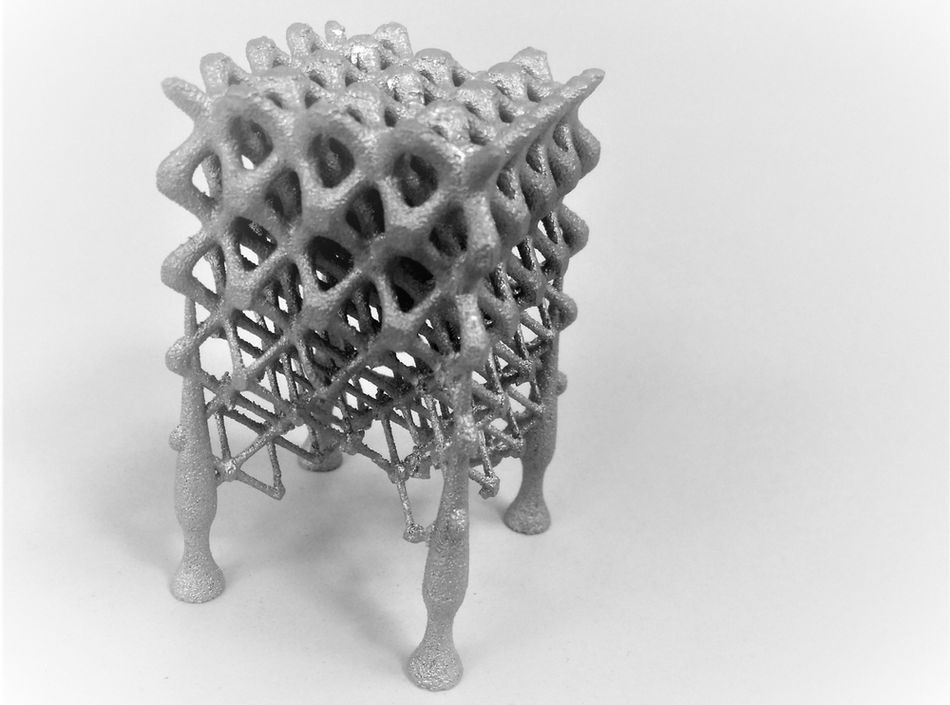
Metal additive manufacturing offers significant advantages, especially for industries like aerospace, medical, and automotive. Its design freedom allows complex internal channels, lattice structures, and organic forms while reducing assembly complexity. Mass customization makes patient-specific implants and tailored components feasible, and material efficiency minimizes waste by using only what is needed. While highly versatile, metal AM has some limitations, including high equipment costs, the need for post-processing, and build size constraints.
Advantages
Design freedom: Complex channels, lattice structures, and reduced assembly complexity.
Mass customization: Patient-specific or tailored components.
Material efficiency: Minimal waste.
Rapid iteration: Quick design testing.
Performance improvements: Weight reduction, improved cooling, better mechanical properties.
Limitations
High equipment cost: Industrial PBF and binder jetting machines are expensive.
Post-processing requirements: Support removal, heat treatment, finishing.
Build size constraints: Limited DMLS build envelopes; larger parts may require segmentation.
Conclusion and Future Trends
Metal 3D printing has evolved from a niche technology to a transformative force in manufacturing, with applications spanning aerospace, healthcare, automotive, and electronics. Technologies like PBF and DED enable the production of complex geometries that traditional methods struggle to achieve.
Looking ahead, several trends are shaping the future of metal 3D printing. Advancements in materials are expanding the range of printable metals, including high-strength alloys and composites, which are crucial for demanding applications. Meanwhile, the integration of artificial intelligence (AI) and machine learning is enhancing process optimization, reducing defects, and improving overall efficiency. Additionally, the rise of decentralized and on-demand manufacturing is transforming supply chains, allowing for localized production and quicker response times.
For digital design engineers, hardware engineers, and electronics engineering students, mastering metal additive manufacturing presents opportunities to innovate and push the boundaries of traditional design. By understanding the evolving landscape of materials, processes, and technologies, professionals can leverage metal 3D printing to create next-generation products that are lighter, more efficient, and tailored to specific applications.
Frequently Asked Questions (FAQ)
What is metal 3D printing and how does it differ from plastic 3D printing?
Metal 3D printing creates parts by melting or bonding metal powder or wire, requiring high-energy lasers, inert atmospheres, and specialized post-processing. Unlike most plastic printing, it produces strong, functional parts suitable for very demanding environments.
Which metal 3D printing technologies are most common?
Powder bed fusion is the most common, with alternatives including binder jetting, directed energy deposition, and bound powder extrusion.
What materials can be 3D printed in metal?
Common materials include stainless steel, tool steels, nickel superalloys, titanium alloys, cobalt chrome, copper, and aluminum, each offering different combinations of strength, weight, and heat resistance.
How strong are metal 3D printed parts compared with wrought materials?
When properly printed and post-processed, metal AM parts can achieve near-wrought densities and mechanical properties, though fatigue performance may be lower.
Is metal 3D printing expensive?
Yes; industrial systems and metal powders are costly, and post-processing adds expense, but it can be cost-effective for complex, low-volume, or consolidated parts.
References
[1] VoxelMatters. Metal AM Market 2025 [Internet]. January 2025.
[2] Singh R, Gupta A, Tripathi O, Srivastava S, Singh B, Awasthi A, Rajput SK, Sonia P, Singhal P, Saxena KK. Powder bed fusion process in additive manufacturing: An overview. Materials Today: Proceedings. 2020 Jan 1;26:3058-70.
[3] Zhang LC, Liu Y, Li S, Hao Y. Additive manufacturing of titanium alloys by electron beam melting: a review. Advanced Engineering Materials. 2018 May;20(5):1700842.
[4] Okolie O, Stachurek I, Kandasubramanian B, Njuguna J.3D printing for hip implant applications: a review. Polymers. 2020 Nov 13;12(11):2682.