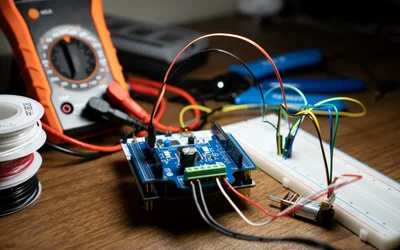
A practical selection guide to the STM32 Nucleo family: the three form factors, what the order code tells you, what the on-board ST-LINK actually does, and how Nucleo compares to Discovery kits and to Blue Pill and Black Pill boards.
Be the first to know.
Get our hardware design weekly email digest.
Tagged with
Hardware Design
ORGANIZATIONS. SHAPING THE INDUSTRY.
Latest Posts

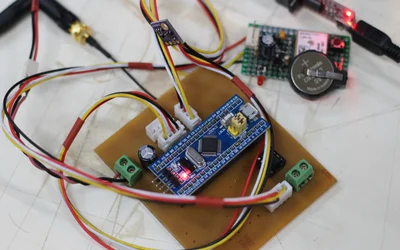
A working reference for the STM32F103 line: the four density classes and what each gives you, why USB and CAN can't run together, the LQFP48 pin functions, how the Blue Pill is wired, and how to spot the clones on cheap boards.


From Single Models to Scalable Agentic Systems

6 minutes read


Polymer, tantalum, and other MLCC alternatives are giving engineers more design options to balance electrical performance, validation needs, lifecycle risk, and sourcing flexibility.


An STM32 microcontroller selection guide built as a working method: narrowing 1,644 parts down to one order code, organized by the constraint that actually drives your design rather than by part number.

1