STMicroelectronics SATEL-VL53L7 Breakout Board
Dual Breakout board with Embedded Time-of-Flight Sensor Module
General
| Product Type | Breakout Boards |
| Compatible with | X-NUCLEO-53L7A1 |
| Applications | Wearable devices, XR accessories, smartphones, Collaborative Robotics, spatial awareness, object detection |
| Key Features | Divisible breakout boards, Enhanced AI spatial awareness, Compact Normalized Histogram (CNH) output |
Technical Specifications
| Time of Flight Sensor | VL53L7CX |
| AI Enabler | VL53L7CH |
| Supply Voltage | 3.3V |
| Field of View | 90 |
Overview
The STMicroelectronics SATEL-VL53L7 features a pair of breakout boards consisting of a VL53L7CX and a VL53L7CH time-of-flight (ToF) sensor. It allows 8x8 multizone ranging and a 90-degree field of view. It supports enhanced AI applications and precise ranging for up to 350 cm.
Pair of Boards Supporting Advanced Applications
The SATEL-VL53L7 breakout board uses the FlightSense technology from STMicro. It features a pair of ToF sensor breakout boards. including:
VL53L7CX for Multizone Ranging
VL53L7CH for AI applications
The VL53L7CX sensor is dedicated to 8x8 multizone ranging. It is capable of providing a 90-degree field of view and delivers accurate distance sensing for up to 350 cm. It’s a compact device, best-suited for spatial awareness applications and object detection.
The VL53L7CH is designed for AI-driven applications. It also features a similar wide-angle field of View and enhances efficiency by ensuring low-power consumption. This breakout board is capable of providing compact and normalized histogram (CNH) data, which is well optimized for AI processing. As a result, it enables multizone data collection, which can be fed to AI algorithms. As a result, it streamlines the development of AI-based spatial information applications like presence detection, occupancy monitoring, and gesture detection, etc.
Separable Design for Prototyping with STM32 Nucleo Dev Boards
The pair of boards offers a separable design. So, developers can separate the boards into two mini-PCBs. It allows better flexibility and integration with the STM32 Nucleo development platforms. As a result, it streamlines prototyping and evaluation. Moreover, it operates at just 3.3 V, so they can be easily integrated with standard communication interfaces and microcontrollers.
Together, the two boards provide a comprehensive development environment, combining AI capabilities with precision measurements. Moreover, the adaptable architecture makes it a viable option for industrial systems such as automation, smart building management, consumer products, and robotics.
In applications where high-resolution and depth sensing are needed, the breakout board pair becomes an effective option due to its low-power and highly accurate design. Moreover, it also complies with the Ecopack2 environmental standards, making it a robust design to handle rugged applications.
References
Recommended Specs
Continue Reading
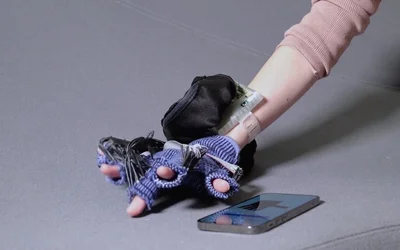
A new glove with more than three dozen actuators across all five fingers and the palm, developed by Cornell researchers, aims to reduce swelling for people suffering from edema.

3 minutes read


Textiles are tactile, sensorial and visual. Qualities can be modified or even expanded when technology is added, transforming passive textiles into active and interactive devices, monitoring and detecting bodily functions due to their constant contact with our skin.

3 minutes read

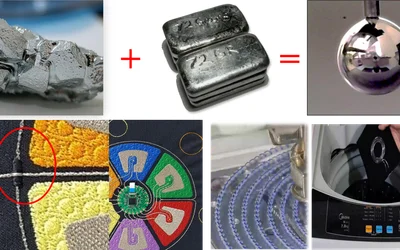
In this article you will learn more about liquid metals, a material that never ceases to amaze. It is water-like at room temperature but with metallic properties. Here you will see how researchers want to make them printable or turn them into conductive, stretchable, and washable fibers for e-textiles.
9 minutes read