Arduino VENTUNO™ Q Edge AI Single Board Computer
Edge Computing Platform with Integrated AI Acceleration
General
| Product Type | Development Boards |
| Applications | Embedded Systems, Prototyping & Development, Research & Education |
| Key Features | Qualcomm Dragonwing IQ-8275, Wi-Fi 6, Bluetooth 5.3, Ubuntu / Debian / Zephyr OS |
Technical Specifications
| Main Processor | Qualcomm Dragonwing IQ-8275 |
| AI Processing | Hexagon Tensor AI Processor, up to 40 TOPS |
| Secondary MCU | STM32H5F5 Cortex-M33 at 250 MHz |
| Storage | 64GB eMMC + NVMe Gen 4 Expansion |
| Wireless Connectivity | Wi-Fi 6, Bluetooth 5.3 |
| Ethernet | 2.5 Gbit RJ45 |
| Camera Interfaces | 3× MIPI-CSI + USB Camera Support |
| USB Ports | 1× USB-C, 2× USB 3.0 Type-A |
| Operating Systems | Ubuntu / Debian / Zephyr OS |
Overview
The Arduino VENTUNO™ Q Edge AI Single Board Computer is a development platform designed for edge artificial intelligence, robotics, and intelligent automation applications. It combines a Qualcomm Dragonwing IQ-8275 AI processor with an STM32H5F5 microcontroller in a dual-brain architecture, enabling AI inference alongside deterministic real-time control. The system integrates CPU, GPU, and NPU resources capable of handling neural network processing while maintaining sub-millisecond response times for motion and industrial interfaces.
The board supports Linux-based operating systems and includes 16GB LPDDR5 RAM with expandable storage through eMMC and NVMe interfaces. Connectivity features include Wi-Fi 6, Bluetooth 5.3, CAN-FD, Ethernet, USB, and multiple MIPI-CSI camera interfaces for vision-based applications. Display interfaces support HDMI, MIPI-DSI, and USB Type-C DisplayPort output. Compatibility with Arduino UNO shields, Raspberry Pi HATs, Qwiic modules, and ROS 2 enables integration into robotics, sensing, and embedded AI development workflows.
Features of Arduino VENTUNO™ Q Edge AI Single Board Computer
The Arduino VENTUNO Q combines AI acceleration with real-time embedded control on a single board. It supports robotics, edge inference, and multi-sensor applications with integrated connectivity and expansion interfaces. Let’s go through its features in detail:
Dual-Brain AI and Real-Time Architecture
The board integrates a Qualcomm Dragonwing IQ-8275 processor and an STM32H5F5 microcontroller, connected via an RPC bridge. The AI processor handles neural network inference using CPU, GPU, and NPU resources. The Cortex-M33 MCU provides deterministic, real-time control for robotics, motion systems, and industrial interfaces that require low-latency response.
AI Processing and Edge Inference Capability
The integrated Hexagon Tensor AI Processor supports up to 40 TOPS for local AI inference workloads. The platform supports local language models, vision-language models, object tracking, gesture recognition, pose detection, speech recognition, and text-to-speech processing without cloud dependency, enabling offline AI operation in embedded systems.
Connectivity and Multimedia Interfaces
The system supports tri-band Wi-Fi 6, Bluetooth 5.3, and 2.5Gb Ethernet for high-speed communication. Multimedia interfaces include HDMI, MIPI-DSI, DisplayPort Alt Mode, and three MIPI-CSI camera interfaces for multi-camera processing, stereo vision, and edge AI sensing applications. USB 3.0 and Type-C interfaces support peripherals and high-speed data transfer.
Industrial Control and Robotics Integration
Industrial interfaces include CAN-FD, deterministic GPIO, PWM outputs, and support for Robot Operating System 2 (ROS 2). These interfaces enable motor control, robotics development, and industrial networking. Real-time control functions support motion systems and safety-critical operations requiring stable timing and low-jitter signal generation.
Expansion Ecosystem and Development Environment
The board supports Arduino UNO shields, Raspberry Pi HATs, Qwiic modules, and high-speed carrier headers for sensors and displays. Development is performed through Arduino App Lab, supporting Arduino sketches, Python, Linux applications, and AI models within a unified environment for embedded AI and robotics workflows.
Applications
The Arduino VENTUNO Q is used in robotics and motion control systems that require AI inference combined with deterministic, real-time actuation. In AI-powered systems, it supports local neural network execution for speech, vision, and sensor-based processing without cloud dependency. The platform is also used in edge AI vision and sensing systems for object tracking, gesture recognition, stereo depth perception, and multi-camera inspection. In education and research, the board supports experimentation with robotics, AI algorithms, embedded Linux, and industrial communication protocols. Its compatibility with Arduino and Raspberry Pi ecosystems enables rapid prototyping across embedded AI and automation applications.
References
Recommended Specs

Continue Reading
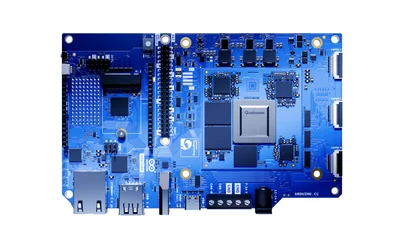
Explore the Arduino VENTUNO Q edge AI SBC: dual-brain architecture, up to 40 TOPS NPU, ROS 2 support, and Arduino App Lab for AI and robotics development.

Explore how edge AI SBCs combine local AI inference, deterministic control, and industrial I/O to enable responsive robotics and automation.

An engineer's guide to understanding and selecting the right Single Board Computer.