Why Do Not Change Is Sometimes the Safest Option?
From Component Swap to Full Requalification: The Engineering Work Hidden Behind a Minor Design Change

19 Mar, 2026. 4 minutes read
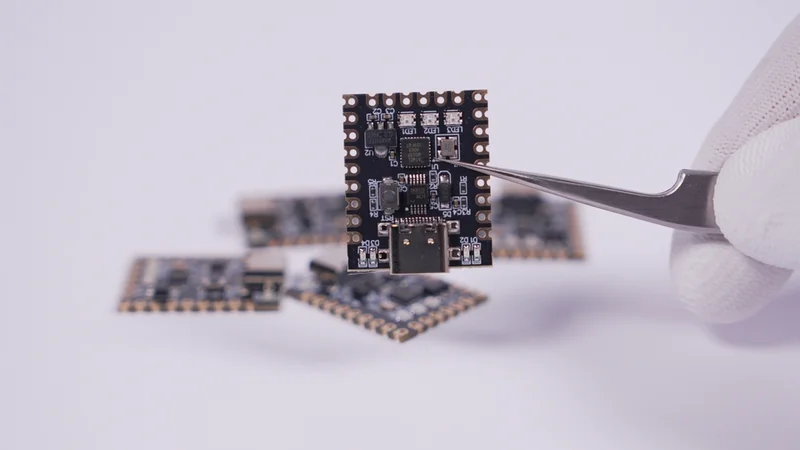
In most industries, technological change signals progress. However, for industries with strict regulatory frameworks, component-level change is more of a liability than an asset. For these manufacturers, modifying a single electronic controller can trigger an entire cascade of requalification procedures, new emissions testing, and renewed safety certifications across every country where their systems operate (1). In many cases, the safest path forward is to maintain continuity.
The Compliance Burden of Modification
Engine Control Units (ECUs) are a great example of the risk inherent in design changes. These systems regulate exhaust management and other parameters that directly influence environmental compliance. If an engineer replaces a single semiconductor within an ECU, that decision potentially invalidates all existing emissions certifications. Manufacturers of global equipment, such as excavators or harvesters, must then conduct repeated emissions testing in every nation where they market their machinery to verify compliance with local standards.
This process is cumbersome! Requalification demands laboratory analysis, environmental simulation, and in-field validation under diverse thermal and load conditions. These testing programs consume months of time and millions of dollars while delaying production lines. Therefore, the financial and operational incentive to preserve an existing design is overwhelming.
Regulatory Pressures in Marine and Rail
The marine and rail sectors face similar pressures, although their compliance focus extends beyond exhaust emissions. Maritime systems must comply with electromagnetic interference (EMI) standards (2), as equipment onboard cargo and passenger vessels cannot disrupt emergency communication frequencies. A substitute controller that alters EMI characteristics jeopardizes these safety certifications. Consequently, requalification requires extensive spectrum analysis and validation of electronic noise performance before deployment can resume.
Rail manufacturers face similar constraints! Locomotive control systems are safety-critical and heavily regulated under national and transnational standards. Any design alteration, even one forced by component obsolescence, triggers a full system-level reassessment. The practical result is that once a system has been qualified, operators will avoid change unless no other option remains.
The Economic Logic of Stability
Whereas rapid iteration drives market share in consumer electronics or data centers, industrial sectors view change as a source of risk. Manufacturers engineer equipment for decades of service, yet the semiconductors inside those systems often possess production lifespans measuring only a few years. Resolving this mismatch requires partners capable of sustaining component availability long after Original Component Manufacturers (OCMs) cease production.
Rochester Electronics has built its business model on this principle. As the industry’s only semiconductor provider dedicated to preservation rather than replacement, Rochester helps OEMs adhere to regulations without redesigning their systems. The company guarantees that proven components remain available, qualified, and tested for the machine's entire service life.
The Safety of Sameness
In heavily regulated environments, consistency equates to safety. When an engine control board or ship navigation module performs exactly as it always has, the surrounding certification framework remains valid. This approach allows OEMs to circumvent the cascading costs of redesign while maintaining the system’s legality and serviceability.
This concept also applies to operational safety. When running mining equipment or keeping trains moving on schedule, there's no room for surprises. Downtime is expensive and dangerous. That's why engineers in these industries stick with what's tried and true. An untested component may perform fine in a lab, but there's no room for uncertainty in the field.
By keeping proven parts in circulation, Rochester reduces uncertainty and lets operators maintain consistent safety standards throughout the product's operational life.
Investing Against the Industry Trend
While the broader semiconductor industry directs capital toward advanced 12-inch wafer processes and ultra-fine-pitch packaging, Rochester deliberately invests in the opposite direction. The company actively supports 8-inch wafers, through-hole assemblies, and conventional leaded packages. These mature technologies remain vital to long-lifecycle equipment, where certification requires mechanical consistency and predictable electrical performance.
Rochester’s commitment means that customers can keep using the same verified design and remain confident that compliant components will remain available. We built our infrastructure specifically for continuity, which allows us to produce, test, and qualify devices decades after their commercial peak. In this way, Rochester provides regulatory assurance to our customers.
Rochester’s Enabling “No Change”
Rochester operationalizes this strategy through authorized distribution, licensed manufacturing, and design replication (3). These capabilities enable the company to sustain or replicate semiconductors long after the original OCM has exited the market.
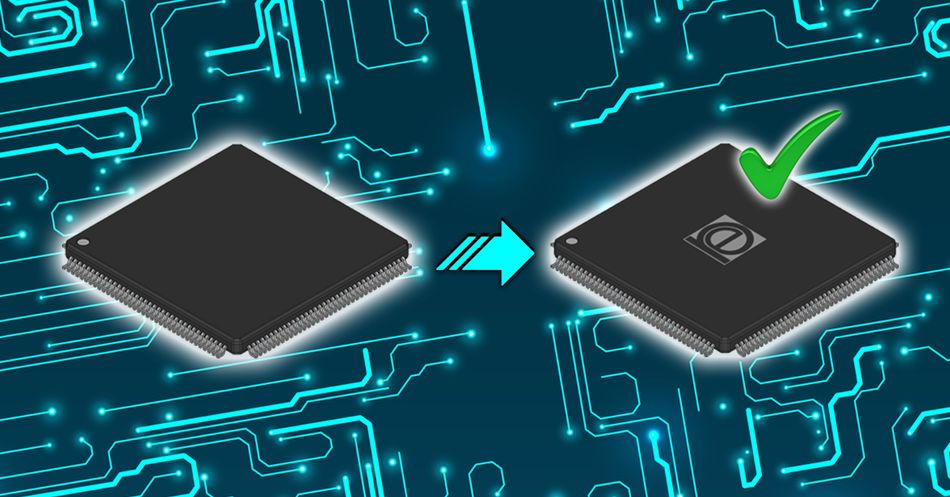
In cases where a component’s package or assembly type becomes obsolete, Rochester invests in the corresponding tooling and process technology to continue production. For example, lead frame assemblies, which require trim-and-form operations, have been largely phased out of high-volume markets like mobile and data center applications. Rochester maintains this infrastructure because industrial and transportation customers continue to rely on it.
The approach means that even when an OCM discontinues wafer fabrication, authorized manufacturing can resume under the same electrical and mechanical specifications. Combined with AS6496-compliant handling standards, which govern environmental and traceability practices for authorized distributors, Rochester’s model keeps every device shipped authentic and reliable.
The Value of a Conservative Approach
Sticking with what works might seem old-fashioned when everyone's talking about the next big thing. But, for manufacturers bound by safety and emissions regulations, it’s a pragmatic strategy. In industries like transportation and heavy manufacturing, you don't benefit from being cutting-edge if it means risking compliance. The stakes are too high, the regulations too strict, and the consequences of getting it wrong too severe.
By partnering with Rochester, OEMs can sustain proven designs without compromise. Through licensed manufacturing, replication, and controlled inventory management, Rochester opens the door to decades of continuity and stability.
References
1. https://rocelec.widen.net/future-proofing-aerospace-whitepaper-eng
2. https://www.etsi.org/30184301v020100a.pdf
3. https://www.rocelec.com/solutions/design-and-authorized-replication