Scaling Without Sacrifice: How Agile Teams Helps Organizations Grow Securely
Learn how Altium Agile Teams enables secure hardware collaboration with centralized identity, role-based access, and full traceability — so teams can scale without sacrificing speed or control.

19 Feb, 2026. 4 minutes read

As hardware teams grow in size and scope, engineering managers face uncertainty around data protection. They face a dilemma when they think of inviting more stakeholders to collaborate: either risk that the wrong participant accesses information they shouldn’t see, or introduce rigid systems that could slow processes and disrupt established workflows.
At a simpler stage of organizational development, those managers and their IT organizations may have improvised permission structures, tolerated unsecured file exchanges, and sustained fragmented identity systems because those approaches felt lightweight and fast. While those patterns might have worked for a small team operating in close proximity, where everyone was on a first-name basis, they break once teams grow to multiple time zones and many concurrent projects.
Altium’s Agile Teams platform solves these challenges by giving hardware teams a secure collaboration environment that scales with headcount and complexity. With Agile Teams, organizations can embrace formal identity management, access control, and traceability without giving up the agility that made them fast and innovative.
Identity, Trust, and a Growing Team
Organizations change as they succeed, and their identity model must change with them.
In the early stages, teams often rely on manual access control consisting of shared credentials or ad hoc permissions. As headcounts rise, those shortcuts create risk because teams lose visibility into who can access sensitive design data and which actions each user can perform.
Agile Teams offers a different path forward with single sign-on features that centralize identity for all collaborators within the design environment. With a centralized identity layer, teams can connect access rights to established corporate authentication systems and eliminate inconsistencies between tools. Engineers no longer have to guess which system governs access, because the platform maintains a single source of truth.
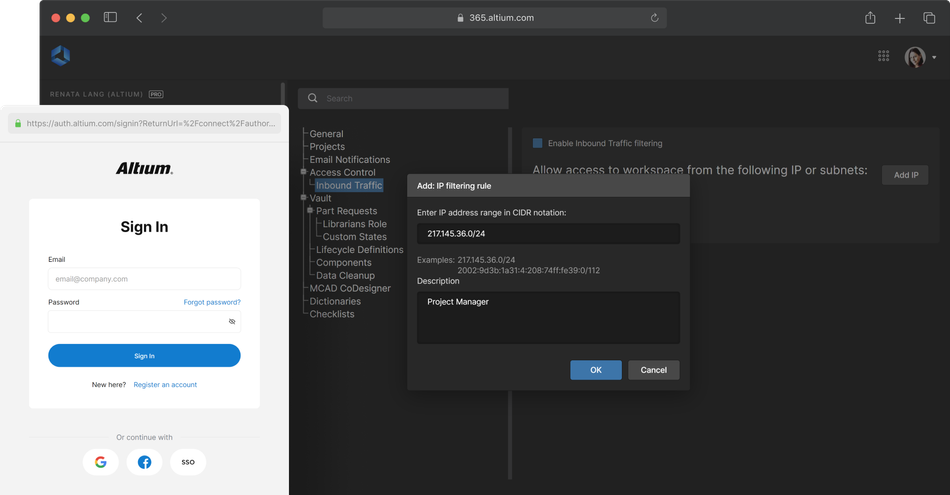
Agile Teams also offers a global access license model that supports distributed engineering organizations. With it, engineers can work from approved regions without having to reassign licenses or request temporary access exceptions. Altium included this global access entitlement in response to the needs of its globally distributed customers. The change, implemented in Agile Teams, helps project leaders onboard new contributors quickly while simultaneously establishing clear boundaries for trust and access. As a result, organizations have the flexibility needed to scale teams without eroding accountability or exposing design assets to accidental or intentional misuse.
Secure Internal and External Collaboration
Hardware development is a multidisciplinary pursuit, encompassing electrical and mechanical designers, system engineers, manufacturers, and procurement teams. While each group serves a distinct function, they must all access the same design data, with varying levels of visibility. To this end, Agile Teams supports role-based permission controls that let program leaders or admins invite external participants without exposing sensitive project assets. In that way, external guests can participate in reviews and discussions without gaining visibility into restricted project assets.
In Agile Teams, all collaboration happens in a singular, shared workspace. File-based exchanges disappear because engineers no longer rely on exported PDFs, emailed design snapshots, or unmanaged cloud folders. Configurable workflows in Agile Teams prevent outdated copies from circulating and remove dependence on unsecured channels that fragment design history. As teams can always reference live design data, design reviews are less cumbersome and decision-making is better-informed.
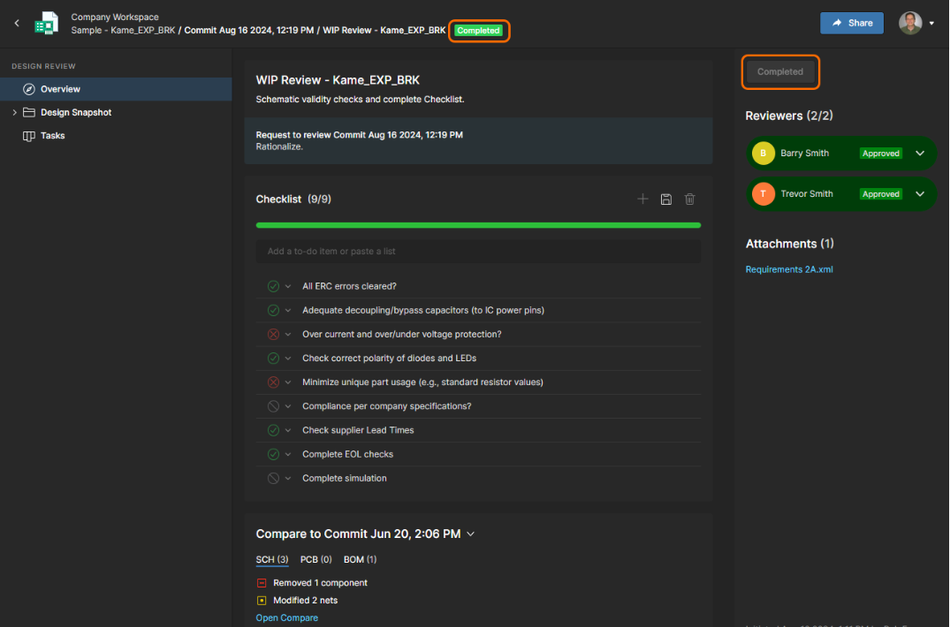
The Agile Teams platform is also flexible enough to adapt as roles change. For example, teams can add or remove contributors without restructuring their security model. In that way, engineering managers can retain control over access while maintaining continuity across projects and collaborators.
Auditability that Streamlines Compliance Reporting
Leaders must show that their product development process complies with internal best practices and external regulations. Those preparing compliance reports need visibility into all of the actions, changes, and decisions that occurred throughout the design lifecycle. Agile Teams facilitates compliance reporting by automatically recording detailed event logs that capture user actions, timestamps, and object-level interactions occurring within the workspace. These logs create a dependable record that simplifies internal reviews and facilitates regulatory checks without requiring teams to manually reconstruct their design history across many disconnected systems. Engineers and managers can trace who changed a schematic, who approved a design review, and when those actions occurred.
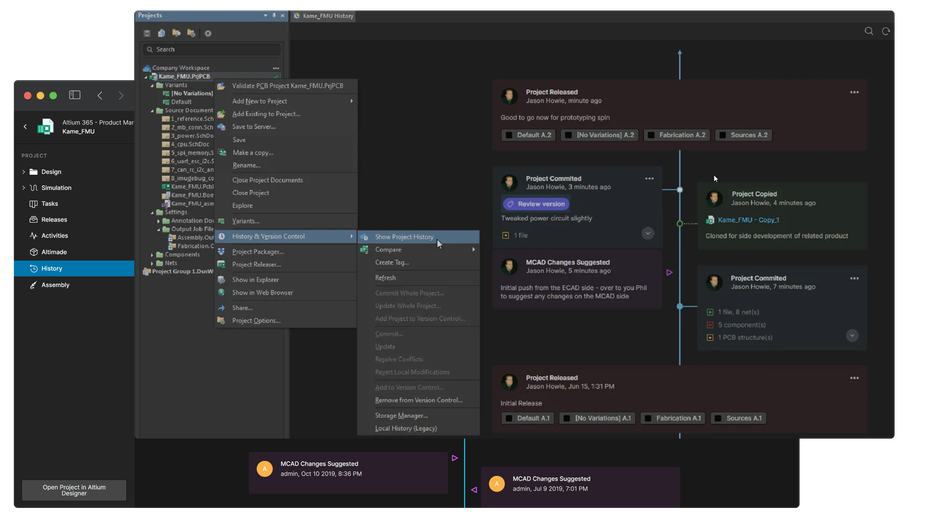
Because all collaboration happens in a shared environment, Agile Teams also automatically accumulates comments, approvals, and design decisions. Teams can avoid the common failure mode of assembling evidence from scattered emails or spreadsheets after a project reaches a critical milestone. Such auditability enables more flexible change because every adjustment to process or personnel is traceable. Teams can adapt workflows or reorganize responsibilities while preserving a complete operational record. The result is an adaptable organization with a strong foundation for adding people and projects, with the confidence that comes from knowing that the digital thread of the team’s interactions will be there if they need it.
Growth Without Compromise
The goal of any organization is growth, and secure flexibility is the only way to grow without losing control of data or workflows. With Agile Teams, Altium is helping hardware development organizations scale securely without slowing velocity or constraining their design options. With more freedom to collaborate and more confidence in their processes, organizations can grow sustainably and securely.