Embracing Change While Maintaining Legacy Systems
Modernization Without Disruption: Preserving the Industrial Core While Enabling Innovation

02 Apr, 2026. 4 minutes read
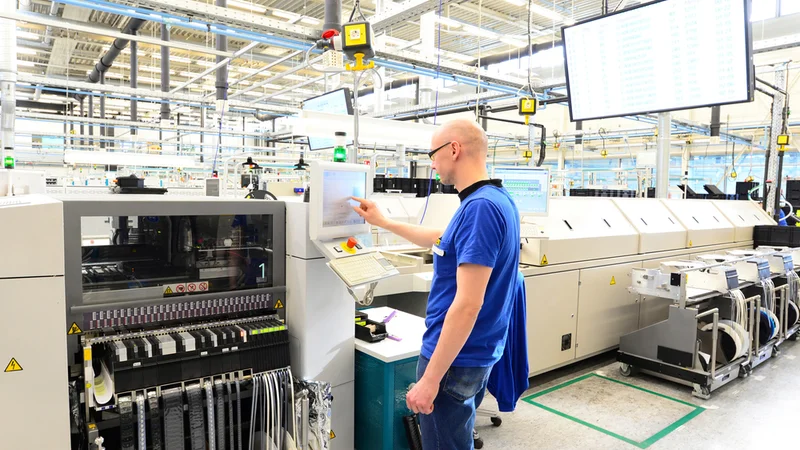
Change in the industrial sector rarely happens gradually. Most modernization occurs in step changes: massive, carefully calculated upgrades are made only when the operational and financial case becomes undeniable.
Whereas consumer or cloud markets refresh technology on a two-year cadence, industrial infrastructure often remains in service for three or four decades. That difference is a function of the systems involved. Factory control infrastructure is a capital asset OEMs expect to function reliably for 30 to 40 years (1). Replacing it prematurely can invalidate the software and trigger a new cycle of compliance testing that spans multiple continents.
The Hidden Costs of Interdependency
For many OEMs, the hardware serves merely as a platform for customer-owned software. In many cases, end users customize the code that powers the automation system. Consequently, any changes to the hardware architecture can introduce unpredictable downstream effects. What seems like a straightforward upgrade could destabilize the software layer and necessitate cumbersome requalification or operator retraining.
Beyond just the Bill of Materials, these interdependencies mean that modernization impacts system uptime, regulatory standing, and the confidence of end customers. Therefore, industrial decision-makers will only approve complete infrastructure replacement when the operational advantages overwhelmingly justify the disruption.
Instead, the industry favors incremental improvements, such as upgrading an edge controller or replacing a sensor interface, while leaving the main infrastructure intact.
A Layered Approach
Stagnation isn’t an option as external pressure calls for greater efficiency and sustainability. For example, the growth of Industry 4.0 and 5.0 is causing industrial operators to adopt edge computing and machine learning (2). However, successful engineers implement these technologies at the periphery rather than replacing the core electronics that influence motion control, power distribution, and process automation.
Upgrading at the edge gives manufacturers access to better operational data and faster response times when production conditions change. Because these upgrades are modular by design, operators can integrate them without affecting safety-critical subsystems. For instance, a packaging facility might replace a local Human-Machine Interface (HMI) with a modern optical sensor system while the underlying Programmable Logic Controller (PLC) remains unchanged. Such a layered approach facilitates progress without jeopardizing system certifications or requiring global retraining efforts.
Rochester Electronics calls this strategy "no-risk modernization." By sustaining the semiconductor components at the heart of industrial control systems, Rochester helps customers evolve peripheral technologies while preserving the validated core. When the underlying processors or controllers remain available, engineers can innovate around them, knowing the system's foundation is safe.
When Change Becomes Necessary
Eventually, however, the need for full modernization arrives. Component obsolescence, new safety standards, or the depletion of stored inventory can prompt an organization to consider a system redesign. At that point, planning and foresight determine whether the transition proceeds smoothly or becomes a scramble.
The most effective strategies begin years in advance! Procurement teams should monitor component lifecycles and share BOMs with authorized suppliers long before a crisis emerges. Since many OCMs finalize End-of-Life plans months before notifying the market, early engagement lets partners like Rochester prepare for replication or licensed manufacturing before the supply chain is impacted.
A Framework for Longevity
Organizations can balance progress and stability by adopting a framework based on component selection, data transparency, and partnership continuity (3).
1. Stability starts with supplier selection. You can significantly lower risk just by sticking with OCMs that have a proven track record of staying power. These are the companies designing for the long haul, meaning that their product families survive across generations. Even if you aren't building an automotive system, using automotive-grade components gives you access to those stricter reliability standards and longer qualification cycles.
2. Data Transparency is about sharing detailed BOM information with authorized partners early in the design process. When Rochester gains visibility into the components an OEM relies on, it can forecast risks, purchase inventory during discontinuation cycles, and prepare for future replication if needed. Many industrial customers delay this communication until an EOL notice appears, leaving little time for viable alternatives.
3. Partnership Continuity means that modernization occurs within a controlled ecosystem. Rochester is a 100% authorized after-market manufacturer. We insulate our customers from industry shifts by maintaining more than 15 billion devices across 200,000 part numbers and holding billions of dies in inventory. Whether through ongoing production of legacy devices, licensed manufacturing, or full product replication, we preserve the stability industrial systems require to evolve responsibly.
Managing the Human and Financial Dimensions
Beyond technical impacts, modernization carries profound organizational and financial implications. Requalifying a control module across dozens of countries can incur millions in costs. And, every adjustment introduces uncertainty for operators accustomed to familiar interfaces.
Incremental adoption strategies can solve these challenges! OEMs should introduce dual-platform designs that support legacy and next-generation components. By gradually introducing less-critical subsystems (e.g., sensor clusters or network gateways), staff can adapt to new technologies without upending the status quo. When a full-scale upheaval becomes unavoidable, teams can carry out structured, controlled pilot programs to identify issues before committing to widespread rollout.

Rochester mitigates these risks by supplying components that match original specifications exactly. This capability allows engineers to integrate newer peripheral designs without worrying about core system compatibility. Because the connection points and electrical characteristics remain identical, staff retraining is unnecessary, and testing accelerates.
The Value of Authorized Continuity
As AI processors, 3D packaging, and 12-inch wafer technologies come to dominate semiconductor investment, the pressure on mature industrial technologies will intensify, and advancement will continue to diverge from the needs of long-lifecycle sectors. However, this same growth offers opportunities for targeted improvement.
Rochester’s lifecycle model guarantees that these modernization efforts do not create cascading compatibility issues. By combining authorized distribution, licensed manufacturing, and design replication, Rochester establishes a foundation of continuity. This allows industrial customers to integrate new sensing, networking, and analytics capabilities while relying on Rochester to preserve the hardware lineage underpinning their operations. This way, new technology can take root without undermining the infrastructure on which industrial operations rely.