Exploring the key concepts related to Unsupervised vs Supervised Learning, understanding the fundamental principles, major algorithms and their real-world applications, and practical distinctions between supervised and unsupervised learning.
Be the first to know.
Get our machine learning weekly email digest.
Tagged with
machine learning
ORGANIZATIONS. SHAPING THE INDUSTRY.



High Tech Campus Eindhoven
High Tech
High Tech Campus Eindhoven is Europe's smartest square km and has the ultim...
49 Posts

ETH Zurich
University for science and technology
Freedom and individual responsibility, entrepreneurial spirit and open-min...
43 Posts

University of Michigan
Higher Education
Work together. Create smart machines. Serve society. University of Michiga...
40 Posts

Carnegie Mellon University
University
A private, global research university, Carnegie Mellon stands among the wor...
25 Posts
Latest Posts

Artificial intelligence (AI) is a wide-ranging tool that enables people to rethink how we integrate information, analyze data, and use the resulting insights to improve decision making


Gain a comprehensive understanding of Edge AI by exploring the fundamental concepts, hardware components, software tools, and real-world applications.

Transforming manufacturing processes through advanced inspection

What’s Next for Artificial Intelligence and Edge Computing?


How Edge AI Senses the World for Situational Awareness.


What to Consider When Selecting Your Edge AI Hardware and Software.


The greater the amount of high-quality data you have, the better your machine learning model will be. This post looks at the challenges (and solutions) involved in creating and organizing a dataset when you’re starting from scratch.

5 minutes read


Researchers create a new simulation tool for robots to manipulate complex fluids in a step toward helping them more effortlessly assist with daily tasks.


This machine-learning method could assist with robotic scene understanding, image editing, or online recommendation systems.

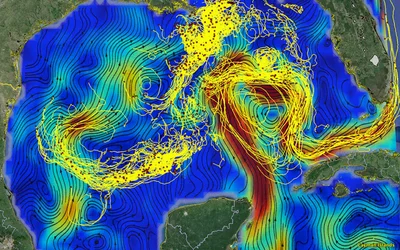
A new machine-learning model makes more accurate predictions about ocean currents, which could help with tracking plastic pollution and oil spills, and aid in search and rescue.

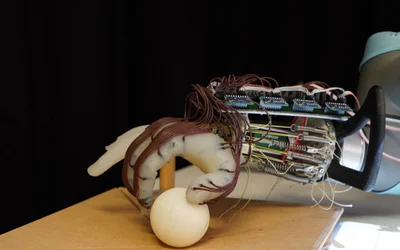
Researchers have designed a low-cost, energy-efficient robotic hand that can grasp a range of objects – and not drop them – using just the movement of its wrist and the feeling in its ‘skin’.

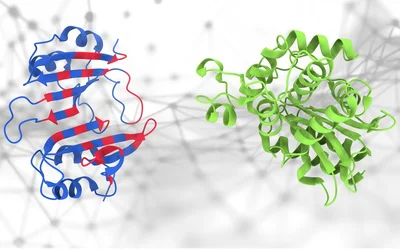
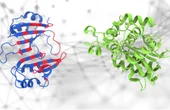
Scientists at EPFL have developed PeSTo, an AI model that can predict, with high confidence, the binding interfaces of proteins when they bind other proteins, nucleic acids, lipids, ions, and small molecules. The model's low computational cost enables the processing of large amounts of structural data, opening up opportunities for new biological discoveries.

3 minutes read
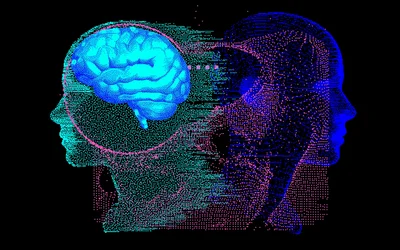
Let us delve into the profound impact that generative AI may have on employment, exploring both the opportunities it creates and the challenges it presents, as we strive to shape a world where human ingenuity and machine intelligence can coexist harmoniously.

8 minutes read

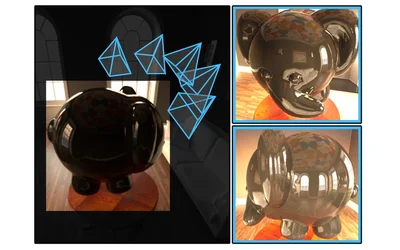
A new computer vision system turns any shiny object into a camera of sorts, enabling an observer to see around corners or beyond obstructions.