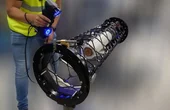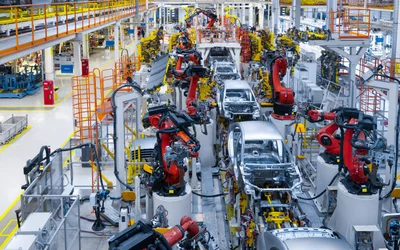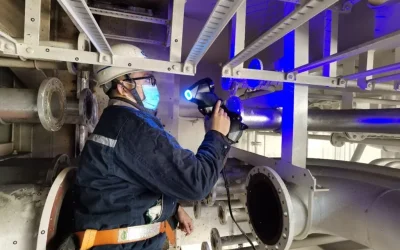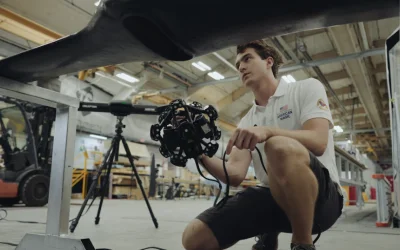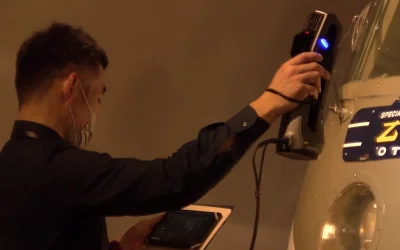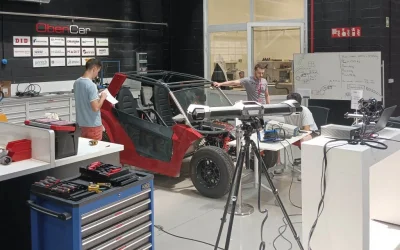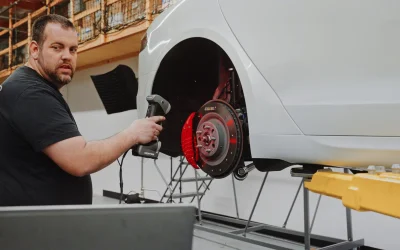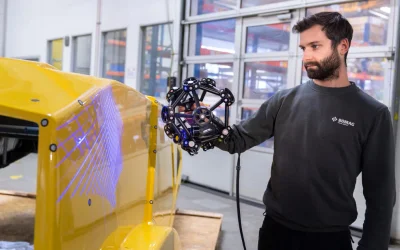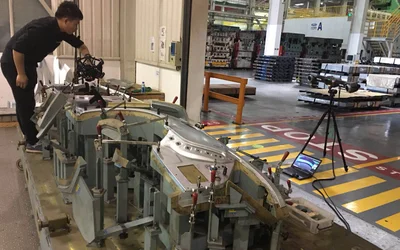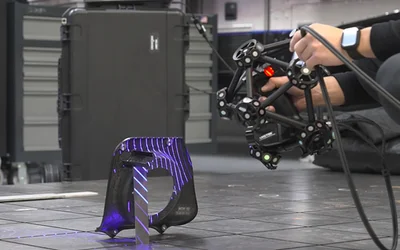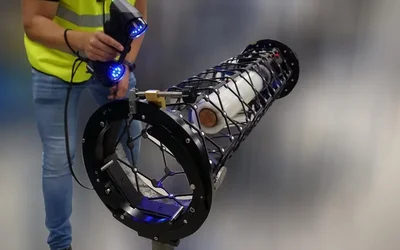
Laser scanning was found to provide an excellent middle-ground between technologies, all while being very easy to work with. The Creaform family of products has been clearly identified as being at the forefront of this technology.

3 minutes read
Tagged with

3D Measurement & Digitization
An industrial metrology brand focused on high-precision 3D measurement solu...
Laser scanning was found to provide an excellent middle-ground between technologies, all while being very easy to work with. The Creaform family of products has been clearly identified as being at the forefront of this technology.
3 minutes read
End-to-end manufacturers are companies that lead products through the entire manufacturing process, from design to customer delivery.
6 minutes read
The shipbuilding industry is a critical component of any country’s infrastructure and economy. However, the process of ship construction, particularly the installation of pipes throughout the hull, is challenging and cumbersome. This is due to the segmented construction method adopted in shipbuilding, which often leads to deviations in the hull production process, making it difficult to accurately arrange and install pipes.
2 minutes read
Ålö Agricultural Machinery (Ningbo) Co., Ltd, a wholly owned subsidiary of Ålö, is a leading manufacturer of loaders and implements for agricultural tractors. With production facilities in four countries and customers in over 50, Ålö holds approximately 30% of the world market for tractor loaders exceeding 50 hp. Since 2020, the company has been part of the JOST Group, a renowned manufacturer of safety-critical systems for commercial vehicles.
2 minutes read
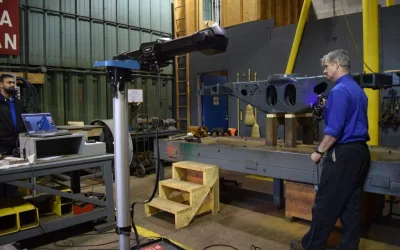
National Steel Car is a leading railroad freight and tank car manufacturer. Based in Hamilton, Ontario, Canada, and founded in 1912, the company develops and produces over 76 model variations of freight and tank cars for railroad, agriculture, chemical, construction, metal, energy, and financial/leasing companies in Canada and the United States.
2 minutes read
The New York City Yacht Club’s American Magic team once again chooses Creaform’s 3D measurement technologies to gear up for the next America’s Cup. Learn more.
2 minutes read
Developing a new type of train that could transport luxury tourists from Tokyo to mountain resorts, such as Hakone and Mount Fuji, and beaches, such as Odawara and Enoshima, in less time. That was the Odakyu Electric Railway’s mission when the company undertook the design of the Romance Car in 1957.
3 minutes read
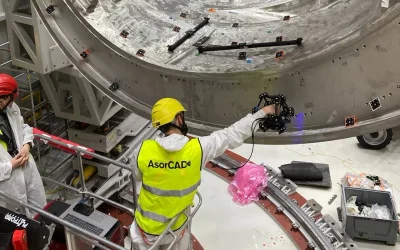
Recreating the fusion reaction occurring in the Sun’s core here on Earth; this is the mission that scientists and engineers have taken up with ITER, one of human history’s most ambitious engineering projects.
3 minutes read
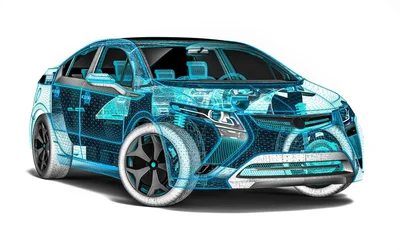
More time—this is a luxury that many people wish they could afford. What about engineers who work long hours to design and manufacture molds to produce automotive performance parts, such as engine devices, transmissions, and electronic controls? What would they do if they could save 85% of the time required for mold inspections?
6 minutes read
AIC-Automotive Intelligence Center, based in Amorebieta-Etxano, Bizkaia, is a European center for the generation of value for the automotive industry based on a concept of open innovation where companies improve their positioning through cooperation.
3 minutes read
Based in California but servicing the entire United States, APEX Race Parts brings the latest wheel and tire technology to the automotive racing industry. The business employs dozens of car racing experts that are driven by the need for speed and performance.
3 minutes read
BOMAG’s team was searching for 3D measurement solutions to add to its portfolio that would enable uncomplicated, flexible and non-contact measurement of free-form surfaces, such as castings and plastic parts. The ideal 3D measurement solution also needed to be portable so that scanning of large components and the highest quality standards could be guaranteed.
2 minutes read
This blog aims to illustrate the different manufacturing challenges leading to product defects and highlight how 3D scanning technology allows for more features and parts to be inspected. It also describes how QC managers can shorten inspection time and reduce production costs associated with scraps.
5 minutes read
Endurance racing does not only require the best and latest technology. It also involves having the ability to harness it for multiple hours in a row without causing disaster. When you are competing at the highest level and against the best of the best, attention to detail is everything. This means leaving no stone unturned, no issue unresolved. Only then can a racing team truly be at the top of its game.
3 minutes read
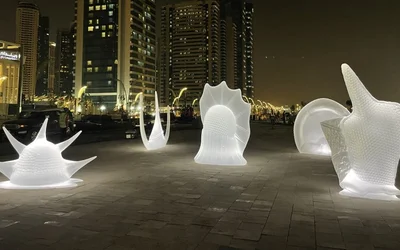
3D scanning can be used to measure objects of art in order to assess their 3D dimensions accurately.
3 minutes read