Extending Automotive-Grade Functional Safety into Industrial Systems with NXP S32K Microcontrollers
Industrial and robotics designers strive for higher safety integrity with the NXP S32K microcontroller.

03 Aug, 2026. 5 minutes read
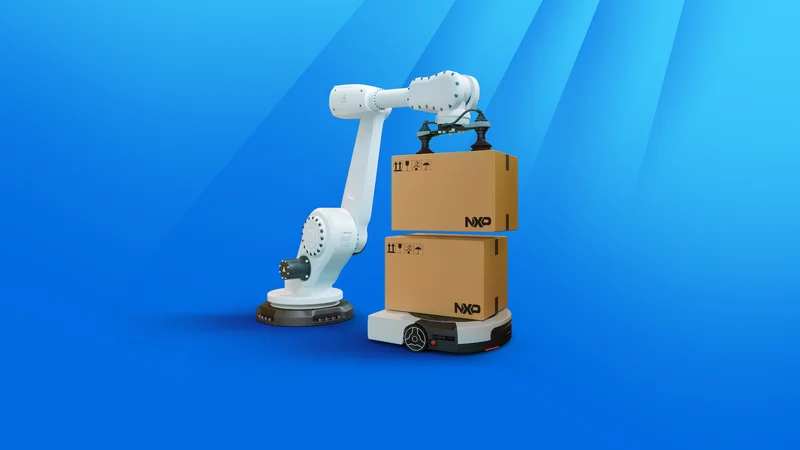
Safety is important in all designs, but it is especially important in industrial and automotive markets. While both industries have comparably rigorous standards, automotive silicon generally offers a more comprehensive feature set, including deeper diagnostic architectures, lockstep execution, greater safety software collateral, and options for coordinated supervision with a safety power management IC (PMIC). Despite those benefits, many industrial and robotics designers fear that automotive-grade silicon is too different or complex to be compliant in their own designs.
Fortunately, with NXP’s long track record in both industries, industrial designers can easily harness the benefits of automotive silicon. Beyond industrial-native MCU families such as MCX E series, NXP’s S32K microcontroller family, paired with its companion PMICs, offers a direct path to cross-domain functional safety without reinventing safety architectures from scratch.
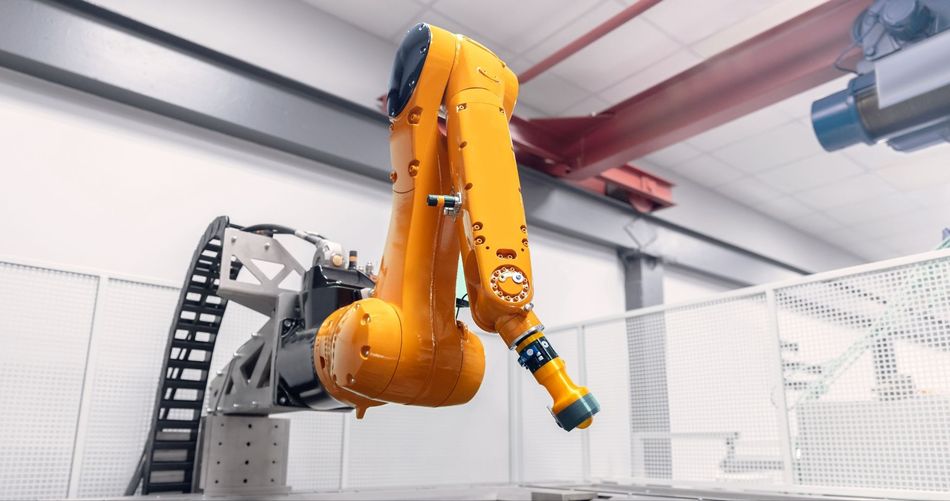 Source: NXPExploring Automotive and Industrial Compatibility
Automotive and industrial applications have different sets of standards and classifications, which can make the sectors seem very different on the surface. For instance:
Automotive: Follows ISO 26262 standard and Automotive Safety Integrity Level (ASIL) classification system.
Industrial: Follows IEC 61508 standard and Safety Integrity Level (SIL) classification system.
Machine control systems: Follows ISO 13849-1 and Performance Level (PL) classification system.
Because of these differences, many engineers don’t consider the possibility of cross-domain compatibility. But, in reality, these standards and classifications overlap more than they differ.
While no direct equivalence mapping exists between an ASIL D and SIL 3, for example, engineers can still demonstrate system-level equivalence through proper analysis, documentation, and design evidence. This process may appear daunting, but with the right silicon provider, it is straightforward.
If silicon vendors supply diagnostic coverage data, safety manuals, and Safety Element out of Context (SEooC) documentation aligned to both frameworks, design teams can easily prove equivalence in either direction. Otherwise, teams must prove equivalence themselves, which can be an arduous process.
An Architecture for System-Level Safety
Regardless of the chosen silicon, robust functional safety design should include fault detection at both the processing core and the power supply.
To establish such a redundant design, engineers can implement a coordinated MCU-PMIC architecture with a continuous, bidirectional safety communication channel between the two devices over I2C or SPI. In this design, neither device relies solely on self-monitoring to detect and respond to failures or anomalous behavior. Instead, the MCU can detect power anomalies reported by the PMIC or the PMIC can detect processor failures and act independently, giving the system two independent observers.
There are a number of fault-detection and response features that can add extra layers of safety to this architecture. For example, question-and-answer watchdog handshakes, which are external checks that software-only watchdog timers can’t replicate, enable the PMIC to verify proper MCU software execution. Similarly, if the PMIC has safe-state output capabilities, designers can configure it to signal external hardware directly in a fault scenario, thereby putting the system into a safe state.
These systems can benefit doubly from processors with lockstep core architectures, in which multiple internal cores execute the same instructions simultaneously. By using a hardware comparator to monitor the core outputs in real time, lockstep processors can force a safe state if the core results diverge before any unsafe output reaches the system.
Similarly, features like Memory Built-In Self-Test (MBIST) and Logic Built-In Self-Test (LBIST) let the system verify its diagnostic hardware. In that way, designers get a deeper level of confidence knowing that even the fault-detection systems themselves are functioning correctly.
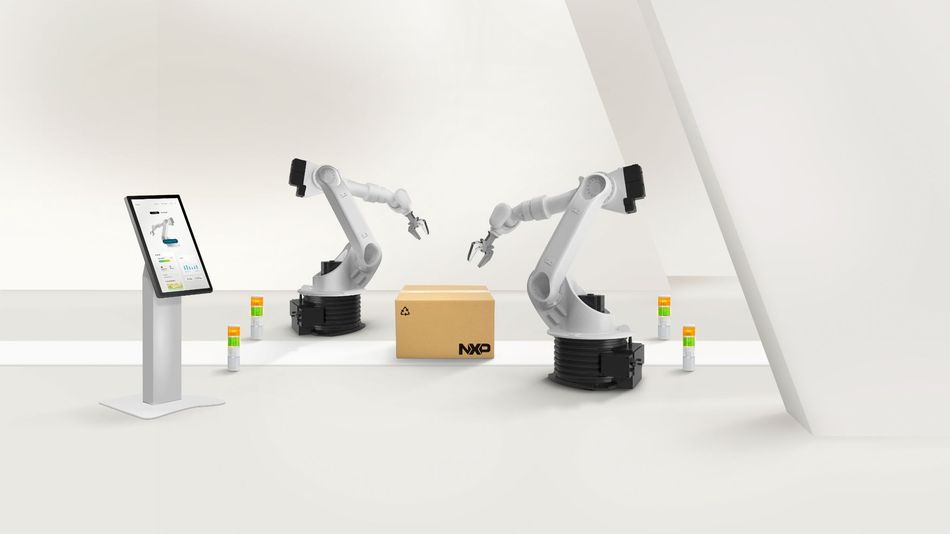
Silicon-Level Safety With NXP
With MCX E, customers get a qualified industrial part for SIL 2 under IEC61508. For higher safety needs where multicore or lockstep core is required, the S32K344 cluster of microcontrollers can help to close the gap by leveraging its ASIL D support.
To reach these safety levels, NXP is certified by TÜV-SUD for functional safety management for safety-related projects up to ASIL D according to ISO 26262:2018 and up to SIL 3 according to IEC 61508:2010 following our BCaM process.
Importantly, NXP offers both microcontrollers with complete SEooC documentation, failure modes, effects, and diagnostic analysis (FMEDA), and a safety manual, meaning industrial designers can demonstrate IEC 61508 equivalence with only system-level analysis.
With NXP’s MCX E and S32K3 family, industrial and robotics designers can achieve high levels of compliant functional safety using industrial-grade and automotive-grade parts.
For example, the S32K3 features dual, 320 MHz lockstep-configurableArm® Cortex®-M7 cores, with an integrated hardware comparator to force safe states if core outputs diverge. The company also equipped this MCU with a Fault Collection and Control Unit (FCCU), a centralized hub that aggregates all internal and external error signals into a single, deterministic fault-handling pathway.
NXP designed three diagnostic mechanisms into the FCCU.
For memory faults, the FCCU monitors all SRAM and Flash memory using Error Correction Code (ECC) and Single-Error Correct, Double-Error Detect (SECDED) schemes, catching memory degradation before it produces unsafe outputs.
For logic and permanent faults, the system runs MBIST and LBIST at startup to verify the diagnostic hardware.
For core processing faults, Structural Core Self-Test (SCST) covers permanent hardware faults in the Cortex-M7 cores that transient-fault detection alone would miss.
With these three features, designers can achieve high level Safe Failure Fraction during system-level analysis, which supports up to SIL 3.
In addition to prioritizing standalone capabilities, NXP designed the S32K1 to pair with the FS23 safety PMIC and the S32K3 to pair with the FS26 and FS27. When used in conjunction, they offer question-and-answer watchdog handshakes and continuous FCCU monitoring to detect failures that the MCU can’t report on itself.
Together, these devices unlock a dual-channel hardware architecture that satisfies PL e requirements before engineers write a single line of application code.
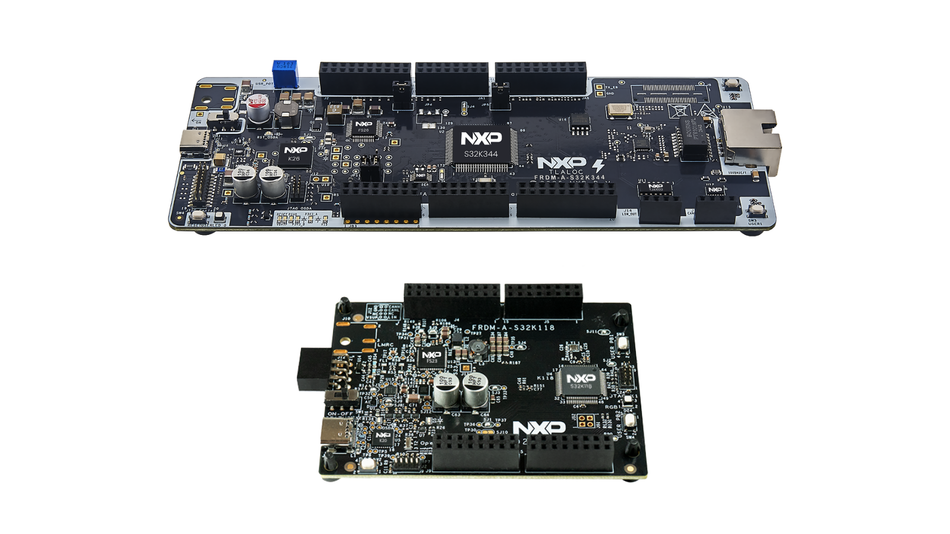
Getting Started with FRDM Boards
To help designers quickly get started with safety-first architectures based on automotive silicon, NXP offers FRDM development boards for both the S32K family and its companion PMICs. A completely verified and documented hardware solution, the FRDM development board lets teams instantly implement and validate MCU-PMIC coordination, lockstep fault detection, and FCCU fault routing without building any custom hardware.
In addition to the hardware, NXP also offers robust software tools that are ready for use out of the box. Pre-coded and validated examples are available through NXP's Application Code Hub, and the boards support the S32 Design Studio integrated development environment.
Safety Without Compromise
As industrial and robotics designers strive for higher safety integrity levels, automotive-grade solutions offer a promising path forward. With the S32K3 family, they inherit NXP's proven ISO 26262 safety framework and provide work products helping customers to integrate ICs in IEC 61508 systems. Designers can shift their focus to what matters most: building the next generation of safer, higher-performance industrial and robotic systems.