Busbar Solutions: Optimizing High-Performance Power Distribution
Selecting and validating the right busbar architecture earlier to optimize high-performance power distribution.

23 Jun, 2026. 10 minutes read

Today’s electrical systems face constraints that would have been unthinkable a decade ago. Designers once relied on discrete cabling for power distribution, but rising current densities and switching speeds now push those approaches to their thermal and electromagnetic limits. As conductors' heat and loop inductance increase, voltage drops, hot spots, and radiated emissions begin to constrain available output power and long-term reliability. Meanwhile, complex wiring harnesses heighten these issues by introducing parasitic impedances and many potential failure points.
In place of wire harnesses, busbars now offer a structured and modular alternative for high-power distribution. With controlled geometry, they deliver low impedance, predictable thermal behavior, and mechanical stability, making power distribution more predictable and easier to simulate.
This whitepaper explains how Molex and Sager Electronics help engineers select and validate the right busbar architecture earlier in the design process to shorten time to market and improve system-level outcomes.
Conventional Wiring Limitations
Wire harnesses struggle to support today’s high current levels because their physical construction creates inherent electrical and thermal inefficiencies. Circular conductors and long, convoluted routing paths increase resistive and inductive losses, creating thermal inefficiencies. This increases component temperatures and forces engineers to apply aggressive derating factors that restrict the system’s usable power. In high-current applications, such as electric vehicle traction inverters or AI training clusters, the heat generated by bundled cabling can become a limiting factor for the entire system. Wire bundles also inherently trap heat within their insulation layers and therefore, require active cooling solutions that add weight, complexity, and failure modes to the final product.
Wire harnesses also introduce substantial variability in mechanical placement. Cable management, bend radii, and harness strain all create opportunities for assembly-level inconsistency, as each variable can have significant impacts on overall performance. Because unit-to-unit routing differences can alter the system’s EMI profile, engineers often resort to costly, over-designed shielding and filtering measures to guarantee consistent operation.
High-density platforms only magnify these drawbacks. For example, rack-scale AI compute systems demand hundreds of amps per rail within tight volumetric limits. In these systems, bundled cabling consumes valuable space that designers would prefer to allocate to cooling solutions or additional compute modules. Aerospace power electronics face similar constraints where mass, vibration tolerance, and EMI margins compound to determine qualification outcomes. In these environments, the volumetric penalty of wiring harnesses is unacceptable.
Modular busbar architectures solve these challenges by replacing complex cabling with engineered copper or aluminum structures that designers control from the outset. Some of the major benefits of busbars include:
Engineers can define conductor geometry, cross-section, and insulation stack-up to lock in electrical and thermal behavior before changes to mechanical layout.
Reduced loop inductance through laminated structures that stabilize fast switching behavior for wide-bandgap solutions.
Improved vibration tolerance through flexible braids that carry high current without accumulating fatigue stress.
Support for confined routing paths using rigid-flex assemblies that preserve current density within mechanical compliance.
Collaborative Modeling by Molex and Sager Electronics
The busbar approach from Molex emphasizes direct engineer-to-engineer collaboration. The process begins with a global front-end design team that engages customers early to learn about their specific constraints. In this stage, Molex engineers review relevant inputs, including continuous and peak current requirements, voltage levels, temperature-rise limits, creepage and clearance considerations, and the available mechanical envelope. Before finalizing, Molex reviews the preliminary design, identifies manufacturable geometries, and suggests stack-ups, terminations, and routing strategies that reduce risk. Molex also uses its dedicated NPI teams to convert the customer design into a production print and quickly produce a functional prototype to validate the design.
This collaborative workflow reduces iteration cycles by helping engineers leverage advanced simulation instead of trial-and-error fabrication. To this end, Molex uses a suite of thermal, airflow, and mechanical finite element analysis (FEA) tools to virtually validate designs and give actionable feedback within roughly 72 hours. The fast turnaround saves customers weeks of development time, compared to traditional prototyping methods, in which engineers build and test physical samples to identify failures.
In general, early modeling can help teams uncover issues like potential hot spots and mounting tolerances before fabricators cut a single piece of metal. Consequently, customers can adjust their designs with confidence, knowing the new revision will perform as expected in the physical world.
Sager Electronics contributes to the process by providing logistical support to Molex. Specifically, Sager Electronics manages sourcing, inventory planning, and fulfillment to ensure that validated designs can move into volume production without material disruptions. By handling the supply-chain process, Sager enables Molex to focus on engineering validation and support. Through this collaboration, Molex and Sager work together to offer customers a development path that shortens the design process and brings power solutions to market faster.
Busbar Design Considerations
Busbar Materials
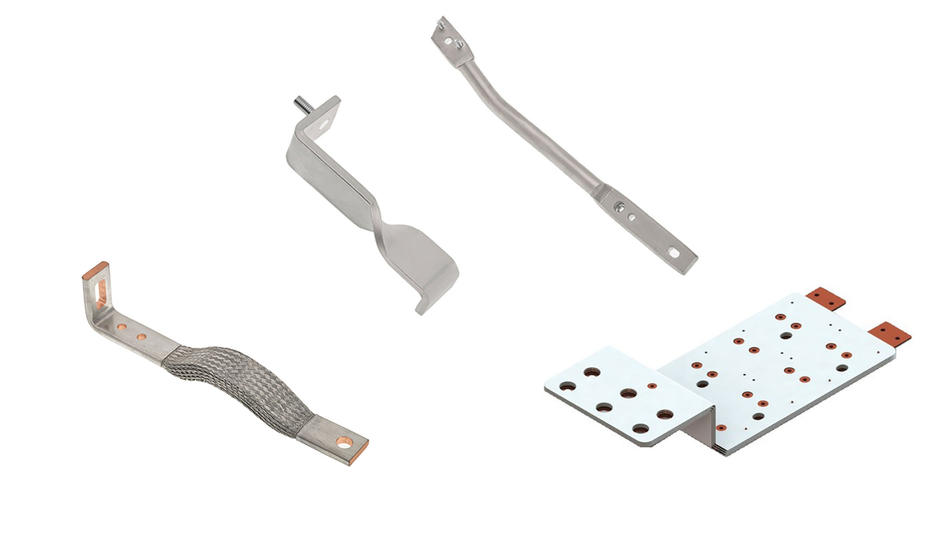
Material selection is the bedrock of busbar design. Engineers usually choose copper as their default material for high-performance applications because it delivers exceptional conductivity (100% IACS) and thermal spreading capabilities for applications where current density dominates the available envelope. In some weight-sensitive applications, like aerospace and large-format electric vehicles, aluminum is a preferable option. A lower-density, lower-conductivity material, aluminum offers significant weight and cost advantages compared to copper. Molex engineers often assist customers in combining these materials to optimize the balance between conductivity, weight, and cost for their unique applications.
 Source: Sager Electronics
Busbar Structures and Architectures
Engineers can choose from several distinct busbar formats depending on the application's specific mechanical and electrical challenges.
Rigid Busbars
These solid, pre-formed structures deliver high-current performance with maximum mechanical stability. In general, rigid busbars are best suited for static environments where structural integrity and efficient power delivery are the top design priorities.
Molex manufactures rigid bars using processes such as CNC milling, turret punching, and stamping to achieve complex shapes that navigate around other components. These bars support welded, brazed, and formed features and can include different metal platings for corrosion protection and a variety of contact resistances. Some options include
Tin: cost-effective standard for many industrial applications.
Nickel: durable in harsh environments.
Silver: the highest conductivity option; best for aerospace and defense applications.
Laminated Busbars
For applications requiring precise electrical characteristics, laminated busbars are a great option. This structure consists of alternating conductive layers separated by dielectric insulation, which minimizes characteristic impedance and inductance because the alternating positive and negative layers create a canceling magnetic flux effect. For this reason, engineers often choose this architecture to manage the high-frequency switching noise inherent in SiC-based converters and prevent voltage overshoot. Additionally, the laminated structure improves heat dissipation by increasing the surface area relative to the cross-sectional area and offers a compact, space-saving profile that is easy to mount.
Molex creates laminated busbars using insulation materials such as Mylar, Nomex, PET, FR4, and rigid plastics to bond the conductors.
Flexible Busbars
When an application is subjected to constant vibration, thermal expansion, or complex routing paths, flexible busbars provide a reliable, space-saving solution. Using this structure, designers can bend, fold, twist, or curve conductors to fit into tight spaces where a rigid bar cannot be positioned. Designers often construct these busbars with diffusion-welded ends to maintain high conductivity at the termination points.
Molex offers flexible options using round or flat braid, as well as multi-layered flex composed of thin, stacked copper strips. This process fuses the layers into a solid mass without the need for filler metals. The fused layers maintain mechanical resilience along the entire length of the conductor and help prevent work hardening and cracking under vibration.
Hybrid Assemblies
Many complex systems require a combination of properties. Hybrid assemblies merge rigid and flexible structures to introduce motion tolerance or geometric compliance in tight locations. Molex fabricates these by welding or brazing flexible elements directly to rigid sections to create a unified component that solves multiple integration challenges simultaneously. For example, a rigid section might serve as a battery terminal interface, while a flexible section then routes power to the inverter. This absorbs the relative motion between the two components.
Molex has the manufacturing capabilities to fabricate all these formats in-house using techniques like swaging, edge bending, and powder coating. Customers can select the optimal architecture for their specific needs without coordinating with multiple suppliers or compromising design intent.
Integrating Busbars with a High-Power Interconnect Ecosystem
Besides conductive metal, a robust power delivery system requires clean, reliable interfaces across conductors, busbars, PCBs, and external wiring. The interface is often the weak point in a high-power system, as resistance can build up due to oxidation or mechanical relaxation.
Molex delivers a high-power interconnect ecosystem that complements its busbar designs by creating a consistent, validated connection pathway. The COEUR Socket Technology from Molex is a solution that includes advanced design features to minimize contact resistance and improve current-carrying capacity in high-power designs. This technology is incorporated into Molex interconnect solutions, including the Sentrality Pin and Socket Interconnect System—a prime example of busbars integration with high-power interconnects at the system level.
To accommodate busbar-to-board and busbar-to-busbar applications, the Molex Sentrality Pin and Socket Interconnect System supports current levels from 30 to over 350A and accommodates multiple attachment methods, including press-fit, weld, screw, and surface mount technology (SMT). These options enable design flexibility when integrating busbars into mixed-technology assemblies that combine mechanical, PCB-based, and cable-based elements.
A unique feature of the Sentrality system is its integrated float mechanism, which allows +/- 1.0 mm radial self-alignment. In rigid busbar systems, manufacturing tolerances can accumulate and complicate pin-to-socket alignment during assembly. The float capability absorbs the misalignment and offers repeatable mating forces to support long-term reliability in systems otherwise prone to thermal expansion and vibration.
Using this end-to-end ecosystem, engineers can design a complete high-power pathway from source to load without relying on arbitrary mechanical adapters or custom interfaces that increase risk. With a global manufacturing footprint, including facilities in Monee (US), Nogales (Mexico), Kunshan (China), and Katowice (Poland), Molex reduces lead times and supply-chain risk for customers worldwide.
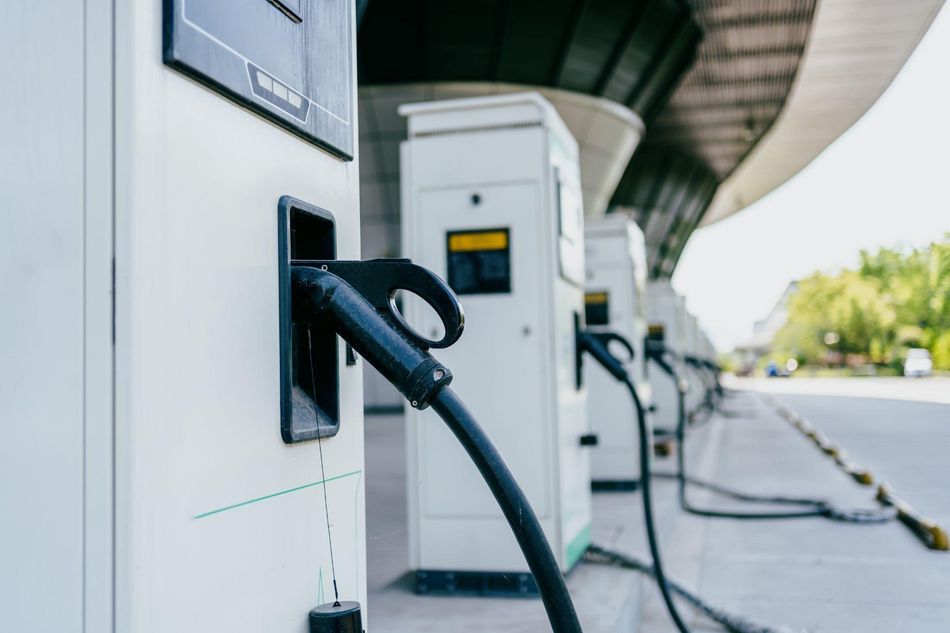 EV charging stations. Source: Shutterstock
Selecting Busbar Architectures for Different Applications
Aerospace and Defense
Aerospace programs require power solutions that are lightweight, vibration-tolerant, and capable of mitigating EMI in the harshest operating conditions. As material weight is often the primary driver, aerospace engineers frequently rely on aluminum rigid busbars to decrease airframe loads.
Structurally, different architectures can serve distinct applications in the same aircraft. For example, rigid busbar structures provide the necessary mechanical stability for on-vehicle power distribution in static zones. Flexible busbars offer clear benefits in areas subject to constant movement or vibration, such as near propulsion units. Furthermore, engineers frequently use laminated busbars in avionics and radar systems because their low inductance and capacitance help control impedance and shield sensitive electronics from interference.
Molex supports these mission-critical applications through ITAR-registered facilities and rigorous process controls that ensure compliance with defense industry standards.
AI Data Centers and High-Current Rack Power
The explosive growth of AI training clusters drives unprecedented demands for power density. It is not unusual for busbars to carry several hundred amperes per rail to supply high-power GPUs. In these environments, thermal management is a top priority.
Laminated and hybrid busbar structures can help manage thermal spread by reducing the inductive voltage spikes that can disrupt fast-switching power converters. Engineers can also design these structures with integrated liquid cooling features and predictable thermal paths to ensure busbars maintain stable operation, even with dynamic power loads.
Industrial Drives and Electrified Systems
Industrial power supplies, robotics, motor drives, and uninterruptible power supply (UPS) architectures benefit from reduced parasitic effects and simplified busbar assemblies. In place of cluttered wiring nests that are difficult to trace and troubleshoot, rigid bars or hybrid structures provide clean, organized power pathways through complex cabinet geometries. In addition to improving electrical performance, this modular concept also eases maintenance and helps ensure design repeatability across manufacturing lots. It is more efficient for a technician to replace a modular busbar assembly than to re-wire a complex harness.
EV, Charging, and Battery Energy Storage Systems (BESS)
Automotive architectures are trending toward higher currents and distributed power stages, which call for robust connections for battery management systems and traction inverters. In these applications, flexible busbars are a strong candidate. They support pack-level vibration profiles by absorbing the mechanical stress of road movement and the thermal expansion of battery cells.
Meanwhile, laminated busbars offer low-inductance properties to support efficient switching in inverters and on-board charger (OBC) systems. High voltages (800V+) require careful attention to creepage and clearance. To withstand these measures and simplify battery-pack assembly, Molex engineers design insulation systems with connectors mounted directly on the busbars, reducing the tolerance stack complexity found in traditional wiring methods.
A Molex Case Study
Molex recently supported a customer in the aviation market that required a US-based manufacturer. This customer was experiencing significant yield issues in its existing product due to repeated damage to busbar insulation during internal manufacturing and assembly. Sharp metal edges on the busbar were cutting into the insulation during installation, causing reliability concerns and rework.
After the customer shared these challenges, Molex Engineering engaged a cross-functional team and produced a prototype within one week using their dedicated New Product Introduction (NPI) cell located at the manufacturing facility in Monee, IL. The fast turnaround enabled Molex engineers to observe the manufacturing process directly and isolate the root cause of the failure. The Molex team swiftly validated a corrective approach, redesigning edge geometry, and revising the insulation application process to improve mechanical durability.
Molex presented the prototype and associated design for manufacturing (DFM) recommendations within the same week. The accelerated timeline confirmed the feasibility of the proposed solution and provided the customer with clear, visual evidence of the design improvements.
What's Next for Busbars?
Over the next five years, challenges surrounding power distribution will change considerably.
First, higher-voltage architectures are becoming the standard in electric vehicles and next-generation data centers. Moving from 400 to 800V and beyond requires advanced insulation materials, aggressive thermal dissipation strategies, including liquid cooling, and laminations with even lower characteristic impedance to handle increased power throughput without compromising safety or efficiency.
Second, systems will continue to move toward modular power blocks. To support this trend, the industry will need more integrated rigid-flex structures and connectorized busbars that simplify assembly and maintenance. The process of bolting simple metal bars together is fading as the future gives way to fully integrated sub-assemblies that engineers can drop into place, ready to perform.
Third, digital manufacturing and early simulation (potentially including digital twins) will push more decision-making into the front end of the design cycle. Engineers will expect to validate thermal and mechanical performance virtually before committing to tooling. They will simulate part performance and the assembly process itself.
Molex is actively expanding capacity to support these high-volume, globally distributed manufacturing programs with consistent quality.
Conclusion
Conventional wire harnesses can no longer meet power systems’ requirements for predictable, modular, and thermally efficient performance. Busbars offer a clear path forward for an effective solution to these challenges.
As designers look to leverage the benefits of busbars, Molex and Sager Electronics offer an engineering-centric approach that minimizes barriers to entry, shortens development time, and ensures high-system performance.
Learn more about the latest busbar solutions from Molex or contact the technical team at Sager via this short-form for application-specific support.