A Practical Guide to Rocker Switch Selection
Learn how to choose the right rocker switch by evaluating voltage, current rating, pole and throw configuration, sealing, mounting, and application requirements.

02 Oct, 2026. 5 minutes read
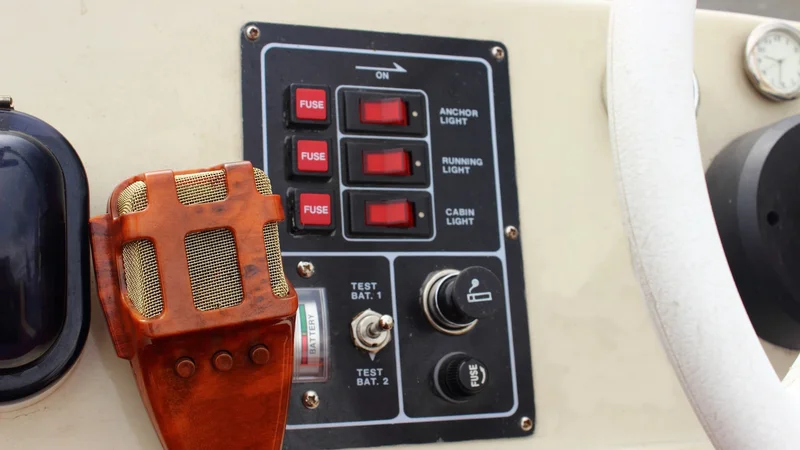
What separates a rocker switch that lasts for years from one that fails long before the product reaches the end of its life?
The difference usually comes down to proper selection. A switch that performs reliably in a household appliance may not withstand the inrush current of a motor, the vibration of heavy machinery, or the moisture found in outdoor environments. Factors such as contact material, electrical rating, environmental sealing, and actuator design all play a critical role in long-term performance.
Whether you are designing industrial equipment, medical devices, commercial appliances, or transportation systems, selecting the right rocker switch requires balancing electrical, mechanical, and environmental requirements.
This guide walks through the key considerations to help you make an informed decision.
Key Factors to Consider for Rocker Switch Selection
Rocker switches are among the most widely used control interfaces across industries because they offer a reliable, durable way to operate electrical equipment. Their continued relevance is reflected in a global market.
Whether you are designing industrial machinery, medical devices, commercial equipment, or consumer products, selecting the right rocker switch is essential to ensure reliable performance and long service life. The following are the key factors to consider when selecting a rocker switch.
1. Circuit Type and Voltage Rating
Confirm AC or DC before anything else; a switch built for one is not automatically safe on the other. A switch rated 15A at 125V AC may only be good for 3–5A on a 12V DC circuit, since the two current types impose different stresses on contacts. Match the voltage class, too: 12V/24V DC systems and 125V/250V AC systems each need a switch rated for their respective ranges.
2. Electrical Rating and Size
Current load dictates the physical size, since higher current requires larger, heavier contacts to dissipate heat properly. A working rule: pick a switch rated at least 20% above the actual continuous load; running a switch at its ceiling shortens its service life. A low-signal indicator circuit fits a compact switch; a heavier accessory or power circuit needs a larger, sturdier body.
3. Pole and Throw Configuration
This defines how many circuits one switch body controls. A basic on-off task needs only a single pole, single throw (SPST) design. Controlling two circuits together, or reversing a motor, calls for a double-pole setup instead, which is increasingly common now as more compact multi-circuit devices are needed to save panel space.
4. Switching Function
The switching function determines how the switch behaves when it is actuated. Some applications require a maintained toggle that stays in position after activation, while others need momentary action that remains active only while pressed and returns automatically when released. This distinction is particularly important in automated systems and fail-safe applications.
5. Illumination
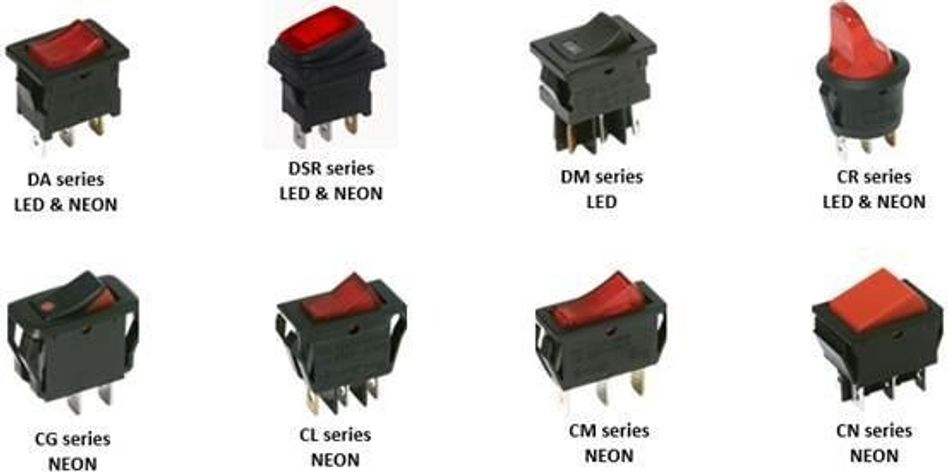
Choose an illuminated rocker switch if the equipment will be used in low-light environments or if operators need a clear visual indication of switch status. LED illumination is the preferred choice for most applications due to its long life and low power consumption, while neon illumination is typically used in AC-powered and legacy systems. Also consider the required illumination voltage and color.
6. Actuator Style & Travel
The actuator's shape, travel distance, and operating force determine how the switch feels during use. Low-profile actuators are ideal for compact devices, while raised or curved designs are easier to operate, especially when users wear gloves. A clear, consistent tactile response helps operators confirm switch activation without relying solely on visual feedback.
7. Termination and Mounting
PCB-mounted switches use straight, right-angle, or bracket terminals. Panel-mounted switches typically use solder lug or quick-connect terminals. Ensure compatibility with the required panel cutout or PCB layout to simplify installation and avoid costly redesigns.
8. Sealing and Environmental Protection
Consider the environment where the switch will be used. For outdoor, marine, or industrial applications, choose a sealed rocker switch with an appropriate IP rating (such as IP65) to protect against dust and moisture. This helps ensure reliable performance and extends the switch's service life.
9. Certifications and Contact Durability
Confirm the switch carries relevant certifications like UL, RoHS, or CE, especially for industrial or export applications. Contact material also matters at higher voltages, since silver or gold-plated contacts resist arcing better than base metal contacts, extending switch life under repeated use. A quality switch should also have a specified cycle life, typically 50,000 to 100,000 operations, for standard industrial and automotive use.
Quick Reference: Choosing the Right Rocker Switch Configuration
The table below provides a quick overview of common rocker switch configurations and their ideal applications.
Configuration | What It Offers | Best Fit |
SPST (single pole, single throw) | Simple two-terminal on/off switching | Basic circuits needing only one on/off function |
SPDT (single pole, double throw) | Routes power to one of two outputs, often with a center-off position | Applications needing to select between two power sources or modes |
LED illumination | Long service life, low power draw, wide color range | Most modern designs, especially where color-coded status matters |
Neon illumination | Simple, reliable, commonly used in legacy and industrial designs | Applications where neon is already standard, or voltage requirements suit it |
Sealed (IP65+) | Protects contacts from dust, moisture, and washdown spray | Outdoor, marine, or harsh industrial environments |
Standard (unsealed) | Lower cost, simpler construction | Indoor, low-exposure environments |
Considering these factors will help you choose a rocker switch that delivers reliable performance throughout the product's service life.
Choosing the Right Fit for Your Application
Selecting the right rocker switch means considering all of the key requirements together rather than focusing on a single specification. Electrical ratings, switching configuration, environmental protection, mounting method, and user experience all influence long-term performance and reliability.
Use the following checklist before making your final selection:
Confirm whether the circuit is AC or DC, and match voltage and current rating accordingly.
Match the pole and throw setup to the exact circuit design.
Choose a sealing level based on real dust and moisture exposure.
Pick a termination style and panel cutout that fits the assembly cleanly.
Decide whether illumination is needed, and choose LED or neon accordingly.
Confirm the switching function (maintained or momentary) matches the intended use.
Factor in actuator travel and feel if operators will rely on tactile confirmation.
Check for relevant certifications (UL, RoHS, CE) and confirm the switch has a stated cycle life suited to your application.
Selecting the right combination of electrical, mechanical, and environmental characteristics can help to maximize switch reliability and overall system performance.
Why Choose Littelfuse Rocker Switches
Littelfuse offers a broad portfolio of rocker switches made to meet the diverse requirements of industrial, automotive, commercial, and off-highway applications. Littelfuse’s DSR series is one of the best examples of a rocker switch built for harsh operating conditions. It pairs IP65 sealing with LED or neon illumination to protect against dust, moisture, and other environmental exposure.
Many models also offer gold- or silver-plated contacts, allowing engineers to optimize performance for both low-current signal switching and higher-power applications. Whether you need a basic on/off switch or a rugged illuminated solution for demanding conditions, Littelfuse provides reliable rocker switches backed by decades of switching expertise.
Explore their website to find the right switch for your next design!