Urethane Casting Solutions for Robotics: Flexible, Low-Volume Production
The robotics industry is moving quickly, with innovation expanding across manufacturing, healthcare, logistics, and automation.

10 Jun, 2026. 3 minutes read
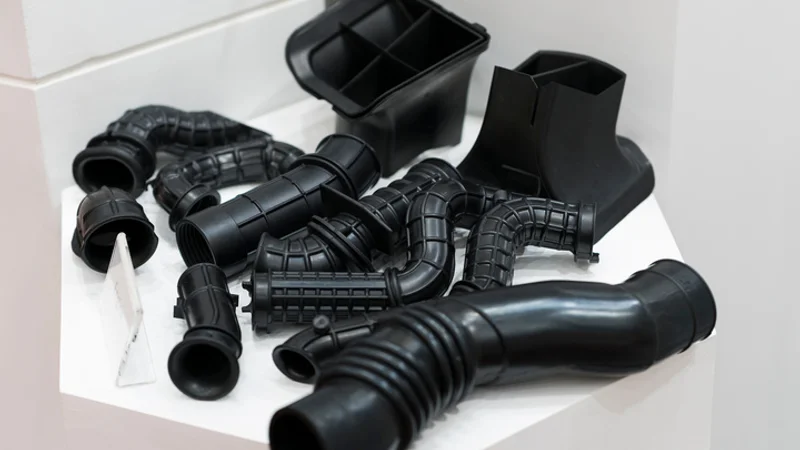
The robotics industry is moving quickly, with innovation expanding across manufacturing, healthcare, logistics, and automation. Developing robotic systems requires precision components that can be tested, refined, and improved before full-scale production. Urethane casting is well suited to this stage because it enables fast, cost-effective production of high-quality parts, making it a practical choice for robotics projects that need flexibility and low-volume output. RPWORLD provides urethane casting solutions that help robotics manufacturers move development forward more efficiently.
Robotic products often go through multiple design iterations before reaching final production. Engineers need to evaluate mechanical performance, structural integrity, and component compatibility throughout development. Urethane casting supports this process by producing prototype parts that closely resemble final production components. Using polyurethane materials that simulate the properties of production plastics, manufacturers can assess designs more realistically before committing to hard tooling. RPWORLD helps robotics companies validate designs with greater confidence through reliable prototype manufacturing support.
Another major advantage of urethane casting is its suitability for small-batch production. Unlike injection molding, which typically requires higher tooling investment and is more economical at larger volumes, urethane casting offers a more flexible option for limited runs. Multiple identical parts can be produced from a master model while maintaining good detail, surface quality, and dimensional consistency. This is especially useful when robotics companies need to test several design variations before finalizing a component.
Complex geometries are common in robotics, including housings, enclosures, connectors, and mechanical assemblies. These parts often involve detailed internal features and tight dimensional requirements. Vacuum casting helps reproduce these details accurately while reducing air bubbles during material injection, which contributes to smoother surfaces and better overall part quality. RPWORLD uses controlled casting processes to help ensure robotic components meet both functional and appearance requirements.
Material flexibility is another strength of urethane casting. Robotics applications may require parts with specific properties such as flexibility, impact resistance, or transparency. A wide range of polyurethane materials can be used to simulate different production plastics, giving engineers the ability to compare material options without the cost of hard tooling or larger production runs. RPWORLD offers multiple material choices to help robotics developers select the most suitable option for each application.
Speed is also a major benefit. In robotics development, faster iteration can make a significant difference. Once a master model is ready, silicone molds allow functional parts to be produced in a short timeframe, helping teams move quickly through testing and design refinement. RPWORLD supports this process with efficient urethane casting services that help shorten development cycles.
Urethane casting also works well as a bridge between prototyping and production. Robotics companies often need small quantities of functional parts for pilot builds, testing programs, or early market validation. In these cases, urethane casting provides production-like quality without the cost and lead time of hard tooling. This allows teams to validate designs, review part performance, and gather feedback before scaling up.
Quality and precision remain essential throughout robotics development. Components need to fit correctly, function reliably, and hold up under demanding use conditions. With controlled vacuum casting processes and careful production management, RPWORLD helps customers produce accurate, durable parts for testing and low-volume applications.
As robotics technology continues to expand into more industries, the need for efficient prototyping and flexible low-volume production will continue to grow. Urethane casting offers a practical combination of speed, flexibility, and precision, helping manufacturers streamline development and bring new products to market faster. With dependable urethane casting support, RPWORLD helps turn robotic concepts into functional parts ready for evaluation and next-stage manufacturing.