PolyJet 3D Printing: Guide to the Multi-Material Stratasys Technology
PolyJet 3D printing is a high-precision material jetting technology that uses inkjet heads and UV-curable photopolymers to produce multi-material, full-color parts with good resolution.

04 Jun, 2026. 11 minutes read
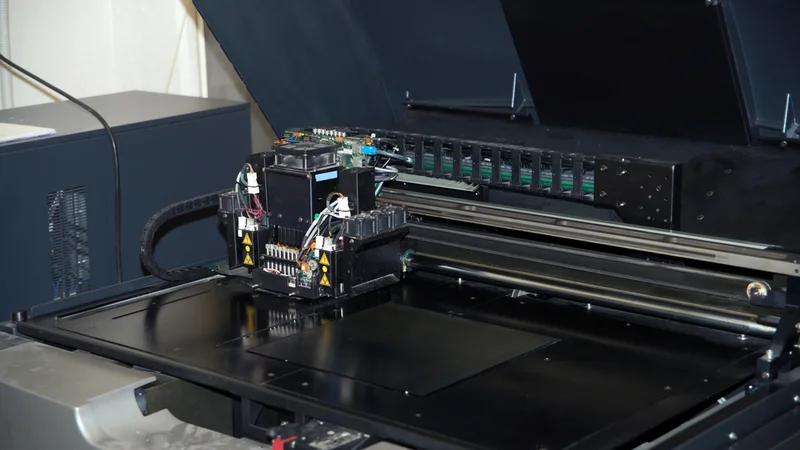
PolyJet 3D printing is a material jetting process developed by Objet Geometries (now part of Stratasys) that produces parts by jetting thin layers of UV-curable photopolymer resin from inkjet print heads, then immediately curing each layer with UV light. The technology is distinguished by its ability to deposit multiple materials in a single pass, achieving layer thicknesses as fine as 14 µm, smooth surface finishes and full-color output without post-processing.
For engineers evaluating additive manufacturing options, PolyJet 3D printing occupies a specific niche: high-fidelity prototyping, multi-material functional models, and end-use parts where accuracy and aesthetics matter more than raw mechanical strength or cost per part. The process competes with stereolithography (SLA) on resolution and with fused deposition modeling (FDM) on accessibility, but offers capabilities that neither can match in multi-material and multi-color printing.
This article provides a technical overview of PolyJet 3D printing technology, covering its history, process mechanics, materials, printers, design guidelines, applications,and comparison with other additive manufacturing methods. It is written for engineers, product designers, and technical professionals who need to understand where PolyJet fits in a prototyping or production workflow.
History and Evolution

PolyJet technology was invented by Objet Geometries, founded in 1998. The first commercial PolyJet printer, the Objet Quadra, debuted in 2000 and introduced the concept of jetting photopolymer droplets and curing them with UV light, layer by layer. This approach drew on principles from 2D inkjet printing but applied them to three-dimensional fabrication.[1]
In 2012, Objet Geometries merged with Stratasys, combining PolyJet expertise with Stratasys's FDM technology.[2] Under Stratasys, PolyJet printers expanded from single-material systems to multi-material platforms capable of jetting several resins simultaneously. The Connex series, introduced before the merger, was one of the first systems to enable multi-material printing. Subsequent platforms such as the J750 and J850 extended multi-material capability to full-color CMYK printing and support for six or more base resins in a single build.
Over two decades, PolyJet has evolved from a niche rapid prototyping tool into an industrial-grade platform used across medical, dental, automotive, aerospace, and consumer product industries. The underlying technology has remained consistent (inkjet deposition of UV-cured photopolymers), but advances in print head resolution, material chemistry, and software have steadily expanded its capabilities.
How PolyJet Works
The PolyJet process involves three stages: design preparation, jetting and curing, and support removal.[3]
Design Preparation
The workflow begins with a 3D CAD model exported as an STL or OBJ file. The model is imported into slicer software such as Stratasys GrabCAD Print, where the engineer assigns materials and colors to different regions of the part, sets build orientation and configures layer thickness. The software slices the model into layers (typically 14–55 µm thick) and generates the jetting instructions for the print heads.
Material assignment is a distinguishing step. Because PolyJet printers can jet multiple resins simultaneously, the engineer can specify different photopolymers for different regions of the same part. For example, a rigid shell material on the exterior and a rubber-like material on grip surfaces. The slicer calculates the droplet placement for each material at each layer.
Jetting and Curing
During printing, the print head carriage moves across the build tray in the X-Y plane. Hundreds of nozzles on the inkjet print heads simultaneously jet tiny droplets of liquid photopolymer resin onto the build platform. Immediately after deposition, a UV lamp mounted on the carriage passes over the layer and cures (solidifies) the photopolymer through photopolymerization.
Each pass deposits one layer of the part. The build platform then lowers by one layer thickness (14–55 µm), and the process repeats. Where support structures are needed (for overhangs, undercuts, or complex geometries), the printer jets a separate support material. Stratasys PolyJet printers use a dedicated SUP/WSS support material (breakway, soluble, or water-soluble) that fills voids and supports overhanging features during the build.
The simultaneous deposition of build and support materials, combined with immediate UV curing, means each layer is fully solidified before the next is applied. This eliminates the need for a separate post-cure step (unlike some SLA processes) and allows for very fine layer resolution.
Support Removal
After printing, the part is removed from the build tray and the support material must be cleaned away. PolyJet support materials can be removed by several methods, depending on the exact formulation:
Water jetting: A high-pressure water jet (typically a WaterJet cleaning station) dissolves and removes water-soluble support material. This is the most common method for complex geometries.
Soaking: Parts can be soaked in a sodium hydroxide (NaOH) solution or water bath to dissolve soluble support material from internal channels and fine features.
Manual removal: For accessible areas, breakaway support material can be peeled or scraped away with hand tools.
The ease of support removal is a practical advantage of PolyJet. Because the support material is designed to be easily removed, engineers can print complex internal geometries, thin-walled structures and assemblies-in-place without worrying about mechanical support removal damaging the part.
Recommended reading: Types of 3D Printers: The Ultimate Guide to Additive Manufacturing Technologies
Advantages
Extremely high resolution and fine layer thickness (as low as 14 µm) for smooth surfaces and detailed features.
Multi-material printing allows combining rigid, flexible, transparent, and colored resins in a single part.
Full-color capability with hundreds of thousands of color combinations for realistic prototypes.
Complex geometries are possible thanks to gel-like, water-soluble support materials.
Rapid prototyping workflow, with parts cured immediately during printing—no lengthy post-curing required.
Versatile applications, from dental and medical models to concept prototypes and functional testing.
Easy support removal, minimizing risk to delicate features or internal channels.
On the other hand, PolyJet parts are generally not suitable for high-strength or long-term load-bearing applications, as the photopolymers are less durable than engineering plastics. Additionally, print size is limited by the printer build envelope, making very large parts challenging without assembly. Perhaps most importantly, machines are very expensive and targeted at commercial users, although individuals and small companies can use Stratasys Direct for on-demand manufacturing.
Applications
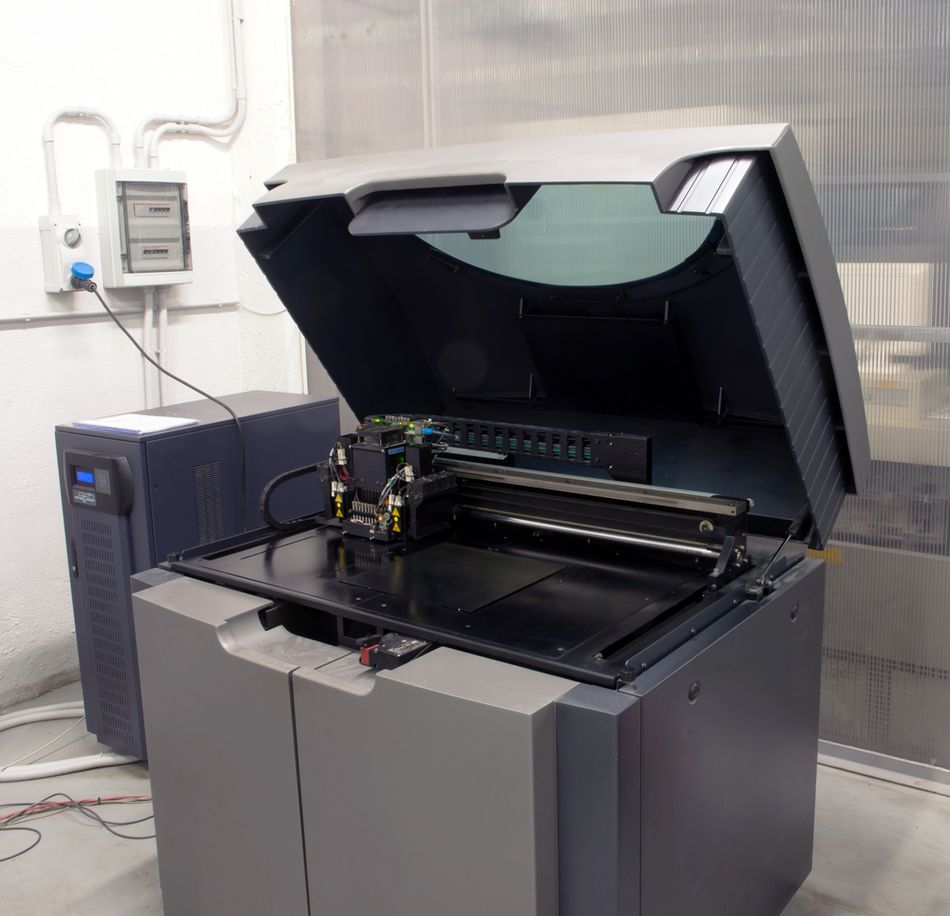
PolyJet 3D printing serves a broad range of industries and use cases where high fidelity, multi-material capability and smooth surface finish are required.
Rapid prototyping: High-fidelity visual and functional prototypes, including consumer electronics enclosures, automotive interior parts, packaging mockups, and industrial design models.
Medical modeling & surgical planning: Patient-specific anatomical models from CT/MRI data; supports sterile environments using biocompatible materials; J5 MediJet optimized for this workflow.
Dental applications: Surgical guides, orthodontic models, crowns and bridges, try-in dentures; high accuracy reduces chair time and improves fit.
Aerospace tooling & fixtures: Lightweight tooling, jigs, and assembly aids for composites; smooth surfaces and precision reduce lead times versus machined aluminum.
Consumer products: Full-color, multi-material prototypes for footwear, eyewear, sports gear, and household items to evaluate form, fit, and aesthetics.
Education & research: Experimental fixtures, microfluidic devices, custom lab equipment, and demonstration models for universities and research labs.
Art & architecture: Detailed, full-color physical models of sculptures, buildings, and urban layouts.
Materials and Photopolymers
PolyJet's material library is one of its strongest differentiators. Stratasys offers over 200 material combinations through its "digital materials" system, which blends base resins at the voxel level to create composite properties.[4]
Product Name | Function | Description |
Vero® | Rigid, general | Rigid, high-detail photopolymer for accurate fit, form, and functional prototypes across many industries. |
VeroVivid / Vero Color | Full color | Colored rigid materials enabling thousands of vivid colors and tints for realistic visual prototypes. |
VeroClear / ContactClear | Transparent | Clear rigid photopolymer for see-through parts and visualization of internal features. |
Digital ABS Plus™ | Tough, durable | Tough, durable photopolymer with heat resistance for functional prototypes and tooling. |
Agilus30™ Colors | Flexible | Flexible, rubber-like material with controlled shore values for elastomeric parts and overmolding. |
Elastico™ | Soft flexible | Rubber-like photopolymer for advanced flexible and soft-touch prototyping. |
DraftWhite™ | Basic rigid | Rigid white material for single-material applications, including medical uses. |
MED610™ | Biocompatible | Transparent, biocompatible material suitable for precise surgical guides and temporary patient contact. |
MED615RGD™ | Biocompatible opaque | Rigid, ivory-opaque, biocompatible material designed for bodily contact and medical prototypes. |
MED625FLX™ | Flexible biocompatible | Flexible, transparent, biocompatible material for dental applications requiring elasticity. |
PolyJet™ Digital Materials | Composite blends | Custom voxel-level combinations of base resins to tailor shore, translucency, or mechanical properties. |
SUP705™ / SUP706B™ / SUP710™ / SUP711™ | Support | Gel-like and soluble support materials for overhangs and complex geometries, easily removed by breakaway or solution. |
WSS150™ | Water-soluble support | Water-soluble support optimized for delicate and internal features with gentle removal. |
Digital Materials
PolyJet's digital materials system is unique in additive manufacturing. By jetting two or more base resins from separate print heads and varying their ratio at each voxel, the printer creates composite materials with properties intermediate between the base resins. For example, blending a rigid Vero resin with a flexible Agilus resin produces a range of Shore A values between the two extremes. The J850 can jet up to seven materials simultaneously (six build materials plus support), enabling hundreds of unique digital material combinations in a single print.
This capability allows engineers to print parts with graded stiffness (rigid in one region, flexible in another), multi-color graphics directly embedded in the surface, and functional overmolds without secondary operations.
2026 PolyJet Printers and Specifications
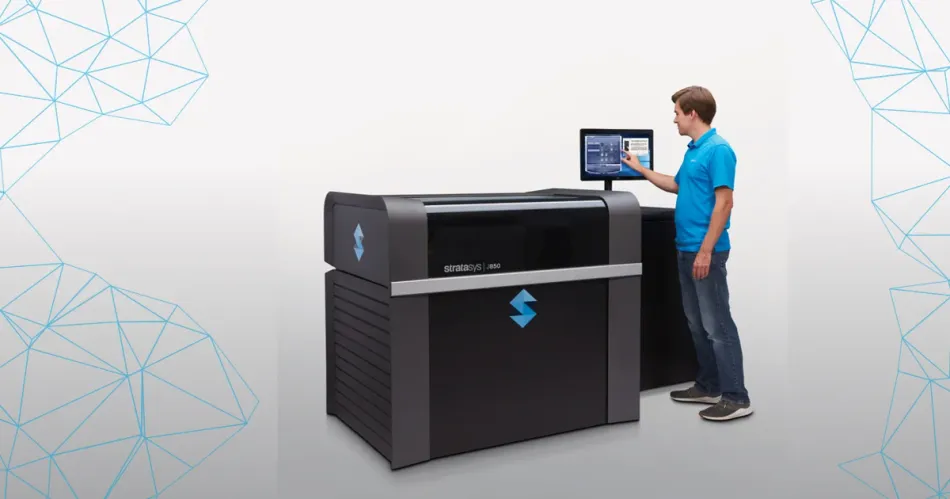
The current PolyJet lineup consists of 12 printers organized into several hardware platforms and industry-specific variants. At the core are the compact rotating-tray systems: the J3 DentaJet, J5 DentaJet, J5 MediJet, J5 Digital Anatomy, J35 Pro, and J55 Prime. Above these sits the mid-size J826 Prime, part of the J8 platform used for realistic multi-material prototypes and full-color product models. And at the high end are the large-format J850-platform systems—J850 Prime, J850 Pro, J850 Digital Anatomy, and J850 TechStyle—which use the same large build envelope but target different applications.[5]
Printer | Category | Description | Materials | Build Size (mm) |
J3 DentaJet | Dental | Entry-level PolyJet dental printer for producing models, surgical guides, and appliances in mixed trays. | MED610, MED620 (VeroGlaze), MED625FLX, VeroDent | 140 × 200 × 190 |
J5 DentaJet | Dental | Multi-material dental production printer designed to print several dental applications simultaneously. | MED610, MED620, MED625FLX, VeroDent, TrueDent | 140 × 200 × 190 |
DentaJet XL | Dental | Higher-capacity dental PolyJet system for large dental labs producing multiple parts per build. | MED610, MED620, MED625FLX, VeroDent | 260 × 260 × 200 |
J850 Digital Anatomy | Medical | High-end medical modeling printer designed to replicate the mechanical behavior of human tissues. | BoneMatrix, GelMatrix, TissueMatrix, RadioMatrix | 490 × 390 × 200 |
J5 Digital Anatomy | Medical | Compact medical printer for anatomical models used in surgical planning and simulation. | BoneMatrix, TissueMatrix, GelMatrix | 140 × 200 × 190 |
J5 MediJet | Medical | Medical PolyJet printer combining full-color capability with biocompatible materials for device prototyping and anatomical models. | MED615RGD IV, DraftWhite MED857, Elastico Clear FLX934 | 140 × 200 × 190 |
J35 Pro | Commercial | Office-friendly PolyJet printer for multi-material design prototypes and concept models. | Digital ABS Plus, DraftGrey, Elastico, VeroUltra Opaque, VeroUltra ClearS | 140 × 200 × 155 |
J55 Prime | Industrial | Full-color rotating-tray PolyJet printer for highly realistic design and packaging prototypes. | VeroUltra, VeroVivid colors, ToughONE, Elastico, Digital ABS | 140 × 200 × 190 |
J826 Prime | Commercial | Mid-size multi-material PolyJet printer for product design prototypes and engineering models. | Vero family, Agilus30, Digital ABS, VeroUltraClear | 255 × 252 × 200 |
J850 Prime | Industrial | Large full-color PolyJet system capable of printing multi-material prototypes with hundreds of thousands of color combinations. | Vero family, Agilus30, Digital ABS, VeroUltraClear | 490 × 390 × 200 |
J850 Pro | Industrial | Industrial multi-material printer focused on functional prototyping and engineering validation. | Digital ABS, Agilus30, Vero family, DraftGrey | 490 × 390 × 200 |
J850 TechStyle | Textile | PolyJet printer designed to print flexible and colored materials directly onto textiles and fabrics. | VeroEcoFlex, Agilus30, VeroUltra | 490 × 390 × 200 |
Legacy PolyJet Printers
Before Stratasys unified its product lines, PolyJet technology was developed by the company Objet, which launched many of the earliest commercial systems in the mid-2000s. Notable models included the Objet Eden260 and Objet Connex500, both widely adopted in product design and engineering prototyping. The Eden series helped establish PolyJet as a high-resolution prototyping technology, while the Connex platform introduced a major breakthrough: the ability to jet and cure multiple photopolymer materials simultaneously, allowing users to create composite parts that combined rigid and flexible properties in a single print.
After Stratasys acquired Objet in 2012, the technology evolved into the Objet Connex3 and later the Stratasys J750, which introduced full-color, multi-material printing capable of producing hundreds of thousands of color combinations.[6] Other legacy systems such as the Objet30 and Objet1000 expanded the lineup toward desktop and large-format applications. Together, these earlier printers laid the technical foundation for today’s J-series PolyJet machines, particularly in areas such as multi-material printing, high-resolution surface finish, and realistic prototype simulation.
Design Guidelines
Minimum feature size: 0.51 mm
Featured edge: 0.51 mm
Font (raised or recessed): 0.30 mm
Minimum wall thickness: 0.76 mm
Layer thickness: 27 µm (down to 14 on some models at high resolution)
Resolution:
X-axis: ~0.042 mm per dot
Y-axis: ~0.042 mm per dot
Z-axis: ~0.014 mm per layer
Tolerance: ±0.127 mm, or ±0.025 mm per 25 mm, whichever is greater
Bosses: at least 5.1 mm above or below the surface to remain visible
Holes and channels: minimum width 0.51 mm, vertically oriented for circularity; depth-to-width ratios greater than 2:1 are difficult to clean
Pins: minimum diameter 0.51 mm; functional pins should be ~2.0 mm; off-the-shelf pins can be inserted in drilled holes
Joints: minimum clearance 0.20 mm on all sides, accessible for cleaning or support removal
Living hinges: use low-durometer flexible material, printed with the same material as connecting rigid parts; ideal for caps, clips, and closures
Orientation: less critical than other processes; orient surfaces to reduce support usage or to face upward for optimal finish[7]
Comparison with Other Technologies
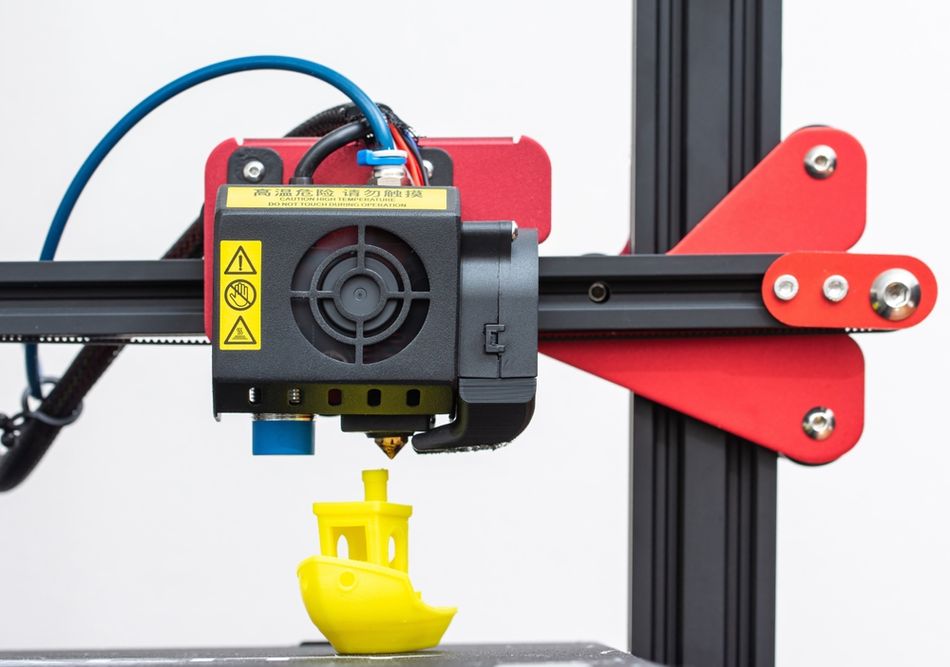
Understanding how PolyJet compares with other additive manufacturing processes helps engineers select the right tool for each application.
PolyJet vs. SLA (Stereolithography)
Both use UV-curable photopolymers, but SLA cures resin with a laser or DLP projector, tracing each layer, while PolyJet jets tiny droplets from inkjet heads. SLA can achieve comparable or slightly better surface finish for single-material parts, but it lacks PolyJet’s multi-material and multi-color capabilities. SLA offers a wider range of engineering-grade resins (tough, heat-resistant, castable), whereas PolyJet allows blending multiple materials within a single build.
PolyJet vs. FDM (Fused Deposition Modeling)
FDM, another Stratasys technology, extrudes thermoplastic filament, producing parts with visible layer lines (typically 100–300 µm). PolyJet achieves much finer resolution (14–55 µm) and smoother surfaces. FDM parts are generally tougher, more heat-resistant, and cheaper, with access to engineering thermoplastics like ABS, nylon, PEEK, and ULTEM. PolyJet is preferred when surface finish, dimensional accuracy, and multi-material capability are priorities; FDM is preferred for strength, heat resistance, and cost efficiency.
PolyJet vs. SLS (Selective Laser Sintering)
SLS fuses nylon or other polymer powders with a laser, producing strong, durable parts without supports. SLS parts have superior mechanical properties (impact strength, fatigue life) but a grainy, matte surface finish (Ra 6–12 µm) and are limited to single-material, single-color builds. PolyJet excels in surface quality and multi-material capability, while SLS dominates in mechanical performance and cost for medium-volume production.
PolyJet vs. MJF (Multi Jet Fusion)
HP’s MJF sinters nylon powder with infrared light, producing strong, isotropic parts. Like SLS, MJF parts have rougher surfaces and limited material variety compared with PolyJet. MJF offers cost advantages for production volumes, while PolyJet remains the choice for high-surface-quality, multi-material, and full-color applications.
Recommended reading: FFF vs FDM: Is There Any Difference?
Conclusion
PolyJet remains a unique additive manufacturing solution for engineers and designers who prioritize precision, surface quality, and multi-material versatility. Current Stratasys systems, including the J5, J8, and J55 series, enable full-color, rigid-to-flexible blends, and biocompatible parts, with layer resolutions as fine as 14 µm and over 200 digital material combinations.
The technology excels in rapid prototyping, medical and dental modeling, consumer product development, and aerospace tooling, delivering prototypes that closely mirror final production intent. While photopolymers have inherent limitations—brittleness, UV sensitivity, and higher material cost—these are acceptable trade-offs when visual fidelity, multi-material complexity, or smooth surfaces are essential.
Beyond purchasing a printer, engineers and companies can also access PolyJet technology on demand via Stratasys Direct, leveraging Stratasys’ part production services to meet short-term or high-variability needs without capital investment. By understanding design guidelines and material capabilities, PolyJet allows teams to accelerate development cycles, explore complex material combinations, and bring accurate, production-like prototypes to life.
FAQ
What materials can PolyJet 3D printers use?
PolyJet printers use UV-curable photopolymer resins. Options include rigid opaque resins (Vero family), transparent materials (VeroClear), flexible rubber-like resins (Agilus30, Tango), high-temperature resins, simulated polypropylene, biocompatible medical resins (MED610, MED620), and digital ABS. Over 200 different materials can be blended at the voxel level to create customized material properties.
How accurate is PolyJet 3D printing?
PolyJet 3D printers achieve high dimensional accuracy: ±100 µm for parts under 100 mm and ±200 µm for larger features. Layer thickness ranges from 14–55 µm, producing high-quality 3D printed parts.
How does PolyJet compare with SLA?
Both are 3D printing technologies using UV-curable resins. SLA cures resin with a laser or projector, while PolyJet jets droplets from inkjet heads. PolyJet excels in printing multi-material, full-color parts, whereas SLA offers a wider range of single-material engineering resins and may be more cost-effective for single-material parts.
Can PolyJet 3D printed parts be used as functional components?
In limited cases. Photopolymers are generally more brittle than thermoplastics, but biocompatible resins are used in medical and dental applications, and digital ABS can produce functional jigs, fixtures, and snap-fit assemblies.
How is support material removed?
PolyJet prints use water-soluble or gel-like support materials. Supports are removed by water jetting, soaking in sodium hydroxide, or manual peeling. Complex internal channels may require longer soaking for complete removal.
What are digital materials?
Digital materials are composites made by jetting two or more base resins and varying their ratio at each voxel. This creates a continuous range of material properties, including flexibility, hardness, and color, within a single part without assembly.
How does PolyJet compare with FDM?
PolyJet produces smoother, higher-resolution surfaces and allows multi-material parts. FDM parts are stronger, more heat-resistant, and less expensive. Choose PolyJet for surface quality, accuracy, and material variety, and FDM for mechanical strength and cost efficiency.
Which industries use PolyJet 3D printing?
PolyJet is widely used in consumer goods, automotive, medical, dental, aerospace, and education/research. Applications include design prototypes, anatomical models, surgical guides, orthodontic models, tooling and fixtures, full-color consumer product prototypes, and experimental lab devices.
References
[1] Pei E, Kabir IR, Leutenecker-Twelsiek B. History of AM. InSpringer Handbook of Additive Manufacturing 2023 Oct 18 (pp. 3-29). Cham: Springer International Publishing.
[2] Stratasys and Objet complete merger [Internet]. Stratasys. 2012 Dec 3 [cited 2026 Apr 3].
[3] What is PolyJet Technology? [Internet]. Stratasys. PolyJet™ Technology for 3D Printing. 2025 [cited 2026 Apr 3].
[4] PolyJet Materials Catalog [Internet]. Stratasys. Materials catalog — PolyJet materials. 2026 [cited 2026 Apr 3].
[5] Stratasys PolyJet 3D Printers [Internet]. Stratasys. PolyJet™ 3D printer catalog, including multi‑material and high‑precision systems. 2026 [cited 2026 Apr 3].
[6] Stratasys launches multi-material colour 3D printer [Internet]. BBC News; 2014 Jan 27 [cited 2026 Apr 3].
[7] PolyJet Design Guide [Internet]. Stratasys. 2024 [cited 2026 Apr 3].