How To Bring Order to Growing Hardware Teams Without Slowing Them Down
Discover how Altium Agile Teams brings structure to people, processes, and data, helping growing hardware teams scale efficiently without sacrificing speed or engineering flexibility.

09 Feb, 2026. 6 minutes read

Expanding hardware teams can only go so far on informal coordination efforts. When teams take on more projects and additional contributors enter the workflow, the lack of a formalized framework begins to create significant friction. On the other hand, while rigid enterprise systems might bring more organization to the workflow, they can also impede creativity and speed. Ultimately, teams need reliable ways to manage people, processes, and data without adopting heavy systems that slow down engineering.
With Agile Teams, Altium is introducing a new option that gives teams structure without hindering the pace small teams rely on.
Structure for People
Hardware teams rely on many contributors who need clear, predictable access to shared design assets. But, managing access through static spreadsheets or manual IT requests causes security vulnerabilities and operational bottlenecks that prevent scaling.
Agile Teams solves this with a sophisticated identity and access management layer specifically calibrated for electronics design environments. With it, administrators can assign granular, role-based permissions that strictly define what each contributor can view, edit, or release. In that way, all stakeholders receive the exact level of access required to perform their functions without exposing sensitive intellectual property or design data to unauthorized personnel.
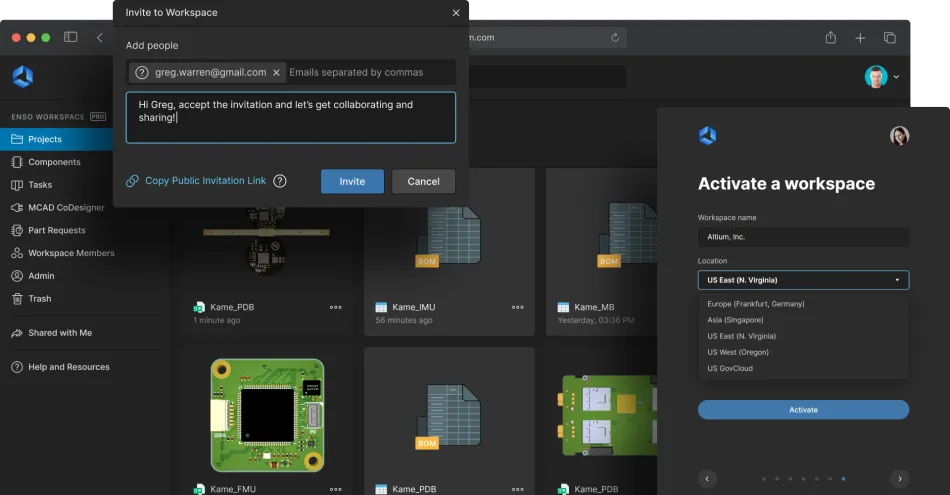
Organizations can also implement structured control with external collaborators, such as contract engineers and fabrication houses. Instead of relying on insecure file transfer protocols or email attachments, organizations can invite external partners directly into a secure guest portal. Contractors interact with the specific projects assigned to them through a controlled interface and, when the contract expires, the organization can simply revoke the contractor’s access so that no residual data remains accessible.
Agile Teams even centralizes license and user management to preserve consistency between projects and teams. As personnel rotate between projects or new engineers join the organization, administrators can easily provision or de-provision seats from a single dashboard. Similarly, users can configure themselves into organizational workgroups that mimic actual team hierarchies. By centralizing permissions, Agile Teams reduces the administrative overhead typically associated with scaling an engineering department.
Structure for Processes
Design Reviews
Coordinating design reviews becomes exponentially more difficult as engineering teams grow and project schedules overlap. Traditional review methodologies often rely on fragmented artifacts (e.g., static screenshots and exported PDFs) that disconnect feedback from the actual design data. Instead, Agile Teams centralizes the entire review lifecycle directly within the engineering environment, including a web-based interface. Each stakeholder no longer needs ECAD software just to meaningfully participate within the review process.
Using Agile Teams, participants can place comments and redlines directly on specific regions of the schematic or PCB layout. By anchoring every piece of feedback to its exact context, users can prevent ambiguity regarding which specific component or trace needs modification. The platform then tracks these comments as actionable tasks so that organizations have a clear audit trail of decision-making. The system also formalizes signoff flows, so there is transparency into who approved a specific revision and when.
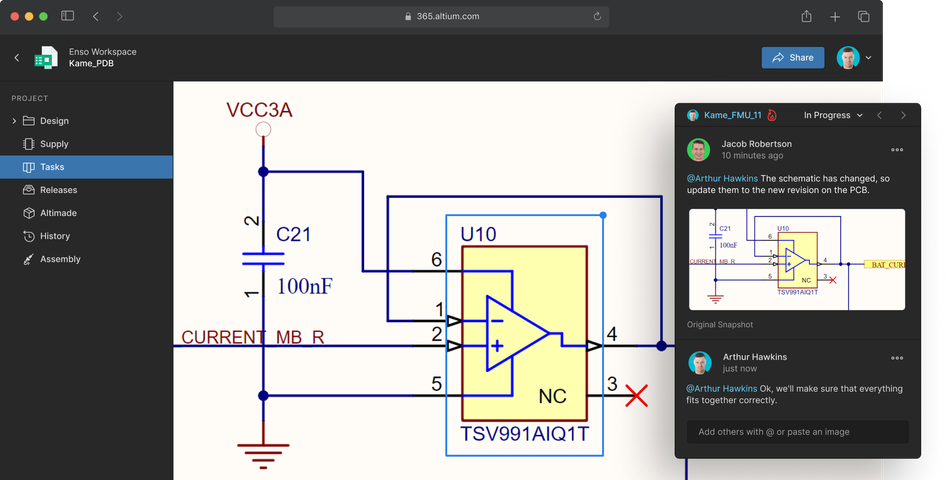
To further reduce variability, Agile Teams lets organizations implement custom checklists to guide the review process. Reviewers can participate asynchronously, checking designs and providing feedback on their own schedules while the system orchestrates the overall approval logic. Such a structured approach drastically reduces the meeting overhead typically associated with design milestones and provides confidence that all reviewers are following the same guidelines.
BOM Control
Bill of Materials (BOM) management brings considerable risk when handled through offline spreadsheets or disjointed procurement steps. When systems keep the engineering design environment from supply chain realities, teams waste time specifying unavailable or obsolete components.
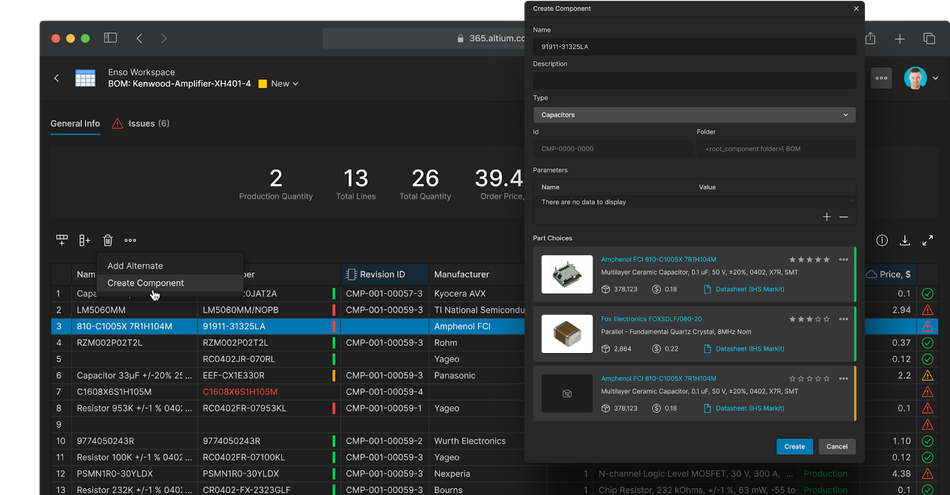
Agile Teams moves BOM oversight into a shared, live workspace where engineering and procurement professionals can access the same underlying dataset. In Agile Teams, the BOM is a dynamic document that updates as the physical layout changes.
To this end, Altium integrated real-time supply chain intelligence directly into the BOM management interface. Availability, lifecycle status, and compliance data from major suppliers are automatically available, and engineers have immediate visibility into potential sourcing issues. For example, engineers can see warnings about "Not Recommended for New Design" (NRND) or "End of Life" (EOL) components and swap parts before committing the design to fabrication. Teams can also define alternate part choices and pin-compatible backups early in the development cycle to insulate the project from market volatility.
Agile Teams also enforces synchronization between BOM and PCB data through managed Engineering Change Orders (ECOs). When procurement teams initiate a part change due to sourcing constraints, the system guarantees that this modification flows cleanly back into the engineering environment. With bidirectional alignment, Agile Teams prevents the dangerous drift that occurs when purchasing data differs from design data.
Standardized Workflows
Every hardware project repeats a standard set of everyday activities like design review cycles and final release generation. Without a formalized structure, individual engineers often improvise these processes and produce inconsistent outputs or untraceable approvals.
Agile Teams introduces predefined, configurable workflows that codify best practices and reduce process ambiguity. These workflows are guardrails that guide the design team through necessary steps without needing managerial oversight. Organizations can simply adjust these workflows to match their specific internal requirements and what automated checks must function at each design stage. For instance, users can configure a workflow to automatically trigger a design rule check or generate fabrication files only after a manager approves a release state.
Ultimately, structural consistency significantly shortens the onboarding period for new engineers. Instead of relying on tribal knowledge or outdated documentation to understand how to release a board, new team members can simply follow the active workflow prompts within the software. Agile Teams make sure that every single project, regardless of the lead engineer, moves through the system with the same rigor.
Structure for Data
Centralized Libraries
As product portfolios scale, managing component data becomes extremely difficult. As a result, teams often end up with a library full of duplicate parts and unverified footprints.
To solve this, Agile Teams creates a single, centralized component library that ties the entire engineering organization to one controlled source of truth. By consolidating library management, the platform eliminates the risks associated with local libraries where individual engineers maintain their own, disparate component versions.
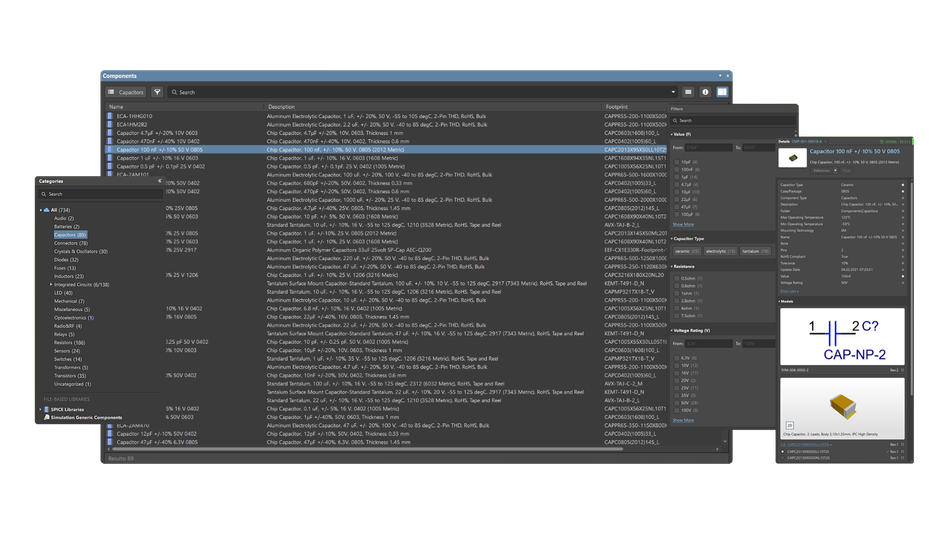
Using Agile Teams, librarians and engineering leads can enforce strict lifecycle states for every component. The system prevents engineers from placing "Draft" or unverified parts into production-level designs, creating a hard quality gate that mitigates downstream manufacturing failures. In that way, teams can preserve consistency between projects as designers only pull symbols, footprints, and parametric data from the same validated repository.
Traceability and Version Control
Growing product portfolios require absolute clarity regarding design revisions and variant management to prevent manufacturing errors. Agile Teams provides comprehensive "Where-Used" capabilities that show precisely where engineers use each component across all board designs and revisions. When the system flags a specific component as risky or unavailable, teams can instantly identify all affected projects.
In contrast to generic file storage systems, Agile Teams includes a built-in, electronics-aware version control that captures the whole history of every schematic and layout change. It tracks individual commits and provides a timeline of project evolution to document who made changes and why. Meanwhile, visual difference (diff) tools let engineers compare any two revisions of a schematic or PCB layout side-by-side. The system visually highlights added, removed, or modified elements, making it significantly easier to verify changes as compared to error-prone manual comparisons.
Agile Teams also features tagged releases to preserve the exact state of data sent to manufacturing. By creating immutable snapshots of the design files, BOM, and fabrication outputs, the system keeps the design repeatable indefinitely. Teams can confidently revisit older revisions to support legacy products, knowing that the data has been securely versioned and separated from ongoing development.
Ecosystem Integration
Hardware development becomes harder to manage when engineering tools and organizational systems drift apart. That’s why Agile Teams integrates natively with standard enterprise software (e.g., Jira, Duro PLM, and Arena PLM) to keep engineering data aligned to the broader business ecosystem. These integration functions are bi-directional, meaning that when engineers enter data into one platform, Teams automatically propagates it into the others.
For example, in Agile Teams, an engineering task or issue created during a design review can automatically generate a corresponding Jira ticket. As the engineer resolves the problem in the design tool, the project management software immediately reflects status updates. The synchronized approach prevents teams from maintaining separate, conflicting records of engineering progress.
When data stays organized throughout the entire lifecycle, engineering leaders gain clear project insight without relying on ad-hoc reporting.
Organization Without Limitations
Scaling hardware development requires a more predictable structure across people, processes, and data. Altium Agile Teams introduces that structure without adopting the heavy systems that often slow down engineering. With clearer access patterns, consistent workflows, and governed data, teams can finally gain stability without losing the pace they need to stay competitive in the market.