How Rochester Electronics Keeps Certified Avionics Flying
Understand the challenges commercial avionic designers face, and explore Rochester's solution for lifecycle certainty.

25 Sep, 2026. 12 minutes read

Commercial avionics manufacturers are currently experiencing the longest recorded backlog in the industry’s history. Fueled by post-pandemic travel demand and constrained production capacity, Boeing and Airbus together held an open-order backlog of 17,000 aircraft as of 2025, with a projected 12-year window to clear it.
Long production queues mean avionics systems need to remain in certified production for decades longer than semiconductor manufacturers planned. When a flight computer's custom application-specific integrated circuit (ASIC) reaches end-of-life, or a chip manufacturer discontinues a key PowerPC® processor, manufacturers simply can’t use a newer commercial alternative. Hardware change standards, such as DO-254, require proof of equivalency, an expensive and tedious process that, in many cases, may not be feasible.
Understanding the challenges that commercial avionics designers face, Rochester Electronics offers an industry-leading silicon replication methodology and package investment program. By helping avionics suppliers source discontinued silicon and legacy packaging without costly requalification, Rochester gives avionics programs the lifecycle certainty to keep delivering through aviation's longest backlog and beyond.
The Financial Consequence of a Major Change
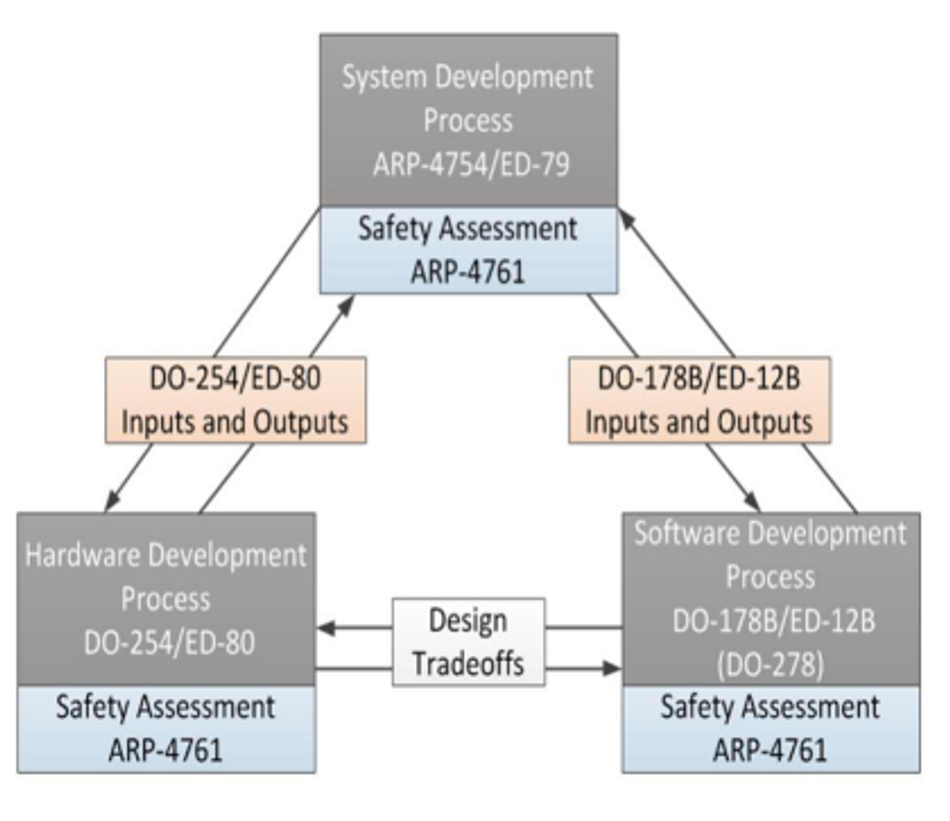
DO-254 is the FAA and EASA standard governing all hardware changes to airborne electronic systems. Every component substitution in a certified avionics design, including a nominally drop-in replacement for a discontinued component, goes through DO-254 evaluation to determine whether it constitutes a major or minor change. Engineers whose program receives a major classification face a significantly different outcome than those whose program is cleared for a minor change.
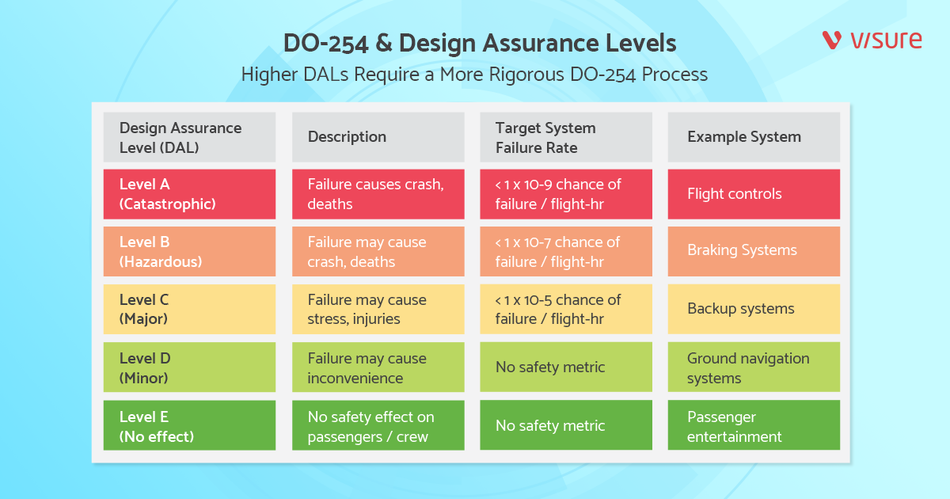
A major change classification requires a full hardware requalification campaign. Depending on the Design Assurance Level (DAL) of the component and the complexity of the affected system, the campaign can cost tens of millions of dollars and require multiple years of engineering time. For avionics programs supplying into an active Boeing or Airbus build schedule, a major change event can incur costs that threaten the program's viability. Schedule slips that push deliveries past contract deadlines carry financial penalties, and for lower-volume platforms, the requalification cost alone can eclipse the program's total remaining value.
A minor change classification, by contrast, preserves most of the original qualification baseline. Because the new device's behavior falls within the original design’s certified performance window, the avionics OEM does not need to revisit the underlying certification evidence. The result is a minor change that involves a fraction of the engineering cost of a major change, and its schedule impact is weeks rather than years.
In most cases, the financial consequences of a major change are severe enough that avionics OEMs actively avoid any component substitution that they can't prove to be minor, even when a newer commercial alternative is technically capable of performing the same function. Proving minor change status requires documentation at the transistor level, something that most component suppliers simply can't provide.
And, beyond just DO-254, the avionics industry faces DO-178, which governs software changes. A hardware change that alters a component's interface or behavior, even subtly, can trigger requalification under both standards simultaneously. In this case, programs face a combined qualification cost that can easily exceed the total program value for smaller platforms.
All things considered, component replacement strategy is one of a project’s most consequential engineering decisions.
Requirements for Minor Change Classification
In technology translation, engineers take a discontinued device's functionality and rebuild the physical implementation in a new process node. The hope is that the existing VHDL or Verilog descriptions, along with timing constraints, truly represent all the possible timing. They select new cell placements, re-synthesize routing tracks, and choose output drive strengths from the target foundry's cell library. The resulting device performs the same logical function, but its signal timing, edge rates, and current characteristics differ from those of the original, because the underlying physical implementation is new. In fact, previously unconstrained inputs may turn out to be timing-critical and missed in this type of technology translation. DO-254 may classify that outcome as a major change, regardless of functional equivalence, because the device's measured behavior no longer falls within the original certification margin.
In technology replication, engineers preserve the original GDSII mask data, the physical blueprint that defines every transistor's geometry and placement on the die. Cell placement, routing geometry, and interconnect paths carry forward unchanged. The only modifications are small adjustments to transistor gate sizes and metal widths, tuned to match the original device's I-V curves and AC performance on the target foundry's process.
Because the replication process does not touch the netlist or the fundamental technology family, the replicated device's performance variation window falls inside the original device's process margin. When the replicated device's process window falls inside the original's, engineers can satisfy D6-82768-1, Section 3.2, the Boeing minor change qualification standard for component substitutions.
For engineers evaluating a replication supplier, comparative analysis documentation will ultimately determine classification. To be considered compliant, replicated components must present a comparative analysis that covers all characterized parameters, such as threshold measurements, edge rates, signal integrity characteristics, and source and sink currents, across the full range of voltage and temperature variations. In addition, a compliant report must present original component manufacturer (OCM) data and replicated device data side by side in composite histograms and box-and-whisker plots. An airframe OEM's qualification team needs this statistical package to provide sufficient evidence for a minor change submission.
Without a supplier capable of producing that documentation at the transistor level, engineers must undergo a costly major change event, regardless of how functionally similar the substitute component is.
When Architectures Can’t Change
To remain in compliance with industry standards, designers often find themselves stuck with antiquated technologies.
For instance, in flight controllers, DO-254 stipulates that certification regulators must be able to replay exactly which instruction it executed on which processor core at any given moment during a flight. Modern multi-core processors use speculative execution to dynamically optimize load distribution. In this architecture, the processor decides at runtime which core handles which instruction, which is incompatible with the deterministic execution record required by airborne systems certification. In contrast, PowerPC offers deterministic, per-core instruction execution with evidence packages, which offers the granularity regulators require. As such, the architecture has been the de facto solution for commercial avionics for decades despite its otherwise antiquated design.
Similarly, a component’s Development Assurance Level (DAL) classification also limits avionics suppliers. DO-254 assigns a classification to every hardware component from DAL-A through DAL-E, based on the severity of a potential related failure. For example, a DAL-A component failure in systems like engine controllers, flight management systems, and main flight computers would require the pilot to land as soon as possible. The higher the DAL classification, the greater the scrutiny and the greater the difficulty of making component changes.
An example is the industry’s inability to adopt newer process nodes, such as FinFETs. Industry sources have estimated that qualification effort at $50 million or more for a single DAL-A application. At that cost, re-architecting a flight computer around a new-generation processor is not a viable response to component obsolescence for most avionics programs.
All of these constraints came to a head in 2023, when NXP's end-of-life event discontinued more than 30 PowerPC device types, eliminating the last actively manufactured versions of the majority of processors on this architecture. The commercial avionics industry now depends on a processor family with only one mainstream production source and an antiquated processor architecture, which drives the need for antiquated DDR3/4 memory types. Rather than creating a temporary gap, this processor supply problem is now a permanent problem the avionics industry needs to solve without losing certification.
Recent Waves of Obsolescence
Semiconductor obsolescence in commercial avionics manifests in multiple independent ways, including:
Silicon fab changes
ASIC supply exits
Package format abandonment
Strategic product line discontinuations
Taken together, avionics suppliers face a multi-dimensional obsolescence problem. Each route demands a different response, and a supplier that can address only one isn’t a full-lifecycle partner. Unfortunately, no single supplier relationship or service category can address everything ending simultaneously.
ASIC Supply Exits
In the early 1990s and 2000s, many avionics system designers built custom ASICs that their OEMs managed in-house, and those designs have no commercial successor. When those fabs close, the programs they support will close too.
Unfortunately, custom ASIC supply has narrowed significantly as traditional ASIC foundries have exited or consolidated. For example, onsemi's 2026 exit from the classic ASIC business removed the last old-style ASIC supplier for a substantial number of avionics programs that had depended on them for bespoke silicon. Similarly, the recent Portacello fab closure after being sold to LA Semiconductor left many programs mid-lifecycle with no source for replicated silicon and no clear path to an alternative foundry.
Package Obsolescence
Package obsolescence adds to the silicon problem, and these problems do not always align on the same timeline. Even if designers can successfully replicate a discontinued ASIC's silicon, they’ll still find themselves blocked from production if no assembly house manufactures the ASIC’s original package.
Legacy package formats have steadily disappeared from major semiconductor assembly houses as the industry has moved investments toward advanced packaging formats. For example, formats like large plastic quad flat packs, PLCCs, DIPs, PGAs, and custom lead-frame configurations with dedicated trim-and-form tooling are becoming harder to source.
As a result, many designers are left without any qualified assembly path for their parts, forcing them to resort to costly package redesigns, full requalification cycles, or discontinuation of long-running product lines.
Strategic Discontinuations
Memory and precision timing devices have recently fallen victim to obsolescence due to strategic shifts in the supply chain. Specifically, investment in SRAM and parallel NOR flash has largely stopped as the memory industry redirects capital toward high-bandwidth memory for AI workloads.
While other industries have significant freedom to replace retired or unavailable components, regulatory compliance bounds commercial avionics. As such, recent memory shortages have left avionics designers in a predicament: their systems depend on these components for active and future programs, yet they can no longer source them.
A Deeper Look at Package Continuity
Even when silicon replication succeeds, programs can fall short of production if the required package format is impossible to manufacture. Package continuity and silicon continuity are distinct problems that designers need to solve simultaneously.
Because consumer electronics push for smaller and thinner packages, the largest semiconductor assembly houses are focused exclusively on BGA, QFN, and chip-scale or stacked die formats. The lead times, tooling economics, and yield requirements associated with large plastic quad flat packs and legacy PLCC formats have rendered them commercially unviable for these manufacturers.
However, changing a package format on a DAL-A component carries its own DO-254 change classification risk, independent of what happens at the silicon level. For example, moving from a leaded PLCC to a BGA on a flight computer printed circuit board assembly changes the board's mechanical, electrical, and thermal interface. That interface change can require a full board-level requalification even when the replicated silicon inside the package is functionally identical to the original.
A package continuity solution requires sustained capital investment in tooling and production capability that commercial semiconductor manufacturers can't justify. Maintaining custom substrate tooling for legacy BGA packages, PLCC molds, and oversized lead-frame formats means accepting costs with no mainstream market to recoup them. Engineers designing precision BGA substrates for legacy package formats face a challenge comparable to the silicon replication work itself.
Suppliers evaluating a lifecycle partner need to determine whether that partner has invested in silicon and package replication capability, and whether they made that investment before the crisis, not in response to it.
Rochester's Technology Replication Methodology
Rochester Electronics developed its technology replication process specifically to satisfy DO-254 minor change criteria, beginning with original GDSII mask data wherever available.
For example, the company holds original GDSII physical design data for products from Motorola/Freescale, LSI, AMCC, Intel, Fairchild, National Semiconductor, and many others. That data makes transistor-level replication possible without reverse engineering using imaging techniques. When original GDSII data is unavailable, Rochester's engineers deconstruct a sample device layer-by-layer to reconstruct the mask database before beginning the replication process. Either path produces a replication built from the ground up on the original device's physical implementation.
Next, Rochester engineers find a target foundry whose process parameters are compatible with the original device's technology family, then tune transistor gate sizes and metal widths to match the original's I-V curves and AC performance across the full range of process, voltage, and temperature variations. Tuning adjustments are typically in the range of 5 to 10% on dimensional parameters, and every change falls within the target foundry's design rule requirements. The result is a replicated device whose process window falls inside the original's process variation window, the key technical criterion for minor change classification.
Rochester also produces replicated DAL-A components, holding every equivalence proof to the most stringent qualification standard in DO-254. The company's proprietary comparative analysis tool flow automates the statistical evaluation of every characterized parameter and produces the composite documentation customers need for minor change submissions to airframe OEM qualification teams.
On the package side, Rochester has made dedicated investments in PLCC tooling, large plastic quad flat pack molds, and custom wirebond BGA substrate design. For example, when two large assembly houses confirmed they could no longer produce the 240-pin plastic quad flat pack required for a PowerPC replication program, Rochester designed a new one. Currently, the company is developing a 388-pin BGA substrate for the TMS320C44 DSP replication serving A320 cockpit display controllers.
Rochester in the Cockpit
Rochester supplies replicated and licensed components to key subsystems across many commercial airliners in service today, including flight computers, engine controllers, cockpit displays, refueling panels, and high-density data switches.
Flight Computers
The flight computer is where the stakes of obsolescence are clearest, because any change to the hardware risks cascading into the software that runs on it.
Rochester recently replicated two custom ASIC designs for a major aerospace manufacturer's single-aisle and wide-body flight computer programs after the manufacturer's OCMs abandoned the original fabrication process. Rochester submitted both replications as minor changes under DO-254, and the flight computer programs continued production without a board redesign or a DO-178 software requalification event. For one of the ASICs, the Ultra429 ARINC 429, Rochester verified the replication at the transistor level, confirming die size, edge rate, and signal timing against the airframe manufacturer's minor change criteria.
Engine Controllers and Refueling Systems
The same minor-change discipline carries into propulsion and fuel systems, but here the engineering problem is often one of scale and program management rather than a single part.
Rochester recently replicated five custom ASICs for an engine controller powering a business jet platform under DAL-A classification, the most demanding design assurance level. For the HTF7000 engine, Rochester structured the five-ASIC solution as a single coordinated package, rather than delivering five independent component replacements. That choice consolidated documentation and testing into a single effort and meaningfully reduced the qualification burden on the program.
For a 777 refuel computer program, Rochester replicated a custom ASIC using component IP acquired by an avionics integrator from a major OEM during a system lifecycle extension program, working from transferred IP rather than the original manufacturer's records.
Cockpit Displays and Data Switches
In displays and data networking, the original package is just as likely to be obsolete as the die inside it. The company is currently replicating the TMS320C44 DSP for cockpit display controllers serving the A320 family, an effort that covers both the silicon die and a new 388-pin BGA package being developed by Rochester specifically for the program.
The high-density data switch work follows the same pattern. Rochester previously replicated the MPC603R PowerPC processor for a switch deployed on 777 and A380 platforms, a program that required a replicated silicon die alongside a new 240-pin plastic quad flat package with a heat spreader that Rochester developed in-house.
Because programs like these put a new package into a flight-critical part, they demand close coordination with the people who own the qualification. For this program, as with the cockpit display work, Rochester worked directly with the airframe OEM's qualification team rather than solely with the avionics integrator.
Working Directly with the World's Largest Aerospace Manufacturers
Rochester Electronics works directly with the two largest commercial airframe manufacturers, Airbus and Boeing. That direct engagement has led the company to build its replication documentation to satisfy its qualification requirements directly, standards that subsystem integrators and tier-two suppliers don’t adhere to.
A replication supplier who has worked only with subsystem integrators has not been through direct airframe OEM qualification. Without that experience, the supplier's engineers can't know in advance what the airframe OEM's qualification team will ask for when a minor change submission arrives. Those engineers may produce documentation with gaps the airframe OEM's qualification team will not accept, turning minor change submissions into extended back-and-forth reviews, or worse, triggering a major change reclassification.
Rochester's engineers have completed multi-hour qualification audits at Airbus's Toulouse headquarters, covering every characterized parameter of a replicated device, and have received minor change approval through that process. Therefore, customers working with Rochester on their own programs can be confident that the documentation Rochester produces will withstand the same level of scrutiny.
On the silicon side, Rochester has partnered with NXP to replicate PowerPC processors under license. Specifically, Rochester is currently manufacturing the MPC860 and MPC855, with the MPC566/5/4/3/2/1 family in production planning. These devices are available under the original NXP part numbers with 100% form, fit, and function compatibility. Customers that use these chips do not need to re-designate part numbers on their bills of materials, which eliminates a documentation change that could itself trigger a qualification review.
Taken together, Rochester's silicon replication capability, package investment program, direct airframe OEM relationships, and semiconductor partnership give avionics programs a one-stop solution for legacy component continuity. Programs that attempt to solve the same problem independently need to coordinate separate silicon suppliers, package manufacturers, and qualification documentation vendors, each with their own scope, timeline, and accountability gaps.
Keeping Commercial Aviation Flying
Commercial aviation's production backlog will continue to push service life extensions onto programs designed for a semiconductor supply chain that no longer exists. Rochester provides avionics suppliers with a single accountable partner for silicon replication, package continuity, and qualification documentation that proves minor-change status to the airframe OEMs who demand it.
Ultimately, the programs that stay on schedule will be those with a lifecycle partner who solved the obsolescence problem before it became one.