Enhancing Electro-Mechanical Switches with Integrated Diagnostics
Explore how diagnostic-enabled electro-mechanical switches improve safety, reduce downtime, and enable predictive maintenance across industrial, automotive, and aerospace systems.

25 Feb, 2026. 9 minutes read
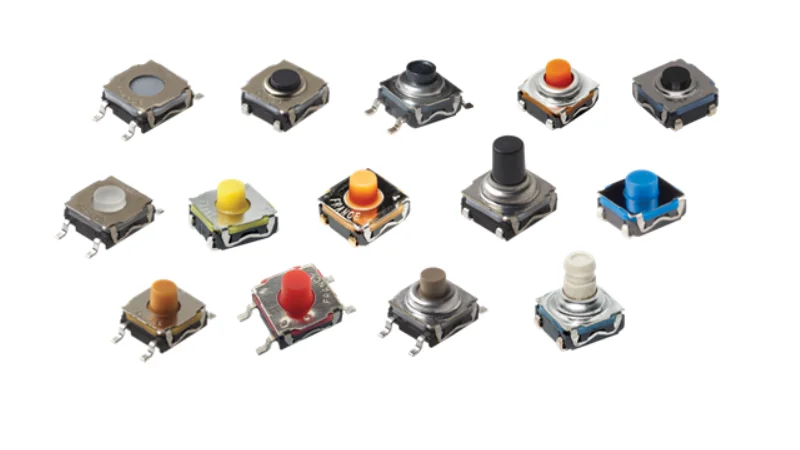
Electro-mechanical switches, including limit switches and micro-switches, are basic components in industrial, automotive, aerospace, and medical applications. Their role in enabling safety, control, and feedback functions has been proven over decades. However, the absence of embedded intelligence in traditional designs limits their effectiveness in Industry 4.0 and predictive maintenance applications. Integrating diagnostic capabilities into electro-mechanical switches allows engineers to improve system reliability, reduce downtime, and implement predictive maintenance strategies. This paper explores the benefits, diagnostic methods, case studies, and practical considerations for implementing diagnostics in switches.
Introduction
Limit and micro switches are extensively used as deterministic position-feedback devices in mechanical and electro-mechanical systems. Their value lies in simple, repeatable kinematics, high mechanical endurance, and well-characterized failure behavior. These devices provide direct, hardware-level feedback for control and safety logic in applications like robotic end-of-travel detection, machine guarding, and brake or pedal position sensing.
Conventional electro-mechanical switches, however, operate as passive devices. They provide only discrete state information (open/closed) and offer no visibility into internal degradation mechanisms such as contact wear, spring fatigue, or contamination. As a result, failure modes typically remain latent until functional performance is lost, driving unplanned downtime, reactive maintenance, and elevated system-level risk.
Modern control architectures are shifting toward condition-based maintenance and fault-tolerant design. In this context, switches are expected to provide more than state indication. Integrating diagnostic functions such as contact-resistance trending, actuation-timing analysis, and built-in test structures enables traditional switches to operate as self-monitoring devices that can report early-stage degradation.
This paper examines the rationale, benefits, and real-world applications of diagnostic-enabled switches, and outlines the path forward for manufacturers and OEMs seeking to align with the next generation of smart, connected systems.
The Case for Diagnostics
Electro-mechanical switches operate in environments where mechanical wear, electrical stress, and contamination can gradually erode performance. A lack of visibility into these failure mechanisms leaves engineers reacting to faults only after they cause system disruption. Integrated diagnostics change that dynamic by enabling earlier detection of abnormal behavior, including rising contact resistance, intermittent continuity, or slower actuation response. This allows maintenance teams to intervene before a switch reaches a hazardous state, improving overall system safety and reducing unplanned downtime.
Diagnostics also provide a clearer picture of the component lifecycle. Instead of relying on fixed service intervals or conservative replacement schedules, engineers can make decisions based on real degradation trends. On the cost side, diagnostics help prevent the kind of undetected degradation that leads to secondary failures, warranty claims, or system-level repairs. The resulting switch remains simple in function and contributes more to system reliability, lifecycle planning, and operating efficiency.
Failure Mode vs. Diagnostic Method Table
Failure Mode | Description | Diagnostic Detection Method | Benefit |
Contact Wear / Pitting | Erosion or arcing increases resistance, eventually causing intermittent or failed signals. | Contact resistance monitoring — sense current detects rising resistance over time. | Detects gradual degradation |
Contact Contamination | Dust, oxidation, or fluid ingress interferes with electrical conduction. | Signal integrity monitoring — debounce analysis detects chatter; resistance trend analysis shows degradation. | Identifies unstable operation |
Actuator Misalignment | Mechanical drift or wear prevents proper actuation travel. | Actuation timing analysis — monitors closure delay relative to mechanical input. | Confirms mechanical integrity |
Spring Fatigue | Reduced force leads to incomplete or delayed contact closure. | Timing analysis/bounce monitoring — detects sluggish or inconsistent closure behavior. | Detects gradual degradation |
Environmental Intrusion | Moisture, oil, or particles degrade both mechanical and electrical performance. | Combined resistance + timing monitoring — abnormal resistance plus irregular actuation response flags intrusion. | Identifies environmental damage |
Electrical Open Circuit | Broken wire, loose connector, or solder joint failure. | Built-in test resistor/voltage divider — differentiates between true “open” state and wiring fault. | Detects wiring failures |
Electrical Short Circuit | Conductor insulation failure or contamination creates unintended continuity. | Built-in test resistor/bias voltage detection — flags short-to-ground or short-to-power conditions. | Detects wiring failures |
Intermittent Connections | Vibration-induced or thermal cycling causes sporadic disconnections. | Signal integrity monitoring — detects chatter, dropouts, or intermittent state transitions. | Identifies unstable operation |
Diagnostic Techniques
Diagnostic functionality in electro-mechanical switches can be implemented in several ways, each with different trade-offs in cost, integration effort, and fault-coverage. The simplest approach relies on passive resistor networks, which introduce a defined resistance path that allows the control electronics to distinguish a legitimate open state from wiring faults such as shorts or broken conductors. This method is inexpensive and suited for applications where basic open/short detection is sufficient.
Manufacturers utilize active electronic monitoring for applications requiring detailed information about switch health. Engineers can track parameters like contact resistance drift, bounce characteristics, and timing behavior in real time by integrating compact electronics such as microcontrollers, ASICs, op-amps, or current-sensing elements. These diagnostics can be interfaced directly with vehicle ECUs, PLCs, or other controllers via standard communication protocols such as CAN, LIN, SPI, or I²C, enabling more granular fault reporting than a simple binary output.
Many designs adopt a hybrid architecture that combines passive elements with selective active monitoring. This allows engineers to achieve higher diagnostic coverage without significantly increasing size, power consumption, or cost. A hybrid approach works well when a switch needs to retain its traditional form factor while still providing data that supports predictive maintenance and system-level health monitoring.
Benefits of Diagnostic-Enabled Switches
Reliability and Safety
Diagnostic-enabled limit and micro switches give engineers direct visibility into the switch’s functional condition rather than relying solely on a binary open/closed signal. Tracking parameters such as contact resistance drift, changes in actuation timing, and deteriorating signal integrity allows engineers to identify abnormal behavior before it escalates into failure. This is critical in safety-critical mechanisms like braking systems, aerospace actuators, or interlocks, where a silent failure can compromise the entire system. Integrated diagnostics also improve fault coverage in FMEDA analyses, helping designs meet the diagnostic-coverage requirements associated with ISO 26262, IEC 61508, and similar functional-safety frameworks. When engineers can quantify switch behavior over time, they can demonstrate higher Safety Integrity Levels and design systems that respond predictively instead of reactively.
Reduced Maintenance & Downtime
Traditional electro-mechanical switches typically rely on fixed service intervals or are replaced only after a fault becomes visible, which often forces maintenance teams into a cycle of either over-servicing or reacting to unexpected failures. Integrating diagnostics shifts this model toward condition-based maintenance. As the switch monitors parameters such as contact resistance or timing drift, it can indicate when its performance begins to deviate from nominal behavior. This gives engineers a clear picture of degradation trends and allows them to schedule replacements only when the component genuinely requires attention.
The ability to intervene based on actual health data rather than predetermined intervals reduces both unnecessary planned downtime and the far more costly unplanned stoppages caused by sudden failures. In continuous-process environments and high-volume industrial automation, this transition to predictive maintenance delivers measurable operational and cost advantages.
Enhanced System Integration
Integrating diagnostics transforms a switch from a simple electro-mechanical contact into an active participant in the control architecture. Instead of providing only an open/closed state, the switch can supply fault codes, degraded-performance indicators, or timing irregularities that a PLC or ECU can interpret directly. This tighter interaction simplifies system validation and improves fault handling. In many applications, like automotive and aerospace, robust diagnostic coverage can also reduce redundant switch channel requirements, which lowers system weight and complexity without compromising safety objectives. In smart factories, diagnostic-enabled switches integrate with SCADA, MES, and IoT platforms, feeding real-time data into enterprise-level maintenance and analytics systems.
Lifecycle Cost Optimization
Diagnostic-enabled switches carry a higher initial cost compared to traditional devices, but the total cost of ownership (TCO) is significantly lower. Predictive alerts minimize unplanned service interventions and help maintenance teams avoid the costly, reactive repairs typically associated with switch failures. As the degradation is identified early, both the switch and the mechanical subsystem it interacts with experience less cumulative stress, allowing longer service intervals. Over time, operators can directly quantify the impact through improved uptime and reduced maintenance overhead, making the return on investment clear from a system-level perspective.
Competitive Differentiation for OEMs
For original equipment manufacturers (OEMs), switches with built-in diagnostics provide a tangible way to elevate the performance and reliability of their systems. Instead of acting as simple binary devices, these switches contribute real operational data at the component level. This enhances the overall value of the design and gives customers confidence in the long-term stability of the equipment.
Diagnostic-enabled switches also align naturally with current engineering trends such as digital twins, predictive analytics, and data-driven reliability models. Continuous information on actuation behavior, contact health, and wiring integrity allows these devices to function as part of a broader ecosystem of self-aware components that support accurate system modeling and early-fault detection.
Switches that combine traditional mechanical robustness with embedded intelligence help OEMs differentiate their products in competitive markets.
Applications
Diagnostic-enabled switches have already been used across several engineering domains. In industrial automation, they help maintenance teams detect issues such as actuator drift or mechanical misalignment long before a line stoppage occurs, supporting higher machine availability. Automotive systems apply the same principles to brake, steering, and door-interlock switches, where early indication of rising contact resistance or delayed actuation directly reduces the risk of latent failures in safety-critical circuits. Aerospace platforms use diagnostic feedback to monitor landing-gear position switches and control-surface limit switches, allowing engineers to verify mechanical integrity under vibration, temperature cycling, and structural load. Similarly, in medical equipment, particularly surgical robotics and patient-handling devices, diagnostics contribute to more predictable system behavior by highlighting wear or contamination before it affects accuracy. In high-volume consumer products, integrated monitoring helps manufacturers meet appliance-safety requirements by ensuring that switch degradation or wiring faults are identified during operation rather than after failure.
Design and Integration Considerations
Successfully integrating diagnostics into electro-mechanical switches requires careful attention to both electrical and mechanical design constraints.
Electrical Design
Integrating diagnostics into a switch adds an electrical layer that should operate without disturbing the primary actuation, which requires filtering and shielding in high-EMI environments to avoid false transitions. Power consumption also becomes part of the design envelope as any added electronics must fit within the tight current budgets common in automotive ECUs, industrial controllers, or aerospace avionics, often requiring low-power ICs or sleep-state strategies. Moreover, the diagnostic output needs to align with the host system’s interface architecture, whether it expects a simple analog trend, a digital status line, or a communication protocol such as CAN, LIN, or I²C, so that the switch can be treated as a clean, drop-in node within the control hierarchy.
Mechanical and Packaging Constraints
Integrating diagnostics into an electro-mechanical switch introduces additional design pressures on the mechanical envelope. Any added electronics must fit within the same footprint engineers already rely on, so maintaining the established form factor becomes a hard constraint. Thermal behavior also becomes more critical as active components introduce localized heat sources, and the switch architecture must conduct or dissipate that heat without affecting actuation force, material stability, or long-term dimensional accuracy. Moreover, the inclusion of diagnostic features cannot compromise sealing performance. Switches that operate in under-hood environments, industrial washdown areas, or other harsh conditions need to meet their original IP rating, which means gasketing, overmolding, and housing tolerances must protect both the mechanism and the embedded electronics from moisture, dust, oils, and pressure fluctuations.
Standards and Compliance
Integrating diagnostics into an electro-mechanical switch shifts the device from a purely mechanical component into a mixed-domain element that needs to satisfy a broader set of requirements. Designs intended for automotive or industrial systems are evaluated against functional-safety standards such as ISO 26262 and IEC 61508, which specify acceptable failure rates and the level of diagnostic coverage needed to support higher safety classifications. Once electronics are added, the switch must also demonstrate robust electromagnetic compatibility, ensuring that diagnostic circuitry neither introduces noise into the control system nor becomes susceptible to external interference. Any diagnostic feature has to survive the same mechanical realities as the switch itself. Accelerated life testing is required to confirm that resistance-trend monitoring, timing measurements, or fault-detection thresholds are stable over the full service life of the mechanism.
Future Trends and Research Directions
The integration of diagnostics in electro-mechanical switches is a stepping stone toward more intelligent and connected systems. Manufacturers are now exploring switches with embedded edge-processing capabilities, where microcontrollers or ASICs perform health checks locally rather than relying entirely on the host controller. This reduces communication overhead and gives designers faster, more deterministic fault information.
A new direction involves integrating low-power energy-harvesting techniques like using vibration, thermal gradients, or stray electromagnetic energy to power diagnostic electronics, enabling maintenance-free designs.
Another trend is predictive algorithms and digital-twin models that use real operational data to estimate wear rates and forecast failure points with greater accuracy than fixed maintenance schedules. As switches shrink, MEMS-based sensing is becoming practical as well. Temperature, vibration, or strain can be monitored directly within the switch envelope, giving mechanical engineers more visibility into how their assemblies behave under real loads and duty cycles.
Low-power wireless communication is also starting to influence switch design. Protocols such as BLE, Zigbee, and LoRa make it feasible to capture switch-health data from locations where traditional wiring is impractical or cost-prohibitive.
Conclusion
Diagnostics is an important development in electro-mechanical switch design. Transforming switches from simple binary devices into components capable of reporting their health allows engineers to achieve tangible benefits. These include improved safety through early fault detection, reduced downtime via predictive maintenance, and better cost efficiency across product lifecycles.
Choosing between passive, active, or hybrid diagnostic approaches enables system designers to tailor solutions to application-specific requirements while balancing cost, performance, and reliability. Early adopters in automotive, aerospace, and industrial automation have already demonstrated the practical advantages of diagnostic-enabled switches, supporting broader adoption across medical devices, consumer electronics, and other sectors.
As systems become more interconnected and data-driven, diagnostic-enabled switches are increasingly integrated into Industry 4.0 architectures. Emerging trends such as energy harvesting, MEMS integration, and embedded AI will continue to expand the capabilities of switches toward more autonomous operation. For engineers, manufacturers, and system integrators, diagnostics are becoming a fundamental element for the next generation of safe, reliable, and intelligent systems.