Engineering Smarter Motion: The Trends Shaping Shuttle and Tote Handling Systems
As e-commerce accelerates, engineers are rethinking AS/RS design from the ground up. Discover how innovations in motion control, modularity, and energy efficiency are enabling warehouses to move faster, store smarter, and scale sustainably.

30 Oct, 2025. 4 minutes read
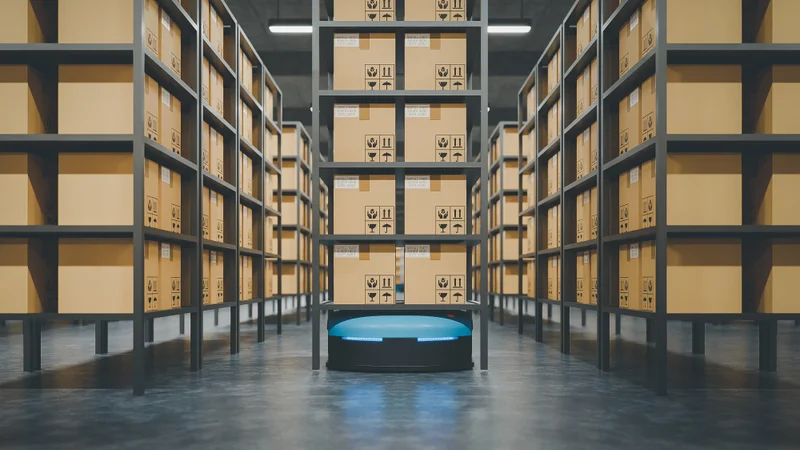
E-commerce continues to expand, and customers increasingly expect their orders to be delivered instantaneously. The effect? Logistics operators are being pushed to their limits. Warehouse space has become so valuable that operators must completely rethink their approach to storing, retrieving, and moving inventory.
It’s in this context that engineers are fundamentally reimaging Automated Storage and Retrieval Systems (AS/RS) and shuttle-based tote handling platforms. The next wave of intralogistics will be measured by its ability to move faster and store smarter, which means that extreme spatial density, accelerated retrieval cycles, and adaptive payload handling all become paramount.
The systems that once optimized floor area are now racing to optimize volume itself. For leaders to separate themselves from the pack, they must address the concepts of motion control, power management, and modularity at the component level.
Shrinking Space, Expanding Capacity
As warehouse operators around the world adopt vertical storage strategies, they are now designing upward, not outward. The result is a new generation of multi-level, high-density shuttle systems capable of stacking totes across unprecedented vertical ranges, sometimes exceeding 40 meters in height. But while the verticalization trend is optimizing volume usage, it’s also creating a new set of mechanical and electrical constraints for engineers to navigate.
First, operating in tightly confined geometries demands more from every component. Motors must deliver high torque without occupying excessive space, and they must do so with low inertia to facilitate rapid acceleration and deceleration. As such, drive solutions that were adequate for traditional horizontal conveyance are being replaced by compact, high-performance alternatives designed specifically for vertical and diagonal movement within dense storage grids.
At the same time, load characteristics are diversifying. E-commerce warehouses deal with everything from lightweight electronics to bulky household items, while industrial centers move heavier parts and assemblies. With that kind of variety, systems are now required to handle flexible payloads. Modern shuttle modules must dynamically adjust speed and torque to accommodate different SKUs, packaging formats, and weight profiles without compromising cycle time or safety.
In the midst of it all, the competitive focus has shifted accordingly. Throughput is no longer measured simply in picks per hour. The key performance metric now is volumetric throughput, or getting the most picks out of every cubic meter of warehouse space. This shift might seem subtle, but it completely changes how systems get designed, controlled, and optimized.
Explore future trends with Delta-Line at SPS
Are you heading to SPS? Visit Delta Line booth 220 in Hall 1 to see their motion solutions dedicated to intralogistics. Among the highlights will be the company’s new integrated servo motors, specifically developed to manage peak movements in AS/RS applications, reflecting Delta Line’s commitment to enabling the warehouses of tomorrow.
Want free entry to the fair? Sign up here.
Speed Beyond Motion
Faster cycle times are the holy grail of warehouse automation, but raw motor power is no longer the bottleneck. Instead, speed depends on how precisely and efficiently energy moves through the system during the countless transitions within shuttle operation. Every shuttle accelerates, brakes, and reverses direction hundreds of times per hour, and it's these transitions that consume the most energy and impose the most stress on mechanical components.
Mechanically, engineers need to fine-tune acceleration and deceleration ramps to avoid shock loads that can strain hardware. Abrupt starts and stops may save a fraction of a second per cycle, but they introduce vibration and cumulative wear that shortens component life and increases maintenance costs. The smarter approach is to optimize motion profiles for smoothness and repeatability.
Engineers need motion controllers to orchestrate these dynamics. Real-time controllers can coordinate drive current and torque delivery to actively minimize oscillations when the shuttle changes direction or comes to a stop at high speed. A well-tuned control loop can shave milliseconds from each individual movement, which can translate into hundreds of additional retrievals per shift without placing higher stress on the drivetrain.
Delta Line's engineering teams work closely with shuttle OEMs to match motor characteristics to these demanding control profiles. The goal is to design drive systems that respond instantly to command signals while always operating within thermal and mechanical limits.
Modular Intelligence for Adapting to Any Payload
The architectural philosophy behind modern shuttle systems has completely shifted. These platforms are no longer fixed, monolithic machines designed around a single use case. Instead, they're modular networks made up of self-contained units that each have their own sensors, drives, and control logic. Such a distributed setup enables features that earlier generations simply couldn't achieve.
For example, multiple shuttle modules can now operate in parallel while sharing real-time data about system status, traffic patterns, and workload distribution. Software algorithms can then dynamically adjust speed, torque, and routing decisions to prevent congestion and maintain smooth flow throughout the storage grid. And, when product demand shifts during the day, the system can reassign workloads on the fly to keep utilization high without manual intervention.
Modular design also delivers significant mechanical and operational advantages, as operators often need to adjust capacity in response to seasonal demand or business growth. For instance, engineers can leverage standardized power and communication interfaces to add or remove shuttles without reworking the main control infrastructure. Similarly, electrically, "plug-and-operate" motion assemblies dramatically reduce downtime during maintenance events.
Delta Line has built motion platforms around adaptable motor geometries and flexible interface options. OEMs can select components that precisely match the torque, speed, and footprint requirements of different module types, so that each shuttle performs optimally within the larger system architecture. Customization, combined with standardized mounting and wiring conventions, shortens integration timelines and simplifies long-term support.
Conclusion
The warehouse of the future will be judged not by how efficiently it uses floor space, but by how intelligently it leverages its entire volume. To make this vision a reality, engineers must design AS/RS with both mechanical architecture and motion control as the main priorities. With this direction, the next decade of intralogistics systems will offer more intelligent and adaptive structures for a more efficient warehouse.
Delta Line is committed to being a collaborative partner in that journey through motion solutions that push the boundaries of what's possible in automated storage and retrieval.Optimize your AS/RS design for the demands of tomorrow's warehouse with Delta Line's engineering expertise. Get in touch today.