Automotive and Additive Manufacturing Converge at Formnext 2026
Formnext 2026 will provide automotive, transportation, and mobility companies with a unique gateway to the global additive manufacturing ecosystem.

19 Aug, 2026. 5 minutes read
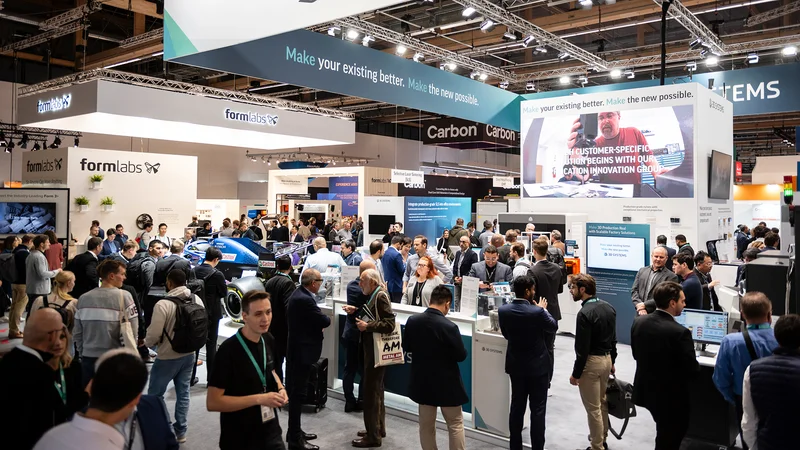
The automotive sector is in the middle of an important transition. In 2026, electric car sales are expected to exceed 23 million, driven largely by major adoption in China and Europe. [1] Meanwhile, an increase in software-defined vehicles (SDVs), with functions like autonomous driving and over-the-air updates, is contributing to increased manufacturing complexity.
Despite this complexity, EV and SDV producers are logging shorter and shorter development times for new vehicles, with startups often needing just 24 to 30 months for new vehicle development—around half the time taken by traditional OEMs.[2]

Shifting expectations in development times, coupled with supply chain disruptions and uncertainties surrounding global tariffs, have put pressure on OEMs and suppliers. Furthermore, the high cost of new vehicle production and limited consumer spending power means the automotive market is looking for innovative ways to streamline production, shorten supply chains, and increase profit margins.
Additive manufacturing (AM) is uniquely positioned to assist the automotive industry in its efforts to ensure that hardware production keeps pace with innovation. By offering hyper-local production and reduced supply chain dependence, AM is becoming increasingly important for prototyping, tooling, and even serial production of automotive components. The convergence of automotive and AM will be demonstrated at Formnext 2026, which brings together leading and emerging figures from the automotive and AM industry.
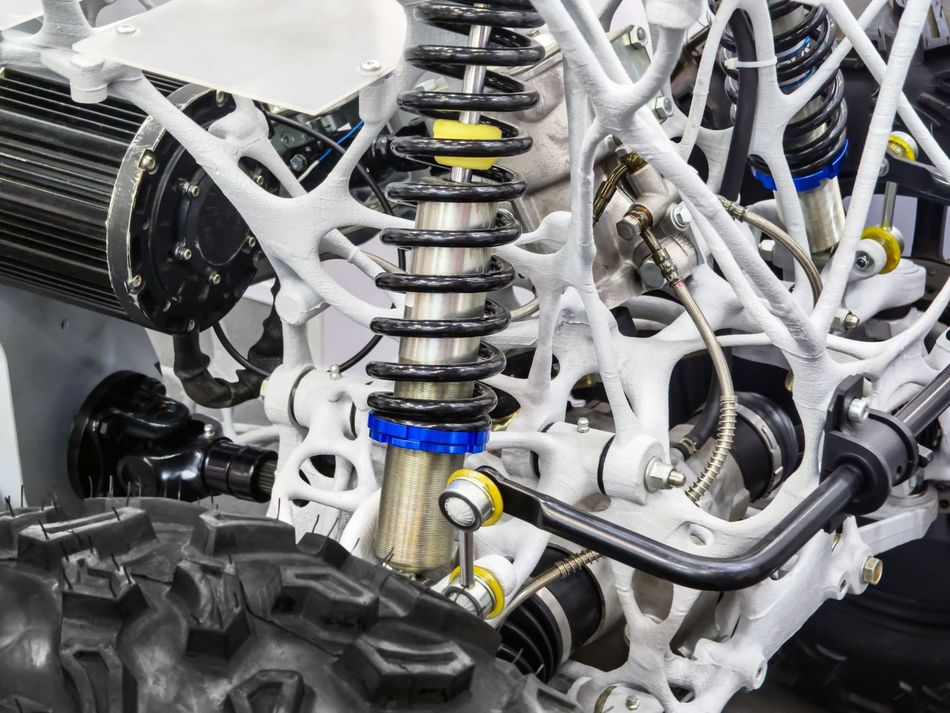
Additive Manufacturing in Automotive Today
Additive manufacturing is often considered a cutting-edge or even futuristic technology. However, its use in the automotive industry goes back to the 1980s, not long after the first 3D printers appeared. This makes it about as futuristic as the DeLorean. Back then, AM was synonymous with rapid prototyping, and many automotive suppliers and OEMs still use polymer 3D printing to prototype items like interiors, dash components, and body panels. This is an area in which companies can exploit some of the technology’s main advantages: design freedom, tool-free production with short lead times, and minimal up-front costs.
However, rapid prototyping represents just one application of additive manufacturing in today’s transport-related industries. Companies like GM and Tesla have used binder jetting, a form of AM that prints materials like metals and ceramics suspended with binder material, to fabricate complex sand casting molds that can then be used to produce high-strength cast metal parts. Ford is one of many companies to use AM for final part production, deploying metal 3D printing for EV battery cooling components.
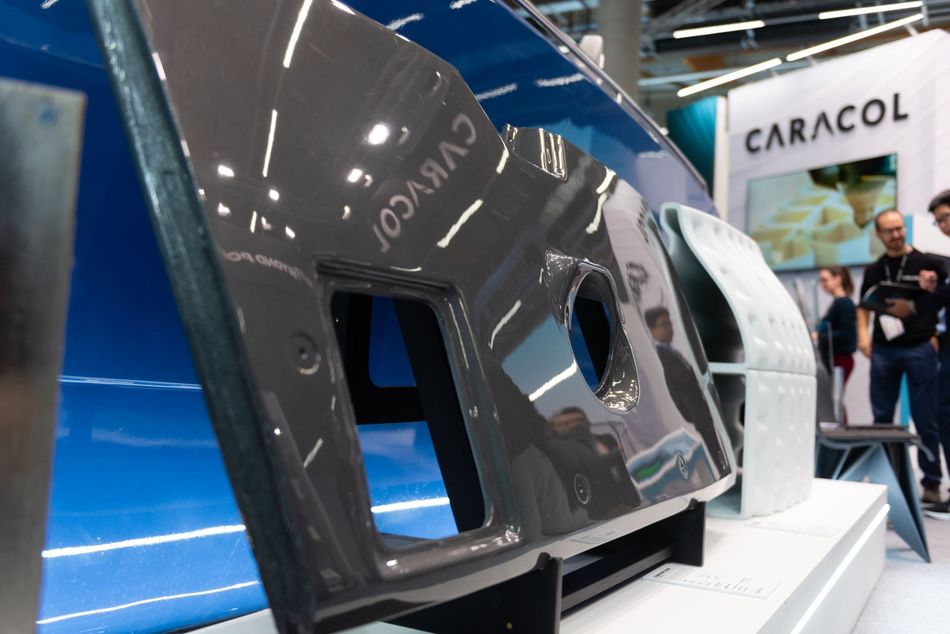
Beyond the major OEMs, other businesses like part suppliers, mechanics, and body shops are using 3D printing for jobs like custom part production, repair of legacy vehicles, and reverse engineering. In polymer 3D printing, low-end professional extrusion and photopolymerization systems are available below the five-figure mark and serve as an ideal entry point for smaller firms.
AM use can be subsequently scaled up by introducing further printers controlled by print farm management software or deploying larger production-ready systems. Metal AM systems and more complex polymer printing technologies come with greater material handling and post-processing demands, but even these machine categories are becoming steadily more accessible in terms of machine cost and usability.
Three Diverse Use Cases
Automotive, transportation, and mobility companies now use AM for applications beyond prototyping. At Daimler Truck, the largest commercial vehicle producer in the world, the technology is deployed for efficient spare part production, particularly in the Daimler Buses division. That company is working with AM leader 3D Systems to overcome supply chain bottlenecks and reduce part delivery times. Digitizing its spare parts library allows it to use certified local AM service bureaus while a unique digital rights management solution protects its IP, ensuring those third-party bureaus only print the exact part quantity required.
Additive technology is proving equally valuable in other areas of transportation. Siemens Mobility, the rail transport division of Siemens, is a long-time user of AM technology and recently 3D printed a three-meter front panel for a rail vehicle approved for speeds up to 124 mph (200 km/h).
Like Daimler Truck, Siemens Mobility also uses AM hardware in conjunction with a digital spare parts library, allowing it to provide fast replacements even on decades-old vehicles. The company says this library of 2,100+ virtual parts reduces costs, allows for easy redesign, lowers CO2 emissions, and shortens delivery times by up to 90%.
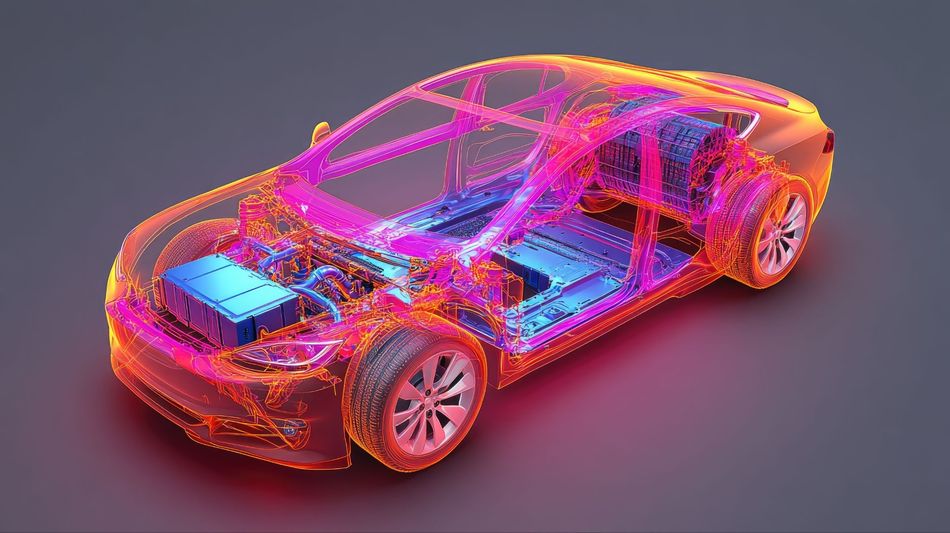
In the growing EV space, additive manufacturing exhibits some of its most creative applications. For instance, Silicon Valley disruptor Sakuu has combined expertise in AM and battery production to develop a proprietary dry process for the 3D printing of custom-shaped functional batteries with patterned openings for thermal management. Key advantages of 3D printing these batteries with the company’s unique Kavian process include elimination of toxic solvents, substantial gains in energy density, and fully customizable form factor.
Accessing the AM Ecosystem
The world’s leading automotive and transportation OEMs are demonstrating the value and versatility of additive manufacturing. However, there remain several common obstacles to AM adoption in the sector, including:
Choosing between different 3D printing technologies
Choosing between in-house and external AM production
Material selection
Integrating AM into established workflows
Scaling up AM use or moving from prototyping to production
Understanding the application of industry-specific regulations to AM
At the 2026 edition of the annual Formnext trade show, AM technology providers, material providers, and service providers will present proven solutions to these problems for users in automotive, transportation, and other relevant industries.
The event will bring together over 800 exhibitors along the entire process chain, allowing industry decision-makers to see technology demonstrations and use cases up close while forming new business connections.
As the world’s largest additive manufacturing industry event, Formnext serves as a unique entry point to the AM ecosystem, giving end-users direct access to the world’s foremost AM companies and serving as a catalyst for the formation of strategic partnerships.
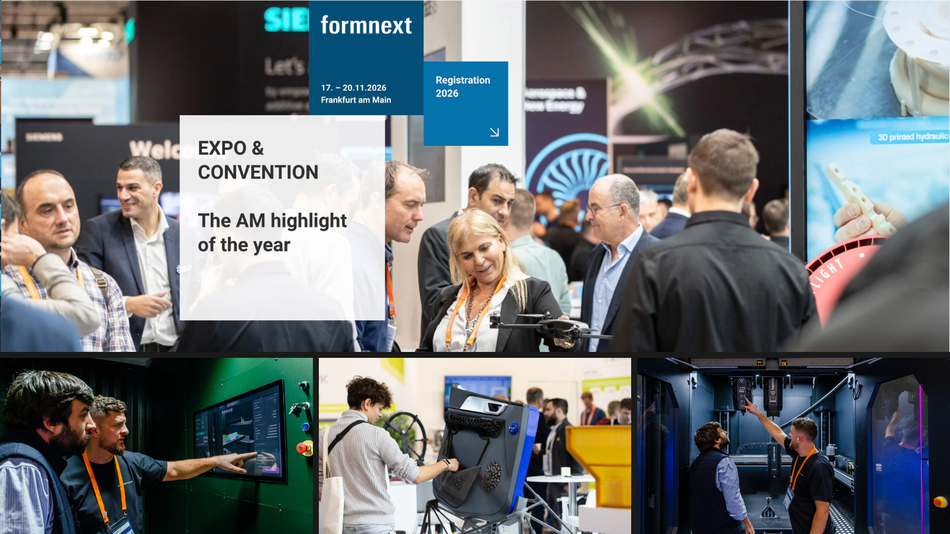
This year’s edition of Formnext takes place November 17–20, 2026 at the Messe Frankfurt exhibition grounds. Subscribe to the AM4U newsletter and Formnext Magazine to receive updates about the event and secure your Formnext ticket with the Early Bird discount, available until 22 October.
Learn more about Automotive at Formnext by downloading the free industry whitepaper and registering for the Formnext Technology Talk "AM in the automotive, transportation & mobility industry".
References:
- https://www.iea.org/reports/global-ev-outlook-2026/trends-in-electric-cars
- https://www.mckinsey.com/industries/automotive-and-assembly/our-insights/winning-the-automotive-software-development-race