3D Printing Innovations: 13 Advances Engineers Should Know
From continuous resin printing to collagen bioprinting, these are the 3D printing innovations shaping the future.

25 Nov, 2026. 18 minutes read
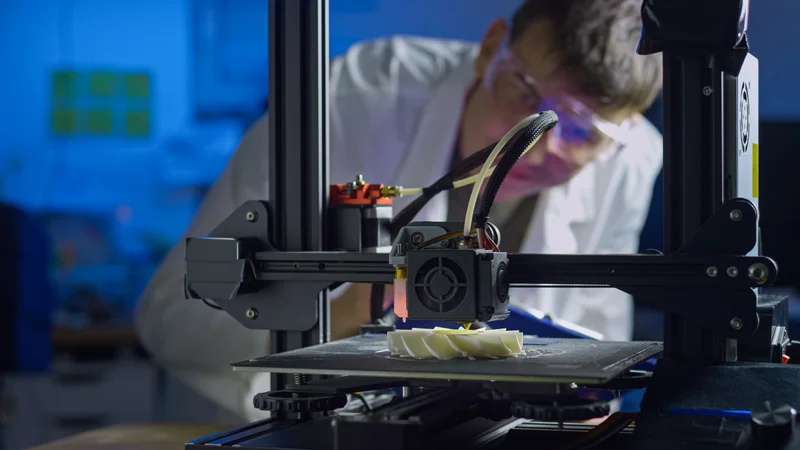
3D printing innovations span hardware, materials, software, and applications
Key Takeaways
Advances in photopolymerization are pushing 3D printing in different directions, such as continuous resin printing for faster production and two-photon polymerization for nanoscale precision.
Multi-laser systems, beam shaping, and hybrid directed energy deposition are making metal additive manufacturing more suitable for large, complex, industrial components.
Innovations in powder engineering, laser technology, and thermal management are improving the printability of challenging materials, including high-strength aluminum, copper, and PEEK.
Collagen bioprinting and 4D printing are extending additive manufacturing beyond conventional static components to biological structures and stimulus-responsive materials.
Machine learning, generative design, and text-to-CAD tools are changing how engineers design parts, select printing parameters, and monitor production quality.
Introduction
3D printing innovations tend to come from changes to one of three things: how material is turned into a solid, which materials can be used, and how reliably a factory can repeat the result.
These developments are gradually changing the role of additive manufacturing across industries. Faster printing processes are making higher production volumes economically viable, while advances in material science are enabling applications in more demanding operating environments. Meanwhile, improvements in computational design and process control are giving engineers greater freedom to develop complex components and manufacture them consistently.
This guide walks through 13 important 3D printing advancements. While not every innovation on this list emerged this year (2026), we believe the 13 choices represent important modern breakthroughs that casual additive manufacturing observers may not be familiar with.
Recommended reading: What Is 3D Printing? How It Works, Processes, Materials, and Limits
3D Printing Innovations at a Glance
# | Innovation | Process family | Key achievement | Evidence type |
1 | Continuous liquid interface production (CLIP) | Vat photopolymerization | Printing speeds of hundreds of mm per hour | Peer-reviewed research |
2 | Two-photon polymerization | Photopolymerization | Feature sizes below 100 nm demonstrated | Peer-reviewed research |
3 | Multi-laser and beam-shaped powder bed fusion | Metal powder bed fusion | Systems with 12 × 1 kW lasers and dynamically adjustable beam profiles | Manufacturer and trade press |
4 | Large-scale directed energy deposition and multi-alloy engines | DED and hybrid metal AM | Rocket nozzle production reduced from years to months or weeks | NASA and industrial research |
5 | High-strength aluminum processing | Metal powder bed fusion | Crack-free 7075 and 6061 aluminum with strengths comparable to wrought material | Peer-reviewed research |
6 | High-temperature polymers (PEEK) | Material extrusion | Improved crystallinity and interlayer adhesion through thermal management | Peer-reviewed research |
7 | FRESH collagen bioprinting | Hydrogel extrusion | 20 µm filament resolution and functional cardiac tissue structures | Peer-reviewed research |
8 | Copper additive manufacturing | Metal powder bed fusion | Relative densities of 99.8–99.9% using green lasers | Peer-reviewed research |
9 | 4D printing with shape memory polymers | Multiple AM processes | Printed structures that change shape in response to external stimuli | Peer-reviewed research |
10 | Machine learning for parameter selection and monitoring | Multiple AM processes | Optimized 316L stainless steel printing parameters in just over six iterations | Peer-reviewed research |
11 | Generative design and text-to-CAD | Digital design and computational engineering | 43% weight reduction in an automotive gear using generative design | Industrial case study and trade press |
12 | Part consolidation in aerospace | Metal powder bed fusion | 20 components consolidated into one; 100,000th LEAP fuel nozzle tip shipped in 2021 | Manufacturer |
13 | Metal 3D printing in space | Laser-based metal AM | First metal part 3D printed aboard the ISS in August 2024 | European Space Agency |
Process Innovations: Faster, Larger, and Finer Printing
1. Continuous Liquid Interface Production (CLIP)
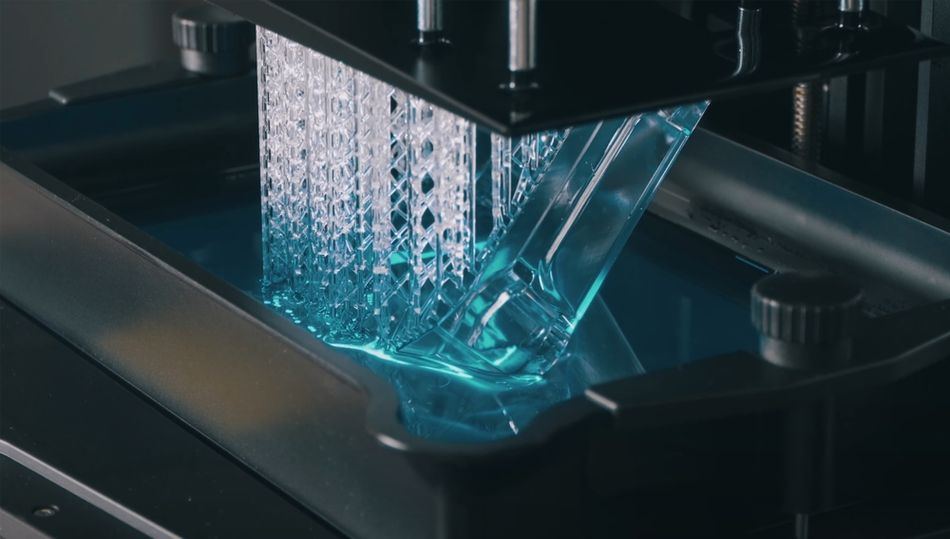
Classic stereolithography (SLA) builds a part one cured layer at a time. A 2016 PNAS paper on CLIP, a process developed by the company Carbon, blames that layering for keeping 3D printing in the “realm of rapid prototyping,” because layer-by-layer parts have anisotropic mechanical properties that depend on print direction.[1]
CLIP removes the stop-and-start cycle. In the 2015 Science paper that presented it, an oxygen-permeable window below the ultraviolet projection plane is described as creating a “dead zone” where photopolymerization is inhibited, and the upward movement of the growing part renews the liquid resin underneath it.[2] The authors reported monolithic polymer parts up to tens of centimeters in size, feature resolution below 100 µm, and draw rates of hundreds of millimeters per hour, producing parts “in minutes instead of hours.”[2]
A 2016 follow-up paper showed further benefits. Test parts sliced at 100, 20, and 0.4 µm were all built at 40 mm/h in the same build time, so finer slicing reduced the staircasing effect without adding fabrication time.[1] In separate tensile tests on specimens sliced at 100, 20, and 1 µm in three orientations, tensile strength and Young’s modulus showed no statistical difference across slice thickness or orientation.[1] The paper also reports large overhangs printed without supports.[1]
Carbon’s current printer lineup spans the M2, M3, M3 Max, and the large-format L1, and the M3 Max uses a true 4K light engine to double the build area at the same pixel size and density.[3] The company has increasingly focused on dental, while DLS parts are also in consumer products, such as custom-fit bike saddles and Adidas’s 3D printed “4D” shoes.
Other innovations in vat photopolymerization include Azul 3D’s non-stick High-Area Rapid Prototyping (HARP) technology and the totally layerless Computed Axial Lithography (CAL) technique.[4][5]
2. Two-Photon Polymerization at the Nanoscale
At the opposite end of the size scale, two-photon polymerization focuses a femtosecond laser tightly into a photopolymerizable material, where a photoinitiator molecule absorbs two photons at once and starts polymerization locally.[6] The very short laser allows for the curing of tiny structures. Because two-photon absorption scales with the square of the light intensity, curing is confined to a small region within the focal volume, and light elsewhere passes through without reacting.[6]
A 2022 review notes that resolutions of several hundred nanometers are relatively easy to reach and that features below 100 nm have been demonstrated repeatedly.[6] Penn State’s Materials Research Institute runs a Nanoscribe Photonic Professional GT system on this principle, specified for feature sizes down to 200 nm, with a piezo mode for arbitrary 3D trajectories and a galvo mode for ultra-fast layer-by-layer structuring.[7]
The Penn State facility demonstrated prints of 20 × 7 × 1 µm.[7] Useful applications of the technology include tiny lenses, microneedles, and miniaturized mechanical parts.
3. Multi-Laser and Beam Shaping Powder Bed Fusion
In metal powder bed fusion (PBF), one line of progress is more laser power, better controlled. A February 2023 Additive Manufacturing report on Nikon SLM Solutions’ NXG XII 600E, a variant of the NXG XII 600, describes a system driven by 12 lasers of 1 kW each, noting that the NXG XII 600 is 20 times faster than a single-laser system and five times faster than a quad-laser system.[8]
The 600E extends the build envelope to 1.5 m in the Z axis, and SLM says external cooldown unpacking enables job-to-job turnover in under one hour.[8]
EOS takes a different route: it is one of a handful of PBF companies—alongside Farsoon Technologies, Nikon, and others—using beam shaping technology, which switches between dynamic beam profiles to adapt the beam to the application.[9] In other words, instead of just using a standard Gaussian laser beam, with energy concentrated at a small point in the center, the beam can have, for example, a ring or elliptical shape.
The result of beam shaping technology is much faster printing of large structures while retaining the ability to use a Gaussian beam for precision features. And EOS says its technology, used on systems like the EOS M4 ONYX FLX, can switch between its seven different beam shapes in a matter of microseconds.[9]
4. Large-Scale Directed Energy Deposition
Directed energy deposition (DED) melts feedstock with a laser or other energy source as it is deposited. It has become the main way to add large, structurally demanding features to rocket engines, and much of the recent progress comes from hybrid approaches that pair it with L-PBF, in-situ machining, or composite overwrap.
A well-established example is the bimetallic combustion chamber. Virgin Orbit and NASA built copper-alloy liners by powder bed fusion and applied an Inconel 625 jacket and manifold interfaces by blown-powder DED, machining them in place on a hybrid additive/subtractive machine tool.[10] More recently, TRUMPF combined laser metal fusion and laser metal deposition to make an injector and wide bell nozzle, depositing nickel superalloy 718 onto an L-PBF GRCop-42 copper component at powder utilization above 90%.[11]
Hybrid DED is also moving beyond single-material pairings. The European DISCO2030 project is developing hybrid methods for joining dissimilar metal-metal and metal-polymer materials, built on powder bed fusion and DED, with a rocket engine, a marine engine, and a cryogenic hydrogen tank as demonstration cases.[12]
Alloy development is advancing too: NASA’s HR-1, a laser powder DED alloy, resists hydrogen environment embrittlement in regeneratively cooled nozzles and is reported to conduct heat better than its wrought counterpart.[13]
NASA’s RAMPT project shows how far these combinations can go at scale. It combined a printed copper chamber, a carbon fiber overwrap that saves up to 40% in weight versus metal jackets, and a DED-printed nozzle in a single-piece thrust chamber assembly, cutting nozzle production time from years to months or weeks.[14] The hardware has logged more than 16,000 seconds of hot-fire testing and nearly 500 starts, and the project has built a full-scale DED nozzle liner of about 2.8 × 2.4 m.[14]
Materials Innovations: New 3D Printing Materials
5. Advances in High-Strength Aluminum Processing
Aluminum is a mainstay of lightweight design, but the strongest grades are hard to make with new manufacturing methods. In 3D printing, they tend to crack. In recycling, impurities in scrap usually limit what can be made from it. Two recent lines of work attack these problems from different directions: one changes the powder so high-strength alloys can be printed, and the other changes how aluminum is extruded so scrap can be reused.
In 2017, Martin and colleagues noted that only a few alloys, notably AlSi10Mg, TiAl6V4, CoCr and Inconel 718, could be printed reliably. Most of the more than 5,500 alloys in use could not be, because printing produced large columnar grains and periodic cracks.[15]
Their fix was to assemble nucleant nanoparticles, chosen from crystallographic data, onto 7075 and 6061 aluminum powders. Processed by selective laser melting, the alloys formed crack-free, equiaxed, fine-grained microstructures with strengths comparable to wrought material. The authors expected the approach to extend to other alloy systems, such as non-weldable nickel superalloys and intermetallics. HRL Laboratories, where most of the authors worked, funded the study.[15]
Extrusion has seen its own shift. Recycling post-consumer aluminum scrap typically requires high-temperature melting and the addition of 20–30 percent newly produced aluminum, which dilutes the energy and cost benefits.[16]
Pacific Northwest National Laboratory's Shear Assisted Processing and Extrusion (ShAPE) technique instead softens scrap with rotational shear and friction heat, rather than a preheated billet and linear force. It also tolerates excess iron, a common scrap impurity.[17] A 2026 study used ShAPE to convert real-world post-consumer scrap streams into Al–Mg–Si–Cu automotive alloys without adding primary aluminum, extruding billets at about 510°C followed by press quenching.[17]
6. High-Temperature Polymers: PEEK
Engineering plastics sit between commodity polymers and metals. They offer the strength, heat resistance, and chemical stability needed for demanding parts, often at a fraction of the weight of metal. That makes them attractive for additive manufacturing in aerospace, automotive, and medical applications, where a printed polymer part can replace a machined metal one. PEEK is the best-known example, and printing it pushes material extrusion to its thermal limits.
A 2025 review notes that PEEK requires nozzle temperatures above 340 °C, which limits its compatibility with standard 3D printers, while common polymers such as PLA print at 190 to 230 °C.[18] The same review says these extreme conditions can lead to warping, shrinkage, delamination, and poor interlayer adhesion, all of which compromise mechanical performance.[18]
Researchers have responded with thermal process control, including precise adjustments of nozzle and chamber temperatures.[18] In one 2024 study cited by the review, PEEK printed at 420 °C and given a post-print heat treatment at 300 °C for two hours showed improved crystallinity and interlayer adhesion.[18] The review also notes that most PEEK-compatible FDM printers are compact enough for clinical and laboratory environments.[18]
Recent work also tackles the material itself. A 2026 study developed filaments for fused filament fabrication from PEEK and polyetherimide (PEI) blends, melt-extruded across a full range of weight ratios from pure PEEK to pure PEI, and examined their processing, mechanical properties, and crystallinity.[19]
7. Collagen Bioprinting with FRESH
Bioprinting combines living cells with hydrogel materials to create tissue-like structures, and hydrogels are among the most promising materials in additive manufacturing.[20] Extrusion, inkjet printing, and stereolithography are the most studied ways to print them.[20]
The central challenge is rheology, meaning how the material flows. A hydrogel’s viscosity determines how easily it moves through the nozzle: higher-viscosity gels may need more heat or pressure to extrude, while low-viscosity gels tend to sag or spread after deposition.[20] Many hydrogels thin under shear, which eases extrusion and allows finer control.[20]
Because soft, low-viscosity materials struggle to hold their shape, researchers have developed approaches that support the print as it is made. FluidForm’s FRESH (freeform reversible embedding of suspended hydrogels) is one example, and it has been applied to collagen. Collagen is the primary component of the human extracellular matrix, and building collagen scaffolds that replicate tissue structure has proved difficult.[21] FRESH extrudes the bioink within a thermoreversible support bath of gelatin microparticles that supports the print and is then melted away at 37 °C.[21]
Controlling pH-driven gelation gave 20 µm filament resolution and a porous microstructure that allows rapid cellular infiltration and microvascularization.[21]
The 2019 Carnegie Mellon 3D bioprinting study engineered heart components at scales from capillaries to the full organ and reproduced patient-specific anatomy as measured by micro-computed tomography. It also printed ventricles with human cardiomyocytes that contracted in sync, with wall thickening of up to 14% at peak systole.[21]
8. Copper Additive Manufacturing Breakthroughs
Copper has historically been a difficult material to process using metal additive manufacturing because of its high thermal conductivity and reflectivity. In conventional laser powder bed fusion, copper reflects much of the incident infrared laser energy and rapidly dissipates absorbed heat, increasing the risk of incomplete fusion and porosity.
Recent advances in green and blue laser technology have helped overcome these limitations without compromising material purity. A 2026 review reported that green lasers achieve approximately 40–45% energy absorption in bulk copper, compared with around 5% for infrared lasers at room temperature. Relative densities of 99.8–99.9% have been demonstrated using green laser PBF.[22]
Improvements in powder engineering have also expanded the design possibilities for copper AM. In 2025, researchers demonstrated that incorporating nanoscale copper oxide particles into copper powder could improve laser absorption and melt pool behavior, enabling the production of features as small as 70 μm. The resulting material exhibited a yield strength of approximately 450 MPa while retaining high electrical conductivity. To demonstrate the technology’s practical potential, the researchers manufactured a terahertz antenna that achieved 2.5 times the signal intensity of conventional 3D printed pure copper antennas.[23]
These developments are expanding the industrial applications of copper AM across electronics, aerospace, and energy systems. Potential applications include compact heat exchangers with intricate internal channels, liquid-cooled electronic components, electric motor windings, radio-frequency components, and rocket engine combustion chambers. Current research is increasingly focused on achieving consistent functional properties, improving production speed, and qualifying printed copper components for demanding industrial applications.[22]
9. 4D Printing with Shape Memory Polymers
4D printing adds time as a design variable. A conventional 3D print is finished the moment it leaves the printer, and its shape is fixed from then on. A 4D printed structure is designed to keep changing: a flat part might fold itself into a three-dimensional form, or a component might adjust its shape once it is in use. The idea moves some of the work from machines to materials, because the printed part carries its own instructions for how to transform. Skylar Tibbits of MIT introduced the concept at a TED conference in February 2013, defining it as structures that change themselves over time in response to external stimuli.[24]
A 2023 review describes it as additive manufacturing combined with shape memory materials, with shape memory polymers the most favored by researchers. Adding functional fillers to these polymers widens the stimuli they respond to: temperature, current, light, magnetism, or chemical solutions.[24]
The processes in use include fused deposition modeling (FDM), inkjet printing, direct ink writing, SLA, digital light processing, and SLS.[24] Demonstrated uses include an active hinge for a morphing wing flap and a deployable structure, and the review lists applications from soft robots to aerospace and biomedical devices.[24]
The material choice is a trade-off. Thermoset shape memory polymers give strong shape memory but are harder to rework, and their permanent shape cannot be redefined; thermoplastic versions can take a new permanent shape at the cost of weaker shape memory.[24] For multimaterial 4D printing, the review lists unresolved problems including limited material selection and low printing resolution.[24]
Software, Process Control, and Application Frontiers

10. Machine Learning for Parameter Selection and Monitoring
Getting a 3D printer's settings right is harder than it looks. Laser power, scan speed, and layer thickness all affect how strong and dense a part turns out, and finding a good combination by trial and error is, as one 2023 study puts it, “a time-consuming and costly process.”[25]
That study, from the Skolkovo Institute of Science and Technology, used a machine learning technique called multi-objective Bayesian optimization to pick laser powder bed fusion settings for 316L stainless steel. The goal was a part with a target hardness and low porosity. Starting from a modest set of experimental results, the model reached optimal settings in just over six iterations, and the resulting parts were hard and nearly pore-free.[25] The authors note that testing every combination of six factors at five levels each would take more than 15,000 tests.[25] They also flag a trade-off that remains: a thicker layer would shorten the build, but it would roughen the surface and add post-processing steps.[25]
Machine learning is also being used to watch prints as they happen. A 2024 review sorts deep learning work in additive manufacturing into three areas: design, process modeling, and monitoring and control. It points out that video of a build provides a steady stream of data that models can scan for anomalies.[26]
However, the review is candid about the limits of machine learning in this area. Models need to work across different part geometries, handle uncertainty, cope with data that is scarce, imbalanced, or noisy, and become easier to interpret.[26] One response is to build knowledge of the process physics into the models, so they need less data.[26]
Commercial machines are adding their own control features. EOS, for example, describes its Smart Fusion as advanced process control with real-time heat management, which allows support-free building.[9]
11. Generative Design and Text-to-CAD
Designing a part has traditionally meant an engineer drawing it, one feature at a time, in CAD software. AI is starting to change that by taking on part of the drawing. Generative design tools, which propose shapes that meet goals and manufacturing constraints, are already mature in some CAD packages such as Autodesk Fusion.[27] A newer wave goes further and tries to produce a part from a plain-language description.
The results so far are mixed. Text-to-CAD tools are beginning to produce useful 3D models from prompts, and they can already help with starter geometry and some simple printable parts.[27] The most practical approach is not to generate a shape directly. Instead, an AI system writes a script in a CAD language such as OpenSCAD or CadQuery, and that code is turned into a true CAD model.[27] This is important because a CAD model has to capture more than shape.
Japanese automobile company ISUZU has used generative design on a diesel engine gear. To match the noise reduction of a scissor gear without hurting fuel efficiency, the team needed to cut the gear’s weight by 30 to 40 percent, and they worried that earlier lightening, which drilled holes, had left little material to remove.[28] Generative design found a way. After two months of refinement, the selected prototype was 43% lighter, and two gears replaced with the new design matched the scissor gears' noise reduction while improving fuel consumption by 0.5%.[28]
The ISUZU result is a useful reminder that these tools do not always end in a 3D printer. The team said the shapes it generated were suitable for machining, and that considering manufacturability early was a major advantage.[28]
12. Part Consolidation in Aerospace
One of the most significant advantages of metal additive manufacturing (AM) in aerospace is the ability to combine multiple components into a single, complex part. This can reduce assembly requirements, eliminate potential points of failure, and lower the overall weight of an aircraft. GE’s LEAP fuel nozzle is a well-known example of this approach. According to GE’s 2017 account, the 3D printed nozzle combined 20 parts into a single unit, weighed 25% less than a conventional nozzle, and was more than five times as durable.[29]
The LEAP program also demonstrated the viability of metal AM for large-scale production. GE began manufacturing fuel nozzles at its Auburn, Alabama, facility in 2015, establishing the industry’s first mass-production site for additively manufactured aircraft engine components. In 2021, the facility shipped its 100,000th additively manufactured fuel nozzle tip.[30] Each LEAP engine incorporates 18 or 19 fuel nozzles, depending on the model, demonstrating the considerable production volumes that metal AM can support.[30]
Subsequent engine development programs took part consolidation even further. GE’s advanced turboprop engine consolidated 855 components into just 12 parts. The engine improved fuel burn by as much as 20% and delivered 10% more power, while the use of 3D printing for rapid prototyping reduced its development time by a third.[29]
The potential for consolidation had also been demonstrated in an earlier experiment in which a GE team printed half of an old commercial helicopter engine, reducing 900 components to 16. The resulting printed parts were 40% lighter and 60% cheaper.[29]
13. Metal 3D Printing in Space
Additive manufacturing could play an important role in future space exploration by allowing astronauts to manufacture components without relying on supplies from Earth. While plastic 3D printing has been possible aboard the International Space Station (ISS) for several years, processing metals in microgravity presents additional technical challenges.
In August 2024, a metal 3D printer built by Airbus and its partners for ESA finished the first metal part 3D printed on the International Space Station.[31] The station had already hosted plastic 3D printers; ESA describes its demonstrator as the first to successfully print a part in metal in microgravity.[31]
Cranfield University was involved in designing the printer’s melting process and hardware, as well as its laser source, delivery optics, and feedstock storage and feeding system.[31]
As missions expand to the Moon and Mars and resupply becomes harder, printing parts, repairs, and tools on demand is an alternative to relying on resupplies and redundancies.[31] In September 2024, ESA planned to bring this first part and three further prints back to Earth for quality analysis at ESTEC, its astronaut training center in Cologne, and the Technical University of Denmark.[31]
Conclusion
The latest innovations in 3D printing show just how far the technology has progressed beyond its origins in rapid prototyping. Engineers can now manufacture microscopic structures, large rocket engine components, functional biological tissues, and parts that change shape after printing. Materials that were once considered impractical for additive manufacturing are becoming increasingly accessible, while improvements in printer hardware are making industrial production faster and more economical.
Some of the most important advances are also happening outside the printer itself. Machine learning is helping engineers identify suitable processing parameters, while generative design and emerging text-to-CAD tools are opening up new approaches to product development. Together, these technologies could shorten the journey from an initial design concept to a functional, manufactured component.
Of course, these 3D printing innovations are at different stages of maturity. Some, such as aerospace part consolidation, have already proven their commercial value, while others remain largely experimental. What comes next depends on which areas of the industry receive most investment and demand.
Recommended reading: Types of 3D Printers: The Ultimate Guide to Additive Manufacturing Technologies
Frequently Asked Questions
What are the latest innovations in 3D printing?
Recent innovations in 3D printing technology include volumetric printing, multi-laser metal printing, artificial intelligence for process optimization, and advanced materials such as high-performance metal alloys, ceramics, and biomaterials.
What is the future of 3D printing?
The future of 3D printing may include faster prototyping, automated production, intelligent process control, and manufacturing in space. Advances in materials and processes such as selective laser sintering will make industrial production more efficient.
How are 3D printing innovations impacting the medical field?
3D printing enables the production of patient-specific implants, dental restorations, surgical instruments, and custom prosthetics. Innovations in bioprinting and biomaterials are also opening up new possibilities in tissue engineering and regenerative medicine.
How are industries using 3D printing innovations to improve production?
Industries use 3D printing to reduce part counts, minimize material waste, shorten lead times, and manufacture complex components. Materials such as ABS, PETG, and TPU support rapid product development, while advanced metal alloys enable the production of high-performance industrial components.
References
[1] Janusziewicz R, Tumbleston JR, Quintanilla AL, Mecham SJ, DeSimone JM. Layerless fabrication with continuous liquid interface production. PNAS. 2016;113(42):11703–11708.
[2] Tumbleston JR, et al. Continuous liquid interface production of 3D objects. Science. 2015;347(6228):1349–1352.
[3] Carbon. Products [Internet]. [accessed 24 Nov 2026].
[4] Morris A. Highest-throughput 3D printer is future of manufacturing [Internet]. Northwestern Now; 2019 Oct 17. [accessed 24 Nov 2026].
[5] Kelly BE, et al. Volumetric additive manufacturing via tomographic reconstruction. Science. 2019;363(6431):1075–1079.
[6] Jing X, Fu H, Yu B, Sun M, Wang L. Two-photon polymerization for 3D biomedical scaffolds: Overview and updates. Front Bioeng Biotechnol. 2022;10:994355.
[7] Penn State Materials Research Institute. Additive manufacturing [Internet]. Nanofabrication Lab. [accessed 29 Oct 2026].
[8] Additive Manufacturing. SLM Solutions’ NXG XII 600E offers extended build envelope[Internet]. 2023 Feb 22. [accessed 24 Nov 2026].
[9] EOS. Beam shaping technology [Internet]. [accessed 24 Nov 2026].
[10] Gradl PR, Protz C, Zagorski K, Doshi V, McCallum H. Additive manufacturing and hot-fire testing of bimetallic GRCop-84 and C-18150 channel-cooled combustion chambers using powder bed fusion and Inconel 625 hybrid directed energy deposition. NASA Technical Reports Server. 2019;20190030435.
[11] Laser Focus World. Laser metal deposition for additive manufacturing a hybrid propulsion component for space [Internet]. 2022 Nov 15. [accessed 24 Nov 2026].
[12] European Commission. DISCO2030 [Internet]. CORDIS; project 101091860. [accessed 24 Nov 2026].
[13] NASA. Laser powder DED of NASA HR-1 for hydrogen-environment nozzles. NASA Technical Reports Server. 2026 Mar;20260002311.
[14] NASA. Rapid Analysis and Manufacturing Propulsion Technology (RAMPT) [Internet]. 2025 Jun 30. [accessed 24 Nov 2026].
[15] Martin JH, et al. 3D printing of high-strength aluminium alloys. Nature. 2017;549:365–369.
[16] Chouhan DK, et al. Conversion of real-world aluminum scrap streams into high-performance Al–Mg–Si–Cu automotive alloys using Shear Assisted Processing and Extrusion. Resour Conserv Recycl Adv. 2026;30:200329.
[17] Pacific Northwest National Laboratory. ShAPE™-recycled aluminum [Internet]. [accessed 24 Nov 2026].
[18] Dallal S, Eslami B, Tiari S. Recent advances in PEEK for biomedical applications: A comprehensive review of material properties, processing, and additive manufacturing. Polymers. 2025;17(14):1968.
[19] McCrickard C, Boyd A, Rodzen K, Archer E, Manzoor F, Ullah J. PEEK/PEI polymer blends for fused filament fabrication: Processing, properties, and printability. Polymers. 2026;18(1):113.
[20] Calafel MI, Criado-Gonzalez M, Aguirresarobe R, Fernández M, Mijangos C. From rheological concepts to additive manufacturing assessment of hydrogel-based materials for advanced bioprinting applications. Mater Adv. 2025;6:4566–4597.
[21] Lee A, et al. 3D bioprinting of collagen to rebuild components of the human heart. Science. 2019;365(6452):482–487.
[22] Canacoo S, Kang DH, Sakib MN, Jeong J. Laser additive manufacturing of copper and its alloys: Challenges, process innovations, and future perspectives. Int J Precis Eng Manuf Green Technol. 2026.
[23] Qu S, Wang L, Zhang S, et al. Oxide-dispersion-enabled laser additive manufacturing of high-resolution copper. Nat Commun. 2025;16:3234.
[24] Yan S, et al. Shape memory polymer composites: 4D printing, smart structures, and applications. Research. 2023;6:0234.
[25] Chepiga T, et al. Process parameter selection for production of stainless steel 316L using efficient multi-objective Bayesian optimization algorithm. Materials. 2023;16(3):1050.
[26] Saimon AI, Yangue E, Yue X, Kong Z, Liu C. Advancing additive manufacturing through deep learning: A comprehensive review of current progress and future challenges. arXiv [Preprint]. 2024; arXiv:2403.00669.
[27] Fabbaloo. Text-to-CAD is getting more real, but it’s not there yet [Internet]. 2026 Jun 26. [accessed 24 Nov 2026].
[28] Harada T. ISUZU Central Research Laboratory tackles diesel engine quietness with generative design [Internet]. Autodesk Fusion Blog; 2025 Oct 20. [accessed 24 Nov 2026].
[29] Kellner T. An epiphany of disruption: GE Additive chief explains how 3D printing will upend manufacturing [Internet]. GE Reports; 2017 Nov 13. [accessed 24 Nov 2026].
[30] GE Aviation. GE Aviation reaches new milestones in advanced manufacturing for more fuel-efficient jet engines [Internet]. 2021 Aug. [accessed 24 Nov 2026].
[31] European Space Agency. ESA 3D prints first metal part on the International Space Station[Internet]. 2024 Sep 6. Press release 49-2024. [accessed 24 Nov 2026].