Why Gatekeepers and On-Site Logistics are Essential to Quality Assurance
Digital manufacturing platform FACTUREE proves that the best quality assurance involves digital and physical oversight.

23 Jun, 2026. 5 minutes read
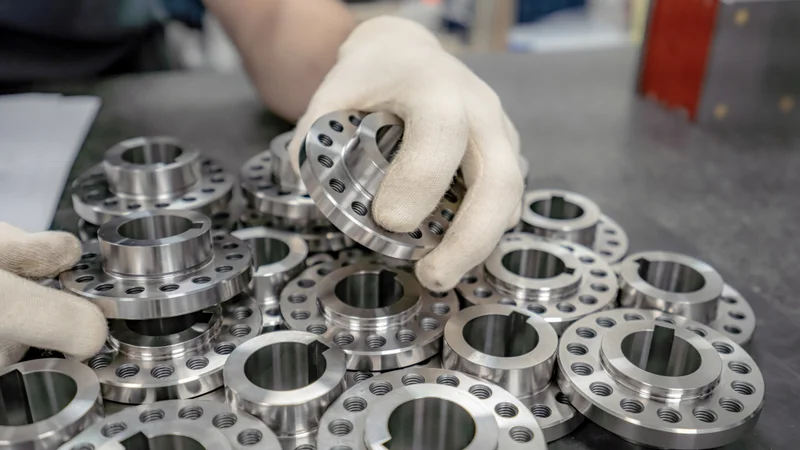
Procurement practices have evolved significantly in recent years thanks to the advent of innovations like RFQ comparison tools and digital manufacturing platforms. In the case of digital manufacturing platforms in particular, custom part procurement has been transformed from a multi-step, risk-laden process into a more streamlined and reliable workflow.
Much of this streamlining is owed to digital frameworks that organize and coordinate various production elements like administration, documentation, production availability, and more. Still, despite the many benefits that smart digital technologies have brought to part sourcing, there is still a significant need for physical oversight across the production chain to ensure that materials, processes, and production output are up to standard. In other words, while procurement is increasingly digital, production will forever have a physical side.
In order to ensure optimal quality assurance along the production chain, leading digital manufacturers like FACTUREE are taking a multi-pronged approach to quality assurance (QA). This involves leveraging AI-driven digital tools (to monitor and verify critical things like purchase orders, manufacturer certifications, supplier data, process monitoring) as well as on-site gatekeepers who ensure that QA is being maintained at critical points in the supply chain. This combination, which takes a holistic approach to quality assurance and logistics, is enabling digital manufacturing platforms like FACTUREE to achieve zero-defect manufacturing for its customers.
The Limits of Digital Oversight
Based in Berlin, FACTUREE is a digital manufacturing platform that functions as a single contracting partner for customers in industries like aerospace, automotive, consumer goods, defense, energy, engineering, medical, and more. The company has a network of over 2,000 qualified manufacturers and a powerful AI platform that connects custom part requests with the ideal manufacturing supplier (based on job specifications, lead times, cost, etc.). Notably, as sole contractual partner, FACTUREE oversees all elements of the procurement and production processes once a part drawing has been uploaded—including quality assurance, inspections, and logistics.
As anyone with insight into production chains and zero-defect strategies will know, this scale of production management and oversight requires a strong digital framework as well as effective on-site quality control. On the digital side, a smart digital manufacturing infrastructure is essential for:
Matching custom parts to the optimal supplier
Verifying manufacturer certificates for quality management (i.e. ISO 9001, ISO 9100, ISO 14001)
Ensuring proper compliance documentation across the network (i.e. RoHS, REACH, EMPB, PPAP)
Validating material certificates (EN 10204) to support incoming goods inspections
Creating a traceable, fully documented supply chain
While powerful, these digital processes must be reinforced with physical, on-site quality assurance. This physical oversight, which includes incoming goods inspections, machine calibration and maintenance, part inspection, and on-site logistics, works to ensure that all operations are up to code and that the parts being made are up to standard at every production step.
On the ground, the people responsible for this oversight—with a special focus on specific points in the supply chain—are known as gatekeepers. It is these gatekeepers that ensure that digitally defined standards are implemented on site and at every step of production.
For an operation like FACTUREE’s, which relies on manufacturing partners to supply parts, this multi-faceted quality assurance approach is central. That is, while the company itself does not own production equipment, it has a robust process to check, monitor, and maintain quality standards across its production network.
The Role of On-Site Logistics
Before we dive deeper into how gatekeepers play a fundamental QA role at FACTUREE, let’s first look at the impact of on-site logistics in a production chain. Generally, on-site logistics refers to the personnel on the ground who are trained to manage and oversee the handling of materials, equipment, and products inside a facility.
At a manufacturing site, an on-site logistics team will be tasked with several things, including:
Overseeing the receipt of raw materials (i.e. ensuring that materials match documentation, identifying non-conforming materials, flagging undocumented substitutions)
Ensuring materials are where they need to be (i.e. that raw materials are being stored properly and are being properly handled when processed)
Monitoring storage and operating conditions (i.e. ensuring that temperatures, humidity levels, cleanliness are maintained in material storage and production environments)
Supporting inspections and documentation to ensure traceability (i.e. verifying inspection documentation, certificates of conformity, etc.)
Identifying defective parts and removing them from the supply chain
Preparing goods to be packaged and shipped (i.e. conducting a manual visual inspection, ensuring packaging standards, on-site customs)
One of the key roles of an on-site logistics team is to detect issues early or as soon as they appear. This goes hand-in-hand with the quality gate manufacturing strategy, in which checks are established at critical points in the production line with the express goal of ensuring products are up to standard. For example, incoming raw materials should be assessed by a gatekeeper to ensure that they haven’t been damaged on route. While the material documentation may all be in order, an expert eye is needed to ensure that, say, a steel blank showing signs of corrosion isn’t put through to be CNC machined.
This quality gate approach mitigates risk by identifying and addressing issues as soon as they arise, so that downstream processes aren’t impacted. In line with this, on-site logistics can also help to identify and flag unreliable suppliers, leading to a more resilient, trusted supply chain.
At FACTUREE, on-site quality control is carried out by engineers who are involved throughout the entire process — from initial inquiry through to delivery — not only once a shipment has arrived. Crucially, handling customs in-house means parts can be shipped directly to FACTUREE and dispatched to customers immediately after quality control, cutting days from the overall manufacturing lifecycle.
Ultimately, having gatekeepers on the ground reinforces digital QA infrastructures and ensures that every step in a production operation is going smoothly. On-site logistics also helps to keep lead times on track, maintain machine uptimes, and overall production consistency.
Quality Assurance at FACTUREE
At FACTUREE, gatekeepers and on-site logistics are an important part of a vigorous supplier quality assurance strategy. This strategy comprises various elements, including AI-supported supplier selection, comprehensive production monitoring (both using digital tools and on-the-ground expertise), a double final inspection, and integrated logistics.
In the market of digital manufacturing platforms, FACTUREE stands out for this holistic and highly certified approach to QA. That is, not only can the company’s customers rely on all network manufacturers being certified for quality management, compliance, and materials, they also have the benefit of working with an Authorised Economic Operator manufacturing partner. As an AEO-certified company, FACTUREE specializes in import and export and maintains a trusted relationship with customs authorities.
In practice, this means that all shipments undergo a parts inspection process, in which an on-site logistics team conducts a manual visual inspection for every part. This ensures that parts haven’t suffered any scratches or other surface finish defects in the last steps of production. From there, parts are carefully packaged in suitable industry-standard packaging, whether it’s customized padding or ISPM 15 overseas shipping crates.
Moreover, thanks to the company’s AEO status, all FACTUREE shipments are prioritized and are rarely subject to physical checks, ensuring that parts are delivered as quickly as possible. The company also handles all customs declarations through its internal quality control. In the event of a damaged or unusable part, FACTUREE takes full responsibility for the return logistics, organizing collection and coordinating import documentation for third countries like the USA, Switzerland and UK.
Conclusion
There is no question that AI and digital tools are advancing procurement and production processes by enhancing traceability, efficiency, and quality assurance. At the same time, establishing a truly robust and resilient production workflow—particularly at a scale like FACTUREE’s network—depends on physical oversight and on-site logistics.
By establishing gatekeepers and strong on-site logistics, digital manufacturing platforms can achieve comprehensive quality assurance that guarantees quality not only by inspecting parts, but also by ensuring that each piece of the production puzzle, from incoming raw materials to final part packaging, is monitored and accounted for.
In the end, and as FACTUREE has shown, the strongest quality assurance strategies for digital manufacturers integrate both digital AI infrastructure and human intelligence.