Vendor-neutral automated optical inspection using edge AI and collaborative robotics
How IDT Solution built an open-architecture AOI system for automotive end-of-line quality control – without proprietary PLCs or software licenses.

04 May, 2026. 3 minutes read
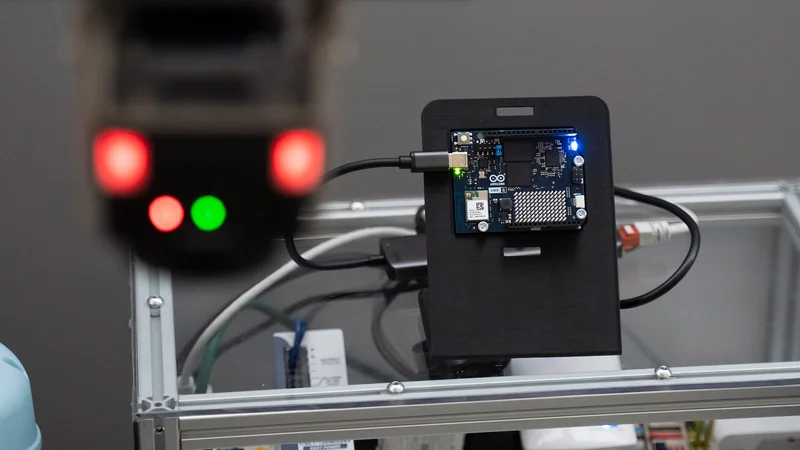
Arduino UNO Q is at the heart of an edge AI proof of concept
Industrial quality control at end-of-line assembly typically means one thing: expensive, closed-loop PLC systems with long delivery cycles and vendor lock-in baked in from day one. IDT Solution, an Italian system integrator founded in 2016 and specializing in open-source industrial automation and IIoT, set out to prove that this trade-off is no longer necessary.
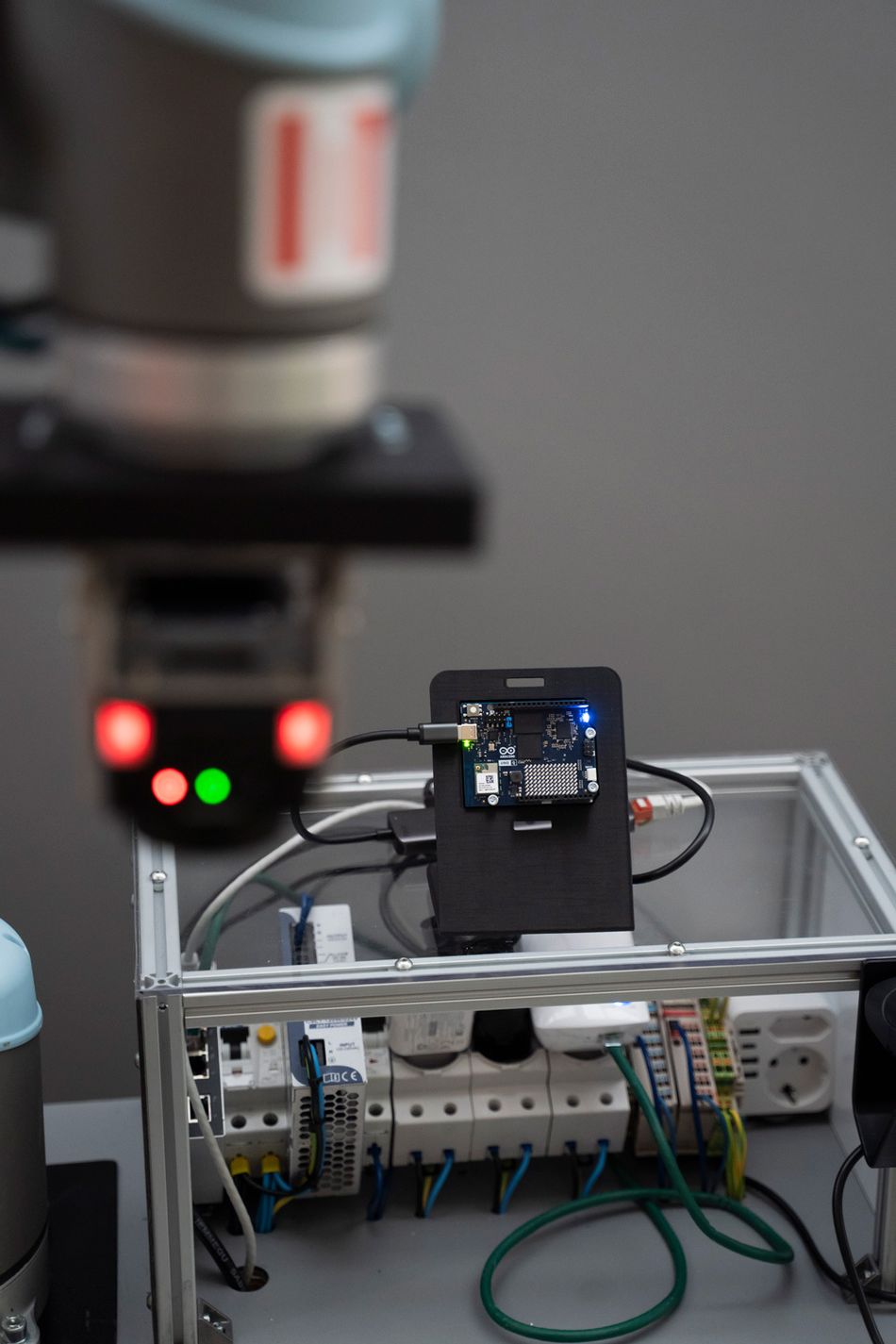
The problem with conventional AOI
Automated optical inspection in automotive manufacturing has historically depended on proprietary controllers – systems that come with significant licensing costs, slow iteration cycles, and deep technological dependency on a single supplier. For manufacturers operating in high-mix, frequently reconfigured production environments, this rigidity creates real operational friction.
IDT’s challenge was to design a proof of concept for end-of-line visual quality inspection of plastic components that could match the reliability requirements of Tier 1 automotive suppliers while being faster to deploy, easier to reconfigure, and free from proprietary constraints.
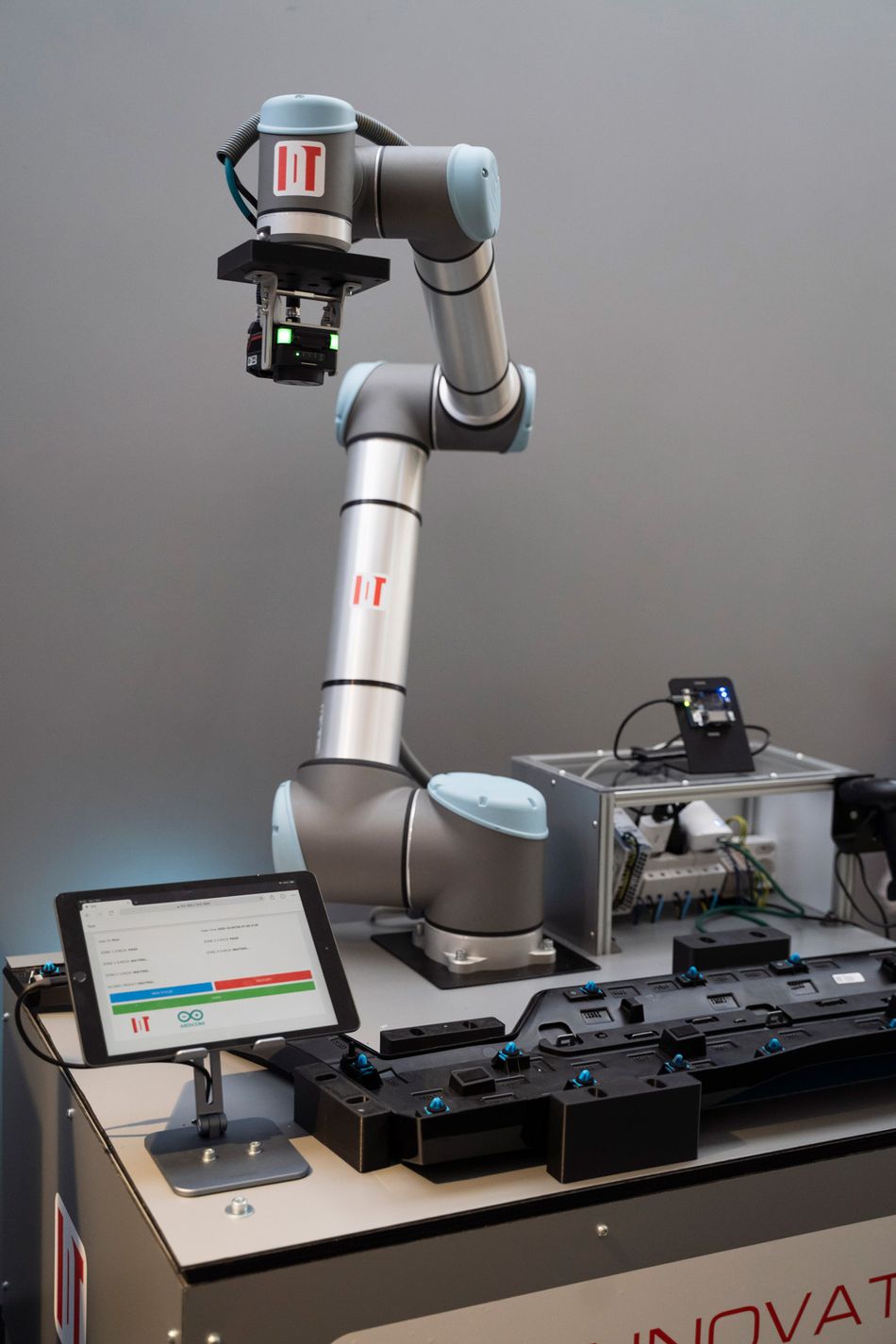
The architecture: Dobot Collaborative robots + edge AI on open hardware
The solution pairs a Dobot Collaborative robot with open-source controllers built around the Arduino® UNO™ Q board – which, unlike conventional microcontrollers, integrates a Qualcomm Dragonwing™ QRB2210 processor capable of running AI inference directly on-device.
The board, via Ethernet, talks with the robot using Modbus TCP running via Python library. The inspection camera is a fixed lens to avoid out-of-focus corrections, and is connected via USB to send the video stream directly to the board, which has a Machine Learning model able to recognize the number and the position of the expected components with an inference time under 50 ms. The model output is used to determine if the inspection went well, and in case the board detects any failure it sends a GPIO message to alert the operator.
This edge processing capability is central to the design. Rather than routing camera data to a cloud or remote server for analysis, the system runs computer vision and AI inspection algorithms locally, keeping response times compatible with end-of-line throughput requirements. It also simplifies OT/IT integration and reduces the external attack surface – a meaningful consideration in automotive manufacturing environments. The overall architecture is deliberately vendor-neutral. No proprietary software licenses. No single-supplier dependency. Commercial off-the-shelf components throughout.
Smart fixtures: shrinking the footprint
IDT implemented this as a “smart fixture” – a compact, self-contained end-of-line test station that integrates quality control, traceability, and edge intelligence without a dedicated electrical cabinet or complex operator panel. All electronics, sensors, and control logic are consolidated directly on the jig.
Compared to traditional end-of-line stations, this approach reduces physical footprint by up to 60% and system cost by up to 30%, while remaining fully compatible with industrial requirements. Because the architecture carries no proprietary constraints, the same fixture can be adapted to new products, lines, or configurations without rearchitecting the system from scratch.
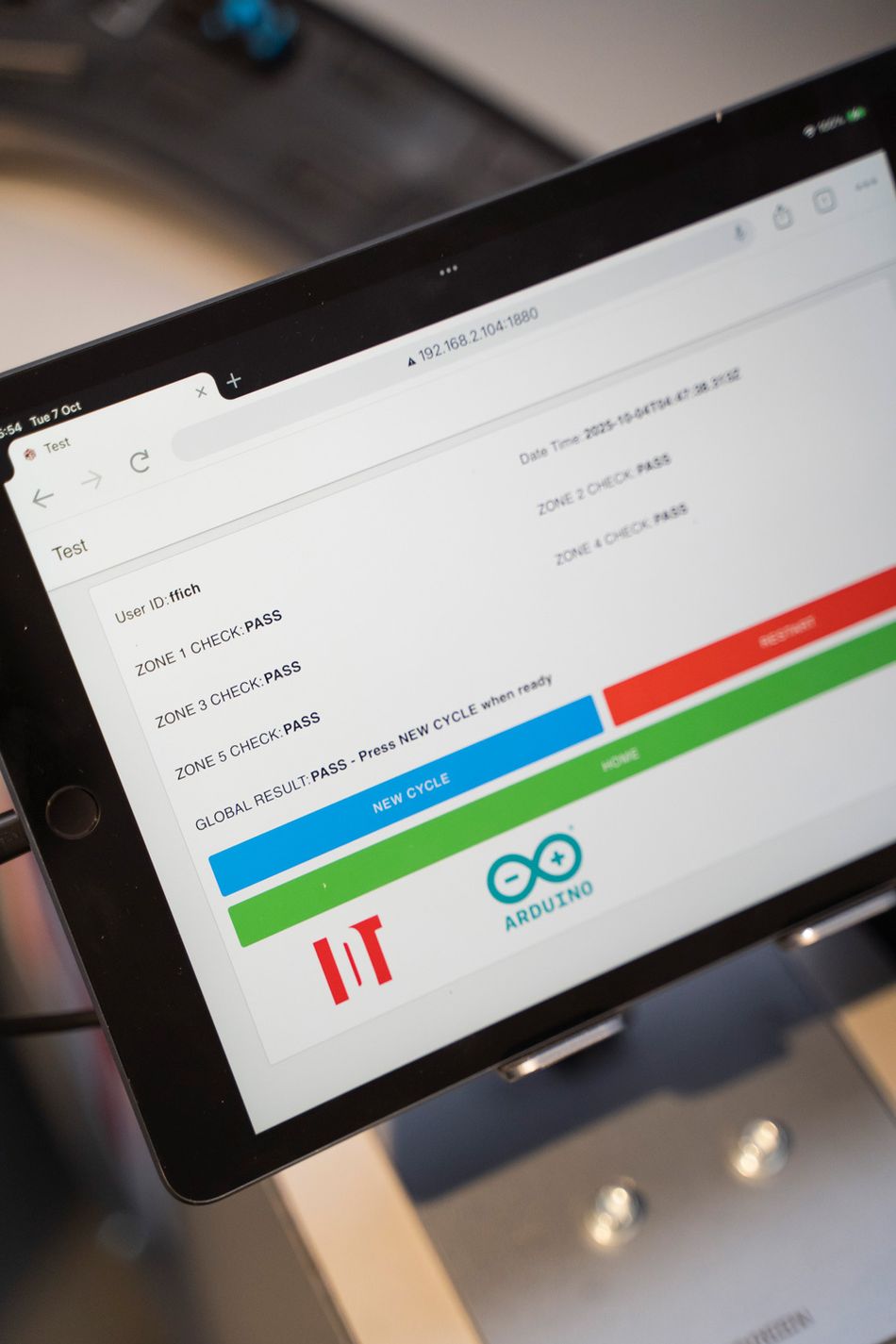
What the PoC demonstrates
The PoC validates several things worth noting for engineers evaluating similar systems. First, that AI inference at the edge – on compact, cost-effective hardware – is now genuinely viable for real-time industrial inspection, not just in research contexts. Second, that vendor neutrality is achievable without sacrificing industrial reliability. Third, that development velocity matters: the ability to iterate the vision model directly online, without proprietary toolchains, changes the economics of both initial deployment and ongoing maintenance.
What makes this architecture replicable is the choice of Arduino as its foundation. UNO Q sits within a broad, well-documented ecosystem that engineers can build on without negotiating licenses or navigating closed APIs. Prototyping is fast because the platform is familiar and the community is large; moving from PoC to production is tractable because the same hardware that runs a bench test can run an installed system. For IDT, this meant compressing the gap between concept validation and field deployment in a way that proprietary controllers simply don’t allow.
The broader argument IDT is making is one the software industry settled two decades ago: open platforms reduce total cost of ownership, accelerate development cycles, and give engineering teams the flexibility to adapt as requirements change. In industrial automation, that argument is now increasingly hard to ignore.
Qualcomm branded products are products of Qualcomm Technologies, Inc. and/or its subsidiaries. Arduino and UNO are trademarks or registered trademarks of Arduino S.r.l.