Robotics meets the culinary arts
A Swiss Italian team has created RoboCake, an edible robotic wedding cake that illustrates the advances in robotic food research.

17 Apr, 2025. 3 minutes read
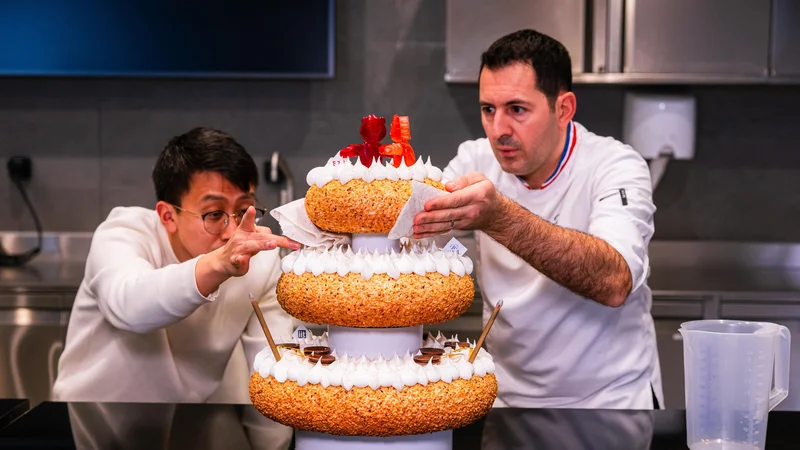
Bokeon Kwak, researcher at EPFL's Laboratory of Intelligent Systems and Julien Boutonnet, EHL Senior Lecturer of Practical Arts at EHL - 2025 EPFL/Jamani Caillet - CC-BY-SA 4.0
This article was first published on
actu.epfl.chThis article was discussed in our Next Byte podcast.
The full article will continue below.
While the idea of creating robots that can be eaten or food that behaves like robots may seem weird, it is a real challenge for the scientific community. As part of the EU-funded RoboFood project, researchers from EPFL and the Istituto Italiano di Tecnologia (IIT- Italian Institute of Technology) have collaborated with pastry chefs and food scientists from EHL in Lausanne, to marry robotic science and gastronomy. Their project, RoboCake, is being showcased at the Expo 2025 Osaka.
“Robotics and food are two separate worlds,” says Dario Floreano, head of the Laboratory of Intelligent Systems (LIS) at EPFL and coordinator of the RoboFood project. “However, merging them offers many advantages, particularly in terms of limiting electronic waste and food waste.” Other applications in the fields of emergency nutrition and health are being considered by scientists. “Edible robots could be used to deliver food to endangered areas, to deliver medicines in innovative ways to people who have difficulty swallowing or to animals, or even to monitor food and its freshness using sensors that can be eaten.
Illustrating robotic food research
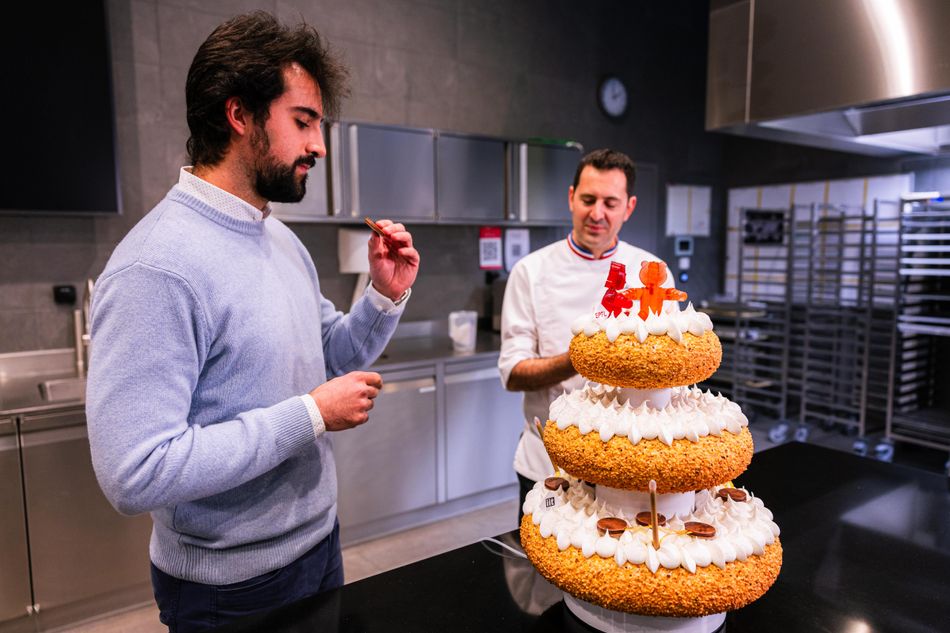
Creating edible robots also offers brand new culinary experiences. The RoboCake, a robotic wedding cake, is an innovative demonstration of the progress made by the RoboFood project, which aims to develop a new generation of edible robots and intelligent food.
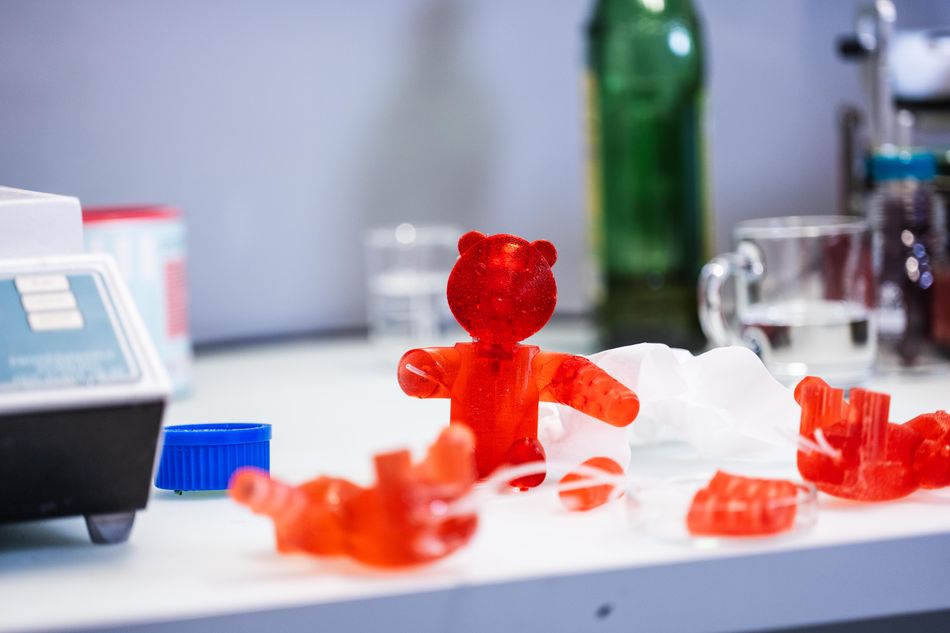
The RoboCake features two completely edible robotic teddy bears, created by the LIS at EPFL. “They are made from gelatin, syrup and colorants,” explains Bokeon Kwak, a researcher at LIS.” They are animated by an internal pneumatic system: when air is injected through dedicated pathways, their heads and arms move.”
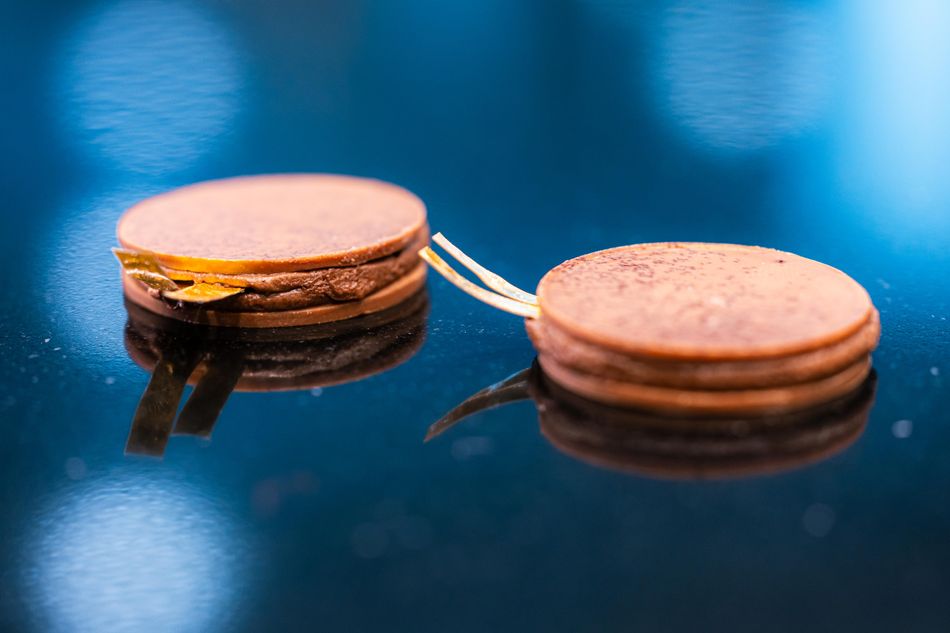
These dancing bears, which taste like soft, sweet pomegranate gummies, are not the only special feature of the cake. IIT researchers, coordinated by Mario Caironi, have developed the first edible rechargeable battery, made of vitamin B2, quercetin, activated carbon and chocolate, for the gourmet touch. “These batteries, safe for consumption, can be used to light the LED candles on the cake,” explains Valerio Galli, a PhD student at IIT. "The first flavor you get when you eat them is dark chocolate, followed by a surprising tangy kick, due to the edible electrolyte inside, which lasts a few seconds”. These batteries represent a potential solution to reducing electronic waste, which reaches 40 million tons per year.
The icing on the cake
To ensure these innovations are both appetizing and safe to eat, the engineers teamed up with food experts and pastry chefs from EHL. “Our challenge was to find the best way to showcase the innovations of our two partners, EPFL and IIT, by adding what we do best: indulgence. This is how the RoboCake was born, a true event pastry cake, meeting the challenge of combining technique, electronics, and taste.” says Julien Boutonnet, EHL Senior Lecturer Practical Arts and France’s top distinction, the Meilleur Ouvrier de France (MOF) award for pastry and candymaking.
“This interdisciplinary collaboration paves the way for interactive and delicious gastronomic experiences reminding us that food is a precious resource and possibly reducing overeating”, says Dario Floreano.